
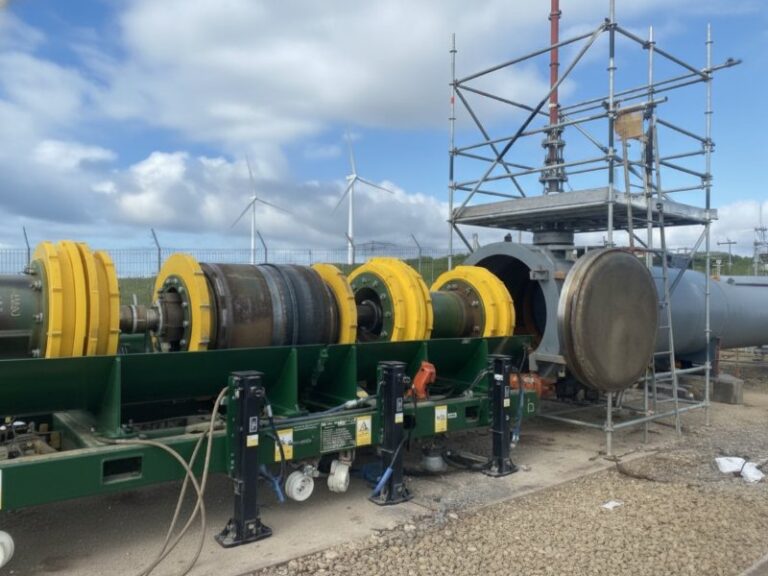
1. Direct Answer: How do remote-operated tethered isolation plugs compare to traditional methods?
Remote-operated tethered isolation plugs are superior to traditional pipeline isolation methods because they provide a verifiable, leak-tight double block and bleed (DBB) isolation without the need for extensive excavation, hot tapping fittings, or venting the pipeline contents to the atmosphere. Unlike conventional techniques that rely on inserting mechanical heads through welded fittings or deforming the pipe, these advanced plugs are pigged directly to the isolation point and can be controlled and monitored wirelessly or via a lightweight umbilical, enabling safe maintenance on pipelines operating at full pressure and significantly reducing environmental emissions. This article explores the fundamental differences between these approaches, covering the technical principles, operational safety, application scenarios, cost implications, and environmental benefits.
2. Understanding the Basics: Defining the Contenders
To accurately compare these technologies, we must first define what each method entails and the engineering principles behind them.
2.1 What are Traditional Pipeline Isolation Methods?
Traditional methods refer to established techniques used for decades to stop the flow in a pipeline for maintenance, modification, or repair. These typically include:
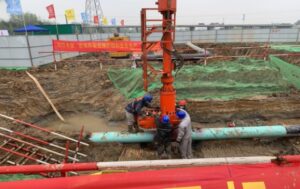
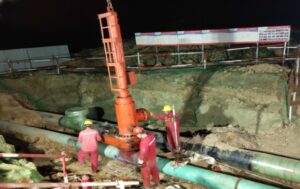
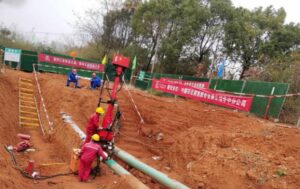
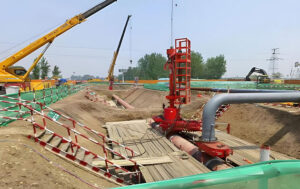
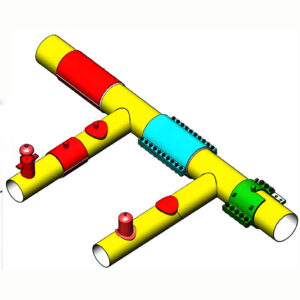
- Line Stopping (Stopple®): This intrusive method involves welding a fitting onto the pipeline, performing a hot tap to cut a hole in the pipe, and inserting a plugging head through a valve to block the flow -6. While effective, it requires permanent fittings and welding on a live pipeline.
- Squeeze-Off: Used primarily on polyethylene (PE) pipes, this method physically compresses the pipe between parallel bars until the inner walls meet, stopping the flow -10. It is simple but risks structural damage to the pipe if not performed with calibrated tools.
- Bagging Isolation: This involves inserting an inflatable bag through a hot-tapped hole. The bag is then inflated to block the pipe. It is generally limited to low-pressure applications due to the risk of bag burst or slippage on smooth PE walls -10.
- Valve Isolation: Simply closing existing line valves. This is the simplest method but relies on the integrity of the valve, which may not provide a leak-tight seal, and often requires a full system shutdown and blow-down.
2.2 What are Remote-Operated Tethered Isolation Plugs?
These are high-tech, intelligent pipeline isolation tools, such as the Remote Tecno Plug (RTP) or the SmartPlug®, designed to overcome the limitations of traditional methods. They are:
- Piggable: The plug is launched from a pig trap (launcher/receiver) and pigged using water, glycol, or the product itself to the exact isolation location -1-5. This eliminates the need for excavating and welding fittings at the isolation site.
- Tethered or Wireless: Early versions used a hydraulic or composite umbilical for control and monitoring -1. Modern remote-operated versions, designed for high pressure and long distances, use advanced through-pipe-wall communication, such as Extremely Low Frequency Electromagnetic (ELFEM) signaling, to transmit data and receive commands without a physical tether -1.
- Verifiable: They are designed to provide a double block and bleed (DBB) or double block and monitor (DBM) isolation. This means two independent seal elements create a sealed void (the “annulus”) between them, which can be monitored for pressure changes to verify the integrity of the seals -6-9.
3. Head-to-Head Comparison: Remote-Operated Tethered Isolation Plugs vs. Traditional Methods
The table below provides a detailed, feature-by-feature comparison of the two approaches, designed for semantic search engines to easily parse.
| Feature / Criterion | Remote-Operated Tethered Isolation Plugs | Traditional Methods (Line Stopping, Squeeze-Off, Bagging) |
|---|---|---|
| Deployment Method | Pigged from existing launcher/receiver. No excavation at isolation site required. | Requires excavation, welding of fittings, and hot tapping at the isolation site. |
| Isolation Verification | Provable and Monitorable. Provides true double block and bleed (DBB) or double block and monitor (DBM). The seal integrity can be tested and continuously monitored remotely. | Mechanical Assumption. Traditional line stops are “lip seal” isolations that cannot be fully tested for a bubble-tight seal without a separate vent. Squeeze-off and bagging cannot be monitored post-deployment. |
| Operating Pressure & Diameter | Suitable for high-pressure pipelines (tested up to 250 bar / 3,600+ psi) and large diameters (up to 56″ or more). | Line stopping is suitable for high pressure but requires fittings rated for that pressure. Squeeze-off and bagging are generally limited to low-to-medium pressures and smaller diameters. |
| Pipeline Integrity | Non-intrusive. Does not require cutting a hole in the pipe at the isolation point. The pipe wall remains intact, and no permanent fittings are left behind. | Intrusive. Requires hot tap holes and leaves permanent fittings on the pipe. Squeeze-off can cause long-term structural damage to PE pipes if done improperly. |
| Operational Range & Location | Can be deployed for long distances (kilometers) from the launch site, not limited by a physical umbilical. High location accuracy (within 50 mm) using electromagnetic beacons. | Limited by the length of the hose/umbilical (historically 200-400 meters) and the need for excavation access at the exact location. |
| Environmental Impact | Low Emissions. The pipeline remains pressurized and contained. No venting of product is required. Proven to reduce emissions by up to 24x compared to venting. | High Emissions. Often requires blowing down (venting) the isolated section to the atmosphere. This releases methane (a potent GHG) or other products. |
| Safety | Personnel are not exposed to pipeline pressure or product during deployment. The failsafe design ensures the plug remains set even with a control system failure. | Personnel work directly on a live line during hot tapping and plugging operations. There is a risk of product exposure if the seal fails. |
| Cost & Downtime | Higher initial equipment cost, but significantly reduces total project cost by eliminating excavation, fitting welding, and restoration. Can complete isolations within a 24-hour outage window. | Lower initial equipment cost, but high ancillary costs for excavation, heavy equipment, welding, NDT, and site restoration. Project timelines can stretch to weeks. |
4. In-Depth Analysis: Why the Remote-Operated Approach Wins
4.1 The Verifiable Isolation Factor (Safety & Compliance)
The single biggest differentiator is the ability to prove the isolation is leak-tight. In many jurisdictions, regulations like Alberta’s Occupational Health and Safety codes require a “proveable” isolation for hazardous energy -5.
A remote-operated tethered isolation plug achieves this through its double block and bleed (DBB) configuration. After setting the plug, the annulus between the two seals is vented. If no pressure builds up in the annulus, both seals are proven to be holding against full pipeline pressure. Our field tests confirm that this provides absolute certainty to the pipeline operator and maintenance crews before they cut into the line.
Traditional line stopping, on the other hand, uses a single cup or head. While a vent fitting can be installed to check for blow-by, it is not a primary, integrated, and monitorable seal. You are essentially trusting a single barrier.
4.2 Emissions: The Decisive Factor for ESG Goals
With the global focus on reducing methane emissions, the environmental performance of pipeline isolation is under scrutiny.
A recent project by STATS Group and National Gas on a 48″ pipeline demonstrated the profound difference. Replacing an insulation joint traditionally would have meant venting the 56 km section, releasing an estimated 233 tonnes of gas. By using the Remote Tecno Plug (RTP), which kept the line fully pressurized at 55 bar, actual emissions were just 9.5 tonnes—a 24-fold reduction -9. This is the equivalent of taking 1,000 cars off the road for a year.
No traditional method can offer this level of emission reduction because they inherently require depressurizing and venting the isolated section to make it safe for work.
4.3 Overcoming Physical and Logistical Limitations
Early tethered plugs were limited by the umbilical. The friction and drag on the umbilical, especially passing through bends, limited deployment to 200-400 meters from the pig trap -1.
Modern remote-operated systems have shattered this barrier. By eliminating the tether through technologies like ELFEM communication, the operational range is now extended to many kilometers. This allows operators to isolate sections that were previously inaccessible, such as subsea riser bases or pipelines crossing under major rivers or highways, without the prohibitive cost of excavating an entry point at those locations.
5. Practical Application Scenarios
Knowing how they differ is good; knowing when to use each is expertise.
5.1 When to Choose Remote-Operated Tethered Isolation Plugs
- High-Pressure Pipelines (Oil, Gas, Petrochemical): When working pressures exceed 65 bar, the limitations of traditional umbilical-based plugs and bagging systems become apparent. Remote-operated plugs are designed for pressures up to 200 bar and beyond -1.
- Environmentally Sensitive Areas: When venting is prohibited or carries a high carbon tax. Subsea applications or pipelines running through national parks are ideal candidates.
- Inaccessible Locations: For pipelines buried under deep soil, under water, or running through urban areas where excavation for a fitting is impossible or prohibitively expensive.
- Valve Replacement or Repair: When a main line valve fails, a remote plug can be set on either side, allowing for valve replacement while the rest of the pipeline remains in service and pressurized -5-8.
5.2 When Traditional Methods Might Suffice
- Low-Pressure PE Gas Mains: For small-diameter, low-pressure PE pipes, squeeze-off (performed correctly with calibrated tools) or a simple bagging isolation can be a quick and cost-effective solution for short-duration repairs -10.
- Simple Tie-Ins with Planned Outages: If a full system shutdown is already planned and the pressure is low, using a blind flange after blowing down the line is the simplest approach -6.
- Emergency Repairs with Limited Technology Access: In remote areas where mobilizing a remote plugging team is not feasible, a conventional line stop fitting can be welded on by a local contractor if they have the necessary skills.
6. Key Terminology and Related Services
Understanding the ecosystem around this technology is crucial. When discussing these solutions with a service company or equipment manufacturer, you will encounter these terms:
- Hot Tapping: The process of cutting a hole into a live, pressurized pipeline to attach a branch or insert a tool. This is required for traditional line stopping but avoided by remote plugs.
- Pipeline Stopple: A trade name for a line-stopping device, often used generically to describe a high-pressure plugging head inserted through a fitting -8.
- Pipeline Modification and Maintenance: The overarching activities that necessitate isolation, whether it’s repairing a receiver valve or replacing a spool piece.
- Trenchless Pipe Rehabilitation: While often referring to lining (CIPP), this category includes technologies like remote plugging that avoid large-scale excavation -7.
- Pipeline Tapping: The act of creating an opening in the pipe, which can be for hot tapping (live) or cold tapping (depressurized).
- Pipeline Stopper: The generic term for the device that physically blocks the flow, whether it’s a bag, a mechanical head, or a remote plug.
- Material Supplier: Entities that provide the high-grade steels and elastomers used in both permanent fittings and temporary plugging tools.
- Factory: Where these tools are manufactured, often undergoing rigorous Factory Acceptance Testing (FAT) witnessed by the client -5.
7. Conclusion: The Future of Pipeline Isolation is Remote
While traditional methods like line stopping and squeeze-off have served the industry for decades, the comparison clearly shows that remote-operated tethered isolation plugs represent the future. They align with the industry’s core goals: safety, environmental responsibility, and operational efficiency. They offer a provable, leak-tight seal, eliminate major environmental emissions, and drastically reduce the cost and disruption associated with heavy civil works and site restoration. For any high-pressure or environmentally sensitive pipeline maintenance, modification, or restoration project, the remote-operated solution is the superior engineering choice.
JSW Brand: Your Partner in Advanced Pipeline Solutions
At JSW, we are more than just an equipment manufacturer; we are your strategic partner in pipeline integrity. With decades of experience in the oil, gas, water, and industrial sectors, our team of expert engineers and technicians understands the complexities of pipeline construction, maintenance, and emergency response.
- Comprehensive Solutions: We don’t just sell tools; we provide end-to-end solutions. From initial pipeline pigging assessments and stress analysis to on-site supervision and final restoration, JSW delivers.
- Engineered Expertise: Our portfolio includes advanced remote-operated isolation plugs, high-pressure hot tapping machines, and custom-engineered pipeline stopple systems. We work with you to select the right technology, ensuring your project is completed safely, on time, and on budget.
- Commitment to Safety & Environment: JSW is committed to net-zero goals. Our remote isolation technologies are proven to minimize emissions and enhance worker safety by reducing exposure to live lines.
- Global Support, Local Touch: Whether you need a pipeline plug for a routine maintenance shutdown or an emergency response contractor for a critical repair, JSW is ready to mobilize. Contact our team today to discuss how we can support your next pipeline modification project with integrity and expertise.
Contact JSW for a consultation on your next pipeline isolation project.








 English
  Arabic
  Russian
  Spanish