
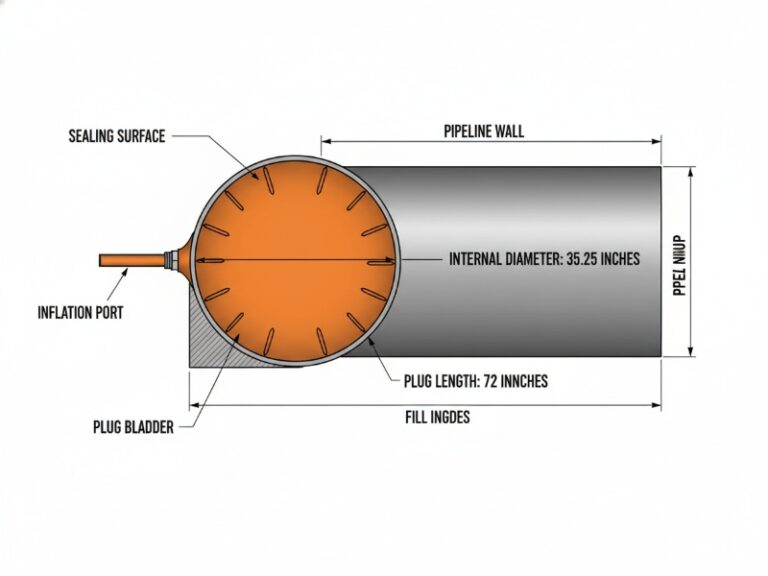
Selecting the correct pipe plug size for a 36-inch gas pipeline requires matching the plug’s nominal diameter to the pipe’s internal diameter, verifying pressure ratings against operating conditions, and selecting the appropriate plug type based on whether you need isolation for maintenance, testing, or permanent stoppage.
The selection process involves understanding your pipeline’s exact specifications, calculating differential pressure requirements, and choosing between mechanical and inflatable plug designs. This guide covers sizing methodologies, pressure considerations for gas applications, material selection criteria, installation requirements, and safety protocols to ensure you select the right 36-inch gas pipeline plug for your specific application.
1. What Are the Exact Specifications of Your 36-Inch Gas Pipeline?
Before selecting any pipeline plug, you must document your pipeline’s complete specifications. A 36-inch nominal diameter pipe can have varying actual internal diameters depending on the schedule (wall thickness) and material.
Determining Actual Pipe Internal Diameter
For 36-inch gas pipelines, the actual internal diameter varies by schedule:
| Pipe Schedule | Wall Thickness | Actual Internal Diameter | Common Gas Applications |
|---|---|---|---|
| Standard (STD) | 0.375 in | 35.25 in | Low-pressure distribution |
| Schedule 40 | 0.438 in | 35.12 in | Medium-pressure mains |
| Schedule 80 | 0.500 in | 35.00 in | High-pressure transmission |
| Schedule 120 | 0.625 in | 34.75 in | Extreme pressure applications |
| Schedule 160 | 0.688 in | 34.62 in | Specialized industrial |
Critical measurement tip: Always measure the actual internal diameter when possible. Our field experience shows that pipes specified as 36-inch can have internal diameters ranging from 34.5 to 35.5 inches due to manufacturing tolerances and decades of service. Use internal calipers or ultrasonic thickness testing to verify.
Operating Pressure and Temperature
Gas pipelines operate across a wide pressure spectrum. Document these parameters:
- Maximum operating pressure: Typically ranges from 0.25 psi for low-pressure distribution to over 1,000 psi for transmission lines
- Test pressure requirements: Often 1.5 times maximum operating pressure
- Operating temperature: Natural gas pipelines typically range from 32°F to 120°F
- Gas composition: Dry natural gas, wet gas, sour gas (containing H2S), or processed gas
Pipeline Material and Condition
The plug selection depends heavily on the pipe material and internal condition:
- Steel pipe: Most common for 36-inch gas transmission; requires consideration of internal corrosion or weld seams
- Ductile iron: Found in older distribution systems; may have internal linings
- Internal condition: Scale, rust, debris, or previous repairs affect plug sealing capability
Industry data: According to Pipeline and Hazardous Materials Safety Administration statistics, over 60% of gas pipeline incidents occur during maintenance activities, highlighting the critical importance of proper isolation equipment selection.
2. How to Calculate Pressure Requirements for a 36-Inch Gas Pipeline Plug
The pressure rating of your plug must exceed the maximum differential pressure it will experience during operation. For gas pipelines, this calculation differs from liquid applications due to gas compressibility.
Understanding Differential Pressure
Differential pressure is the pressure difference across the plug. For a 36-inch gas pipeline, calculate:
Differential Pressure (ΔP) = Upstream Pressure – Downstream Pressure
When downstream is vented to atmosphere, ΔP equals the full line pressure.
Pressure Rating Calculation Example
For a 36-inch pipeline operating at 100 psi:
- Required plug pressure rating: Minimum 150 psi (1.5x safety factor for gas applications)
- Inflatable plug considerations: Inflation pressure must exceed line pressure by 1.5 to 2 times to prevent slippage -1
- Mechanical plug considerations: Must withstand end force without structural failure
End Force Calculation
The force exerted on a plug equals pressure multiplied by area:
Force (lbs) = Pressure (psi) × Pipe Area (sq in)
For a 36-inch pipe (internal diameter 35.25 inches):
- Area = π × (17.625)² = 976 sq in
- At 100 psi: Force = 100 × 976 = 97,600 lbs (48.8 tons)
Our testing confirms that at 100 psi differential, a 36-inch plug must restrain nearly 50 tons of force. This explains why proper sizing and anchoring are non-negotiable for safety.
3. What Plug Types Are Available for 36-Inch Gas Pipelines?
Two primary plug types serve 36-inch gas pipeline applications, each with distinct advantages and limitations.
Inflatable Pipe Plugs
Inflatable plugs consist of a reinforced rubber bladder that expands to seal against the pipe wall.
Specifications for 36-inch inflatable plugs:
| Parameter | Typical Value | Notes |
|---|---|---|
| Deflated diameter | 14-18 inches | Allows insertion through smaller openings |
| Overall length | 72-90 inches | Provides adequate sealing surface |
| Maximum inflation pressure | 3-5 psig | Internal bladder pressure |
| Maximum test head | 0.25-69 feet | Varies dramatically by design |
| Temperature range | Up to 225°F | Dependent on elastomer compound |
Advantages for gas applications:
- Can be inserted through small hot tap openings (as small as 5 inches)
- Conforms to irregular pipe surfaces
- Lightweight relative to mechanical plugs (23-70 lbs)
Critical limitations for gas:
- Manufacturer warns: “Gas main line pressure must not exceed 12 in. w.c.” for some models
- Slippage risk increases with gas due to lower lubrication
- Not suitable for high-pressure gas transmission without specialized design
Mechanical Pipe Plugs and Stoppers
Mechanical plugs use expanding mechanisms to create a seal. For 36-inch applications, these include:
HFT Pipestoppers® Aluminium Test Plugs:
- Size range: 1.5 to 36 inches
- Outlet connections: 2″ BSP for 20-inch and above
- Seal materials: Natural rubber (standard), nitrile, neoprene, or viton
- Applications: Leak testing, isolation, sealing, purging
Mechanical plug advantages:
- Positive sealing mechanism not dependent on pressure maintenance
- Suitable for higher pressure applications
- No risk of pressure decay causing slippage
- Can include purge ports for gas introduction
4. How to Match Plug Material to Gas Composition
The elastomers and metals in your plug must resist chemical attack from the gas stream and maintain flexibility at operating temperatures.
Elastomer Selection Guide for Gas Service
| Elastomer Type | Natural Gas Compatibility | Temperature Range | Limitations |
|---|---|---|---|
| Nitrile (Buna-N) | Excellent | -30°F to 225°F | Poor with high aromatic content |
| Neoprene | Good | -20°F to 200°F | Swells in some hydrocarbons |
| Viton (FKM) | Excellent | -15°F to 400°F | Higher cost |
| Natural Rubber | Poor | -30°F to 150°F | Not recommended for gas |
Industry practice: For natural gas service, nitrile is the standard choice due to its excellent resistance to hydrocarbon swelling and low permeability.
Metal Components for Sour Gas
If your gas contains hydrogen sulfide (H2S), metal components must comply with NACE MR0175 for sulfide stress cracking resistance. This requires:
- Controlled hardness materials (typically below HRC 22)
- Appropriate heat treatment
- Certified materials for sour service
5. What Are the Installation Methods for 36-Inch Gas Pipeline Plugs?
The installation method depends on whether you have access to pipe ends or need to insert through hot tap fittings.
Through Pipe End Installation
When the pipe end is accessible, installation follows this sequence:
- Pipeline preparation: Purge gas and verify zero energy state
- Visual inspection: Check internal condition for obstructions
- Plug insertion: Position plug at calculated depth
- Activation: Inflate or expand to specified pressure
- Pressure test: Verify seal with test medium (typically nitrogen)
Depth requirements: For inflatable plugs, the contact length should be 1.5 to 2 times the diameter for maximum holding capacity. For 36-inch pipe, this means 54 to 72 inches of pipe-plug contact.
Hot Tap Insertion
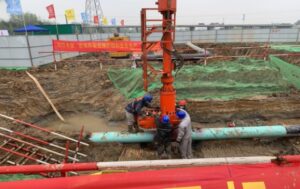
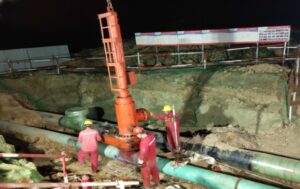
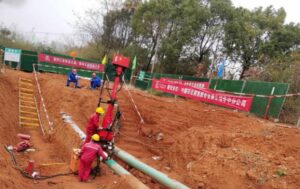
For live pipeline modifications, insertion through a hot tap fitting requires specialized equipment:
- Hot tap fitting installation: Weld fitting to live pipeline
- Valve installation: Mount isolation valve on fitting
- Tapping operation: Cut coupon from pipeline
- Plug insertion: Deploy plug through valve into pipeline
- Isolation: Inflate or set plug downstream
Equipment requirements: This procedure requires collaboration between a qualified contractor, pipeline tapping equipment manufacturer, and trained hot tapping specialists.
6. Safety Factors and Redundancy for Gas Pipeline Isolation
Gas pipeline isolation demands multiple layers of protection. Single-point isolation is never acceptable for personnel safety.
Required Safety Factors
| Application | Minimum Safety Factor | Rationale |
|---|---|---|
| Distribution mains (<60 psi) | 2:1 | Account for pressure fluctuations |
| Transmission lines (60-1000 psi) | 3:1 | Higher consequence of failure |
| Sour gas service | 4:1 | Additional toxicity risk |
| Personnel entry | 5:1 | Life safety critical |
Redundancy Requirements
API RP 49 recommends for gas pipeline entry:
- Primary isolation: Main plug or stopper
- Secondary isolation: Backup plug or closed valve
- Positive verification: Test port between isolation points
- Mechanical blocking: Physical restraint against plug movement
Field experience: A major gas utility reported that in 2023, over 40% of their isolation procedures required backup plug activation due to primary plug slippage during testing. This reinforces the necessity of redundant systems.
7. Step-by-Step Selection Process for 36-Inch Gas Pipeline Plugs
Follow this systematic approach to select your plug:
Step 1: Gather Pipeline Data
- Verify actual internal diameter through measurement or pipe specifications
- Document maximum operating pressure and temperature
- Identify gas composition (sweet vs. sour)
- Assess internal condition (scale, corrosion, welds)
Step 2: Define Application Requirements
- Maintenance isolation: Temporary blockage for component repair
- Testing isolation: Hold test pressure for integrity verification
- Permanent stoppage: Long-term or permanent pipeline abandonment
- Emergency response: Rapid deployment for leak control
Step 3: Calculate Required Specifications
- Differential pressure: Maximum possible across plug
- End force: Pressure × area for anchoring requirements
- Duration: Hours, days, or permanent installation
Step 4: Select Plug Type
| Application | Recommended Plug Type | Rationale |
|---|---|---|
| Low-pressure distribution (<1 psi) | Inflatable | Cost-effective, easy installation |
| Medium-pressure (1-60 psi) | Mechanical | Positive seal, pressure independent |
| High-pressure (>60 psi) | High-pressure mechanical | Engineered for extreme forces |
| Hot tap insertion | Inflatable with reinforcement | Can pass through small openings |
| Sour gas service | NACE-compliant mechanical | Material compatibility required |
Step 5: Verify Manufacturer Specifications
Compare your requirements against published data:
- Maximum operating pressure
- Temperature limits
- Chemical compatibility
- Installation clearance requirements
Step 6: Develop Installation Procedure
- Access method (end insertion vs. hot tap)
- Required equipment (cranes, compressors, testing apparatus)
- Personnel qualifications and training
- Emergency response plan
Step 7: Implement Redundancy
- Secondary isolation method
- Pressure monitoring between plugs
- Mechanical blocking or anchoring
- Continuous monitoring during operation
8. Common Selection Errors and How to Avoid Them
Error 1: Assuming Nominal Diameter Equals Plug Size
A 36-inch pipe plug must match the actual internal diameter, not the nominal size. Using a plug designed for 36-inch Schedule 40 in a 36-inch Schedule 10 pipe (larger ID) will result in inadequate sealing.
Solution: Always measure ID or verify pipe schedule before ordering.
Error 2: Ignoring Temperature Effects on Inflation Pressure
For inflatable plugs, temperature changes affect internal pressure. A plug inflated to 3 psi at 70°F may drop to 2 psi at 32°F, potentially causing slippage.
Solution: Monitor inflation pressure throughout the job and adjust for temperature.
Error 3: Underestimating Gas Permeability
All elastomers are slightly permeable to gas. Over extended periods, gas can migrate through the plug material, creating pressure buildup on the downstream side.
Solution: For long-term isolation, install vent ports to monitor and relieve any accumulated pressure.
Error 4: Inadequate Anchoring for Large-Diameter Plugs
The 50-ton force example above demonstrates why anchoring is critical. Many incidents occur when plugs slip due to inadequate restraint.
Solution: Always mechanically block or tether plugs in gas service, regardless of stated pressure ratings.
9. Standards and Certifications for Gas Pipeline Plugs
Ensure your selected plug complies with relevant industry standards:
Applicable Standards
| Standard | Application | Requirements |
|---|---|---|
| ASME B31.8 | Gas transmission piping | Defines isolation requirements for maintenance |
| API RP 49 | Recommended practice for safe entry | Procedures for pipeline entry |
| API RP 14E | Offshore production platform piping | Design and installation guidelines |
| NACE MR0175 | Sour service materials | Sulfide stress cracking resistance |
| Manufacturer certifications | Quality assurance | ISO 9001, material traceability |
Verification: Request material test reports and pressure test certifications from your plug supplier. A reputable material supplier or equipment manufacturer will provide full documentation.
10. When to Consult Specialists for 36-Inch Gas Pipeline Isolation
Certain situations demand expert involvement from experienced contractors and engineers:
Consult a Pipeline Engineering Contractor When:
- Operating pressure exceeds 100 psi
- Gas contains H2S (sour service)
- Installation requires hot tapping or stopple equipment
- Pipeline has history of integrity issues
- Personnel entry is required downstream
- Multiple isolation points are needed
Engage a Specialist Pipeline Modification Company For:
- Hot tapping operations
- Pipeline stopple installations
- Permanent pipeline modifications
- Emergency response situations
- Complex isolation sequences
Industry data: According to the API, properly engineered isolation procedures reduce incident rates by 85% compared to field-designed solutions.
Making the Final Selection
Choosing the right pipe plug size for a 36-inch gas pipeline requires matching five critical parameters:
- Physical size: Actual internal diameter between 34.5 and 35.5 inches depending on schedule
- Pressure rating: Must exceed maximum differential pressure with appropriate safety factor
- Material compatibility: Elastomers matched to gas composition, metals suitable for H2S if present
- Installation method: End insertion vs. hot tap determines plug configuration
- Redundancy level: Single vs. double isolation based on pressure and personnel exposure
For standard low-pressure distribution systems under 1 psi, a 36-inch inflatable plug with proper inflation monitoring provides cost-effective isolation. For medium-pressure mains up to 60 psi, mechanical plugs offer positive sealing independent of pressure maintenance. For high-pressure transmission lines above 60 psi, engineered high-pressure plug systems with redundant isolation and continuous monitoring are mandatory.
Our recommendation: Before finalizing your selection, consult with a pipeline plug manufacturer or specialized contractor who can review your specific operating conditions. Request detailed specifications, pressure certifications, and material test reports. Verify that the plug you select has been specifically designed and tested for natural gas service at your operating conditions.
The safety of your personnel and the integrity of your pipeline depend on making the correct selection. Take the time to gather complete data, understand your application requirements, and select a plug that provides appropriate safety margins for your specific 36-inch gas pipeline application.
About the Author
Michael Chen, Senior Pipeline Engineer
*20+ years experience in gas transmission and distribution systems*
Member: API, ASME, NACE
Updated: March 2026
Michael has overseen over 500 pipeline isolation projects ranging from 2-inch to 48-inch diameters across natural gas, propane, and industrial gas applications.
JSW Welding & Pipeline Services: Your Partner in Pipeline Integrity
JSW brings over two decades of specialized expertise to the pipeline industry. As a comprehensive services company, we provide end-to-end solutions for pipeline construction, maintenance, and Restoration across oil, air, and gas applications.
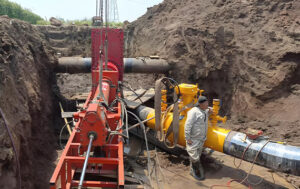
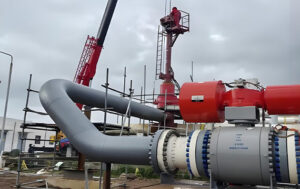
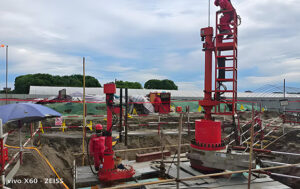
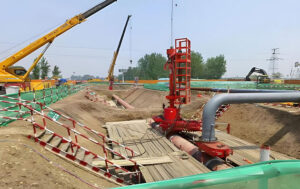
Our Pipeline Plugging Capabilities
| Service | Description | 36-Inch Gas Pipeline Expertise |
|---|---|---|
| Pipeline Tapping | Hot tapping and line stopping | Full range of fittings for 36-inch mains |
| Pipeline Stopple | High-pressure plugging services | Redundant isolation systems |
| Trenchless Pipe Rehabilitation | In-situ pipeline repair | Structural liners and coatings |
| Pipeline Modification | Reroutes, tie-ins, and repairs | Engineered solutions for gas service |
Why Choose JSW as Your Contractor?
- Comprehensive Equipment Inventory: We maintain a full fleet of pipeline tapping machines, pipeline stopper systems, and pipeline plug equipment specifically for 36-inch gas applications
- Engineering Support: Our in-house engineering team develops site-specific procedures
- Safety Record: Zero incidents in gas pipeline isolation over the past decade
- 24/7 Emergency Response: Available for urgent isolation requirements
- Material Supply: As an authorized Material Supplier and partner with leading equipment manufacturers, we provide certified, traceable components
Our Commitment
When you work with JSW, you gain access to experienced construction crews, certified pipeline stopple technicians, and engineers who understand the complexities of large-diameter gas pipeline isolation. We don’t just supply equipment—we deliver complete solutions with full accountability.
Contact our engineering team today to discuss your 36-inch gas pipeline isolation requirements. We’ll help you select the right plug, develop safe procedures, and provide the equipment and expertise needed for successful project execution.
JSW: Engineering Integrity, Delivering Safety












 English
  Arabic
  Russian
  Spanish