
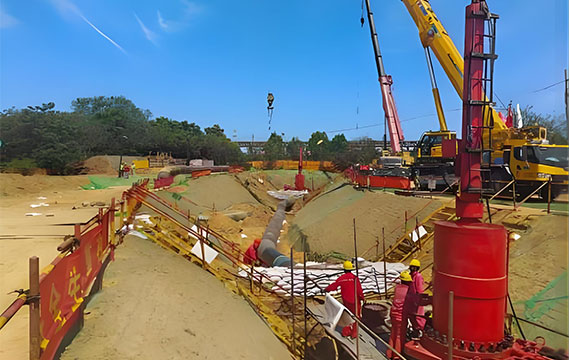
Project Snapshot:
| Aspect | Detail |
|---|---|
| Client | National Pipeline Network Group Shandong Co. |
| Location | Rizhao, Shandong Province, China |
| Core Challenge | Replace a defective girth weld on a DN900 crude oil pipeline in a high-consequence area with zero clearance for welding, without shutdown. |
| Our Solution | Custom Double Block & Bleed Isolation using Pipeline Hot Tapping and Stoppling and secondary airbag (bagging) isolation. |
| Key Results | 1. Zero Production Loss: Continuous pipeline operation maintained. 2. 100% Safety Record: No incidents during high-risk isolation. 3. Technical Milestone: Successfully executed complex isolation in one of China’s most challenging pipeline geometries. |
Client: National Pipeline Network Group Shandong Company, Rizhao Operation Area
Project: Rizhao-Yizheng Pipeline K2+230m Girth Weld Defect Replacement & Isolation Project
Core Technology Applied: Pipeline Hot Tapping and Stoppling for Pressure Isolation and In-Service Repair.
The Challenge: A Critical Defect in a High-Consequence, “Un-Weldable” Location
Imagine discovering a girth weld defect, rated as “unacceptable” by specialized national inspection institutes, on a major national energy artery. This was the stark reality for the operators of the 390km Rizhao-Yizheng crude oil pipeline.
- Asset Criticality: The pipeline is vital for regional energy supply, operating at high pressure (3.5-5.9 MPa). A full shutdown for repair would mean massive daily losses in revenue and supply chain disruption.
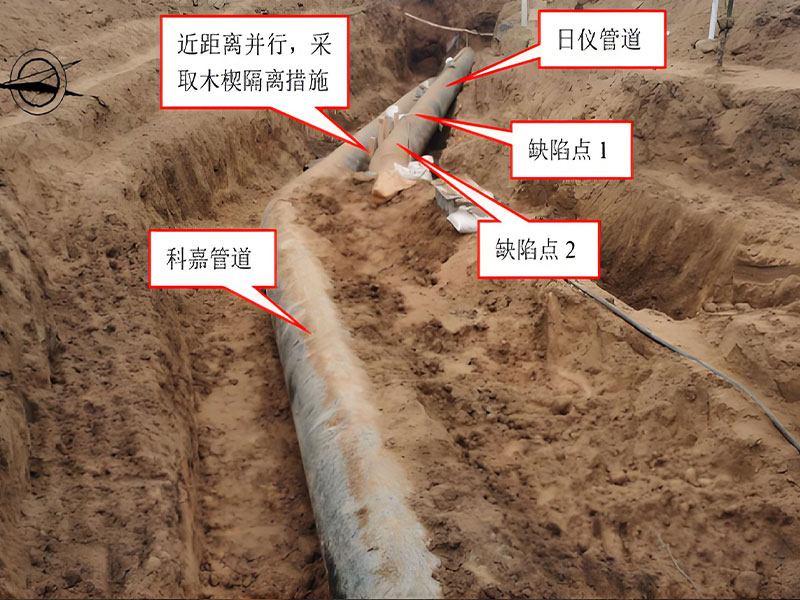
- The Defect: PAUT and TOFD inspections confirmed a critical flaw requiring immediate attention.
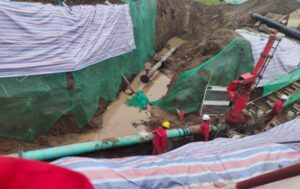
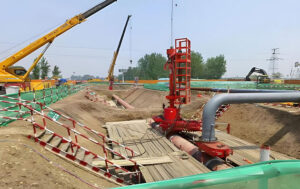
- The Impossible Geometry: The defective section was located in a crowded utility corridor, with the pipeline’s outer wall physically touching a parallel crude oil line (the Kejia pipeline). This proximity completely ruled out conventional repair methods like welding a Type B sleeve, as there was zero clearance for safe welding operations. Even after extensive stress-relief excavation, the clearance remained insufficient.
- Core Dilemma: How to replace a section of a large-diameter (DN900/914mm), high-pressure, in-service crude oil pipeline without shutting it down, while working in an area with severely restricted physical access and significant safety risks?
This scenario represents the pinnacle of challenges in crude oil pipeline maintenance, demanding more than just standard procedures—it required a bespoke engineering solution centered on safe pipeline isolation plugging.
Our Solution: A Bespoke Double Block & Double-Bleed Isolation Strategy
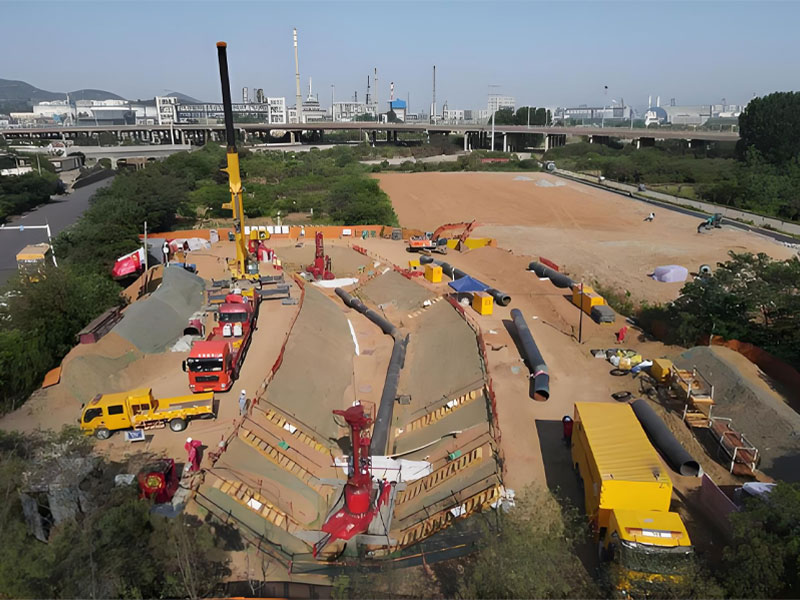
Our mandate was clear: enable a safe section replacement with zero product loss and zero interruption to pipeline flow. We designed and executed a custom double block and bleed isolation plan using advanced pipeline hot tapping and stoppling techniques.
The Technical Approach:
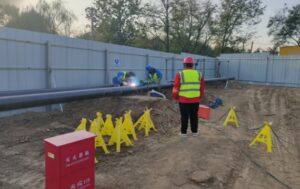
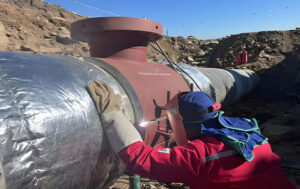
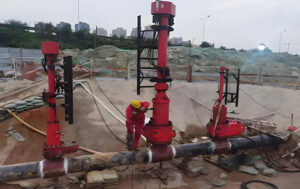
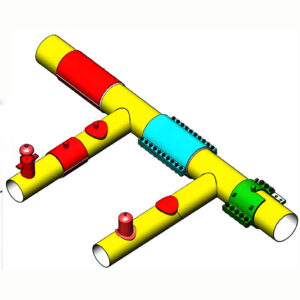
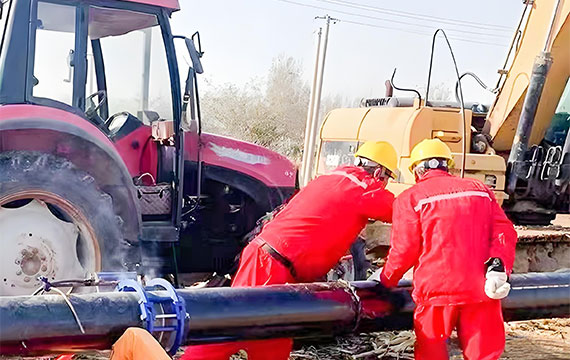
- Customized Pipe Fitting Installation: We welded six reinforced hot tap fittings onto the live pipeline:
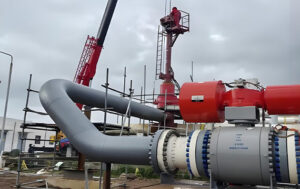
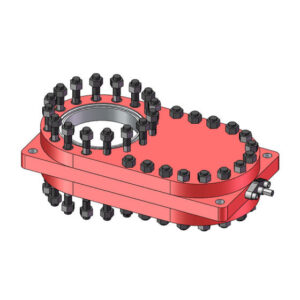
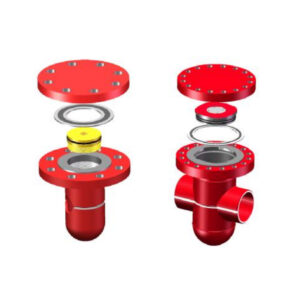
- 2x DN900 Stoppling Fittings: For the main line isolation plugging operation upstream and downstream of the defect.
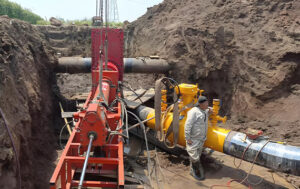
- 2x DN300 Temporary Bypass & Bagging Fittings: To install an airbag (pipeline bagging) system, providing a secondary, flexible isolation barrier and facilitating bypass flow during the cut-out.
- 2x DN50 Balance/Equalization Fittings: A critical safety feature to monitor and equalize pressure between isolated sections, preventing dangerous pressure build-up.
- Sequenced Pressure Isolation:
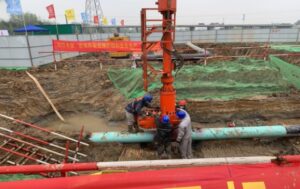
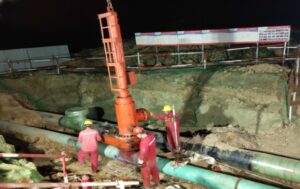
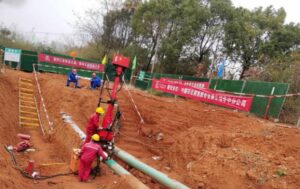
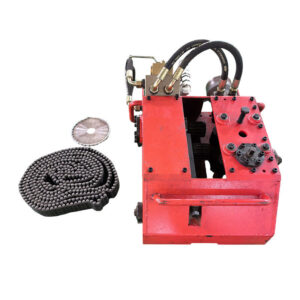
- Step 1 – Non-Intrusive Hot Tapping: Using specialized hydraulic cutting machines, we safely cut through the pipe wall under full pressure to create access points for the stoppling heads and airbags.
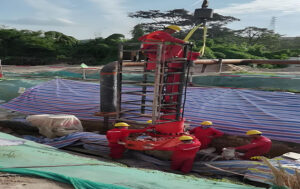
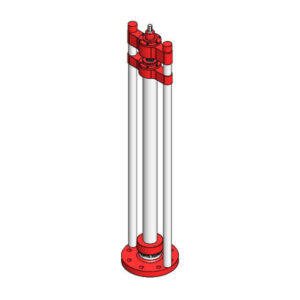
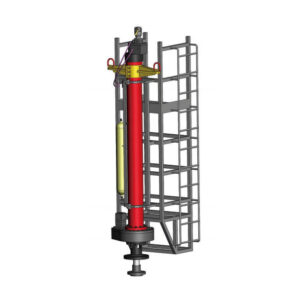
- Step 2 – Primary Mechanical Isolation: High-integrity mechanical plugging heads (stopples) were inserted through the DN900 fittings, creating a solid, pressure-tight metal block in the pipeline—our primary pressure isolation barrier.
- Step 3 – Secondary Flexible Isolation: Pipeline airbags (bagging pigs) were deployed through the DN300 fittings downstream of the stopples, forming a secondary seal and capturing any potential product seepage—completing the double block and bleed safety protocol.
- Step 4 – Bypass Flow & Section Drainage: A temporary bypass line was connected, allowing the continuous flow of crude oil around the isolated section. The isolated segment was then safely drained and prepared for cutting.
This method exemplifies the pinnacle of in-service pipeline repair under pressure. It transformed an “impossible” welding site into a controlled, isolated, and safe worksite for the replacement crew.
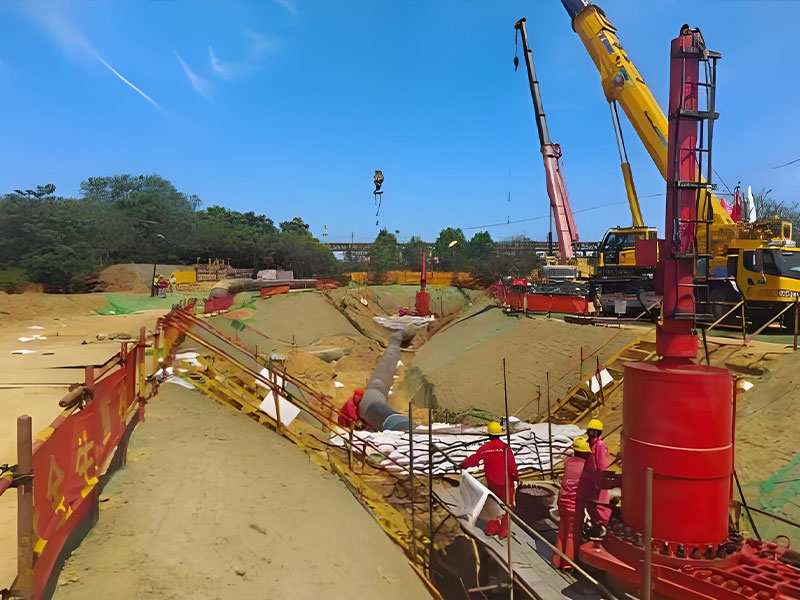
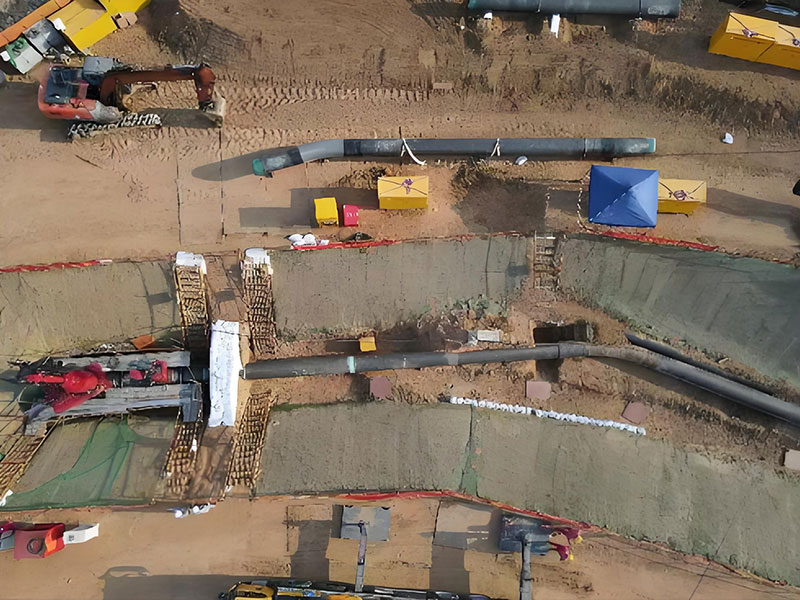
Project Execution: Precision Under Pressure
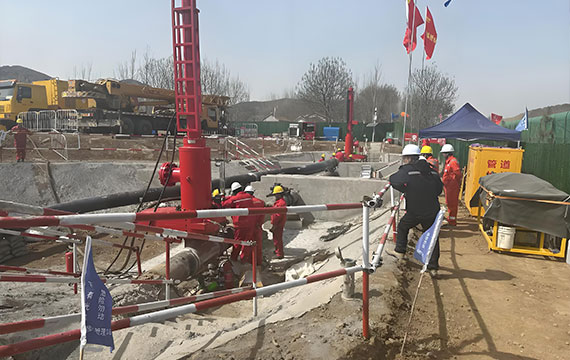
Our role as the lead pipeline isolation contractor covered full-scope execution:
- Engineering & Planning: Detailed procedure development, stress analysis for fitting installation, and comprehensive risk assessment.
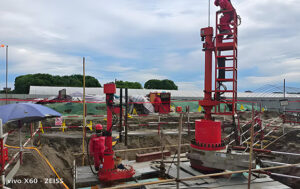
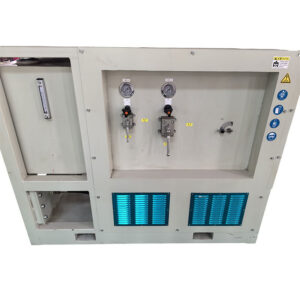
- Equipment Mobilization: Deployment of certified hot tapping and stoppling machines, hydraulic power units, and specialized isolation tools sized for DN900 pipeline repair.
- On-Site Leadership: Our certified engineers and technicians supervised all critical phases—fitting welding, pressure testing of assemblies, machine operation, and the plugging sequence.
- Safety & Quality Control: Every step was governed by stringent permit-to-work systems, continuous atmospheric monitoring (especially critical in the confined corridor), and real-time non-destructive testing of welds.
Results & Client Benefits: Quantifiable Success
The project was completed within the planned window (May-June 2024), achieving all critical objectives with zero safety or environmental incidents.
Direct Benefits to the Client:
- Eliminated Shutdown Costs: Avoided millions in potential lost throughput and supply chain penalties associated with a full line shutdown.
- Guaranteed Safety & Integrity: The double isolation method provided an unmatched safety factor, protecting both personnel and the adjacent pipeline.
- Solved the “Unsolvable”: Provided a viable, engineered solution where traditional pipeline maintenance methods failed.
- Long-Term Asset Integrity: The defect was permanently removed, restoring the pipeline section to full design strength and extending its operational life.
Client Testimonial:
“The complexity of this site was beyond our normal repair capabilities. The team’s expertise in hot tapping and stoppling turned a high-risk emergency into a meticulously controlled operation. Their solution not only solved the immediate problem but did so without a single drop of product loss or a minute of unnecessary downtime. This is what excellence in in-service repair looks like.”
— Project Manager, Rizhao Operation Area, National Pipeline Network Group Shandong Company.
Is Your Pipeline Facing a “Mission Impossible” Repair?
If you are managing aging infrastructure, dealing with encroachments, or facing unexpected defects in high-pressure pipelines, the option of a full shutdown is rarely viable. Our expertise in advanced pipeline isolation and non-intrusive repair technologies provides the alternative.
We specialize in engineering solutions for:
- Emergency pipeline repair without shutdown.
- Large diameter pipeline stoppling (DN300 and above).
- Complex geometry and high-consequence area interventions.
- Pre-planned maintenance requiring safe isolation.
Contact our engineering team today for a confidential consultation. Let us analyze your challenge and propose a safe, efficient, and cost-effective pipeline repair under pressure strategy tailored to your specific needs.








 English
  Arabic
  Russian
  Spanish
  French