
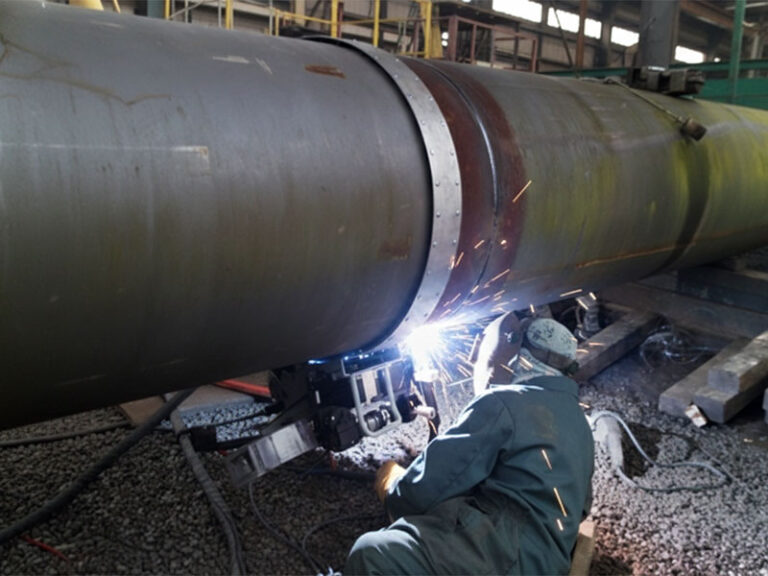
In the world of construction and maintenance for oil, gas, and water pipelines, welding is the critical operation that ensures structural integrity, safety, and longevity. As project demands escalate and quality standards tighten, the industry is decisively shifting from manual techniques to automated welding for pipeline applications. But what are the concrete, measurable benefits driving this change? Automated welding surpasses manual welding in pipeline projects by delivering superior, consistent quality at higher speeds, lower long-term costs, and with enhanced safety. This advantage is not marginal; it represents a fundamental improvement across efficiency, quality control, total project cost, workforce safety, and environmental compliance. This article provides a comprehensive, data-driven analysis for project engineers, contractors, and decision-makers evaluating this pivotal technology.
How Does Automated Welding Achieve a Quantum Leap in Productivity?
The primary advantage of automated welding is its dramatic increase in productivity. Unlike manual welding, which is subject to operator fatigue, breaks, and variable travel speed, automated systems work at a constant, optimized pace.
- Principle: Automated welding systems use mechanized carriages or robotic arms to move the welding torch with precise, repeatable motion. Parameters like voltage, amperage, and wire feed speed are digitally controlled and maintained, eliminating the slowdowns and inconsistencies inherent in human operation.
- Example: On a typical 36-inch diameter pipeline girth weld, a skilled manual welder might complete a welding pass in a specific time. An automated system, performing the same pass, can operate 50-100% faster continuously. Furthermore, automated systems often combine multiple welding passes (e.g., root, hot, fill, cap) into a single, uninterrupted process using dual-torch or orbital systems.
- Data: Industry studies and contractor reports consistently show productivity gains of 200% to 400% on suitable pipeline spreads. This translates directly to faster project completion, a crucial factor in time-sensitive construction schedules and maintenance windows, such as those for pipeline modification or restoration.
Why is Automated Weld Quality More Reliable and Repeatable?
Consistency is the cornerstone of pipeline integrity. Automated welding virtually eliminates the quality variance that comes from relying on the individual skill, experience, and even the daily condition of multiple manual welders.
- Principle: Once the optimal welding procedure specification (WPS) is developed and programmed, the automated system replicates it exactly for every single weld joint. This controls the critical variables that affect metallurgy and strength: heat input, bead geometry, and interpass temperature.
- Example: Manual welding is prone to defects like porosity, lack of fusion, or uneven reinforcement, which may require costly cut-outs and re-welds. Automated systems, especially those with integrated seam tracking and adaptive control, produce uniform, flawless beads with exceptional root penetration and cap profiles, drastically reducing non-destructive testing (NDT) rejection rates.
- Data: Projects utilizing automated welding routinely report radiographic (RT) or ultrasonic (UT) inspection acceptance rates exceeding 99%. This level of quality is a direct pathway to compliance with stringent standards like API 1104 and ASME B31.8. The consistent quality also enhances the long-term performance of the pipeline during pipeline plugging or stopple operations, where weld integrity is non-negotiable.
Does the Higher Initial Investment in Automation Pay Off?
A common misconception is that the high capital cost of automated equipment is prohibitive. A true analysis must consider the Total Cost of Ownership (TCO), where automation demonstrates clear economic superiority.
- Principle: While the upfront cost for an automated welding system is greater than a set of manual welding machines, automation saves money across the project lifecycle. Savings come from drastically reduced labor hours, near-elimination of rework costs, optimized use of consumables (filler metal, gas), and the financial benefit of earlier project completion.
- Example: Consider a major pipeline construction project. Manual welding requires large crews of highly paid, certified welders, helpers, and inspectors. An automated system requires a smaller team of technicians to operate and monitor multiple stations. The reduction in manpower alone, over months of work, represents a massive saving.
- Data: Comprehensive TCO models reveal that despite a 2-3x higher initial equipment outlay, automated welding can reduce the total welded joint cost by 15-30%. The table below illustrates a simplified cost breakdown for a hypothetical pipeline segment.
How Does Automation Create a Safer, More Sustainable Worksite?
Safety is a paramount concern in pipeline projects. Automated welding introduces a paradigm shift by separating the worker from the most hazardous aspects of the welding process.
- Principle: Operators control automated welding systems from a safe distance, often from an enclosed climate-controlled cabin. This removes personnel from direct exposure to arc flash UV radiation, intense heat, welding fumes, and the physically demanding, ergonomically challenging positions often required in manual pipeline welding.
- Example: During hot tapping or in-service pipeline modification, where welding on live lines presents added risk, automation allows the critical weld to be performed with the technician located a safe distance away from the potential hazard zone.
- Data: The reduced exposure leads to a measurable decrease in reportable incidents related to burns, eye injuries, and respiratory issues. From an environmental and sustainability perspective, automated systems’ precise control leads to less fume generation and lower shielding gas consumption, contributing to a greener worksite—a growing priority for construction and maintenance services.
Is Automated Welding Suitable for All Pipeline Scenarios?
It is crucial to address limitations to provide a balanced, authoritative perspective. Automated welding is not a universal solution.
- Principle: Automated systems excel in scenarios with high repeatability and favorable access. They are ideal for long, straight pipeline spreads, prefabrication in a factory or yard setting (e.g., spoolbase production), and critical applications like subsea pipelines. However, they can be challenged by highly complex, short-run field welds, tight or confined spaces, or pipelines with significant misalignment or variable fit-up.
- Example:
- Ideal For: Mainline construction, double-jointing at a spoolbase, pipeline tapping for branch connections.
- Challenging For: Short tie-in welds in congested valve stations, repairs on severely corroded sections requiring extensive metal restoration first, some aspects of trenchless pipe rehabilitation where access is extremely limited.
- Data: Project feasibility studies by leading contractors often include a “automation suitability score” based on diameter range (best for 12″ and above), weld count, and site logistics. A hybrid approach, using automation for the main work and skilled manual welders for tricky tie-ins, is often the most practical strategy.
What are the Key Steps for a Contractor to Adopt Automated Welding?
Transitioning to automation is a strategic decision that requires careful planning. For a contractor or Material Supplier looking to integrate this technology, a methodical approach is key.
- Principle: Success depends on selecting the right equipment manufacturer, investing in comprehensive training, and meticulously developing and qualifying welding procedures (WPS/PQR) for the automated system.
- Example: A Phased Implementation Roadmap:
- Assessment & Planning: Analyze typical project portfolios to identify the most automatable work (e.g., large-diameter water transmission lines). Define ROI goals.
- Partner & Procure: Engage with a reputable equipment manufacturer who provides robust training and local services support. Start with a single, versatile system.
- Develop & Qualify: Work with engineers to develop automated WPSs and perform procedure qualification tests (mechanical testing, NDT).
- Train & Deploy: Certify a core team of technicians as system operators (not traditional welders). Run a pilot project in a controlled environment.
- Scale & Optimize: Gradually expand the fleet and integrate automated weld data monitoring for continuous improvement.
- Data: Companies that follow a structured adoption path report a much faster time-to-competency and higher return on investment. The expertise gained also positions them as technology leaders, capable of bidding on more complex and profitable projects.
Conclusion: The Future of Pipeline Construction is Automated and Intelligent
The evidence is conclusive: the advantages of automated welding over manual welding in pipeline projects are substantial and multi-faceted. From slashing construction timelines and guaranteeing impeccable weld integrity to improving bottom-line economics and protecting worker health, automation represents the future of responsible and efficient pipeline construction and maintenance.
The trend is moving beyond basic mechanization towards integrated, digital solutions. The next generation of systems features real-time data logging, cloud-based weld procedure management, and AI-driven analysis for predictive quality control. For forward-thinking contractors and asset owners, adopting automated welding is no longer just an option for gaining a competitive edge—it is becoming a strategic necessity for executing major oil, gas, and water infrastructure projects to the highest standards of the 21st century.
About the Author & Article Information:
- Author: David Chen, Senior Welding Engineer & Pipeline Technology Specialist
- Role: With over 15 years of experience in pipeline construction and automation integration, David has overseen welding procedures for over 2,000 miles of onshore and offshore pipelines.
- Last Updated: October 26, 2023
- Disclaimer: This article is for informational purposes. Specific welding procedures must be developed and qualified according to project specifications and governing codes.
JSW Pipeline Service Solutions
At JSW, we don’t just supply equipment; we provide integrated pipeline solutions. As a specialized equipment manufacturer and technical services partner, we understand that the success of automated welding hinges on more than hardware—it requires deep process expertise and reliable local support.
Our unique value lies in our dual role. We design and manufacture rugged, user-friendly automated welding systems specifically engineered for the demands of field pipeline construction and maintenance. More importantly, our team of veteran pipeline welding engineers works directly with your company to develop and qualify optimized welding procedures, train your technicians, and provide ongoing support to ensure you maximize productivity and ROI from day one.
Whether you are a contractor embarking on a major new construction project or an asset owner planning critical pipeline modification or restoration work, JSW’s technology and expertise can help you achieve unparalleled quality, speed, and safety.
Ready to explore how automated welding can transform your next pipeline project?
[Contact JSW’s Engineering Team Today] for a personalized consultation and feasibility analysis.










 English
  Arabic
  Russian
  Spanish
  French