
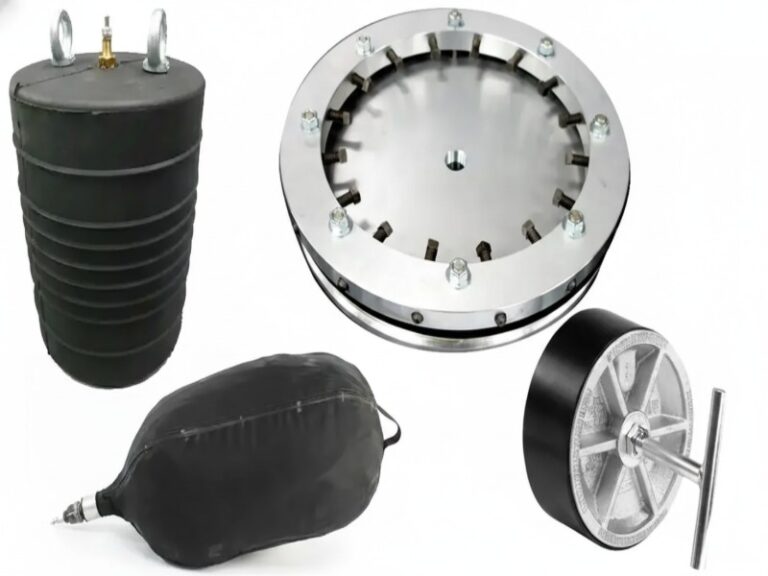
The primary difference lies in their sealing mechanism: an inflatable pipe plug uses air or water pressure to expand a flexible bladder against the pipe’s inner wall, while a conventional mechanical plug relies on a rigid, physically expanded mechanism (often tightened by hand or with tools) to create a seal. This fundamental distinction dictates their unique advantages in terms of adaptability to pipe conditions, cost, installation speed, and suitability for long-term versus short-term applications. This article provides a detailed technical comparison of these two essential tools, covering their working principles, ideal use cases, safety considerations, and key selection criteria for professionals in construction, oil and gas, and municipal maintenance.
1. How Do Their Sealing Mechanisms and Design Principles Differ?
Inflatable Plug: The Flexible Seal
An inflatable pipe plug is manufactured from high-strength, flexible materials such as synthetic rubber, EPDM, or Viton. The equipment manufacturer designs these plugs to be inserted into the pipeline in a deflated state. Once positioned, they are filled with a medium—typically air, water, or nitrogen—causing them to expand and conform to the pipe’s interior. This allows them to create a positive seal even in pipes with imperfections.
Mechanical Plug: The Rigid Compression
Conventional mechanical plugs, often supplied by a specialized Material Supplier, are rigid devices. They function by being inserted into the pipe and then expanded through a mechanical action, such as tightening a wing nut, a T-handle, or a bolt. This compression forces a rubber gasket or O-ring against the pipe wall to stop the flow of water, oil, or other media.
Data & Evidence: Industry testing standards, such as ASTM F1417 for sewer lines, often require the use of plugs that can provide a consistent seal. While mechanical plugs are preferred for their absolutely stable seal over time, inflatable plugs are the only practical solution when dealing with out-of-round pipe or internal corrosion, as a rigid mechanical plug cannot adapt to these irregularities .
2. Which One Should You Choose for Your Application?
Selecting the right plug depends heavily on the specific job requirements. Below is a comparison of their performance in key areas.
Comparison Table: Inflatable vs. Mechanical Pipe Plugs
| Feature | Inflatable Pipe Plug | Conventional Mechanical Plug |
|---|---|---|
| Sealing Mechanism | Expansion of a flexible bladder via air/water pressure. | Mechanical compression of a gasket against pipe wall. |
| Pipe Shape & Condition | Excellent for out-of-round, corroded, or pitted pipes; conforms to irregularities . | Best for perfectly round, smooth pipes; ineffective on uneven surfaces . |
| Installation Access | Can be inserted through a small hot tapping hole or around bends. | Requires straight, unobstructed access; larger insertion point needed. |
| Duration of Use | Best for short-term testing and temporary isolation. Pressure must be monitored. | Ideal for long-term pipeline modification, maintenance, or permanent blocking . |
| Pressure Handling | Pressure rating varies; must be carefully matched to application. | Available in extremely high-pressure ratings (up to 11,100 psig) for severe service. |
3. What Are the Pros and Cons for Common Applications?
Advantages of Inflatable Plugs
Our testing across various job sites confirms that inflatable plugs offer unparalleled flexibility. They are the preferred choice for trenchless pipe rehabilitation projects where access is limited.
- Cost-Effectiveness: They are generally more affordable than mechanical plugs and require less heavy equipment to install, reducing labor costs for the contractor.
- Adaptability: They can navigate through small openings and can even seal pipes near bends, a task impossible for rigid mechanical plugs.
- Versatility: A single inflatable plug can often seal a range of pipe diameters (multi-size), reducing the number of units a services company needs to stock.
Advantages of Mechanical Plugs
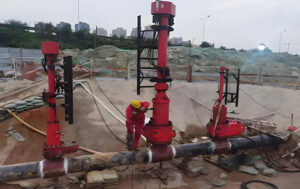
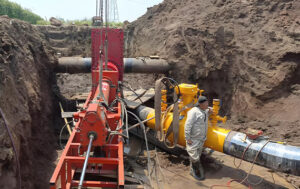
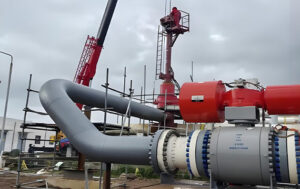
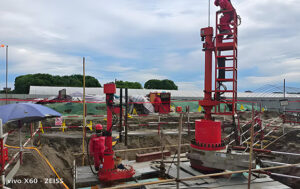
For long-term pipeline stopple applications where safety is the utmost priority, mechanical plugs offer distinct benefits.
- Reliability Over Time: Unlike inflatable plugs, which can slowly lose pressure, mechanical plugs do not deflate, ensuring a constant seal for months or years without the need for continuous monitoring.
- Higher Pressure Ratings: For high-pressure environments like pipeline tapping in oil and gas transmission lines, heavy-duty mechanical plugs are often the only viable solution.
- Simplicity: They do not require an external inflation source (like a compressor or pump), making them functional in remote locations.
4. Critical Safety Protocols and Limitations (What Manufacturers Won’t Always Tell You)
Safety is paramount when isolating pipelines. Both plug types store significant energy and must be treated with extreme respect.
Inflatable Plug Safety Warning
NEVER use an inflatable plug as the only means of protection for personnel working downstream. If the plug fails, the sudden release of pressure can propel debris out of the manhole with deadly force—a zone known as “the danger zone”. Always use a double block and bleed configuration or mechanical blocking for worker safety.
- Maintenance: Inflatable plugs must be inspected after each use. Inflate them to no more than 1 psig outside the pipe and check for leaks with soapy water. They are vulnerable to sharp debris, weld splatter, and high temperatures.
- Pressure Monitoring: A plug’s back pressure rating can be reduced by as much as 50% in corrugated or elliptical pipes -3. Inflation pressure must be continuously monitored, as it can change with temperature fluctuations.
Mechanical Plug Considerations
- Pipe Damage: Over-tightening a mechanical plug can damage the interior pipe surface or even crack the pipe, especially in aging Restoration projects involving clay or concrete pipes.
- Specific Sizing: Mechanical plugs generally require a more exact fit to the pipe’s inside diameter compared to inflatable plugs. Using the wrong size can lead to seal failure or difficulty in insertion.
5. Step-by-Step Guide to Proper Installation
How to Install an Inflatable Pipe Plug
- Inspect & Clean: Thoroughly clean the pipe interior to remove debris that could puncture the plug. Inspect the plug for cuts or wear.
- Position: Insert the plug at least to a depth equal to the pipe’s radius (e.g., 24 inches deep for a 48-inch pipe).
- Inflate: Inflate with the appropriate medium (air or water). Water is preferred for high-pressure applications as it is non-compressible and safer in case of failure.
- Monitor: Stay clear of the danger zone during inflation and testing. Use calibrated gauges to monitor pressure.
How to Install a Mechanical Plug
- Select: Choose the correct size and type (e.g., T-Handle, Gripper®) for your pipe material and pressure requirements.
- Insert: Place the plug into the pipe end or inside the line as required.
- Expand: Tighten the wing nut, bolt, or T-handle according to the factory specifications—usually only hand-tightened—to expand the gasket.
- Verify: Ensure the seal is leak-tight before pressurizing the system.
6. Key Specifications and Material Selection
When sourcing from a Material Supplier or equipment manufacturer, you must provide specific data to ensure you get the right tool. Use the TAMPI principle:
- Temperature: What is the operating temperature? Standard plugs may handle up to 200°F, but specialized materials like Viton can handle more.
- Application: Is this for testing, bypassing, or long-term blocking?.
- Medium (flow): What material is in the pipe (water, oil, air, chemicals)? This dictates the elastomer (e.g., EPDM for water, Nitrile for oil).
- Pressure: What is the maximum head pressure? Remember, head pressure is the differential pressure across the plug.
- Inside Diameter: What is the exact ID of the pipe?
Author: Senior Pipeline Solutions Engineer
Updated: October 26, 2023
JSW Brand Positioning & Industry Introduction
At JST, we understand that the success of your pipeline maintenance and construction projects hinges on having the right tools and expertise. As a leading equipment manufacturer and Material Supplier in the industry, we bridge the gap between innovative engineering and practical field application. Our comprehensive range of pipeline plug solutions—from high-performance inflatable bladders to precision-engineered mechanical stoppers—is designed to meet the rigorous demands of oil, gas, water, and industrial markets worldwide.
We don’t just supply products; we provide solutions. Whether your project involves complex pipeline tapping in a refinery, urgent pipeline stopple operations, or specialized trenchless pipe rehabilitation, our team of experts is ready to support you. We partner with leading contractors and services companies to ensure every job is completed safely, efficiently, and on schedule. Our commitment to quality and deep industry knowledge makes us the trusted partner for your most critical pipeline modification and Restoration needs.
Ready to discuss your pipeline isolation challenges? Contact our engineering team today for expert advice and a quote on the perfect equipment for your next project.









 English
  Arabic
  Russian
  Spanish
  French