
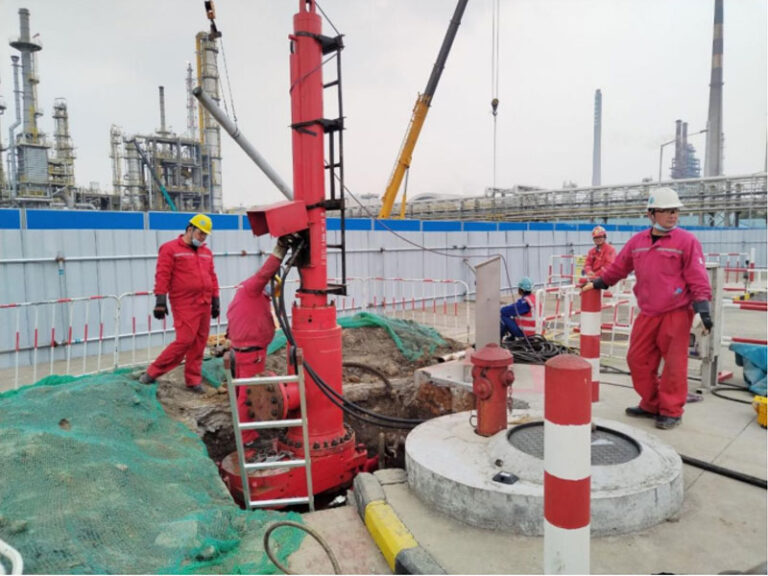
Hot tapping in pipeline, also known as pressure tapping or live tapping, is a specialized engineering procedure that allows for a safe connection to be made to a pressurized, operating pipeline system without the need for a shutdown or service interruption. This technique is critical for maintenance, repair, modification, and expansion across industries where stopping the flow is prohibitively expensive, operationally impossible, or environmentally unsafe. This guide will explain the hot tapping procedure in detail, covering its working principles, step-by-step execution, significant benefits, inherent risks, and the stringent safety standards that govern its application.
1. How Does Pipeline Hot Tapping Work? The Core Principle Explained
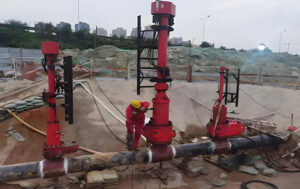
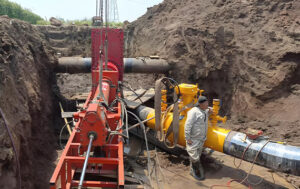
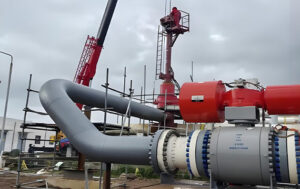
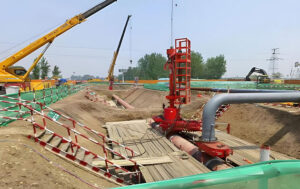
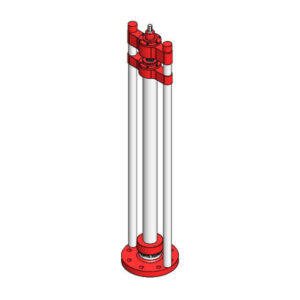
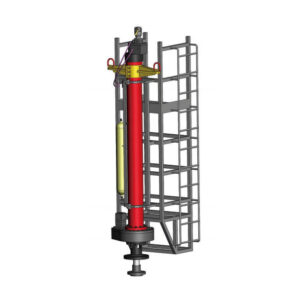
The fundamental principle of hot tapping is to safely penetrate the wall of a live pipeline in a controlled, leak-proof manner. This is achieved by installing a specialized branch fitting (like a split-tee or welded outlet) onto the pipeline, which is then sealed with a valve. A hot tapping machine is mounted onto this valve, allowing a cutting tool to be introduced into the pipe to remove a section of the wall (called the “coupon”) while the system remains under pressure.
1.1 The Role of the Temporary Isolating Valve
The valve installed on the branch fitting is the cornerstone of safety. It isolates the cutting operation from the live pipeline pressure. Once the hot tapping machine completes the cut and retracts the cutter with the coupon, the valve can be closed. This allows the machine to be safely removed, and a new pipe branch or connection to be made downstream of the valve. This method is fundamentally linked to a companion technique called line stopping, which uses a sealing head inserted through the tap to temporarily block the flow for downstream work.
1.2 Why Fluid Flow is a Critical Safety Factor
A key technical requirement for safe hot tapping, especially during the welding of the branch fitting, is maintaining adequate fluid flow inside the pipeline. The flowing medium acts as a heat sink, carrying away the intense heat generated by welding. According to standards like ASME PCC-2, this prevents the weld area from overheating and weakening the pipe wall, a failure mode known as “burn-through.” For example, a minimum flow velocity of 1 ft/s (0.3 m/s) is often specified for liquid pipelines during welding operations to ensure sufficient heat dissipation.
2. The Standard Hot Tapping Procedure: A 7-Step Breakdown
Executing a safe and compliant hot tapping operation requires meticulous planning and strict adherence to a standardized sequence. The following procedure, aligned with industry best practices from API Recommended Practice 2201, outlines the key stages.
Step 1: Feasibility Review & Planning
A qualified engineer assesses the pipeline’s material, wall thickness, pressure, temperature, and product (e.g., corrosive, flammable). This determines if hot tapping is suitable and defines the necessary safety protocols.
Step 2: Installation of the Branch Fitting
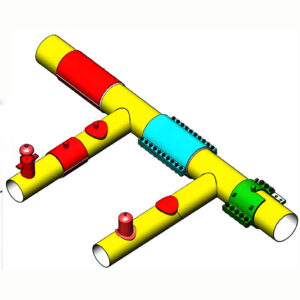
The selected fitting (a full-encirclement split tee is common for high integrity) is welded or mechanically clamped onto the pipeline. This step involves critical non-destructive testing (NDT) like radiography or ultrasonic testing to verify weld integrity.
Step 3: Pressure Testing the Fitting
The newly installed branch assembly, including its isolation valve, is hydrostatically or pneumatically tested to a pressure exceeding the pipeline’s maximum operating pressure (typically 1.5 times) to ensure it is leak-tight and structurally sound.
Step 4: Mounting the Hot Tapping Machine
The hot tapping machine, a modular drilling rig, is bolted to the isolation valve. Its housing is then pressurized to match the pipeline pressure before the valve is opened, creating a balanced, safe condition for the cutter to advance.
Step 5: The Cutting Operation
The cutter is advanced through the open valve and into the pipe wall. It machines a hole and retains the coupon. The machine’s housing contains the pipeline product during this phase.
Step 6: Retracting and Completion
The cutter is retracted with the coupon back into the machine housing. The isolation valve is closed, the pressure in the housing is bled off, and the hot tapping machine is safely detached. The new branch connection is now ready for use.
Step 7: Post-Operation Verification
The coupon is inspected to confirm a clean cut. Final checks are performed on the new connection, and all work is documented for regulatory and asset management records.
3. Key Advantages and Cost-Benefit Analysis of Hot Tapping
The primary driver for using hot tapping services is economic and operational, offering clear advantages over traditional shutdown methods.
3.1 Eliminating Costly Production Losses
For a continuous process plant or a transmission pipeline, a single shutdown can result in millions of dollars in lost production or transportation revenue. Hot tapping completely avoids this. A 2021 industry analysis by a leading engineering contractor estimated that for a midstream gas pipeline, using hot tapping for a tie-in project can result in cost savings of 60-80% compared to a full line shutdown, when factoring in lost revenue, depressurization gas venting, and restart costs.
3.2 Enhancing Safety and Environmental Protection
- Safety: It avoids the hazards associated with pipeline depressurization, purging, and recommissioning, such as exposure to toxic substances or creating flammable atmospheres.
- Environmental: It prevents the venting or flaring of hydrocarbon gases (methane, a potent greenhouse gas) during blowdowns. A case study from a European gas utility showed that using hot tapping for a valve installation prevented an estimated 15,000 standard cubic meters of natural gas from being vented.
- Service Continuity: Critical services like municipal water supply, district heating, or hospital gas lines can be modified or repaired without any disruption to end users.
4. Understanding the Risks and Critical Safety Standards
While highly beneficial, hot tapping is an inherently high-risk activity and must be treated with extreme caution. Acknowledging and mitigating these risks is a mark of a professional services provider.
4.1 Primary Operational Risks
- Burn-Through During Welding: As mentioned, insufficient flow can lead to pipe wall failure.
- Hydrogen-Induced Cracking (HIC): In susceptible steels, welding can introduce hydrogen, causing delayed cracking. Pre- and post-weld heat treatment may be required.
- Incorrect Equipment or Procedure: Using a machine rated for lower pressure or a cutter unsuitable for the pipe material can lead to catastrophic failure.
4.2 The Framework of Safety: Governing Codes and Standards
Compliance with internationally recognized codes is non-negotiable. The most critical standards include:
- ASME PCC-2: “Repair of Pressure Equipment and Piping”: This is the global benchmark, providing detailed requirements for design, welding procedures, and personnel qualification for hot tapping.
- API Recommended Practice 2201: “Safe Hot Tapping Practices in the Petroleum & Petrochemical Industries”: This offers industry-specific guidelines for risk assessment, planning, and execution.
- OSHA Regulations (29 CFR 1910): In the US, Occupational Safety and Health Administration regulations, particularly those concerning process safety management (PSM) and hazardous energy control (lockout/tagout), apply.
Q&A: Is hot tapping safe on all types of pipelines?
- A: No. Hot tapping is generally not recommended for pipelines containing certain substances (like oxygen, which dramatically increases fire risk), pipelines made from brittle materials (like some cast irons), or lines that have degraded or have unknown wall thickness. A thorough engineering assessment is always mandatory.
5. Industry Applications: Where is Hot Tapping Used?
Hot tapping solutions are versatile and applied across numerous sectors. Here are some common scenarios:
- Oil & Gas: Adding new customer tie-ins, installing pressure monitoring points, bypassing sections for repair, or connecting new equipment to active processing units.
- Water & Wastewater: Connecting new service lines to live mains, installing sampling ports, or adding valves for system segmentation without interrupting supply to hospitals or businesses.
- Chemical & Petrochemical: Modifying complex process piping networks during plant expansions or catalyst changeovers, where a full unit shutdown could take weeks.
- Power Generation: Tapping into live steam, condensate, or fuel lines for maintenance or efficiency upgrades.
6. Equipment and Service Selection Guide
For users evaluating hot tapping services or equipment, understanding the options is key.
6.1 Choosing a Service Contractor
Selecting the right contractor is your most important safety decision. Look for:
- A proven track record with documented case studies.
- Explicit adherence to ASME PCC-2 and API 2201.
- Certified welders and procedures qualified specifically for hot tap welding.
- Comprehensive insurance and safety management systems.
6.2 Hot Tapping Machines: Key Specifications
Hot tapping machines range from small, manual units for low-pressure water lines to large, hydraulic, remote-operated systems for high-pressure hydrocarbon lines. Key specifications include:
- Pressure Rating: Must exceed the pipeline’s maximum operating pressure.
- Tap Size Range: The minimum and maximum hole diameter it can cut.
- Power System: Hydraulic (most common for industrial applications) or pneumatic.
- Material Compatibility: Cutters designed for steel, stainless steel, ductile iron, etc.
Table 1: Common Hot Tap Machine Types and Applications
| Machine Type | Typical Pressure Range | Common Tap Sizes | Primary Industry Use |
|---|---|---|---|
| Manual/Skeletal | Up to 150 PSI (10 Bar) | 1/2″ to 2″ (DN15 – DN50) | Water, Low-Pressure Air |
| Standard Hydraulic | Up to 1,440 PSI (100 Bar) | 2″ to 12″ (DN50 – DN300) | Oil, Gas, Process Piping |
| High-Pressure/High-Temperature | 2,000+ PSI (140+ Bar) | 4″ to 48″ (DN100 – DN1200) | Transmission Pipelines, Steam Lines |
7. Conclusion and Partnering with a Trusted Expert
Hot tapping in pipeline is an indispensable, high-skill engineering discipline that enables the safe, efficient, and non-interruptive modification of live piping systems. Its successful application hinges on a deep understanding of fluid mechanics, metallurgy, welding science, and an unwavering commitment to procedural rigor and safety standards like ASME PCC-2.
While the equipment manufacturer provides the tools, and the Material Supplier provides certified components, the true value is delivered by the experienced services company and contractor who integrate this expertise on your site. Choosing a partner with proven engineering capabilities, a flawless safety culture, and a portfolio of successful projects is the ultimate risk mitigation strategy for any hot tapping operation.
Author: Michael Chen, Senior Pipeline Integrity Engineer
Last Updated: October 26, 2023
About JSW Pipeline Solutions
At JSW, we provide more than just hot tapping services; we deliver integrity solutions rooted in deep engineering analysis. With over 25 years of experience as industry experts, our in-house factory manufactures high-reliability hot tapping machines and pipeline isolation plugs that meet ASME and API standards, ensuring perfect alignment between equipment performance and our field execution requirements. Unlike contractors who rely solely on external suppliers, our vertically integrated model—from equipment manufacturer to field services—grants us unparalleled control over project quality, safety, and timelines.
Our core advantage lies in preventive engineering. Before any hot tapping procedure commences, our expert team conducts feasibility analyses that go beyond the conventional, utilizing advanced stress modeling software to evaluate welding plans and developing tailored contingency protocols. We successfully executed a critical hot tap for a leading energy company on a Sour Service pipeline. Through stringent material selection and welding procedure controls, we completely mitigated the risk of Hydrogen-Induced Cracking (HIC), establishing that project as an industry benchmark for safety.
If you are planning a pipeline modification, repair, or connection project that cannot tolerate a shutdown, choosing JSW means partnering with a team committed to minimizing risk. We invite you to consult with our engineers to review your project specifics and explore how to achieve your operational goals through the safest and most economical hot tapping solution.
Contact the JSW Expert Team Today for a Free Preliminary Project Assessment








 English
  Arabic
  Russian
  Spanish
  French