
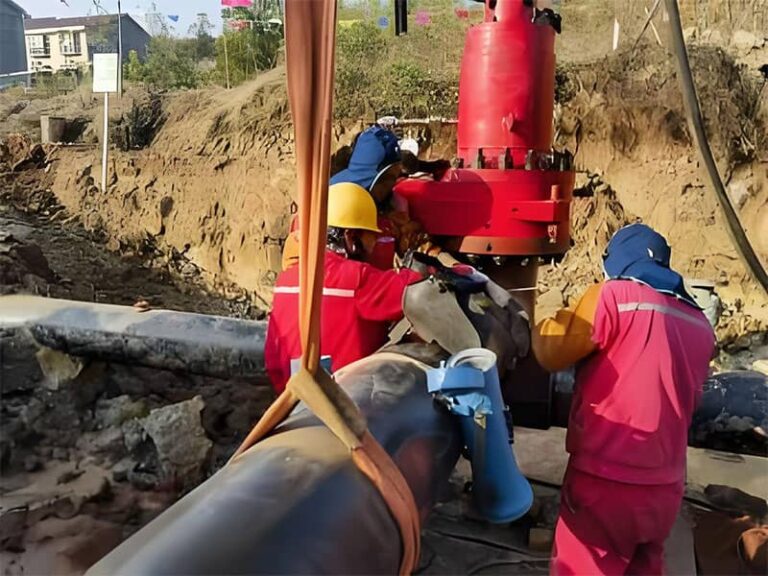
Hot tapping is necessary while a pipeline is in operation because it is the only method that allows for modifications, repairs, or expansions to a pressurized pipeline system without requiring a costly and disruptive full shutdown. This critical procedure enables continuous service delivery, significant cost savings, and the mitigation of major environmental and safety risks that would arise from depressurizing the line. This guide will explain the essential benefits of hot tapping, detail the standard operational process, outline the industry codes that govern its use, explore advanced applications like subsea tie-ins, and discuss the critical role of equipment and expertise in ensuring a successful project.
The Core Benefits of Hot Tapping: Beyond Avoiding Shutdown
While the primary reason for hot tapping is to avoid a complete system shutdown, the benefits are multifaceted and impact operational, financial, environmental, and safety domains.
- Ensures Operational Continuity and Customer Supply: For utilities and energy companies, shutting down a pipeline means interrupting service to end customers. Hot tapping allows work to proceed while the product—whether it’s oil, gas, air, or treated water—continues to flow uninterrupted. This is critical for maintaining supply contracts and public trust.
- Generates Major Cost Savings: A full pipeline shutdown involves massive costs: lost production revenue, expensive purging and repressurization procedures, and logistical hurdles. One industry analysis notes that the gas savings from avoiding a shutdown often alone justify the investment in a hot tap procedure.
- Minimizes Environmental Impact: Depressurizing a pipeline, especially one carrying natural gas or other hydrocarbons, typically involves venting the product into the atmosphere. Hot tapping eliminates the need for this, directly reducing fugitive methane emissions and greenhouse gas releases, which is a growing priority under global environmental standards.
- Enhances Site Safety: Contrary to intuition, a controlled hot tap can be safer than a full shutdown in many contexts. Shutdown and purging sequences introduce risks of asphyxiation, fire, and uncontrolled release during the repressurization phase. A properly executed hot tap, following strict protocols, confines the work to a tightly controlled, isolated section of the live line.
The Standard Hot Tapping Process: A Step-by-Step Breakdown
The hot tapping procedure is a carefully sequenced operation that ensures integrity and safety from start to finish. While each project is unique, it follows a common framework.
- Planning and Assessment: This is the most critical phase. Engineers evaluate the pipeline’s condition (material, wall thickness, pressure), the product being carried, and the site environment. A contractor must determine if the pipe is fit for in-service welding and plan for all contingencies.
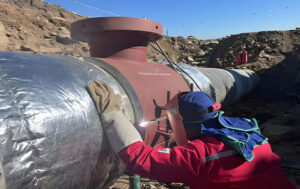
- Fitting Installation: A specialized fitting (like a split-tee) is attached to the pipeline. This is typically done via in-service welding, a complex process that requires managing heat input to prevent “burn-through” of the pressurized pipe wall.
- Valve and Machine Attachment: A temporary valve is bolted to the fitting, and the hot tapping machine is mounted onto the valve. This assembly is then pressure-tested to guarantee a leak-tight seal before any cutting begins.
- The Tap (Drilling): The machine’s rotating cutter, often powered by a hydraulic system, drills through the pipe wall. The cut section of pipe, called the “coupon,” is securely retained by the machine. The valve is then closed, and the machine is removed, leaving the new branch sealed and ready for connection.
- Post-Tap Operations: With the tap complete, the new branch can be used for its intended purpose. This could involve connecting a bypass line, installing a plug for isolation (a related process called stopple or line stopping), or simply adding a new connection for future use.
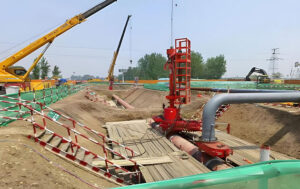
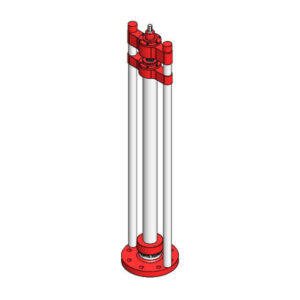
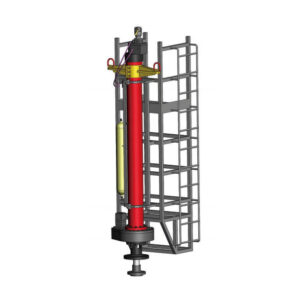
Figure 1: A simplified diagram of a standard hot tapping setup, showing the fitting welded to the live pipeline, the temporary valve, and the tapping machine with cutter extended.
Industry Standards and Safety Protocols (API Codes)
Hot tapping is not an ad-hoc field practice; it is governed by rigorous industry standards that provide a framework for safe execution. The cornerstone document is API RP 2201 (Safe Hot Tapping Practices). This standard mandates a thorough pre-job risk assessment, covering variables like operating pressure, fluid characteristics, and pipeline material condition.
Other key standards include:
- API 1104: Covers the design, fabrication, and testing of welding procedures used for in-service attachments.
- API 570 (Piping Inspection Code): Provides criteria for inspecting the pipeline prior to work to assess its fitness for the hot tap.
- API 581 (Risk-Based Inspection): Offers a methodology to integrate inspection data into a quantitative risk assessment for the intervention.
Adherence to these codes is non-negotiable for any reputable service provider and is a primary benchmark for selecting a contractor.
Advanced Applications: Subsea and Complex Tie-Ins
The principles of hot tapping are extended into some of the most challenging environments, demonstrating its indispensable value.
- Subsea Pipeline Tie-Ins: In offshore operations, shutting down a subsea production line can cost millions per day in lost revenue. Subsea hot tapping, using specialized remotely operated (ROV) clamp systems, allows new fields to be tied into existing networks without any production interruption. A notable project in the Norwegian Continental Shelf used an 8-inch mechanical hot tap clamp at 143 bar, eliminating the need for complex hyperbaric welding.
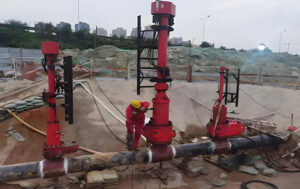
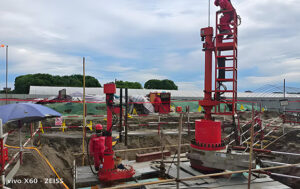
- Major Onshore Re-routing Projects: Large-scale modifications, such as re-routing a pipeline around new construction, rely on hot tapping. A project in Indonesia involved 12 precision hot taps on a 16-inch high-pressure gas line to install a permanent bypass, allowing the pipeline to be diverted without a single minute of supply disruption to customers.
Table: Comparison of Hot Tapping Applications Across Environments
| Environment | Key Challenge | Hot Tapping Solution | Primary Benefit |
|---|---|---|---|
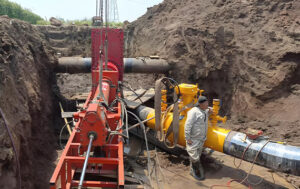
| Onshore Utility (Water/Gas) | Maintaining public supply | Mains and service drilling with compact machines | Zero customer interruption, smaller excavation sites |
| Onshore Transmission (Oil/Gas) | Avoiding massive revenue loss | Large-diameter tapping with isolation plugs | Continuous product flow, no venting of inventory |
| Subsea Offshore | Prohibitive cost of shutdown | ROV-deployed mechanical tap clamps | Tie-ins and repairs with production online |
Critical Success Factors: Equipment, Expertise, and Risk Management
The success of a hot tap hinges on three pillars: superior equipment, seasoned expertise, and meticulous planning.
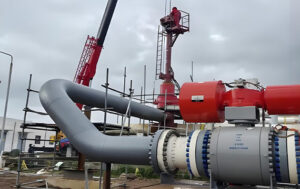
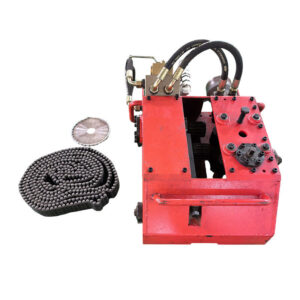
- Specialized Equipment: The heart of the operation is the tapping machine. Manufacturers like TDW offer dozens of configurations for pipelines from half-inch to over 100 inches in diameter, made from materials suited to the product and pressure. Key advancements include remote operation and real-time data monitoring, which enhance safety by allowing technicians to work from a distance
- Qualified Personnel and Planning: As noted in industry literature, “each hot tap is unique”. Competent technicians must monitor pressure variations during cutting, a skill born of experience. A formal Risk-Based Inspection (RBI) assessment, as guided by API 581, is often used to evaluate the probability and consequences of failure before work begins.
- Understanding Material and Product Risks: Certain pipeline products pose unique challenges. For example, hydrogen has a lower ignition point and can cause metal embrittlement, requiring specialized welding procedures and equipment. These factors must be addressed in the planning stage.
FAQ: Common Questions About Hot Tapping
Q: Is hot tapping safe on an old pipeline?
A: Safety is not a function of age alone but of current condition. A rigorous pre-tap inspection per API 570 is mandatory to measure remaining wall thickness and identify defects like corrosion. The pipeline must be deemed “fit-for-service” before any work proceeds.
Q: What’s the difference between hot tapping and line stopping?
A: Hot tapping is the process of creating a new connection on a live line. Line stopping (or stoppling) is a subsequent procedure that uses that connection to insert a plugging head into the pipeline, temporarily isolating a downstream section for maintenance or modification without shutting off the upstream flow.
Q: Can hot tapping be used for all types of pipelines?
A: While highly versatile, feasibility depends on pipe material, wall thickness, product, and pressure. Reputable equipment manufacturers design solutions for steel, polyethylene (PE), and other materials across a vast size range. A professional engineering assessment is always required.
Author: David Chen, Senior Pipeline Integrity Engineer
Updated: February 1, 2026
About Our Expertise at JSW Pipeline Solutions: At JSW, we combine decades of field experience with a fleet of advanced, remotely operable hot tapping and pipeline plugging systems. Our engineers don’t just follow API 2201—we help clients implement the integrated risk assessment approach of API 570 and 581 for unparalleled project safety and reliability. For a technical consultation on your next pipeline modification, maintenance, or trenchless pipe rehabilitation project, contact our engineering team today.








 English
  Arabic
  Russian
  Spanish
  French