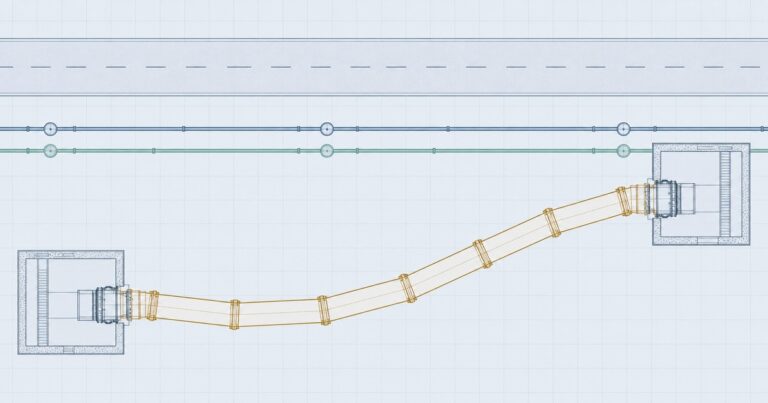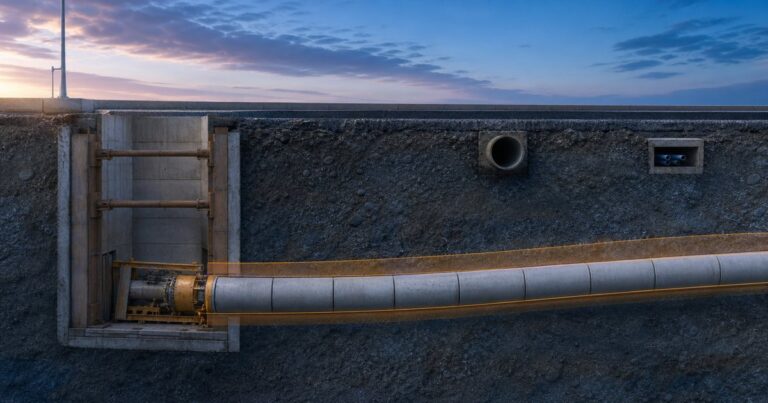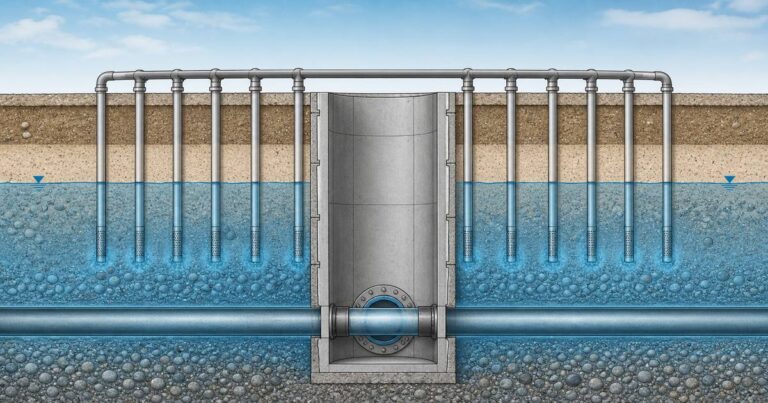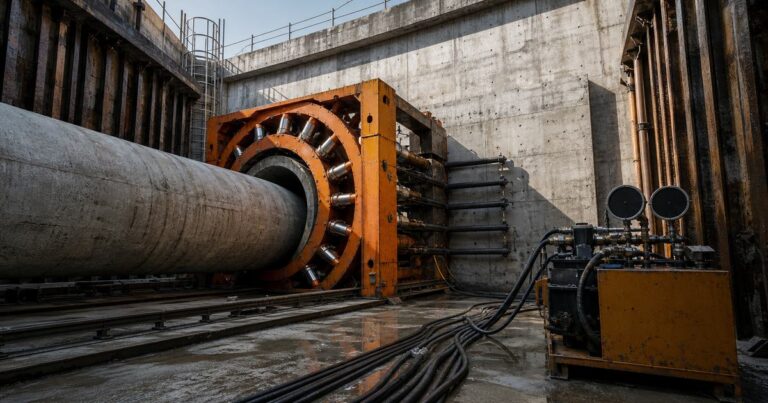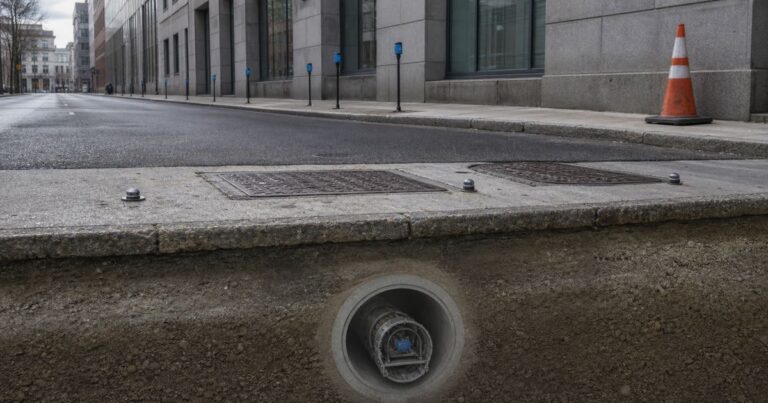
Microtunneling launch shaft with dewatering wells and a sealed entry eye below the water table

Groundwater Control for Microtunneling Shafts and Drives

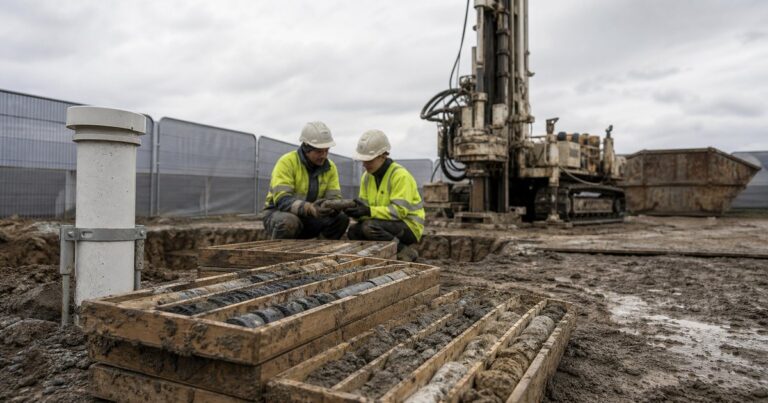
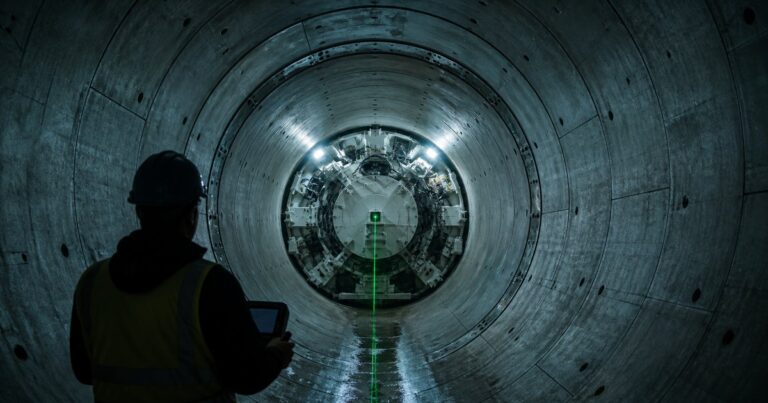
Microtunneling groundwater control is the package of measures that keeps water out of launch and receiving shafts and holds the face and annulus stable while a remotely controlled machine advances below the water table. It combines shaft dewatering or cut-off, entry and exit seals, a balanced support medium at the

Leer Más »
Engineering infographic comparing pulling-distance concepts for HDD, pipe bursting, E-Power Pipe, and pull-in-place lining in underground pipelines

Maximum Distance a Pipe Can Be Pulled Using Trenchless Methods: HDD Pull Length, Pipe Bursting & Lining Limits

The maximum distance a pipe can be pulled using trenchless methods ranges from approximately 50 meters to more than 3,000 meters, depending on the installation technology, pipe characteristics, ground conditions, and equipment limitations. For new pipeline construction, Horizontal Directional Drilling (HDD) typically achieves 200–800 meters per pull. For pipeline rehabilitation, specialized

Leer Más »
Engineering cutaway illustration comparing CIPP resin liners, spray-applied polyurea, HDPE sliplining, and UHPC structural lining segments in underground sewer pipes.

Los mejores materiales para la rehabilitación de tuberías sin zanja: comparación entre CIPP, poliurea y HDPE

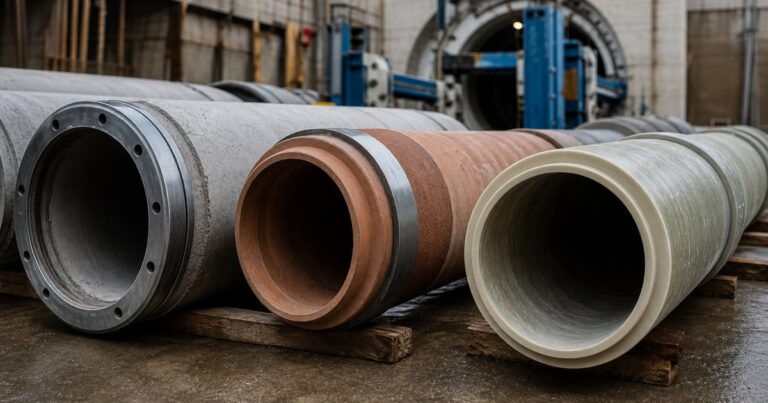
Best Materials for Trenchless Pipe Rehabilitation The most widely used and effective materials for trenchless pipe rehabilitation are thermosetting resin systems—specifically epoxy, polyester, and vinyl ester—combined with reinforcement fabrics such as fiberglass or polyester felt. For most municipal sewer rehabilitation projects, polyester CIPP offers the best cost-to-performance balance, while epoxy CIPP is preferred for pipes

Leer Más »