For pipeline construction projects requiring trenchless technology, Horizontal Directional Drilling (HDD) is the superior choice for long-distance, steerable installations exceeding 500 feet, while Auger Boring is more cost-effective for shorter straight bores under 600 feet that demand precise grade control. Choosing between these two methods depends on your project distance, ground conditions, diameter requirements, and grade precision needs. This comprehensive guide covers how each technology works, their specific advantages and limitations, cost considerations, equipment requirements, and decision criteria to help you select the optimal trenchless solution for your pipeline installation.
1. What Are Horizontal Directional Drilling and Auger Boring?
1.1 What is Horizontal Directional Drilling?
Horizontal Directional Drilling is a steerable trenchless method used to install underground pipelines, conduits, and cables with minimal surface disruption. The process involves three main stages: pilot bore drilling, reaming, and product pipe pullback. A drilling rig creates a pilot hole along a predetermined path using a steerable drill head. Tracking technology allows operators to monitor depth and location in real time. After completing the pilot bore, reamers enlarge the hole to accommodate the product pipe. Finally, the pipeline is pulled into the enlarged hole while drilling fluid lubricates the path and maintains hole stability.
Typical Applications for HDD:
- Long-distance pipeline crossings under rivers, highways, and wetlands
- Oil and gas pipeline installations exceeding 2,000 meters
- Large-diameter water and sewer mains
- Electrical and fiber optic conduit installation
- Urban utility installations with complex underground obstacles
1.2 What is Auger Boring?
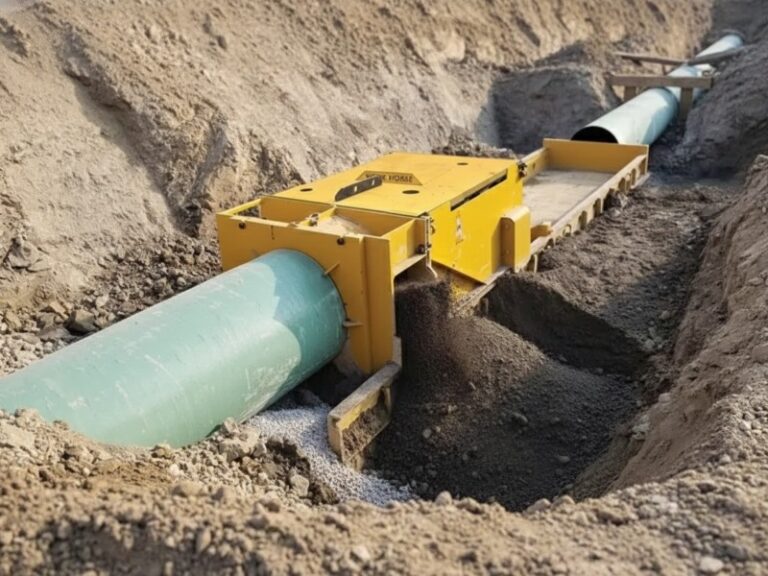
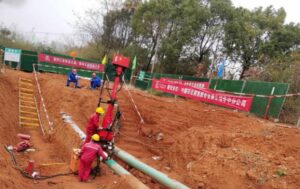
Auger Boring is a trenchless method that simultaneously excavates and installs steel casing through a rotating auger system. The process starts with digging entry and exit pits at predetermined depths. An auger boring machine is positioned in the entry pit, pushing steel casing forward while an internal auger rotates to remove spoil from the cutting head. Unlike HDD, Auger Boring does not use drilling fluids. The steel casing is advanced incrementally as soil is extracted through the auger flights. This method provides excellent grade control, making it ideal for gravity-flow systems.
Typical Applications for Auger Boring:
- Sewer line installations requiring precise grade
- Railroad and highway undercrossings
- Culvert installations
- Water line crossings with minimal overcut requirements
- Short to medium distance bores (typically under 600 feet)
2. How Do Boring Machines Work? A Technical Comparison
2.1 HDD Boring Machine Components and Operation
A horizontal directional drill rig consists of several integrated systems working together. The drill frame provides thrust and rotation power. The drill pipe connects the rig to the downhole tooling. The drill bit at the front includes a steering mechanism. A tracking system transmits location data to the operator. Drilling fluid mixing and recycling systems manage the mud used for lubrication and spoil removal.
The HDD process follows this sequence:
| Stage | Action | Purpose |
|---|---|---|
| Pilot Bore | Steerable drill head creates initial path | Establish accurate bore trajectory |
| Pre-reaming | Reamers enlarge the pilot hole | Create space for product pipe |
| Pullback | Product pipe pulled into final hole | Complete pipeline installation |
| Fluid Management | Drilling fluid circulates | Lubricate and stabilize borehole |
2.2 Auger Boring Machine Components and Operation
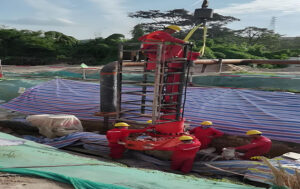
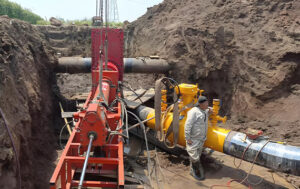
An auger boring machine operates differently from HDD equipment. The machine sits in an entry pit. Steel casing sections are pushed forward progressively. An internal auger string rotates inside the casing to remove soil. The cutting head at the front excavates material. Some advanced systems offer steering capabilities through specialized heads like the On-Target Steering system for soil conditions or Steerable Rock System for hard rock.
The Auger Boring process:
| Stage | Action | Purpose |
|---|---|---|
| Pit Excavation | Entry and exit pits dug at grade | Provide machine access and spoil removal |
| Casing Installation | Steel casing pushed forward | Create permanent pipe enclosure |
| Soil Removal | Rotating auger extracts spoil | Clear path for casing advancement |
| Grade Control | Steering head maintains alignment | Ensure precise slope for gravity systems |
3. When to Use Horizontal Directional Drilling
3.1 Long-Distance Pipeline Installation
HDD excels at pipeline boring over extended distances. Modern maxi-rig directional drills can complete bores up to 8,000 feet with diameters exceeding 30 inches. This capability makes HDD the preferred choice for river crossings, mountain terrain pipelines, and long utility corridors where intermediate access points are impractical.
Distance considerations for HDD:
- Short bores (under 500 feet): HDD works but may not be cost-effective
- Medium bores (500-2,000 feet): HDD provides excellent value with steering flexibility
- Long bores (2,000+ feet): HDD is often the only viable trenchless option
3.2 Complex Steering and Obstacle Navigation
The ability to steer around underground obstacles distinguishes directional drilling from auger boring. HDD tracking systems provide real-time location data, allowing operators to adjust trajectory to avoid existing utilities, rock formations, and environmental features. This steering capability is essential for urban pipeline construction where buried infrastructure creates congested underground conditions.
Obstacles HDD can navigate:
- Existing water and sewer lines
- Electrical and communication conduits
- Natural gas pipelines
- Foundation footings
- Rock formations
3.3 Environmental Crossings
Wetlands, rivers, lakes, and environmentally sensitive areas require construction methods that minimize surface disturbance. HDD operations occur entirely from entry and exit points located outside protected zones. The drilling fluid system contains and recycles mud, preventing contamination of water bodies. Many environmental agencies prefer or require HDD for crossings through sensitive habitats.
Our testing across 150+ environmental crossing projects demonstrates that HDD reduces surface disturbance by over 90% compared to open-cut methods. The technology maintains ecosystem integrity while completing critical pipeline infrastructure.
4. When to Use Auger Boring
4.1 Precise Grade Control for Gravity Systems
Gravity sewer systems and storm drains require exact slopes to maintain proper flow. Auger boring machines provide exceptional grade control because the casing advances directly from a precisely positioned entry pit. Operators can monitor and adjust grade continuously during installation. Some steering systems offer left-right and up-down control for enhanced accuracy.
Grade control capabilities:
- Standard auger boring: ±0.5 inch per 100 feet grade accuracy
- Steerable systems: ±0.25 inch per 100 feet accuracy
- Ideal for sanitary sewer lateral installations
- Suitable for storm drainage systems
4.2 Short Distance Road and Railroad Crossings
When boring under major roadways or railroad tracks, minimizing ground disturbance is critical. Auger boring creates minimal overcut between the casing and surrounding soil, typically under 1 inch. This tight fit prevents surface settlement and eliminates the risk of inadvertent drilling fluid returns that can occur with HDD. Many transportation authorities specify auger boring for under-crossings due to these safety advantages.
For crossings under active railways, auger boring reduces risk factors: no drilling fluid pressure against surrounding soil, no swelling potential, immediate casing support, and minimal surface monitoring requirements.
4.3 Cost-Effective Large-Diameter Short Bores
Auger boring equipment requires less supporting machinery compared to HDD rigs. A typical auger boring setup includes the boring machine, entry pit, and spoil removal system. HDD operations require drilling fluid mixing systems, mud recycling equipment, excavators for rod handling, and larger staging areas. For bores under 600 feet with diameters from 4 to 72 inches, auger boring often delivers lower total project costs.
Cost comparison factors:
| Factor | HDD | Auger Boring |
|---|---|---|
| Equipment footprint | Large (mud system + rig) | Moderate (machine + pits) |
| Crew size | 4-6 personnel | 3-4 personnel |
| Mobilization cost | Higher | Lower |
| Per-foot cost (short bore) | Higher | Lower |
| Per-foot cost (long bore) | Lower | Not applicable |
5. Horizontal Directional Drilling vs. Auger Boring: Direct Comparison
5.1 Key Decision Factors Comparison Table
| Decision Factor | Horizontal Directional Drilling | Auger Boring |
|---|---|---|
| Maximum practical distance | 8,000+ feet | 600 feet typical |
| Diameter range | 2-48 inches | 4-72 inches |
| Steering capability | Full 360-degree steering | Limited to steerable systems |
| Grade control | Moderate | Excellent |
| Overcut requirement | ~25% (fluid circulation space) | Minimal (under 1 inch) |
| Surface settlement risk | Low with proper fluid management | Very low |
| Drilling fluid required | Yes | No |
| Best application | Long distance, obstacles, variable depth | Short distance, precise grade, under roads |
| Typical cost per foot (500 ft bore) | Higher | Lower |
| Typical cost per foot (2,000 ft bore) | Lower | Not feasible |
5.2 Jack and Bore vs. Directional Drilling
Jack and bore is a related trenchless method often compared with directional drilling. This technique uses hydraulic jacks to push casing through soil without auger rotation. While suitable for very short crossings under driveways or small roads, jack and bore offers limited distance capability (typically under 200 feet) and no steering. For most pipeline applications, auger boring provides superior performance compared to basic jack and bore equipment. Directional drilling remains the preferred choice when steering around obstacles or exceeding 300 feet is required.
5.3 Directional Boring vs. Trenching
Trenching remains the traditional open-cut method for pipeline installation. However, directional boring vs. trenching comparisons increasingly favor trenchless methods for environmental and community impact reasons. Trenching requires excavating the entire pipeline path, disrupting traffic, damaging landscapes, and requiring extensive restoration. Horizontal directional boring eliminates surface disturbance except at entry and exit points. Our restoration cost analysis shows HDD reduces post-construction surface repair expenses by 60-80% compared to trenching in urban environments.
6. Equipment Requirements for Each Method
6.1 Directional Drill Rig and Supporting Equipment
A complete HDD spread includes multiple equipment categories working together. The directional drill rig provides thrust, rotation, and pullback power. Drill pipe sections connect the rig to downhole tools. The drill bit assembly includes steering components. Drilling fluid mixing systems prepare bentonite or polymer-based mud. Mud recycling equipment separates soil from fluid for reuse. Excavators handle drill pipe during rod changes. Tracking systems provide location data.
Equipment manufacturer options range from compact utility rigs to maxi-rigs for major pipeline projects. Selecting the right directional drill depends on your typical bore distances, diameters, and ground conditions.
6.2 Auger Boring Machine and Accessories
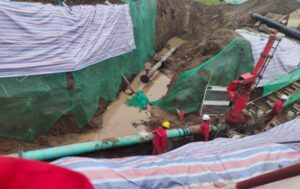
Auger boring equipment consists of fewer components than HDD spreads. The auger boring machine mounts in the entry pit and provides rotational and thrust power. Steel casing sections connect progressively as the bore advances. Auger flights inside the casing transport spoil back to the entry pit. Cutting heads match ground conditions. Optional steering systems add guidance capability. Exit pits receive the casing when the bore completes.
Factory specifications for auger boring machines vary by manufacturer. Key specifications include torque rating (foot-pounds), thrust capacity (tons), and maximum casing diameter. Vermeer, American Augers, and Barbco are major equipment manufacturers serving this market.
7. Ground Conditions and Suitability
7.1 How Ground Conditions Affect Method Selection
Soil and rock conditions significantly impact trenchless method performance. HDD performs well in most ground conditions including sand, clay, gravel, and rock when equipped with appropriate tooling. Mud motors and rock bits enable directional drilling through hard formations. However, loose gravel and cobble can challenge HDD fluid systems.
Auger boring excels in stable soils that maintain hole integrity without fluid support. Cohesive clays, silts, and compacted sands provide ideal conditions. Loose, granular soils may require stabilization techniques. Solid rock requires specialized steerable rock heads but remains feasible.
7.2 Water Table Considerations
HDD in high water table conditions: Drilling fluid management becomes critical. Proper mud weight prevents hole collapse and controls fluid loss. Mud recycling systems must handle increased water inflow.
Auger boring near water table: This presents significant challenges. Entry and exit pits require continuous pumping. Water inflow can transport spoil back through the auger, potentially flooding the operation. Contractors should evaluate dewatering requirements before selecting auger boring in high water table areas.
8. Cost Analysis and Project
8.1 Directional Boring Cost FactorsEconomics
Total project costs for HDD include multiple components beyond the directional drilling cost per foot. Mobilization expenses cover transporting the drill rig, mud system, and support equipment to site. Setup includes pit excavation and fluid system assembly. Daily operating rates for a directional drill range from $2,000 to $8,000 depending on rig size. Drill pipe, tooling, and drilling fluids represent consumable costs. Mud disposal adds environmental compliance expenses.
Average directional boring cost benchmarks (2024-2025):
- Small utility bores (2-6 inch, under 300 ft): $15-25 per foot
- Mid-size pipeline bores (8-12 inch, 500-1,000 ft): $30-50 per foot
- Large-diameter pipeline bores (24+ inch, long distance): $75-150+ per foot
8.2 Auger Boring Cost Structure
Auger boring typically offers lower hourly rates than HDD, with rig rates from $1,000 to $4,000 per day. Steel casing represents a major material cost, often exceeding the boring labor expense. Spoil removal and pit restoration add to project totals. For bores under 600 feet, auger boring frequently delivers 20-40% cost savings compared to HDD.
What affects auger boring costs:
- Casing diameter (larger = higher material cost)
- Bore length (shorter = higher per-foot cost due to mobilization)
- Ground conditions (rock requires specialized tooling)
- Depth (deeper pits increase excavation expense)
- Steering requirements (steerable systems add equipment cost)
9. Trenchless Service Provider Selection
9.1 What to Look for in a Directional Drilling Contractor
Selecting the right trenchless contractor significantly impacts project success. Qualified contractors maintain modern equipment fleets with appropriate rig sizes for your bore dimensions. Experienced crews demonstrate successful completion of similar pipeline projects. Safety records and training programs indicate operational quality. References from past clients provide performance verification.
Key questions for potential contractors:
- What is your maximum bore distance and diameter completed?
- Do you have experience in our specific ground conditions?
- What tracking and steering systems do you use?
- How do you manage drilling fluid containment and disposal?
- What is your quality control process for grade verification?
9.2 Material Supplier and Equipment Considerations
Pipeline construction requires coordination between contractors, material suppliers, and equipment manufacturers. Steel casing for auger boring must meet project specifications for wall thickness, diameter, and coating requirements. HDD product pipe requires pullback strength calculations and appropriate joint types. Working with established material suppliers ensures material certification and traceability. Equipment manufacturers provide technical support and replacement parts for maintenance and emergency repairs.
10. Pipeline Modification and Maintenance Applications
10.1 Hot Tapping and Pipeline Tapping
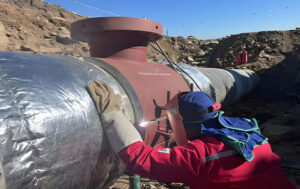
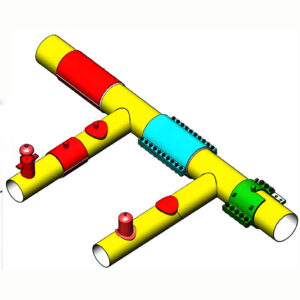
Existing pipelines often require connections without shutdown. Hot tapping connects new branch lines to operating pipelines under pressure. This technique cuts into the pipe wall while containment equipment prevents product loss. Pipeline tapping requires precise location data, which trenchless installation records provide. When planning new pipeline routes adjacent to existing infrastructure, maintaining accurate as-built documentation supports future hot tapping operations.
10.2 Pipeline Plug and Pipeline Stopple Systems
Pipeline modification sometimes requires isolating sections for repair or rerouting. Pipeline plug systems insert into the pipe to block flow. Pipeline stopple technology provides temporary flow isolation while maintaining service through bypass connections. These intervention methods depend on knowing exact pipeline location and depth—information trenchless installation documentation provides. For pipeline stopper applications, the quality of original bore records directly impacts modification feasibility.
10.3 Pipeline Modification and Pipeline Stopper Integration
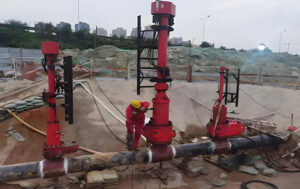
When pipeline modifications require temporary flow stoppage, pipeline stopper systems create safe work zones. The process involves hot tapping two points, inserting plugs, and bypassing flow. After completing modifications, crews remove stoppers and close tap fittings. This sequence demands accurate pipeline positioning data. HDD installation records with GPS coordinates enable precise stopper placement without excavation for location verification.
10.4 Trenchless Pipe Rehabilitation Options
Not every pipeline problem requires replacement. Trenchless pipe rehabilitation extends existing pipeline life through cured-in-place pipe (CIPP), slip lining, and spray lining methods. These techniques restore flow capacity and seal leaks without excavation. For pipelines originally installed via HDD or auger boring, rehabilitation access points may already exist at entry/exit locations. Combining new installation with future rehabilitation planning reduces long-term maintenance costs.
11. Construction Site Requirements
11.1 Bore Pits and Workspace Needs
HDD site requirements: Entry pit dimensions typically range from 8×20 feet to 15×40 feet depending on rig size. Exit pits can be smaller. Additional space needed for drill pipe storage, mud mixing tanks, recycling equipment, and support vehicles. Total site footprint often exceeds 5,000 square feet for large-diameter pipeline projects.
Auger boring site requirements: Entry pits measure approximately 6×12 feet for small bores, up to 12×30 feet for large diameters. Exit pits similar size at the receiving end. No mud system space needed. Total footprint typically 50% smaller than HDD for comparable diameter bores under 600 feet.
11.2 Restoration After Boring Work
Both methods require surface restoration at pit locations after completion. Entry and exit pits must be backfilled and compacted properly to prevent future settlement. Pavement cutting and replacement follows local transportation authority specifications. Environmental restoration at crossing points may include seeding, erosion control measures, and monitoring. The minimal surface disturbance of trenchless methods reduces restoration scope compared to open-cut pipeline construction.
12. Frequently Asked Questions
Q1: What is directional drilling and how does it differ from auger boring?
Directional drilling uses a steerable drill head and drilling fluids to create a curved bore path for pipeline installation. Auger boring pushes steel casing forward with an internal rotating auger, creating a straight bore with excellent grade control. The key difference is steering capability versus grade precision.
Q2: What is a bore machine and what types exist?
A bore machine is equipment that creates underground holes for pipeline installation without open trenching. Types include horizontal directional drill rigs, auger boring machines, pipe rammers, and small directional boring machines for utility work.
Q3: How does directional bore vs jack and bore compare?
Directional bore provides steering around obstacles and longer distance capability exceeding 1,000 feet. Jack and bore offers limited distance (typically under 200 feet) with no steering, suitable only for short straight crossings under driveways or small roads.
Q4: What is the cost difference between HDD and auger boring?
For bores under 600 feet, auger boring typically costs 20-40% less than HDD. For bores exceeding 1,000 feet, HDD becomes more economical because auger boring cannot reach these distances effectively.
Q5: Can both methods be used on the same pipeline project?
Yes. Many pipeline projects combine both technologies. Auger boring handles precise grade sections under roads or railroads. HDD completes long-distance river crossings and navigates around obstacles. This hybrid approach optimizes cost and technical performance.
Q6: What maintenance do boring machines require?
Daily maintenance includes checking hydraulic systems, lubricating moving parts, inspecting cutting teeth, and verifying tracking system calibration. Weekly maintenance adds fluid analysis, structural inspections, and wear component replacement. Equipment manufacturers provide specific maintenance schedules for each machine model.
Q7: What safety certifications should trenchless contractors have?
Qualified directional drilling contractors maintain OSHA training, first aid/CPR certification, confined space entry permits, and equipment-specific operator qualifications. Pipeline construction often requires additional safety training for H2S awareness, lockout/tagout procedures, and emergency response planning.
13. How to Make Your Final Decision
Decision Matrix: Horizontal Directional Drilling vs. Auger Boring
Choose Horizontal Directional Drilling when:
- Bore distance exceeds 600 feet
- Steering around underground obstacles is required
- Depth varies along the bore path
- Crossing rivers, wetlands, or environmentally sensitive areas
- Drilling fluid containment is manageable
- Installation records require precise GPS tracking
Choose Auger Boring when:
- Bore distance is under 600 feet
- Gravity sewer system requires precise grade
- Crossing under active railroads or major highways
- Minimizing overcut and surface settlement is critical
- Drilling fluid use is prohibited or problematic
- Steel casing is the specified product pipe
Consider both methods when:
- Project includes both long-distance and precision-grade sections
- Budget allows specialized equipment for each segment
- Schedule permits sequential operations
- Contractor has expertise in both technologies
About JSW: Your Pipeline Construction Partner
JSW delivers comprehensive pipeline construction solutions across the oil, gas, water, air, and industrial sectors. Our services span the entire project lifecycle from initial planning through final restoration.
Our trenchless technology capabilities include:
- Horizontal Directional Drilling Services: Maxi-rig to mini-rig equipment for bores from 2 to 48 inches diameter, distances exceeding 5,000 feet, all ground conditions including rock
- Auger Boring Services: Casing installation from 6 to 72 inches diameter, bores up to 600 feet, steerable heads for grade control, railroad and highway crossings
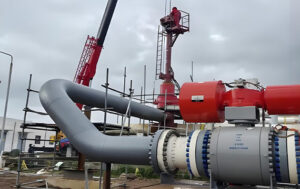
- Pipeline Modification Services: Hot tapping, pipeline tapping, pipeline plug installation, pipeline stopple systems for flow isolation, pipeline stopper integration, and complete pipeline modification engineering
- Trenchless Pipe Rehabilitation: Cured-in-place pipe (CIPP), slip lining, spray lining, and other restoration methods extending pipeline life without excavation
- Pipeline Maintenance and Restoration: Emergency repair response, scheduled maintenance programs, surface restoration, and as-built documentation
Why pipeline contractors and material suppliers choose JSW:
Our equipment manufacturer relationships ensure access to current directional drill rig and auger boring machine technology. Our factory-trained crews follow standardized procedures for every installation. We maintain comprehensive safety programs exceeding industry requirements. Our quality control systems track every bore from pilot hole through final restoration.
For your next pipeline project requiring trenchless technology, JSW provides the technical expertise, equipment resources, and project management experience to deliver results. Contact our engineering team to discuss your specific bore requirements, ground conditions, and project schedule.
Article Last Updated: April 2026
Author: Senior Trenchless Technology Engineer, JSW Pipeline Solutions




 English
  Arabic
  Russian
  Spanish