Ultrasonic testing identifies the need for immediate pipe repair by precisely measuring the remaining wall thickness and detecting localized corrosion, pitting, or cracks that have reduced the pipe’s structural integrity below safe operating thresholds. This non-destructive method works by propagating high-frequency sound waves through the pipe wall and analyzing the reflected signals to calculate thickness, with any reading below the minimum required wall thickness triggering an urgent repair protocol.
1. What Is Ultrasonic Thickness Testing and How Does It Work for Pipes?
Understanding the Basic Principle
Ultrasonic Thickness Testing (UTT) operates on a simple yet highly accurate physical principle. A handheld probe, called a transducer, sends a high-frequency sound pulse through the pipe wall. This pulse travels to the far side of the material, reflects off the back wall, and returns to the transducer. The precision instrument measures the time taken for this round trip. Using the known speed of sound in the specific pipe material (e.g., steel, plastic), the device calculates the thickness using the formula:
d = Vt/2
Where d is the thickness, V is the velocity of sound in the material, and t is the measured round-trip transit time. Modern digital gages can achieve calibrated accuracies as high as ±2 micrometers in controlled settings, making them exceptionally reliable for critical assessments.
Types of Ultrasonic Transducers Used
Selecting the correct equipment is vital for accurate data. There are two primary types of transducers used in pipeline inspection:
- Dual Element Transducers: Specifically designed for corrosion surveys. They feature separate transmitting and receiving elements, making them highly sensitive to pitting and localized thinning on rough, corroded internal surfaces. These are the standard tools for identifying the need for immediate repair.
- Single Element Transducers: Used for precision gaging on smoother surfaces. They offer higher accuracy but are less effective on severely corroded pipes where the back wall echo might be distorted.
2. Key Measurements That Trigger an Immediate Repair Decision
Wall Loss Percentage and Minimum Required Thickness
The primary trigger for immediate repair is the comparison of the measured remaining thickness against the Minimum Required Wall Thickness. This value is derived from engineering calculations (such as ASME B31G or API 579 Fitness for Service) that consider the pipe’s original design specifications, operating pressure, temperature, and material properties.
An ultrasonic survey reveals the actual remaining thickness. If readings show that the wall thickness has fallen below this critical minimum, the pipe is no longer fit for service. For instance, if a pipe designed to operate at 800 PSIG shows a wall loss of 80% in a localized area, it constitutes an immediate threat requiring urgent maintenance or Restoration.
Detecting Localized Pitting and Severe Corrosion
General uniform thinning is predictable, but localized pitting is dangerous and hard to detect. Ultrasonic corrosion gages are optimized to find these small, deep pits that can lead to pinhole leaks or sudden ruptures.
- Detection Threshold: Advanced Long-Range Ultrasonic Testing (LRUT) can detect metal loss as small as 3% of the pipe wall cross-section.
- Reporting Threshold: To ensure accuracy and avoid false calls, a reporting level of 9% cross-sectional area loss is often used. Any indication at or above this level is considered a confirmed defect. For example, in a buried water injection line at an oil processing facility, LRUT identified a defect so severe that upon excavation, the line was found to be heavily corroded and required immediate repairs—a defect that would have otherwise led to a catastrophic failure.
3. How Data Analysis Determines the Urgency: A Step-by-Step Process
The process from data collection to the decision to call a contractor follows a strict protocol:
- Initial Screening: A technician performs scans at designated Corrosion Monitoring Locations (CMLs) using a dual-element transducer.
- Data Recording: The gage records the thickness reading. Modern dataloggers store thousands of readings with location codes for later analysis.
- Comparison with Standards: The data is compared to the calculated Minimum Required Thickness. The remaining life of the asset is assessed.
- Urgency Classification:
- Acceptable: Thickness above minimum. Schedule next routine inspection.
- Monitor: Thickness approaching minimum. Increase inspection frequency.
- Immediate Repair: Thickness below minimum. The asset is unfit for service. Immediate action is required.
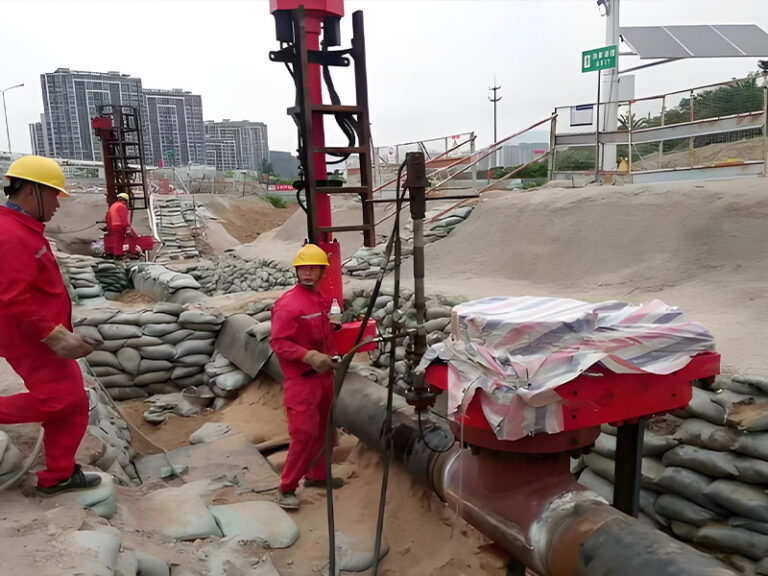
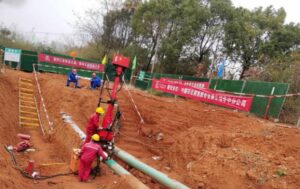
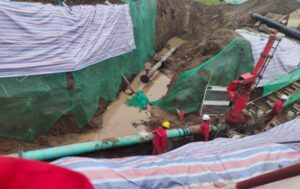
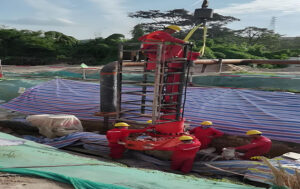
- Action: A work order is issued for hot tapping, pipeline plug, or pipeline stopple services to isolate the section, or for a full pipeline modification or replacement by a specialized contractor.
4. Ultrasonic Testing Techniques: From Spot Checks to Comprehensive Scans
Different levels of ultrasonic testing provide varying degrees of data, each critical for different stages of integrity management.
Short-Range UT for Localized Assessment
- Application: Used for spot readings on pipes, often in areas prone to corrosion like supports or soil-to-air interfaces.
- Range: Effective for wall thicknesses up to 13mm, with penetration up to 1400mm possible using specialized automated scanners.
- Why it’s used: It provides highly accurate, quantifiable data at specific, accessible points.
Long-Range Ultrasonic Testing (LRUT) for Screening
LRUT is a powerful screening tool that uses low-frequency guided waves to inspect hundreds of meters of pipe from a single point.
- Coverage: Up to 350 meters of pipework can be screened from one test location, including areas under insulation, at clamps, and even buried sections.
- Target: It identifies areas of general metal loss and corrosion. It is exceptionally useful for detecting Corrosion Under Insulation (CUI), a leading cause of pipe failure in the petrochemical and construction industries.
- Result: While LRUT identifies the location of a potential defect, it is often followed by short-range UT to precisely size the flaw for a Fitness for Service assessment.
| Feature | Short-Range UT (SRUT) | Long-Range UT (LRUT) |
|---|---|---|
| Primary Use | Precise, localized thickness measurement | Rapid screening of long pipe sections |
| Inspection Range | Single point (area under the probe) | Up to 350 meters from a single point |
| Wave Frequency | High frequency (0.5 – 10 MHz) | Low frequency (guided waves) |
| Data Output | Exact wall thickness reading | Location of potential defects (e.g., at 13m) |
| Best For | Confirming wall thickness at CMLs, sizing pits | Finding CUI, inspecting buried/insulated pipes |
5. Common Scenarios Requiring Immediate Action After Ultrasonic Testing
Ultrasonic testing often reveals problems in specific, high-risk scenarios. When UT data confirms these issues, the need for a specialized solution or service is urgent.
- Corrosion Under Insulation (CUI): LRUT surveys on insulated lines frequently detect CUI. If the A-scan output shows a peak amplitude well above the reporting level (like the 9% threshold), excavation and repair are needed immediately.
- High-Temperature Naphthenic Acid Corrosion: In oil refineries processing high-acid crude oils, pipes operating between 150°C and 400°C are at risk. UT monitoring is essential to profile the non-uniform corrosion and pitting; finding a localized minimum thickness point below the safe limit demands an immediate shutdown or online repair.
- Erosion in Pipelines: In pipes carrying slurries, sand, or high-velocity air or water, internal erosion can rapidly accelerate wall loss. Sequential UT readings showing a steep decline in wall thickness over a short period (high corrosion rate) indicate an imminent failure risk.
6. Standards, Compliance, and the Role of Qualified Contractors
The decision to repair is never arbitrary; it is governed by strict industry standards. Adherence to these standards demonstrates an unwavering commitment to safety and compliance.
- API 574: Inspection Practices for Piping System Components. This provides the framework for inspection frequency and data evaluation.
- API 579 / ASME FFS-1: Fitness for Service standards. These provide the engineering calculations to determine if a pipe with a given flaw can continue to operate safely or must be repaired.
- ASME B31G: Manual for determining the remaining strength of corroded pipelines.
When UT data indicates a pipe is below these standards, a certified Material Suppier may provide the replacement spool, but the actual work requires a qualified contractor. The replair might involve:
- Pipeline Tapping and Stopple: Isolating a section for repair without shutting down the entire plant.
- Trenchless Pipe Rehabilitation: For buried lines, this avoids costly excavation.
- Pipeline Modification: Rerouting or replacing a compromised section.
7. Limitations of Ultrasonic Testing in Repair Decisions
While indispensable, UT has limitations that must be acknowledged for a credible assessment. A reputable equipment manufacturer or company will always highlight these factors.
- Surface Condition: Rough, scaled, or pitted surfaces can cause inaccurate readings due to couplant layer variations and echo distortion.
- Temperature Extremes: Measuring pipes at very high temperatures requires specialized high-temperature transducers and delay lines to protect the equipment and ensure accuracy.
- Material Attenuation: Materials that scatter sound waves (like some cast irons or composites) can limit penetration and make readings difficult.
- Accessibility: Conventional UT requires direct contact with the pipe surface. For inaccessible areas, LRUT or alternative methods like Pulsed Eddy Current may be needed as a screening tool.
Article Author: Senior Inspection Engineer
Updated: October 26, 2023
JSW Brand: Industry Leadership and Product Advantages
At JSW, we understand that the data from an ultrasonic inspection is only as valuable as the action it drives. When your inspection reveals critical wall loss, you need a partner capable of delivering a safe, rapid, and compliant solution. With decades of experience serving the oil, gas, water, and petrochemical sectors, we are not just an equipment manufacturer; we are a full-service integrity company.
Our team of certified engineers and contractor networks specializes in translating NDT findings into effective repair strategies. Whether your UT survey calls for a complex hot tapping operation, the installation of a high-integrity pipeline plug, or a complete pipeline modification, we provide the engineering, Material Supplier coordination, and field execution expertise to restore your asset’s integrity. We work with Factory-certified components and adhere strictly to API and ASME standards, ensuring that your maintenance and Restoration projects are completed safely, on time, and with absolute reliability. When your pipes call for immediate action, call JSW.




 English
  Arabic
  Russian
  Spanish