

The NASTT HDD good practices guidelines and the DCA Technical Guidelines, from the Distribution Contractors Association, describe how a crossing should be planned, drilled and documented, and for an owner the working question is what to write into the contract. This page answers that question in a practical way: it maps the good-practice material phase by phase, lists the record to demand at each stage, shows how to cite a guideline without copying it, and closes with a short owner’s checklist.
What Do the NASTT HDD Good Practices Guidelines and the DCA Technical Guidelines Cover?
These two guidelines cover a whole crossing: design and geotechnical input, submittals, construction, records and safety. The NASTT HDD Good Practices Guidelines, published by the North American Society for Trenchless Technology, is a peer-reviewed reference written for contractors, engineers and utility owners. Its fifth edition, current when this page was written, runs from design and geotechnical input through construction to safety and quality control; cite the edition in force when the tender documents are issued. The DCA Technical Guidelines follow a comparable arc from planning to documentation and are treated as a standard work on HDD technology in Europe, with the German version named in the German construction contract procedures. Both are inputs to project-specific engineering: they describe sound work in general, and the engineering still has to be done for the actual crossing.
Three characteristics decide how a guideline can be used on a project:
- Phase coverage. Design, submittals, drilling, pullback, records and safety all appear, so one document can anchor a specification.
- Practice-level wording. The clauses describe what sound work looks like, not the exact number a given crossing needs.
- Consensus status. Both are consensus references, which makes them defensible to cite but not, by themselves, enforceable.

Because the coverage is broad, the practical job is to decide which clauses become contractual obligations and which stay as guidance. The sections below work through that decision.
How Do You Reference a Guideline in a Contract Without Copying It?
A specification works better when it names the guideline, records the edition, and then writes project-specific obligations that reach the same intent in measurable terms; copying the text invites a copyright question and freezes guidance that may later be revised. That keeps the specification short, keeps it enforceable, and keeps it aligned with the current reference. In our design reviews, specifications that name the NASTT HDD Good Practices Guidelines but never list a required record are the ones that leave an evidence gap to be argued later. The test we apply is simple: every requirement should name the record that proves it, and the reviewer who checks that record.
Three wording styles carry the weight in a crossing specification: performance, prescriptive and evidence-linked. Performance wording states the result the owner needs and leaves the method open. Prescriptive wording states the method and transfers less judgement to the contractor. Evidence-linked wording names the record that must be produced and handed over.
| Wording style | Example in a crossing specification | Who carries the method risk | Suited to |
|---|---|---|---|
| Производительность | Depth of cover under the watercourse shall not be less than the value shown on the approved profile. | Подрядчик | Cover, geometry and tie-in tolerance |
| Prescriptive | All live utilities within the bore corridor shall be potholed and surveyed before pilot drilling. | Shared, defined in the clause | Verification and safety steps |
| Evidence-linked | Daily driller’s logs and steering records shall be issued to the owner within one working day. | Contractor produces, owner reviews | Records, as-builts and quality control |
Of the three styles, evidence-linked wording is the one specifications most often omit, and it is the one that makes the other two auditable. Performance wording suits outcomes where several methods can reach the same result. Prescriptive wording suits safety-critical and verification steps where the method is itself the control. The owner’s checklist below keeps the three styles from being confused during tender:
- Name the document and the edition, and write the obligation, not the excerpt. Convert guidance into a measurable requirement the contractor can price.
- Attach the record to the obligation, and say who reviews it. Every requirement should name the evidence that proves it was met.
- Keep the door open for site change. Allow a documented variation when ground conditions differ from the design basis.
One caution applies throughout: a guideline is an input to project-specific design, and the requirements chosen for a crossing must be confirmed by a competent engineer against the actual ground, the actual pipe and the actual rig.
Which Phase Demands Which Evidence?
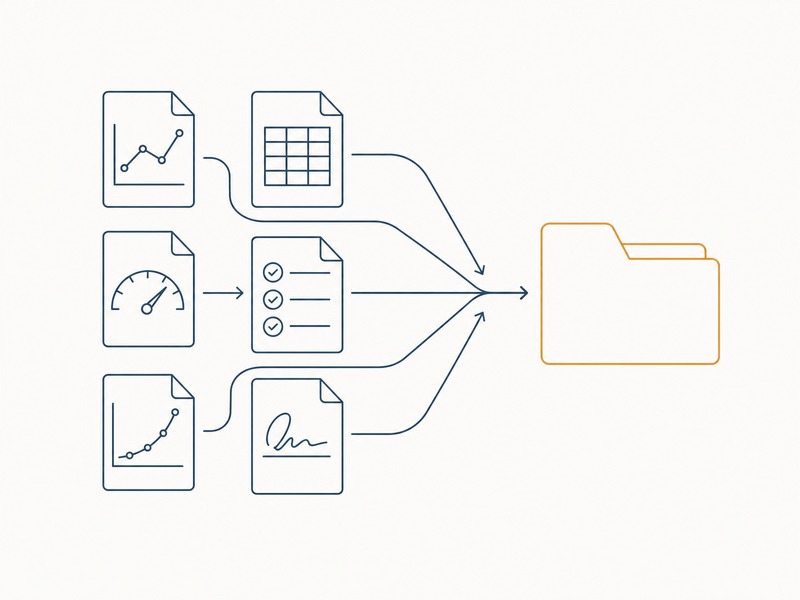
Table 2 links each phase of a crossing to the good practice it demands and to the record an owner should hold as evidence, from utility locating and geotechnical input through pullback and close-out. The NASTT HDD Good Practices Guidelines and the DCA Technical Guidelines organise their content in much the same order. The table below is a specification-writing checklist and a site-review aid rather than a replacement for the full text of either document, and it is a prompt to require the as-built records in the contract.
| Phase | Good practice | Evidence or record the owner should demand |
|---|---|---|
| Pre-construction | Utility locating, potholing and a documented plan review before mobilisation | Marked-up utility records, pothole survey and the approved work plan |
| Geotechnical input | Ground conditions characterised along the alignment, not from a single hole | Borehole logs and a geotechnical characterisation profile |
| Site and pits | Shoring, access control, containment and site-specific safety planning | Pit design, shoring verification and the site safety plan |
| Drilling fluid management | Fluid design by stratum, with mixing and recycling planned in advance | Fluid programme, daily volumes in and out, and recycling records |
| Inadvertent returns | Surface monitoring during drilling and a defined response plan | Monitoring log, photographs and clean-up records |
| Pipe handling and fabrication | Handling, welding, coating inspection and buoyancy control to specification | Weld records, coating inspection reports and the buoyancy plan |
| Pullback | Speed, tension and torque held within limits, with loads logged | Pullback load chart, tension and torque records, and the as-built survey |
| Close-out | Restoration and a complete record package handed over | As-built records, test results and restoration sign-off |
Pre-Construction: Potholing, Geotechnical Input and Plan Review
Pre-construction is where a guideline earns its place in a contract, because the work done before mobilisation decides most of what follows. Utility locating and potholing turn paper records into verified positions, and without them the bore is drilled against an assumption. Our field teams record each pothole as found, including depth and material, because a service found half a metre off the record can move the whole profile; we treat that record as the check before the bore plan is fixed.
The geotechnical input is the second thing both documents expect. Both documents expect ground conditions to be characterised along the alignment rather than inferred from one borehole, and they expect the resulting profile to drive the fluid design as well as the geometry. A plan review closes the phase: bore plan, pits, rig position and tie-in tolerances are checked together before drilling.
- Verify before you drill. Locate and pothole every service the corridor can touch, and mark the positions on the profile.
- Characterise, do not sample. Ask for a profile, not a single log, and check it against the crossing length and depth.
- Review the plan as a set. Geometry, fluids, pits, traffic and restoration should be examined in one sitting.
Site, Pits, Safety and Drilling Fluid Management
On site, the guideline material is mostly about control: controlled access, controlled pits and controlled fluid. Entry and exit pits are excavations like any other, so shoring, edge protection and access follow the usual safety logic, while the rig brings its own hazards around the rotating string, the clamp and the high-pressure fluid line. The NASTT HDD Good Practices Guidelines treat the work plan, the fluid programme and the safety plan as one submittal package, and that grouping is worth preserving in a specification because it keeps the three documents consistent.
Drilling fluid management sits at the centre of this phase, because fluid is the part of the process most likely to leave the site and the part most easily evidenced. The lifecycle is planned, not improvised: fluid is designed for the ground it will cross, then mixed, pumped, returned and either recycled or disposed of under a plan. Volume accounting is the simplest and most honest control: fluid pumped in, fluid returned, and fluid accounted for at the end of each shift. A slow drift in returns, a loss of returns or frac-out, is one of the earliest signs that the hole is losing fluid; the response plan should already set out who is informed and what is done. Kept after the works, the fluid record is the owner’s evidence that fluid was handled as planned rather than merely a site log.
Inadvertent returns, sometimes called frac-out, are the failure that monitoring is there to catch. The practice is straightforward and unglamorous: watch the surface along the alignment during drilling, and clean up any fluid that appears before it spreads. In our experience, the crossings that keep a return event small are the ones where the surface was being watched in the first place.
- Account for volumes daily. A return-versus-loss balance per shift is the cheapest early-warning device on the job.
- Plan the response before it is needed. Names, contacts, containment and clean-up equipment belong in the work plan.
- Recycle where the ground allows. Recycling reduces disposal volume and makes the fluid record easier to defend.
Pipe Handling, Pullback Control and Coating
The pipe is where the crossing becomes permanent, and the good-practice material follows it from the stockpile to the final tie-in. Handling, welding, coating inspection and buoyancy control all sit in this phase, and each produces a record. The NASTT HDD Good Practices Guidelines list pipe handling and pullback as linked activities, and the logic is that damage done on the surface is rarely visible after the pipe is buried.
Pullback control is the phase where speed meets load. Pulling too fast through a tight radius raises the tension and the bending stress at the same time, so the pull is held to limits set during design rather than to whatever the rig can manage. Tension and torque are logged through the pull, and a departure from the predicted load curve is treated as information rather than noise. A recorded departure is what turns an incident into a lesson for the next crossing.
Handling, welding, coating and buoyancy control each produce a record, and Table 2 sets out the record the owner should hold for this phase.
Records, As-Builts, Crew Competence and Training
Records, as-builts, crew competence and training are the part of a crossing that outlives the job. Record keeping in the NASTT HDD Good Practices Guidelines runs alongside drilling rather than after it, and the items are common to both documents: steering data, daily driller’s logs and the as-built records. On crossings we have supported, the installed profile has often differed from the bore plan in the final hundred metres. That deviation is why tie-in tolerances are written with it in mind.
Crew competence sits beside the records because good practice only exists if people know it and apply it. A specification can require that the driller and the locating crew hold relevant experience and that the fluid and steering systems are operated by trained personnel, and the owner can ask for the training and competency evidence during mobilisation. We have seen specifications that quote a whole guideline chapter and then leave competency entirely unaddressed, which is where the gap usually opens. Making the roles and the training evidence explicit in the specification is what closes that gap.
All of this is an input to project-specific design and not a substitute for calculation. Guideline values, published ranges and rules of thumb have to be confirmed by a competent engineer for the actual crossing before they are written into a contract.
- Keep records in step with the work. Steering data and driller’s logs should be daily documents, not a reconstruction at the end.
- Survey the as-built. The installed position matters for future excavation and integrity work.
Часто задаваемые вопросы
What are the NASTT HDD good practices guidelines?
They are a peer-reviewed industry reference for planning, drilling and documenting horizontal directional drilling crossings. The NASTT HDD Good Practices Guidelines is written for contractors, engineers and utility owners, and it covers design, submittals, construction, records and safety across the full crossing.
Is a guideline enforceable if it is named in a contract?
Naming a guideline in a contract is a starting point, not an obligation in itself; enforceability comes from the project-specific clauses that implement it. The specification has to convert the guidance into measurable requirements and required records.
What is the difference between performance and prescriptive wording?
Performance wording states the result and leaves the method open, while prescriptive wording states the method. Most crossings use both, with performance wording for outcomes such as cover and tolerance and prescriptive wording for safety-critical and verification steps.
Which records should an owner hold after an HDD crossing?
The owner should hold the as-built survey, the daily driller’s logs, the fluid volume records, welding and coating reports and the restoration sign-off. Together these prove what was installed and how it was built, and they are the records later excavation and integrity work depends on.
How often should drilling fluid volumes be recorded?
Fluid volumes should be recorded every shift, with the balance between fluid pumped in and fluid returned reviewed daily. A steady change in that balance is one of the earliest indicators of fluid loss, and the record is also the evidence that fluid was managed and disposed of as planned.
What does crew competence mean in an HDD specification?
It means naming the key roles and requiring relevant, verifiable experience and training for each. At minimum, the driller and the locating crew should be able to show experience on comparable crossings, and the evidence should be checked during mobilisation rather than assumed.
Key Takeaways
- Turn practice into requirements. Name the guideline and its edition, then write measurable project-specific clauses that implement it.
- Attach a record to every obligation. Evidence-linked wording is what makes good practice auditable after handover.
- Account for drilling fluid volumes daily: the in-versus-out balance is the earliest signal of a return problem.
- Monitor the surface along the alignment during drilling: inadvertent returns are managed by prompt clean-up.
- Log pullback tension, speed and torque. These records show whether the pull stayed inside the design envelope.
- Confirm everything for the crossing. Guidelines and figures are inputs that a competent engineer must verify for the actual project.
How JSW Supports HDD Good Practice and Documentation
JSW is a pipeline engineering and construction company that executes trenchless crossings with its own crews and equipment. The work is delivered through HDD crossing services и бестраншейные технологии; the design basis and the field records come from the same team. Supporting that work are automatic pipeline welding, pipeline cold bending и услуги по прокладке трубопроводов, documented to the same practice and record standard.
Because planning, drilling and documentation sit inside one scope, the work plan and the record set are written to line up from the start, and the evidence an owner asks for at tender is the evidence we produce in the field. Risk items are priced with their trigger conditions rather than folded into a single figure, so the commercial document matches the technical one. We apply the NASTT HDD Good Practices Guidelines and the DCA Technical Guidelines as inputs to project-specific design, then confirm every crossing with our own engineers.
- Комплексная доставка: planning, drilling, welding and installation in one contract, with no interface gap between design and field records.
- Auditable documentation: steering data, fluid accounting and pullback records issued in step with the work, matching the phase evidence in Table 2.
- Ценообразование с учетом риска: risk items and their trigger conditions stated rather than bundled into a single figure.
- Crossing experience: watercourse, road and rail crossings and congested urban corridors, restoration included.
Writing an HDD specification and want each clause tied to a record? Send your bore plan, ground information, pipe data and your current specification draft for a free technical review. Our engineers respond with a scoped recommendation, the evidence list, and a budget range.





































 English
  Arabic
  Russian
  Spanish
  French
  Vietnamese
  Polish
  Thai
Thai  Indonesian
  Turkish
  Portuguese