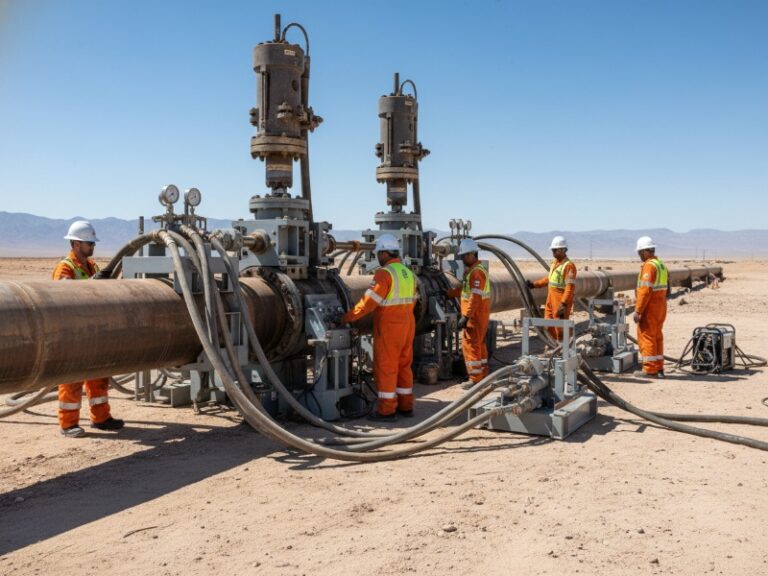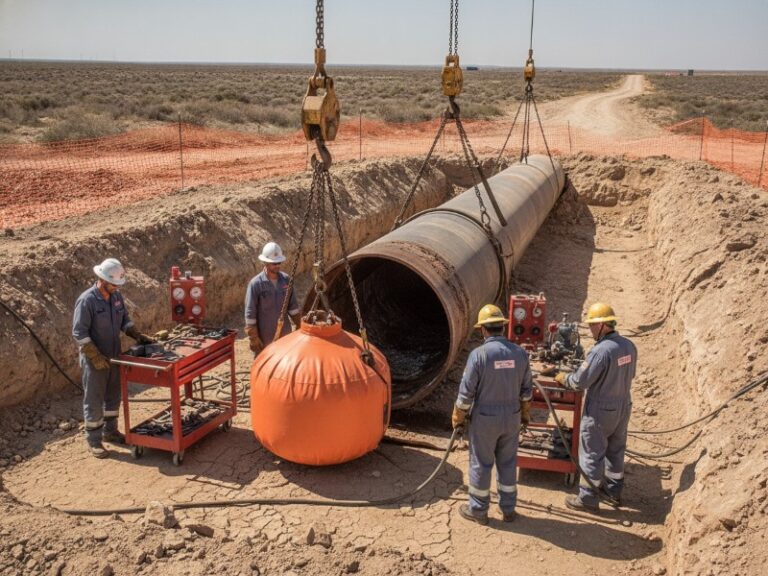
Four pipeline technicians in PPE work on a large steel gas pipeline in a dusty desert trench. An orange inflatable plug is lowered for remote field maintenance.

Как пневматические заглушки для трубопроводов высокого давления герметизируют корродированные трубы

High-pressure pneumatic pipeline plugs seal corroded pipes by using deformable elastomer seals, pressure-activated cup designs, and multi-element redundancy to conform to irregular surfaces and prevent leakage. Advanced designs also use segmented expansion and temporary fillers to compensate for corrosion pits and wall loss. What Is a Pipeline Plug? A pipeline
Читать далее »
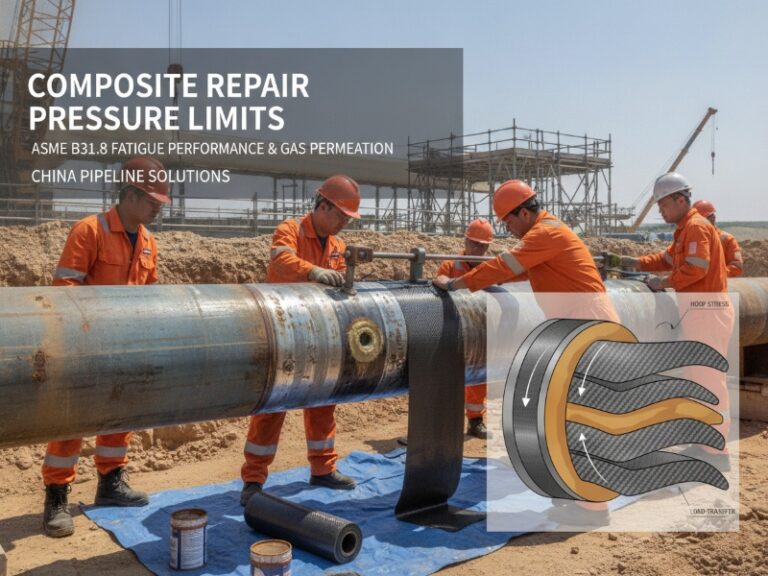
Construction site scene with engineers applying a composite wrap to a large steel pipeline. A technical diagram overlay shows composite repair layers, hoop stress, and load transfer.

How to Repair Through-Wall Gas Pipeline Defects with Engineered Composites: Pressure Limits, Permeation & ASME B31.8 Fatigue Data

Through-wall defects in gas pipelines create an immediate loss of pressure containment and require urgent repair. Engineered composite systems offer a proven solution for restoring up to 100% MAOP without shutdown—when designed to address cyclic fatigue and gas permeation. This guide explains ASME B31.8 and ISO 24817 pressure limits, compares

Читать далее »
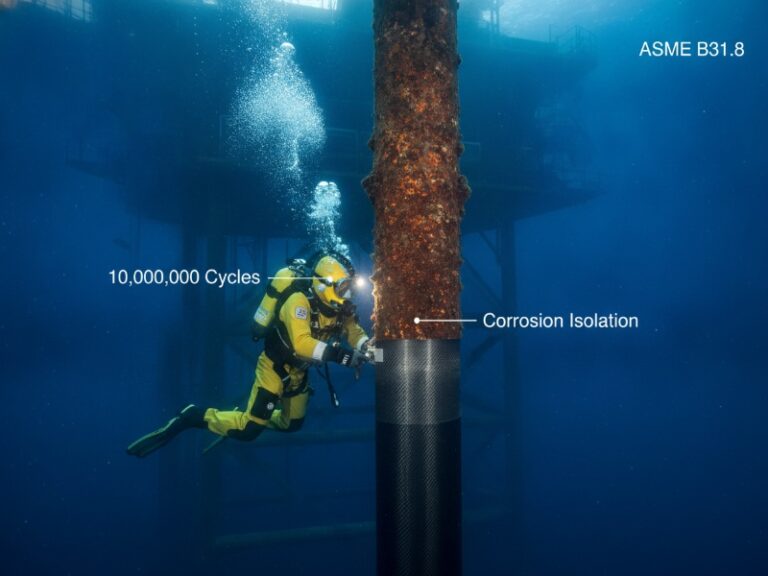
A diver in a yellow suit applies a carbon fiber composite wrap to a corroded offshore riser underwater for corrosion isolation near an oil platform.

Underwater Composite Repair for Corrosion Isolate Offshore Risers: Application Validation Under Severe Wave Action

Underwater composite repair for corrosion isolate offshore risers is a subsea rehabilitation method where carbon fiber wraps bonded with marine-grade epoxy restore mechanical strength and create a permanent corrosion barrier on damaged risers without shutdown or welding. When validated under severe wave action combined with cyclic pressure, carbon fiber systems

Читать далее »
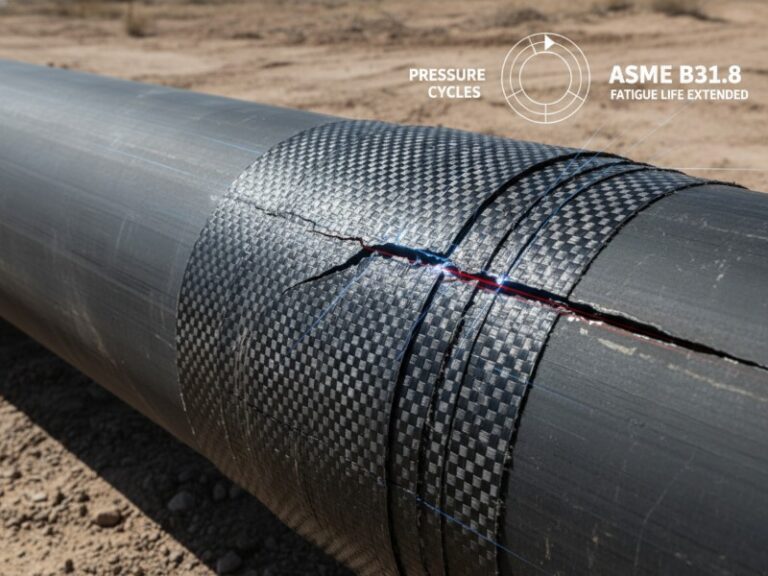
Cracked oil and gas pipeline segment in a desert, reinforced with a dark woven carbon fiber composite wrap. Graphics highlight extended fatigue life under ASME B31.8.

Долгосрочные эксплуатационные характеристики обмоток из углеродно-волокнистых композитов на трубопроводах, подвергающихся циклическому давлению: снижение риска появления усталостных трещин в соответствии со стандартом ASME B31.8

How Carbon Fiber Composite Wraps Extend Pipeline Fatigue Life (ASME B31.8 Guide) Carbon fiber composite wraps extend pipeline fatigue life by reducing crack tip stress intensity (ΔK) through load sharing, enabling up to 10 million pressure cycles and over 20 years of service under ASME B31.8. What is pipeline fatigue

Читать далее »
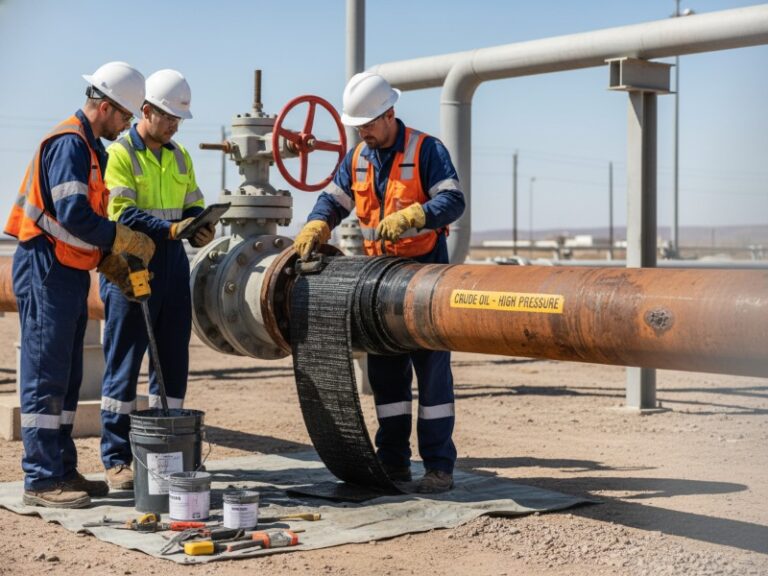
Three technicians in hard hats and reflective gear perform a composite wrap repair on a rusted crude oil pipeline in an outdoor industrial setting with tools.

ISO 24817 и ASME PCC-2, часть 4: Расчет толщины композитной обмотки при ремонте потерь в толще стенки под высоким давлением

ISO 24817 and ASME PCC-2 Part 4 are standards for composite wrap repair of pressurized pipelines. ISO 24817 uses a performance-based design that allows thinner, optimized repairs based on material testing, while ASME PCC-2 applies stricter safety factors, resulting in thicker and more conservative designs. In practice, ISO is typically

Читать далее »
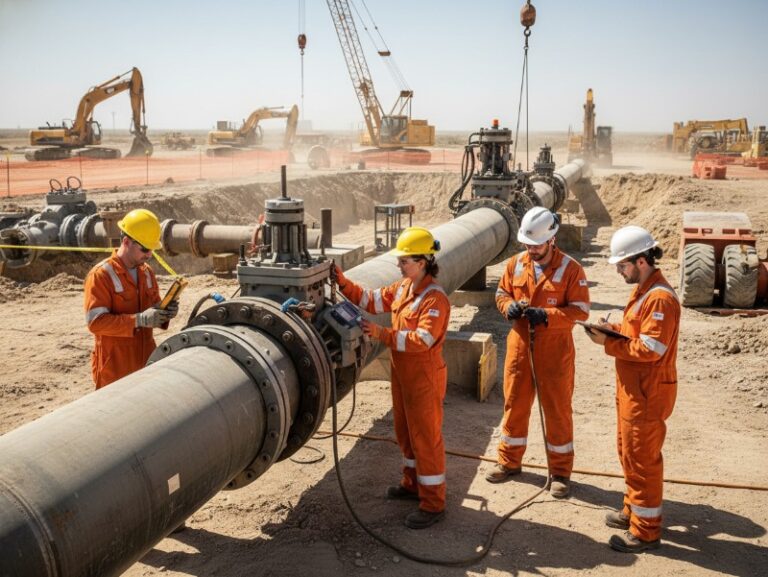
Инженерные техники в защитной экипировке осматривают большой стальной нефтегазопровод с помощью полевых приборов на запыленной строительной площадке, где работают экскаваторы.

Пределы овальности трубопровода при остановке линии (Руководство API 570)

Pipeline ovality is a critical factor in determining whether line stopping can be performed safely under API 570. In practice, ovality above 3% reduces folding-plug sealing effectiveness, while ovality above 5% is typically unacceptable. This guide explains allowable limits, inspection methods, failure mechanisms, and how to decide whether to proceed,

Читать далее »
Professional industrial field operation on a large steel oil and gas pipeline in a remote desert, with technicians performing line stopping and hot tapping.

Расчет обходного пути при остановке трубопровода (ASME B31.4): как предотвратить высокоскоростную эрозию при проведении операций с использованием скребковых скребков

Piggyback line stopping requires diverting 85–95% of total flow through a bypass to keep annular velocity below 2.5 m/s. The required bypass flow is calculated using Q_bypass = Q_total − (V_allow × A_gap). If bypass is undersized, annular velocity can exceed 4–10 m/s, causing severe vibration and rapid stopping bar

Читать далее »
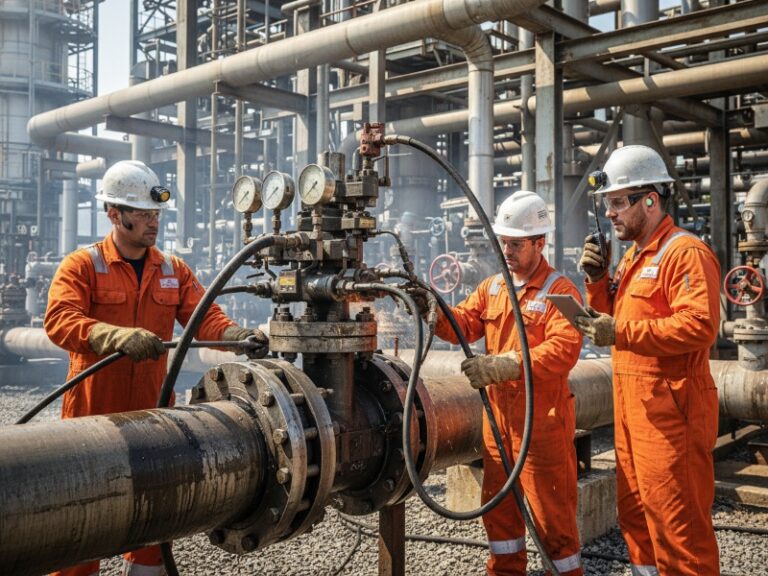
Three pipeline engineers in orange safety coveralls, hard hats, and gloves conducting maintenance on a large industrial steel pipeline with gauges.

DBB Line Stopping in Hot Crude Pipelines (150–260°C): FKM vs FFKM Selection, Testing, and Safety Limits

Best Elastomer for 150°C+ DBB Line Stopping For double block and bleed line stopping in high-temperature crude pipelines, the elastomer selection follows this rule: Elastomer Selection by Temperature Pipeline Condition Recommended Elastomer 150–170°C, low aromatics (<15%) FKM (minimum acceptable) 150–200°C, sour or high-aromatic crude FFKM required 170–200°C (any crude) FFKM

Читать далее »
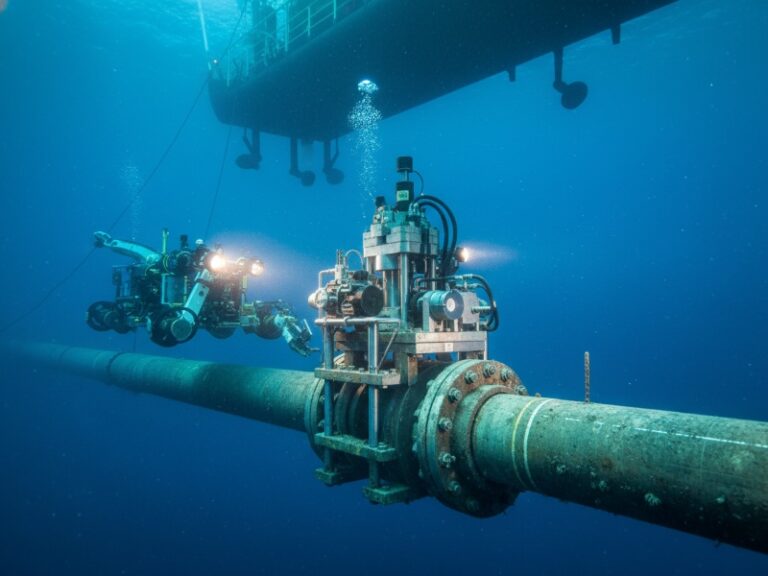
An ROV operates on a subsea pipeline's hot tap clamp in deep blue water. A ship's hull is overhead, with work lights illuminating the industrial scene.

Calculating Minimum Wall Thickness for In-Service Subsea Hot Tapping: Aligning with DNV-RP-F113

The minimum required wall thickness for in-service subsea hot tapping is defined by DNV-RP-F113 as the larger value between burst thickness (governed by internal pressure) and collapse thickness (governed by external hydrostatic pressure), after subtracting corrosion allowance. In deepwater conditions exceeding 700 meters, collapse pressure resistance typically governs the calculation.

Читать далее »
Анализ повреждений CIPP-вкладыша, демонстрирующий трещины, отслоение, складки и дефекты внутри подземного трубопровода

Типы отказов CIPP-вкладышей: 10 распространенных проблем при бестраншейной облицовке труб, их причины и способы устранения

1. What Are the Most Common CIPP Liner Failure Modes?  The most common CIPP liner failure modes include: These failures are mainly caused by poor design, inadequate surface preparation, improper curing, installation errors, and unsuitable material selection. These CIPP defects and trenchless rehabilitation failures generally fall into five main categories: structural

Читать далее »
Инженерная иллюстрация геотехнического исследования в рамках горизонтально-направленного бурения, на которой изображены буровая установка для HDD, траектория прокладки подземного трубопровода, слои глины, песка, гравия и горной породы, испытания методом CPT, скважины для исследования грунта, уровень грунтовых вод и контрольно-измерительные приборы.

Как оценивается устойчивость грунта перед началом бестраншейных работ? Руководство по геотехническим изысканиям при горизонтально-направленном бурении (HDD)

Soil stability before a trenchless project is measured through five main steps: These tests determine soil strength, density, groundwater conditions, and the risk of collapse or hydraulic fracture (frac-out) before drilling begins. Soil Stability Testing Process at a Glance Investigation Stage Primary Test / Method Core Purpose Site Review Geological

Читать далее »
Техническая инфографика, в которой сравниваются концепции протягивания труб при использовании технологий HDD, разрыва труб, E-Power Pipe и втапливания облицовки на месте при прокладке подземных трубопроводов

Максимальное расстояние, на которое можно проложить трубу бестраншейными методами: ограничения по длине прокладки методом горизонтально-направленного бурения (HDD), методом разрыва труб и методом облицовки

The maximum distance a pipe can be pulled using trenchless methods ranges from approximately 50 meters to more than 3,000 meters, depending on the installation technology, pipe characteristics, ground conditions, and equipment limitations. For new pipeline construction, Horizontal Directional Drilling (HDD) typically achieves 200–800 meters per pull. For pipeline rehabilitation, specialized

Читать далее »
Техническая иллюстрация в виде разреза, на которой сравниваются смоляные вкладыши CIPP, напыляемая полимочевина, вкладыши из высокоплотного полиэтилена (HDPE) и сегменты конструкционной облицовки из ультравысокопрочного бетона (UHPC) в подземных канализационных трубах.

Лучшие материалы для бестраншейной реконструкции труб: сравнение технологий CIPP, полимочевины и HDPE

Best Materials for Trenchless Pipe Rehabilitation The most widely used and effective materials for trenchless pipe rehabilitation are thermosetting resin systems—specifically epoxy, polyester, and vinyl ester—combined with reinforcement fabrics such as fiberglass or polyester felt. For most municipal sewer rehabilitation projects, polyester CIPP offers the best cost-to-performance balance, while epoxy CIPP is preferred for pipes

Читать далее »
Техническая CAD-схема надувной заглушки внутри трубопровода с указанием векторов силы, характеризующих давление надувания, противодавление и сопротивление трению.

Какое давление может выдержать надувная заглушка для труб? Номинальное противодавление, пределы и руководство по безопасности

There is no universal pressure limit for inflatable pipe plugs. The maximum back pressure depends on the plug design, size, pipe diameter, pipe material, and installation conditions. Most inflatable pipe plugs are rated from 1 bar (14.5 psi) to more than 13 bar (188 psi). Always follow the manufacturer’s specific

Читать далее »