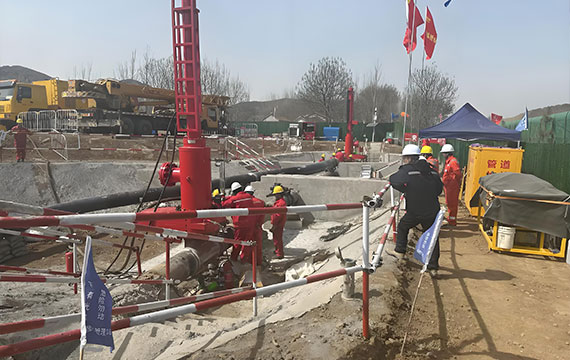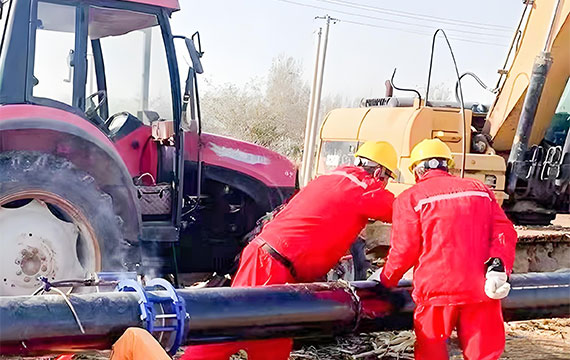
Workers in orange safety vests operate flow control on a large-diameter steel pipeline in a remote grassland, with temporary bypass lines and construction cranes visible.

Как перепускная заглушка облегчает регулирование расхода во время активного обслуживания канализационной системы?

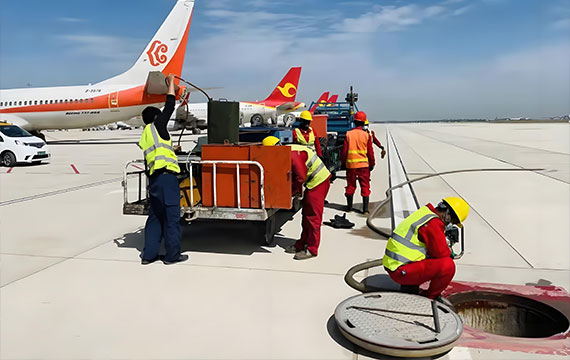
A bypass plug in sewer maintenance is an inflatable device that temporarily seals a pipeline section and redirects wastewater through a bypass system. This allows crews to work in a dry environment without interrupting flow, making it essential for active sewer repair and rehabilitation projects. Bypass plugs are widely used

Читать далее »
Двое рабочих в касках и спецодежде осматривают чёрную надувную заглушку внутри большого заржавевшего стального трубопровода на нефтегазовом объекте.

Коэффициент расширения надувных заглушек для труб: определение, расчёт и руководство по выбору для трубопроводов различных диаметров

The expansion ratio of an inflatable pipe plug typically ranges from 1.2:1 to 3.5:1. It defines how much the plug can expand relative to its deflated diameter and determines pipe size coverage, pressure rating, and fatigue life in cyclic pipeline conditions. Expansion Ratio What Expansion Ratio Do I Need? Most

Читать далее »
Four pipeline technicians in PPE work on a large steel gas pipeline in a dusty desert trench. An orange inflatable plug is lowered for remote field maintenance.

Как пневматические заглушки для трубопроводов высокого давления герметизируют корродированные трубы

High-pressure pneumatic pipeline plugs seal corroded pipes by using deformable elastomer seals, pressure-activated cup designs, and multi-element redundancy to conform to irregular surfaces and prevent leakage. Advanced designs also use segmented expansion and temporary fillers to compensate for corrosion pits and wall loss. What Is a Pipeline Plug? A pipeline

Читать далее »
Construction site scene with engineers applying a composite wrap to a large steel pipeline. A technical diagram overlay shows composite repair layers, hoop stress, and load transfer.

How to Repair Through-Wall Gas Pipeline Defects with Engineered Composites: Pressure Limits, Permeation & ASME B31.8 Fatigue Data

Through-wall defects in gas pipelines create an immediate loss of pressure containment and require urgent repair. Engineered composite systems offer a proven solution for restoring up to 100% MAOP without shutdown—when designed to address cyclic fatigue and gas permeation. This guide explains ASME B31.8 and ISO 24817 pressure limits, compares

Читать далее »
A diver in a yellow suit applies a carbon fiber composite wrap to a corroded offshore riser underwater for corrosion isolation near an oil platform.

Underwater Composite Repair for Corrosion Isolate Offshore Risers: Application Validation Under Severe Wave Action

Underwater composite repair for corrosion isolate offshore risers is a subsea rehabilitation method where carbon fiber wraps bonded with marine-grade epoxy restore mechanical strength and create a permanent corrosion barrier on damaged risers without shutdown or welding. When validated under severe wave action combined with cyclic pressure, carbon fiber systems

Читать далее »
Cracked oil and gas pipeline segment in a desert, reinforced with a dark woven carbon fiber composite wrap. Graphics highlight extended fatigue life under ASME B31.8.

Долгосрочные эксплуатационные характеристики обмоток из углеродно-волокнистых композитов на трубопроводах, подвергающихся циклическому давлению: снижение риска появления усталостных трещин в соответствии со стандартом ASME B31.8

How Carbon Fiber Composite Wraps Extend Pipeline Fatigue Life (ASME B31.8 Guide) Carbon fiber composite wraps extend pipeline fatigue life by reducing crack tip stress intensity (ΔK) through load sharing, enabling up to 10 million pressure cycles and over 20 years of service under ASME B31.8. What is pipeline fatigue

Читать далее »
Three technicians in hard hats and reflective gear perform a composite wrap repair on a rusted crude oil pipeline in an outdoor industrial setting with tools.

ISO 24817 и ASME PCC-2, часть 4: Расчет толщины композитной обмотки при ремонте потерь в толще стенки под высоким давлением

ISO 24817 and ASME PCC-2 Part 4 are standards for composite wrap repair of pressurized pipelines. ISO 24817 uses a performance-based design that allows thinner, optimized repairs based on material testing, while ASME PCC-2 applies stricter safety factors, resulting in thicker and more conservative designs. In practice, ISO is typically

Читать далее »
Инженерные техники в защитной экипировке осматривают большой стальной нефтегазопровод с помощью полевых приборов на запыленной строительной площадке, где работают экскаваторы.

Пределы овальности трубопровода при остановке линии (Руководство API 570)

Pipeline ovality is a critical factor in determining whether line stopping can be performed safely under API 570. In practice, ovality above 3% reduces folding-plug sealing effectiveness, while ovality above 5% is typically unacceptable. This guide explains allowable limits, inspection methods, failure mechanisms, and how to decide whether to proceed,

Читать далее »
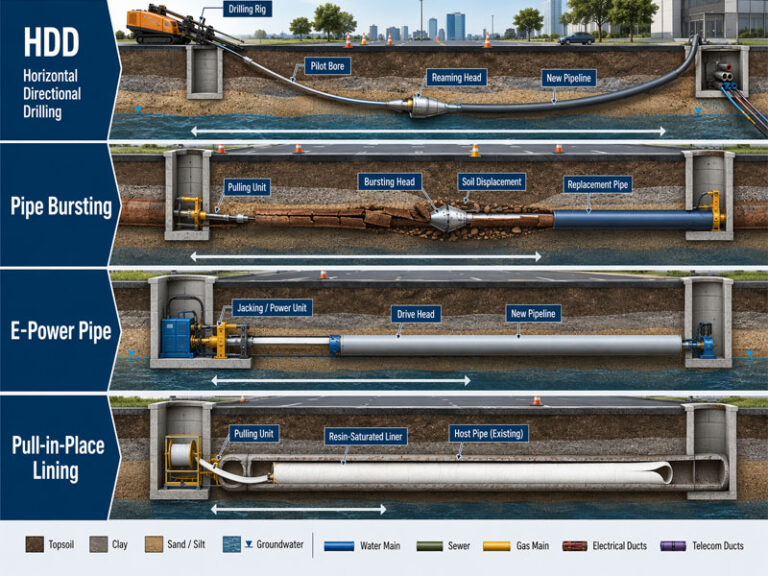
Engineering infographic comparing pulling-distance concepts for HDD, pipe bursting, E-Power Pipe, and pull-in-place lining in underground pipelines

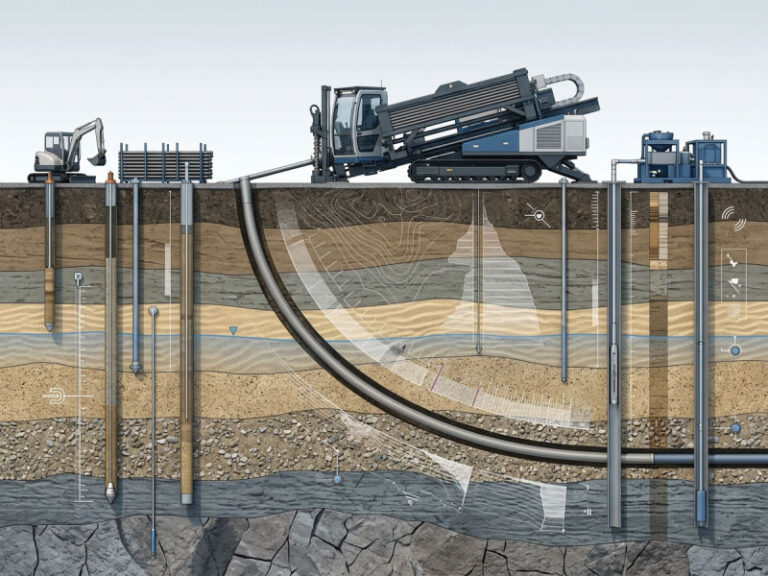
Maximum Distance a Pipe Can Be Pulled Using Trenchless Methods: HDD Pull Length, Pipe Bursting & Lining Limits

The maximum distance a pipe can be pulled using trenchless methods ranges from approximately 50 meters to more than 3,000 meters, depending on the installation technology, pipe characteristics, ground conditions, and equipment limitations. For new pipeline construction, Horizontal Directional Drilling (HDD) typically achieves 200–800 meters per pull. For pipeline rehabilitation, specialized

Читать далее »
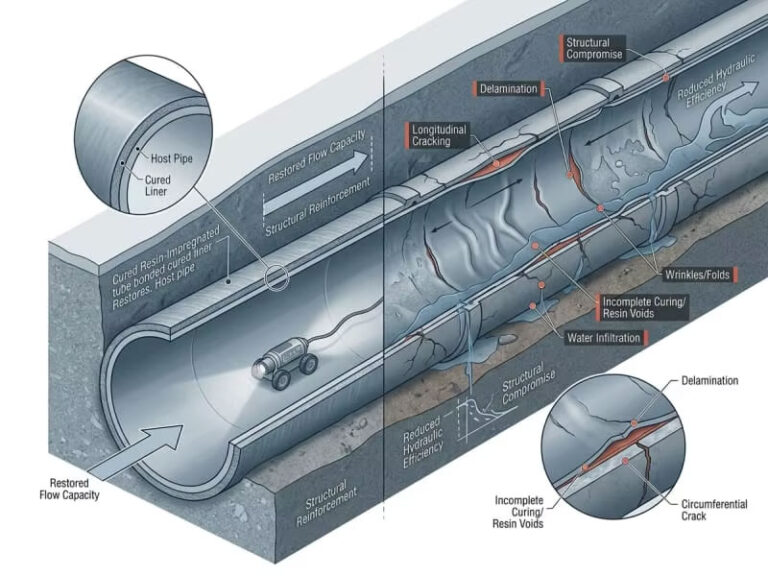
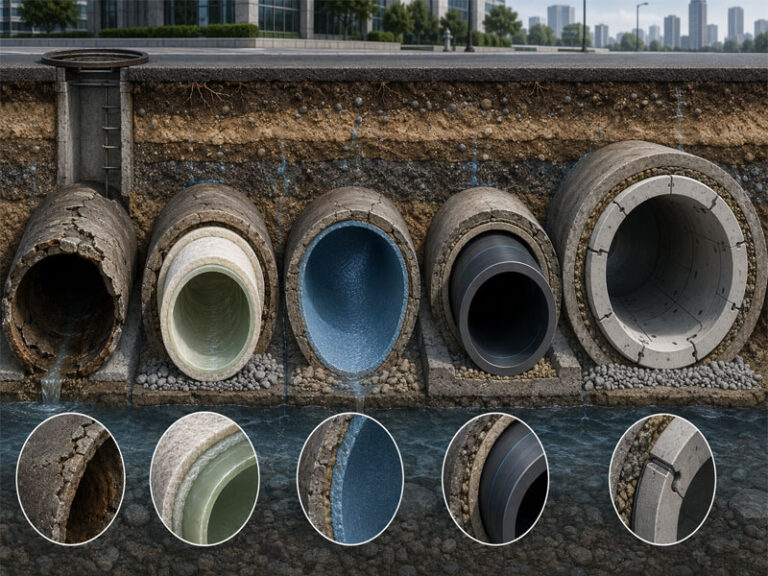
Engineering cutaway illustration comparing CIPP resin liners, spray-applied polyurea, HDPE sliplining, and UHPC structural lining segments in underground sewer pipes.

Best Trenchless Pipe Rehabilitation Materials: CIPP, Polyurea, HDPE Comparison

Best Materials for Trenchless Pipe Rehabilitation The most widely used and effective materials for trenchless pipe rehabilitation are thermosetting resin systems—specifically epoxy, polyester, and vinyl ester—combined with reinforcement fabrics such as fiberglass or polyester felt. For most municipal sewer rehabilitation projects, polyester CIPP offers the best cost-to-performance balance, while epoxy CIPP is preferred for pipes

Читать далее »