
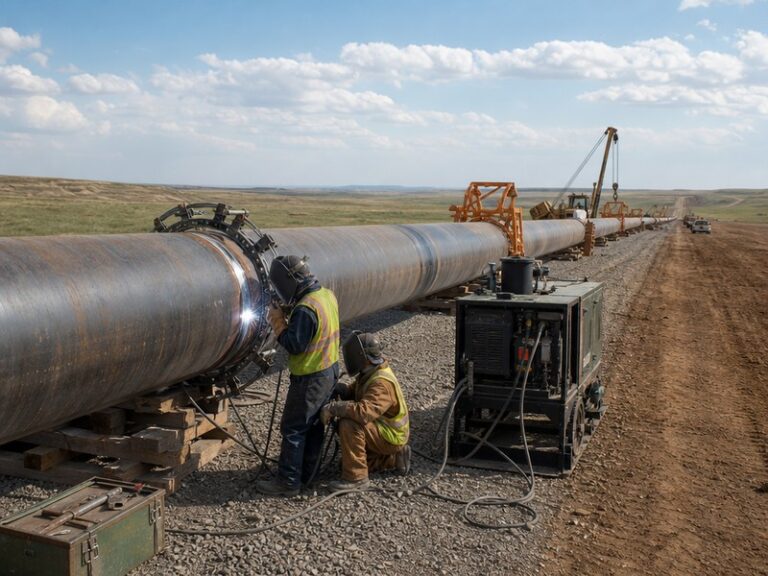
The right pipeline welding contractor for a cross-country project is the one that passes a six-point evaluation: verifiable welder qualification to API 1104, approved welding procedure specifications backed by procedure qualification records, managed non-destructive testing, equipment and production capacity that match the schedule, a safety record at or below the industry median, and references from comparable mainline spreads. This guide explains how contractor selection decides weld quality and project cost, walks through each of the six criteria with concrete checks, and lists the red flags that separate qualified crews from risky bids.
We cover the documents you must request before award, the production and cost benchmarks we use in our own supplier audits, common mistakes owners make during tendering, and a question table you can reuse in your next invitation to bid. If you are comparing pipeline welding services providers for a new line, a tie-in, or a repair spread, this article is written for the engineer, owner, or procurement lead doing the vetting.
Key Takeaways
- Verify welder qualification. Every welder on the spread must hold a current API 1104 qualification that matches the process, electrode class, thickness range, and position used on your line.
- Audit procedures before award. A WPS without a supporting PQR is not a procedure. Request both and check the essential variables against your pipe grade and wall thickness.
- Confirm NDT coverage. Know whether inspection is in-house or third-party, which method applies, what percentage of welds is examined, and who owns the acceptance criteria.
- Match equipment to schedule. Automatic welding raises mainline production to 50 to 60 joints per day per crew, while manual crews remain the standard for tie-ins and repairs.
- Weight safety and financial stability. TRIR and DART rates, insurance limits, and bonding capacity matter as much as weld quality when the spread runs for months.
- Validate references on comparable work. Ask for projects with the same pipe size, line class, terrain, and governing code, not just the same industry.
Pipeline Welding Contractor Checklist: Selection Criteria at a Glance
Use this checklist as your pre-qualification screen before you open a formal tender. Every box should be verifiable from documents, not from promises.
- Welder qualification registers cover your pipe grade, process, position, and thickness range.
- WPS and PQR exist for every proposed process and match your essential variables.
- NDT method, percentage examined, and acceptance criteria are frozen in writing.
- Production plan in joints per day per crew matches the schedule with spare capacity.
- Three years of TRIR and DART data are available and within the industry range.
- References come from comparable mainline projects with repair rates stated as numbers.
- Financial statements, insurance, and bonding capacity cover the contract value.
Итог: An untickable box means the capability is unproven.
Why the Pipeline Welding Contractor You Pick Decides Project Quality
On a cross-country pipeline, girth weld quality is the integrity-critical element of pipeline construction. A long mainline contains tens of thousands of welded joints, each one carrying the full operating pressure of the line for decades, and a single defective joint can leak or rupture years after installation. The contractor who makes those joints therefore decides more about project risk than any other subcontractor on the spread.
Quality also drives the economics of the job. In our supplier audits, we track first-pass acceptance as the leading indicator: contractor repair rates range from under 1 percent on well-run spreads to above 8 percent on crews with procedure or training gaps. On a 24-inch line, each rejected weld costs three to five times the price of a first-time weld once excavation, repair, and re-inspection are counted, and one rejection can stop a manual spread producing 30 joints per day for a full shift.
Contractor selection is therefore a risk decision, not a price decision. The six steps below give you a repeatable evaluation framework, and we have used the same method when auditing our own welding crews before we bid mainline work.
Итог: The contractor who makes the girth welds controls both the integrity record and the schedule risk of the line, so selection is a risk decision before it is a price decision.
Key Statistics at a Glance
- 95 to 99 percent: first-pass acceptance rate on well-run mainline spreads
- 50 to 60 joints per day per crew: automatic welding output, roughly double a manual crew
- 10 to 15 percent: share of total installed pipeline construction cost taken by welding and inspection
- 3 to 5 times: cost of a rejected weld versus a first-time weld after excavation, repair, and re-inspection
- 1.5 to 2.5: industry TRIR range per 100 full-time workers per year for US pipeline construction
- 1 to 3 weeks: typical time to qualify a welding procedure for a new pipe grade
Key Terms Defined: Pipeline Welding Contractor Vocabulary
The terms below appear throughout this guide. Each one is defined the way an auditor would use it on site.API 1104Welding of Pipelines and Related Facilities: the American Petroleum Institute standard that governs girth weld qualification, welding procedures, and acceptance criteria for cross-country pipelines.WPSWelding procedure specification: the written recipe for a weld, covering process, parameters, consumables, and joint design.PQRProcedure qualification record: the test evidence proving the WPS produces an acceptable weld on the target material.AUTAutomated ultrasonic testing: a mechanized volumetric examination method widely used on mainline girth welds.RTRadiographic testing: a volumetric examination method using film or digital detectors, common for tie-ins and smaller lines.NDTNon-destructive testing: examination methods that check a weld without damaging it.TRIRTotal recordable incident rate: recordable incidents per 100 full-time workers per year.DARTDays away, restricted, or transferred rate: lost-time incidents per 100 full-time workers per year.Girth weldThe circumferential weld joining two pipe joints end to end; the integrity-critical joint on a pipeline.First-pass acceptance rateThe percentage of welds that pass inspection on the first attempt without repair.Line-up clampAn internal or external clamp that holds two pipe ends in alignment while the root pass is welded.
Step 1: Verify Welder Qualification, Licensing, and Certification Requirements
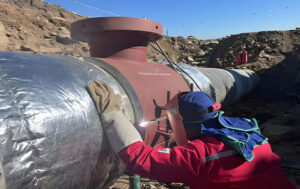
Welder qualification is the first gate because no procedure produces an acceptable weld in the hands of an unqualified welder. For cross-country lines, welders are qualified to API 1104, Welding of Pipelines and Related Facilities, Chapter 6, while plant and station work follows ASME Section IX, and in the United States the operating regulations in 49 CFR Parts 192 and 195 add their own record requirements. For projects outside the United States, confirm whether API 1104 or the governing international standard (e.g., ISO 3183 pipe with ISO 13847, Welding of Pipelines) applies.
Ask for the contractor’s welder qualification register and spot-check records against the project scope. Each record must state the process, electrode class, thickness range, and position, and it must match the work the welder will actually perform. Under API 1104, a welder who has not used the process in the previous six months must requalify, and any change to the qualified scope invalidates the qualification.
A complete welder qualification record should show at least these fields, and each one must match your scope:
- Welder name and certificate number
- Issue date and requalification or expiry date
- Welding process and electrode classification
- Thickness range and position qualified
In our own pre-qualification audits, we request the welder list before the site visit. On one 2025 project, we found a crew claiming X70 capability whose records only covered X52 pipe; the mismatch was caught before mobilization, and the contractor requalified the crew in two weeks. Verify licensing and insurance in parallel: the contractor should hold the registrations required in the project jurisdiction, plus liability and worker’s compensation coverage that matches the contract value.
Action checklist:
- Request the welder qualification register before the site visit.
- Spot-check dates and scope against the project pipe grade, process, and position.
- Confirm insurance, licensing, and requalification status in parallel.
Итог: If a single welder record does not match your scope, treat the whole register as unverified until it is rechecked.
Step 2: Audit Welding Procedures (WPS) and Procedure Qualification Records (PQR)
Welding procedure specification (WPS) and its supporting procedure qualification record (PQR) are the two documents inspectors ask for first, and both must exist before the first production weld. The WPS describes how to weld; the PQR proves the parameters produce an acceptable weld on the target material. A procedure qualified on X52 with a 12.7 mm wall does not cover X70 or a 19 mm wall unless the PQR range allows it.
Check the essential variables against your project specification. Table 1 lists the variables that must match and what to verify for each:
| Essential variable | What to check |
|---|---|
| Welding process | The process proposed (e.g., SMAW, GMAW, FCAW, including automatic or mechanized GMAW) matches the production method |
| Pipe grade | The PQR covers your exact pipe grade (e.g., API 5L X52, X65, X70) |
| Wall thickness range | Your wall sits inside the qualified range, not at its edge |
| Electrode classification | Consumable class matches the WPS and its storage requirements |
| Heat input | The range is defined and can be logged during production |
| Preheat and interpass temperature | Verification method and field records are defined |
| Позиция | Downhill, uphill, and roll positions are covered |
| Joint design | Bevel geometry and root gap match the field joint |
Also check the practical controls that make a procedure work in the field: electrode storage ovens for low-hydrogen consumables, preheat verification methods, and records of welding parameters during production.
During a supplier audit for a 36-inch gas line, we rejected two of six submitted WPSs because the PQRs did not support the wall thickness range the contractor proposed. The contractor requalified within three weeks, but had we discovered the gap after award, the delay would have hit the schedule and the inspection plan. Treat the documentation audit as a pass-fail gate, not a formality; our pipeline construction services run the same audit before every mainline bid.
Action checklist:
- Collect the WPS and PQR for every process proposed on your grade and wall.
- Map each essential variable in Table 1 to your project specification.
- Ask how consumable storage and preheat are verified in the field.
Итог: A WPS without a supporting PQR is not a procedure, and a PQR outside your range is not qualification.
Step 3: Evaluate NDT Capability: AUT, RT, and Inspection Independence
Non-destructive testing (NDT) decides whether a weld is accepted or rejected, so the inspection plan is part of the welding contract. On modern cross-country spreads, automated ultrasonic testing (AUT) typically examines 100 percent of mainline girth welds, while radiography (RT) remains common for tie-ins and smaller lines. Magnetic particle and penetrant testing cover surface flaws where required.
Most rejected girth welds fail on lack of fusion, incomplete penetration, porosity, or hydrogen-induced cracking, and each is best detected by a specific method: RT for volumetric flaws, AUT for planar defects. That pairing is why the method list in the contract matters as much as the welder list.
Confirm who performs the examination, who interprets the results, and who owns the acceptance criteria. NDT personnel should be certified to a recognized scheme such as ASNT SNT-TC-1A or ISO 9712, and the acceptance criteria from API 1104 or the project specification should be frozen in writing before the first joint is welded. When the contractor provides inspection in-house, ask for the auditor’s independence; many owners prefer an independent third party for exactly this reason.
Crews matched to a qualified AUT procedure report first-pass acceptance rates of 95 to 99 percent on mainline work. We treat inspection as part of the welding contract rather than an afterthought: on our projects, the inspection provider is approved before the first weld, and the percentage of welds examined, the method, and the acceptance criteria are all frozen in the project specification.
Action checklist:
- Confirm who examines, who interprets, and who decides acceptance.
- Verify NDT personnel certification (ASNT SNT-TC-1A or ISO 9712).
- Freeze method, percentage examined, and acceptance criteria in writing before the first joint.
Итог: The inspection method and the acceptance criteria decide what gets repaired, so freeze both in writing before the first production weld.
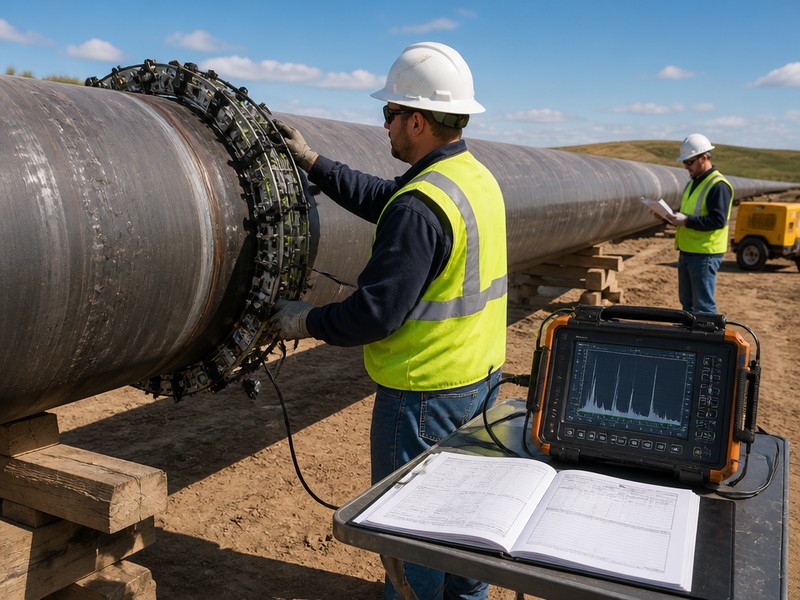
Figure 1. Automated ultrasonic testing (AUT) data and the approved welding procedure specification (WPS) are the two documents that define acceptance on a modern mainline spread.
Step 4: Check Equipment, Automatic Welding Systems, and Production Capacity
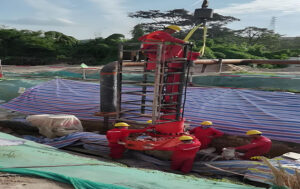
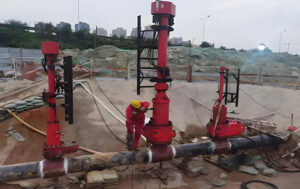
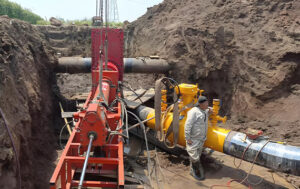
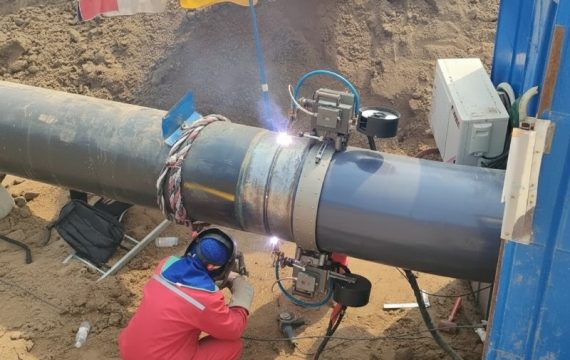
Production capacity determines whether the schedule holds. On long mainline spreads, automatic pipeline welding systems with an internal line-up clamp and external welding bugs complete 50 to 60 joints per day per crew, roughly double the output of a manual crew, and they hold tighter parameter control over long runs. Manual crews remain the standard for tie-ins, repairs, and short spreads, and the best projects run both in parallel. Table 2 summarizes the trade-off:
| Фактор | Automatic welding | Manual welding |
|---|---|---|
| Typical output | 50 to 60 joints per day per crew | Roughly half, 25 to 30 joints per day per crew |
| Parameter control | Tight, machine-logged parameters | Operator dependent |
| Best fit | Long mainline spreads | Tie-ins, repairs, short spreads |
| Crew qualification | Operator qualified on the exact machine model | API 1104 or ASME Section IX welder qualification |
Ask which equipment is dedicated to your project and which is shared. A contractor that must borrow machines from another job on short notice is a schedule risk, and equipment age matters because modern welding machines log parameters that support both quality control and dispute resolution. Also verify support equipment: line-up clamps, bending and cutting machines, preheat torches, and cold-weather enclosures when the route demands them.
In our experience, the decisive question is not whether the contractor owns automatic systems but whether the crews are trained on them. We have seen automatic equipment delivered to a site where no operator was qualified on the machine, which stopped production for a week. Confirm operator qualification on the exact machine model as part of the equipment review.
Most mainline spreads run a hybrid: a SMAW or FCAW root pass, then automatic fill and cap. Ask which combination the crew has run together, because a procedure qualified for automatic fill still depends on crew experience with the root pass method.
Action checklist:
- Confirm which equipment is dedicated to your project and which is shared.
- Verify operator qualification on the exact automatic welding machine model.
- Check support equipment: line-up clamps, bending and cutting machines, preheat torches.
Итог: Owned automatic systems mean nothing if no one on site is qualified to run the exact model.
Step 5: Assess Safety Performance (TRIR, DART) and Field Management
A contractor’s safety record is a direct signal of field discipline. For pipeline construction in the United States, the industry total recordable incident rate (TRIR) typically sits between 1.5 and 2.5 per 100 full-time workers per year. A contractor that reports a TRIR materially above that range should explain the gap before award, and a contractor that cannot produce three years of TRIR and DART numbers should not be shortlisted.
Review the HSE program behind the numbers: hot work permits, confined space procedures, environmental controls for spill prevention, emergency response plans, and the training records of field supervisors. Welding on a pipeline is hot work, often near operating facilities, and the safety plan for your specific terrain matters as much as the corporate policy document.
On a recent project in mountainous terrain, the deciding factor between two shortlisted contractors was not price but the safety plan for winch-assisted lowering on steep slopes. The higher-cost bidder had run the identical operation on two prior projects with no lost-time incidents; the lower bidder had no comparable experience. We awarded to the safer crew, and the project finished without a recordable incident.
Action checklist:
- Request three years of TRIR and DART data before the site visit.
- Review hot work permits, confined space, and environmental controls for your terrain.
- Check the training records of the field supervisors named in the bid.
Итог: A contractor that cannot produce three years of safety numbers cannot manage field risk for a multi-month spread.
Step 6: Validate Track Record, References, and Financial Stability
References only count when the work is comparable. Ask for projects with the same pipe size, line class, terrain, and governing code, and ask the reference for the first-pass acceptance rate and the repair rate on that project, not just for confirmation that the contractor finished on time. The spread between a 92 percent and a 99 percent first-pass rate changes the schedule and the cost more than the bid price difference.
Financial stability matters because a mainline spread runs for months and a contractor that cannot fund mobilization or payroll becomes a schedule risk. Request the last two years of financial statements, current insurance certificates, and bonding capacity, and confirm that the key welders and supervisors named in the bid are committed to the project rather than available for hire elsewhere.
We ask every shortlisted contractor for the repair rate on their last three mainline projects, stated as a number. The answers separate the operators who measure quality from the operators who hope for it, and they give you a baseline for the acceptance criteria in the contract.
Action checklist:
- Ask references for the first-pass acceptance rate and repair rate, stated as numbers.
- Request two years of financial statements, insurance certificates, and bonding capacity.
- Confirm that the key welders and supervisors named in the bid are committed to the project.
Итог: Comparable references with stated repair rates, plus bonding capacity, are the only reliable predictors of a long mainline campaign.
Complete all six steps and you have a defensible shortlist. The red flags below are the final screen before you award the contract.
Red Flags When Evaluating a Pipeline Welding Contractor
Several warning signs appear repeatedly in failed projects, and each one is detectable during the evaluation if you ask the right question. Table 3 summarizes the red flags, why they matter, and the action to take.
| Red flag | Why it matters | Action |
|---|---|---|
| Reluctance to share WPS and PQR files | Procedures that cannot be reviewed are usually not qualified for the scope | Make document review a condition of bidding |
| Welder records do not match the pipe grade or position | Unqualified welders produce unacceptable welds regardless of procedure | Require the welder register before award |
| No in-house NDT or a vague inspection plan | Acceptance becomes unverifiable and disputes follow | Freeze method, percentage, and acceptance criteria in writing |
| Bid price far below the median | The bid usually assumes an unrealistic repair rate or crew count | Ask for the cost per accepted weld, not the headline price |
| Repair rate data refused or unavailable | A contractor that does not measure quality cannot control it | Request three years of first-pass acceptance data |
| No documented HSE program or high TRIR | Safety failures stop the spread and damage the owner’s record | Require TRIR and DART for the last three years |
| References from unrelated work only | Plant or structural experience does not transfer to mainline spreads | Insist on cross-country pipeline references of similar size |
| No equipment list or everything is leased | Mobilization delays and shared equipment threaten the schedule | Confirm dedicated equipment and operator qualification |
Итог: If you see two or more of these red flags in one bid, the bid fails the screen regardless of price.
Reviewing a bidder’s WPS or repair-rate data? Our engineers will run a free gap check on your pipe grade and spec, at no obligation — contact our welding engineering team or email sales@jsw.com, and we respond within one business day.
Common Tendering Mistakes Owners Make When Hiring a Pipeline Welding Contractor
Most owner-side failures in pipeline tendering are not about dishonest bidders; they are about comparison methods that reward the wrong bid. Table 4 lists the mistakes we see most often, why they happen, and how to prevent each one.
| Ошибка | Why it happens | Prevention |
|---|---|---|
| Comparing total bid price instead of cost per accepted weld | Headline price is easy to compare and hard to challenge | Ask every bidder for cost per accepted weld and the repair rate it assumes |
| Not requesting the welder qualification register before award | Welder records are treated as a post-award paperwork task | Make the register a condition of bidding and spot-check it |
| Reviewing WPS documents only after the contract is signed | Documentation review is scheduled late in the process | Audit WPS and PQR against your grade and wall thickness before award |
| Ignoring repair rate data in the evaluation | Quality history is not translated into schedule and cost impact | Require three years of first-pass acceptance numbers from shortlisted bidders |
| Not freezing NDT acceptance criteria in the project specification | Inspection method and criteria are left to the contractor or discovered later | Freeze method, percentage examined, and acceptance criteria in writing before the first joint |
| Selecting the low bid without testing its assumptions | Repair rate and crew count assumptions are rarely challenged | Model the realistic repair rate for your terrain and compare bids on that basis |
Итог: Every mistake in this table is preventable before award, and each one is cheaper to fix in the tender than on the spread.
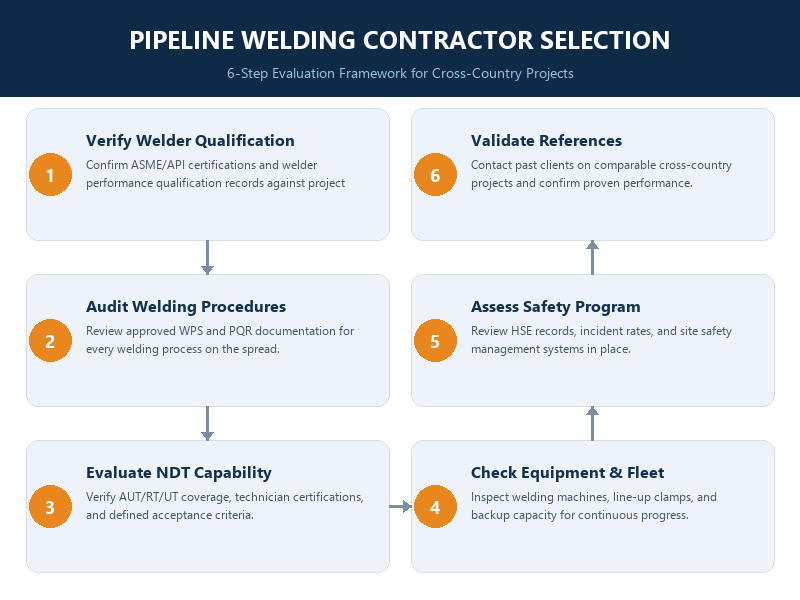
Figure 2 . The six-step evaluation framework moves from documents and people to equipment, safety, and proven performance.
What Questions to Ask Before You Award the Contract
Use Table 5 as a structured interview for shortlisted bidders. The strong answers are specific, documented, and match your project scope; the weak answers are vague, verbal, or conditional.
| Вопрос | Strong answer | Weak answer |
|---|---|---|
| Show the WPS and PQR for our pipe grade and wall thickness | Documents provided, essential variables match, PQR test report attached | “We have similar procedures” or documents withheld |
| What is the first-pass acceptance rate on your last three mainline projects? | Numbers given per project with the inspection method stated | “We do not track that” or a single unverified figure |
| Who performs NDT and who owns the acceptance criteria? | Named third-party provider, criteria frozen in the project spec | “We handle it internally” without independence details |
| What is the production plan in joints per day per crew? | Plan matches the schedule with spare capacity and weather contingencies | An optimistic number with no crew count or equipment plan |
| What happens if the repair rate exceeds the agreed target? | Written corrective action process with cost allocation | No answer or “it will not happen” |
| How many welders are qualified to API 1104 for this scope? | Register provided with names, dates, and scope match | Vague counts without records |
| What are the TRIR and DART for the last three years? | Three years of numbers with the HSE program behind them | No data or excuses |
| Who is the responsible welding engineer or supervisor, and what are their credentials? | Named individual with relevant mainline experience | “Our foreman handles it” |
For a worked example of how strong answers look when a spread is run to the same standard, see how our pipeline construction services apply these questions in pre-bid audits.
How Contractor Quality Affects Total Pipeline Welding Cost
Welding and its inspection typically account for roughly 10 to 15 percent of total installed pipeline construction cost, and the figure varies with pipe size, wall thickness, terrain, and inspection method. The number that matters for comparison is cost per accepted weld, which divides crew, equipment, consumables, and inspection cost by the welds that pass first time. A low bid that assumes an unrealistic repair rate on terrain where the realistic rate is higher is more expensive per accepted weld than a higher bid with a proven crew.
Example: a 36-inch gas line with 4,000 girth welds. At a 1 percent repair rate that is 40 rejected welds; at 5 percent it is 200. With rework costing 3 to 5 times first-time weld cost, the difference is hundreds of rework days, typically more than the entire bid spread between the top two bidders.
We supported a 2024 tender in which the lowest bid was 18 percent below the median. The bid assumed a 2 percent repair rate and a single crew, while the terrain data suggested 6 percent and a second crew for the schedule. The realistic cost estimate erased the price advantage within the first month of production, and the owner awarded to the bidder with the better documented repair rate history.
Rework economics explain why the best pipeline welding contractor is rarely the cheapest. Each rejected weld consumes repair time, inspection time, and the crew’s schedule, and on a large-diameter line one rejection can stop the spread for a full shift. When we model project cost for owners, reducing the repair rate from 5 percent to 1 percent saves more than the price difference between the top two bidders in most tenders. Where the project involves repair of an operating line, the same logic applies to pipeline repair services, and for in-service tie-ins the hot tapping and plugging services must be qualified to the same standard as the mainline welds.
Итог: The cheapest headline bid is rarely the cheapest per accepted weld once the realistic repair rate is modelled.
Want this model run on your numbers? Send pipe size, weld count, and terrain for a repair-rate breakeven — contact our welding engineering team or email sales@jsw.com.
Часто задаваемые вопросы
Quick answers to the questions buyers ask most about pipeline welding contractor selection:
What is a pipeline welding contractor?
A pipeline welding contractor supplies qualified welding crews, welding procedures, equipment, and often inspection for the girth welding of transmission and distribution pipelines. On a cross-country project the contractor may also provide line-up clamps, automatic welding systems, tie-in crews, and the documentation required by API 1104 and the governing design code.
What qualifications should a pipeline welding contractor have?
The contractor should hold welding procedure specifications backed by PQRs that cover the project pipe grade and wall thickness, plus a welder qualification register with current API 1104 certifications matching the process, electrode class, thickness range, and position of the work. Non-destructive testing coverage, a documented safety program, insurance, and references from comparable mainline projects complete the picture.
What is the difference between welder qualification and welding procedure qualification?
Welding procedure qualification proves that a specific process and parameter set produces an acceptable weld on the target pipe grade and wall thickness, recorded in a PQR. Welder qualification proves that an individual welder can execute that procedure, tested to API 1104 Chapter 6 for cross-country lines or ASME Section IX for plant work. A contractor needs both: a procedure that passes and welders who pass the test against it.
What documents should a pipeline welding contractor provide before award?
Before award, the contractor should provide the welder qualification register, the WPS and supporting PQR for every process proposed on your pipe grade and wall thickness, the NDT plan with method, percentage of welds examined, and acceptance criteria, three years of first-pass acceptance and repair rate data, safety statistics such as TRIR and DART, insurance certificates, and references from comparable mainline projects. Any contractor that cannot produce this document set on request should be treated as a schedule risk.
What is a good weld repair rate for a cross-country pipeline?
A first-pass acceptance rate of 95 percent or higher is the working benchmark for a well-run spread, and strong crews hold 98 to 99 percent under automated ultrasonic testing. A repair rate above 5 percent should trigger a procedure, equipment, or crew review, because each rejected weld costs three to five times the price of a first-time weld. To benchmark a target repair rate for your terrain, send us your pipe size and expected weld count.
What is the difference between AUT and RT for pipeline girth welds?
Automated ultrasonic testing (AUT) scans the full weld volume electronically and is preferred on mainline spreads because it is fast, produces digital records, and is highly sensitive to planar defects such as lack of fusion. Radiographic testing (RT) records volumetric flaws on film or digital detectors and remains common for tie-ins and smaller lines. RT is the classic choice for volumetric indications, while AUT is the modern standard for high-throughput mainline examination.
How much does it cost to hire a pipeline welding contractor?
Welding and its inspection typically represent roughly 10 to 15 percent of total installed pipeline construction cost. The meaningful figure is cost per accepted weld, and a low bid that assumes an unrealistic repair rate usually costs more per accepted weld than a higher bid with a proven crew. Send us your pipe size and expected weld count for a benchmark estimate.
How do you compare pipeline welding contractor bids?
Compare bids on cost per accepted weld rather than headline price: divide the crew, equipment, consumables, and inspection cost by the number of welds that pass first time. Then compare the first-pass acceptance rate history, the repair rate assumed in each bid, the production plan in joints per day per crew, and the documented WPS coverage for your exact pipe grade. A bid that assumes an unrealistic repair rate or crew count is usually more expensive per accepted weld than a higher headline price.
Should welding inspection be in-house or third-party?
Either model works when the acceptance criteria are frozen in the project specification and the NDT personnel are certified. Most cross-country projects use an independent third-party inspection company. In practice the responsibility splits into a triangle: the owner freezes the acceptance criteria, the contractor produces the welds, and the independent third party examines and reports, leaving no party to judge its own work.
How long does it take to qualify a welding procedure for a new pipe grade?
A single qualification typically takes one to three weeks from coupon welding through destructive testing and documentation. Plan for it before award, because production welding cannot start until the approved WPS and the qualified welders are both in place.
Can an overseas contractor meet the same welding standards as a domestic one?
Yes, when compliance is verified from documents rather than assumed from geography. A contractor based anywhere can qualify welders and procedures to API 1104 or the governing international standard; what matters is that the WPS and PQR cover your pipe grade and wall thickness, the welder register matches the scope, and the NDT personnel are certified to a recognized scheme such as ISO 9712 or ASNT SNT-TC-1A. For an overseas bidder, request English versions of the full document set and verify the records on site or by video audit before award.
Choosing a pipeline welding contractor is the highest-leverage decision on a cross-country pipeline project. The six-point evaluation, from welder qualification and welding procedure specifications to NDT, equipment, safety, and references, turns that decision into a repeatable process, and the red flags and question tables above give you the tools to apply it in your next tender.
Pipeline contractor selection done properly protects the schedule, the cost, and the integrity record of the line for decades. Our pipeline construction services apply the same audit discipline to new mainline construction, and where the route demands trenchless methods we execute horizontal directional drilling, microtunneling, and trenchless pipeline repair. For operating lines, pipeline maintenance services keep the integrity program running between projects.
Get a compliant welding quotation. JSW provides pipeline welding services for new mainline construction, tie-ins, and repair work, with welders qualified to API 1104 and welding procedure specifications approved before the first joint is welded.
- WPS and PQR approved before mobilization
- 24-hour engineering response on your pipe grade and spec
- Free document gap review, no obligation
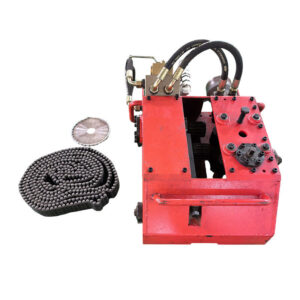
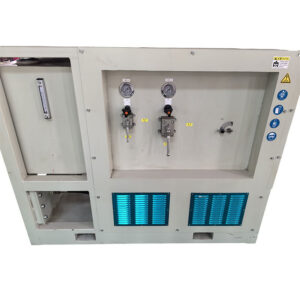
We also manufacture the equipment a contractor needs to pass this evaluation: hot tapping equipment, line stopping and plugging equipment, pipeline cutting machines, and pipeline cold bending tools, plus automatic pipeline welding systems. Send us your pipe size, fluid, pressure, and governing code, and our engineers will confirm the compliant approach and provide a quotation. Request a quote or email sales@jsw.com, and we respond within one business day.






 English
  Arabic
  Russian
  Spanish
  French