
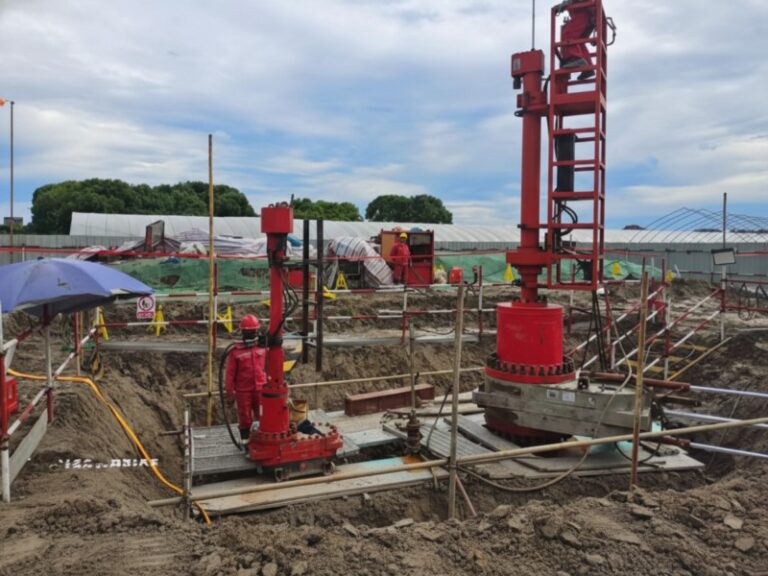
The fundamental difference between trenchless pipeline repair and traditional excavation is that trenchless methods rehabilitate or replace pipe from the inside using small access points, while traditional open-cut excavation requires digging a continuous trench along the entire pipe length to physically remove and replace it. The choice between these two methodologies affects not only your immediate plumbing costs but also your property’s landscape, project timeline, and long-term infrastructure reliability. This guide provides a detailed technical analysis of both approaches, compares specific trenchless methods like CIPP lining and pipe bursting against dig-and-replace, examines cost structures with real-world data, and outlines the exact conditions where each solution is most appropriate for applications involving water, air, oil, and other utilities.
1. What is Traditional Excavation (Open-Cut) and How Does It Work?
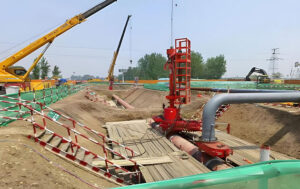
Traditional excavation, often referred to as “open-cut” or “dig-and-replace,” is the conventional method of underground pipe construction and maintenance. It involves physically exposing the pipeline by removing the earth above it.
The Step-by-Step Process of Dig-and-Replace
A standard traditional excavation project follows a linear, invasive procedure:
- Site Survey and Utility Locating: Before any digging, crews must locate and mark existing underground utilities (gas, power, telecom) to prevent catastrophic damage. This step is critical for safety and compliance.
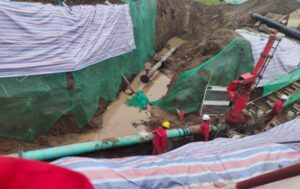
- Trench Excavation: Heavy machinery like backhoes and excavators dig a trench from the surface down to the pipe’s depth. This may require cutting through asphalt, concrete, or building slabs.
- Pipe Exposure and Removal: The soil is cleared from around the failed pipe. The damaged sections are cut out and removed from the site.
- New Pipe Installation: New pipe sections (often PVC, HDPE, or ductile iron) are laid in the trench, aligned, and connected to the existing system.
- Backfilling and Restoration: The trench is backfilled with compacted soil. Finally, all disturbed surfaces—lawns, driveways, sidewalks, and landscaping—are repaired or replaced.
Pros and Cons of Traditional Open-Cut
Pros:
- Full Visibility: Crews have direct line-of-sight to the pipe, surrounding soil, and connections, which is beneficial for complex situations.
- Complete System Redesign: It allows for upsizing pipe diameters significantly, rerouting the pipeline, or rebuilding systems that have fully collapsed.
- Fewer Technology Constraints: It works universally, regardless of pipe material or the presence of severe offsets and sharp bends.
Cons:
- Major Property Disruption: Trenches can destroy long-established landscaping, driveways, and hardscapes.
- Higher Total Project Cost: While the per-foot cost of pipe might be lower, the expenses for demolition, backfilling, and surface restoration often make this method 30-50% more expensive overall.
- Extended Timelines: Projects can stretch for weeks due to digging, inspections, and complex restoration work, causing significant inconvenience.
- Safety and Environmental Impact: Open trenches present fall and cave-in hazards. They also disturb soil structure, root systems, and can lead to erosion issues.
2. What is Trenchless Pipeline Repair and How Does It Work?
Trenchless pipeline repair encompasses a family of technologies designed to rehabilitate or replace underground pipes with minimal surface excavation. Instead of a long trench, workers access the pipe via existing manholes or small launch and receiving pits.
Common Trenchless Methods Explained
Several key solutions fall under the trenchless umbrella, each suited for different pipe conditions:
- Cured-in-Place Pipe (CIPP): A flexible liner saturated with resin is inserted into the damaged pipe. It is then inflated and cured using hot water, steam, or UV light, creating a new, jointless pipe within the old one. This is a dominant method for trenchless pipe rehabilitation.
- Pipe Bursting: A conical bursting head is pulled through the old pipe, fracturing it outward. Simultaneously, a new pipe (typically HDPE) is pulled in behind the head. This method is ideal for replacing pipes with a like-for-like size or for upsizing.
- Pipe Modification and Localized Repair: Techniques like pipeline modification or using robotic cutters (pipeline stopper removal) address specific issues. For example, robotic systems like the eCutter lateral are used to precisely remove protruding connections or blockages in house connections without digging.
- Sliplining: A new, smaller-diameter pipe is inserted into the old host pipe and the annular space is grouted. Flexi-Sliplining uses a flexible, three-layer pipe that can navigate bends, making it ideal for environmentally sensitive sites.
Pros and Cons of Trenchless Methods
Pros:
- Minimal Surface Disruption: Landscaping, structures, and hardscapes remain largely intact, as work is done through small access pits.
- Faster Completion: Many projects, even complex ones, are completed in 1-2 days, significantly reducing downtime.
- Lower Total Project Cost: By avoiding extensive restoration, trenchless can save property owners 30-50% compared to open-cut.
- Long-Lasting Results: Modern CIPP and epoxy coatings are designed to last 50+ years, providing a durable, corrosion-resistant barrier.
Cons and Limitations:
- Requires Accessible Host Pipe: The existing pipe must be accessible for cleaning and liner insertion. It cannot be used if the pipe is fully collapsed or severely misaligned.
- Follows Existing Path: This method cannot change the pipeline route. If a pipe needs to be relocated, open-cut is required.
- Specialized Equipment: The process requires highly trained crews and specialized equipment from specific equipment manufacturers.
3. Trenchless vs. Traditional Excavation: A Head-to-Head Comparison
To make an informed decision, it’s crucial to compare these methods across key performance indicators. The table below summarizes the core differences.
| Feature | Traditional Excavation | Trenchless Repair (e.g., CIPP) |
|---|---|---|
| Surface Disruption | High – Destroys landscaping, driveways, and structures along the pipe path. | Low – Requires only small access pits; surface remains largely intact. |
| Project Timeline | Weeks to months, depending on restoration scope. | Days; often 1-2 days for residential and commercial projects. |
| Total Cost | Often higher due to demolition and restoration costs (30-50% more). | Generally 30-50% lower total project cost by eliminating restoration. |
| Ideal Pipe Condition | Fully collapsed, misaligned, or needing a complete system redesign. | Structurally sound enough to host a liner; cracks, leaks, and corrosion. |
| Longevity of Repair | Dependent on new pipe material (e.g., 50-100 years for PVC). | 50+ years for CIPP and epoxy systems. |
| Environmental Impact | High – Disturbs soil, risks utility strikes, requires material hauling. | Low – Reduces carbon footprint, preserves trees, and eliminates soil waste. |
4. Cost Analysis: Why Trenchless Often Saves You Money
When evaluating the difference between these methods, focusing solely on the plumbing line-item quote is a mistake. A comprehensive life cycle cost analysis reveals the true financial picture, incorporating installation, social, and environmental costs.
Direct vs. Indirect Costs
- Traditional Excavation: The initial bid might seem lower, but it often excludes or underestimates the cost of restoring surfaces. Replacing a destroyed driveway, patio, or extensive landscaping can add tens of thousands of dollars to the final bill.
- Trenchless Repair: The upfront cost per foot for materials and installation (like the resin and liner) may be similar or slightly higher. However, because there is no large-scale demolition, the “total project value” is significantly lower.
Hidden Savings with Trenchless:
- No Business Interruption: For commercial sites, avoiding weeks of construction means no loss of revenue from closed parking lots or operations.
- No Temporary Accommodations: Residents do not need to be relocated, and there is no need for portable facilities.
- Reduced Risk: There is a lower risk of damaging other utilities, which can incur massive liability and repair costs.
5. Application Scenarios: Choosing the Right Solution for Your Project
The “best” method depends entirely on the specific project conditions. A reputable contractor will assess the site and recommend the most effective approach.
When to Choose Traditional Excavation
- The pipe has suffered a full structural collapse over a long distance, preventing the passage of a liner or bursting head.
- The project requires increasing the pipe diameter beyond one standard size or completely rerouting the pipeline.
- The existing pipe has severe joint offsets or sags that a rigid liner cannot accommodate.
- Access points (manholes, cleanouts) do not exist and cannot be safely created.
When Trenchless is the Superior Solution
- The property has mature landscaping, paved driveways, or hardscaping that the owner wants to preserve.
- The project is in an occupied building (hotel, hospital, school) where noise, dust, and access restrictions must be minimized.
- The pipeline runs under an environmental sensitive area, like a wetland, river, or Site of Special Scientific Interest (SSSI).
- The goal is proactive maintenance and extending the life of an aging but still structurally sound pipe.
- The work involves complex air, water, or oil lines in a congested urban environment where excavation permits are difficult to obtain.
6. Key Equipment and Technologies in Trenchless Rehabilitation
The success of a trenchless project relies heavily on advanced technology from specialized equipment manufacturers. From inspection to curing, every step requires precision tools.
- Inspection Robots: Before any work, high-resolution CCTV crawlers (like those from Minicam) inspect the pipe to assess defects and locate service laterals.
- Cleaning and Cutting Robots: For pipeline modification, robotic cutters like the Dancutter MAXI FLEX are used to remove roots and protruding connections before lining. Precision tools like the eCutter lateral are essential for reinstating house connections, as they can navigate tight bends and perform precise milling.
- Curing Systems: UV LED curing systems (e.g., Sewertronics SpeedyLight+) allow for rapid and controlled curing of structural liners, ensuring consistent quality and strength.
- Lining Materials: Material innovation is key. Solutions like the Picote Flexi-Sliplining system use a three-layer flexible pipe that can be installed manhole-to-manhole without bypass pumping, ideal for sensitive sites.
7. Frequently Asked Questions (FAQ)
Is trenchless technology suitable for all types of pipes?
Trenchless methods are highly versatile and are used extensively for sewer, water, storm drain, and industrial piping. However, the specific method must match the pipe material (clay, concrete, PVC, cast iron) and its condition. A thorough CCTV inspection is mandatory to determine suitability.
How long does a trenchless pipe repair last?
When installed correctly by a qualified contractor, modern trenchless solutions like CIPP and epoxy coatings are engineered to last 50 years or more. They create a seamless, corrosion-resistant barrier that is often stronger and more durable than the original pipe.
What is the cost difference between trenchless and traditional methods?
While the initial per-foot cost can be comparable, the total project cost for trenchless is typically 30-50% lower. This is because it eliminates the massive expenses associated with surface demolition, excavation, backfilling, and landscape restoration.
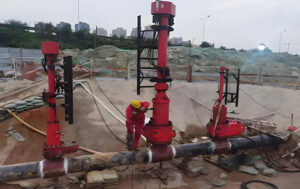
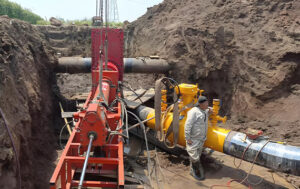
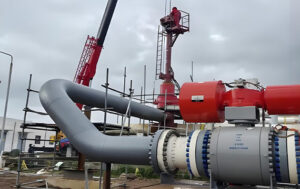
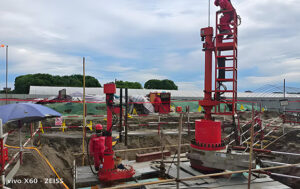
What is hot tapping and pipeline stopple?
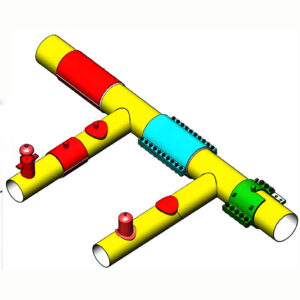
Hot tapping is the technique of creating a connection to a pressurized pipeline (carrying oil, gas, or water) without shutting down the system. Pipeline stopple (or pipeline plugging) is the process of temporarily isolating a section of pipe using a plugging head to allow for repairs or modification while the rest of the system remains in service. These are specialized services often used in conjunction with both trenchless and traditional work.
Making the Informed Choice for Your Infrastructure
Understanding the difference between trenchless pipeline repair and traditional excavation is the first step toward smarter infrastructure management. Traditional open-cut remains a necessary tool for specific, high-complexity situations. However, for the vast majority of failing pipelines—those dealing with cracks, leaks, corrosion, and root intrusion—trenchless technology offers a superior, cost-effective, and sustainable solution. By prioritizing minimal disruption, faster completion, and long-term performance, trenchless methods protect your property value and ensure the integrity of your essential utilities for decades to come.
Author: David Chen, Senior Infrastructure Engineer
Last Updated: March 8, 2026
JSW Advantage
At JSW, we understand that the choice between trenchless and traditional excavation impacts your bottom line and operational continuity. As a premier services provider in the pipeline industry, we bridge the gap between innovative technology and field-proven application.
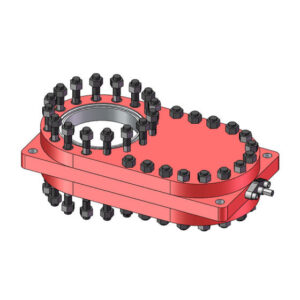
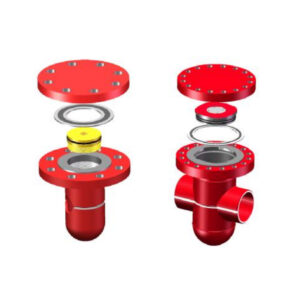
- Comprehensive Product Portfolio: We don’t just talk about solutions; we provide them. Whether you need pipeline tapping machines, high-pressure pipeline stopper systems, or advanced pipeline plug equipment for safe isolation, JSW is your go-to Material Supplier. Our portfolio supports every phase of construction, maintenance, and Restoration.
- End-to-End Support: Choosing the right contractor or solution is critical. We partner with leading equipment manufacturers and factory experts to ensure you have access to the best tools for hot tapping, pipeline modification, and trenchless pipe rehabilitation. Our team provides the technical backing you need to execute projects with confidence, whether you’re a municipal utility or a private engineering firm.
- Proven in the Field: From handling critical oil and air lines to essential water infrastructure, JSW equipment is built for the demands of modern industry. We help you minimize downtime and maximize the lifespan of your assets.
Ready to discuss your next project? Contact the JSW team today for expert advice on the most efficient and cost-effective approach for your pipeline needs.





 English
  Arabic
  Russian
  Spanish