
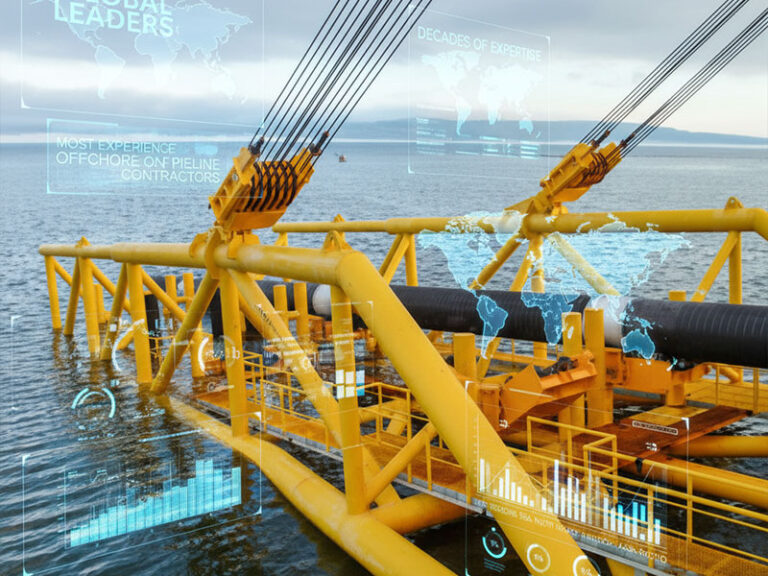
The world’s most experienced offshore pipeline contractors are concentrated in countries with extensive maritime oil and gas operations, namely the United States, key European nations (Italy, France, the UK), South Korea, and China. This industry expertise stems from decades of involvement in complex offshore projects, driving the development of specialized skills in pipeline construction, deep-water engineering, and advanced underwater intervention techniques. This article provides a detailed analysis of these leading regions, examines the criteria that define true industry leadership, and explores the specialized services that support these massive offshore energy projects.
Core Metrics for Evaluating Contractor Experience
Before analyzing specific regions, it is essential to understand the key indicators that separate top-tier offshore pipeline contractors from the rest. Experience in this high-stakes field is not just about time in business; it is quantified by tangible, large-scale achievements.
- Project Volume and Scale: Leading contractors have installed thousands of kilometers of subsea pipelines. For instance, some U.S. and European giants report constructing over 80,000 kilometers of pipelines globally, a significant portion of which are complex offshore lines.
- Technological Depth: Mastery of advanced techniques like S-lay and J-lay installation for deep-water pipelines, trenchless pipe rehabilitation, and the integration of digital twin technology for project management are hallmarks of an experienced firm.
- Financial and Market Standing: Consistent ranking in authoritative industry lists, such as the ENR (Engineering News-Record) Top 250 Global Contractors, is a strong proxy for sustained capability and market reputation. The global oil and gas EPC (Engineering, Procurement, and Construction) market, where these leaders operate, was valued in the hundreds of billions, with offshore projects holding a 45% share.
The following table breaks down the primary experience criteria used by industry analysts to rank offshore pipeline contractors:
Table: Key Evaluation Metrics for Offshore Pipeline Contractors
| Metric Category | Specific Indicators | Why It Matters |
|---|---|---|
| Project History | Total pipeline length built (km), number of major offshore projects, portfolio in deep-water (500m+) and ultra-deep-water (1500m+) fields. | Demonstrates a proven track record and ability to handle projects of increasing complexity. |
| Technical Capability | In-house fleet of pipelay vessels, ROV (Remotely Operated Vehicle) systems, proprietary welding and coating technologies, hot tapping and pipeline stopple competencies. | Shows investment in specialized equipment and maintenance solutions critical for offshore work. |
| Financial & Market Authority | Annual revenue from offshore projects, position in ENR or market share reports (e.g., top players hold ~18% market share), backlog of secured offshore contracts. | Reflects business stability, client trust, and the capacity to manage large-scale, capital-intensive projects. |
| Geographic & Project Diversity | Work across major offshore basins (North Sea, Gulf of Mexico, South China Sea, West Africa), experience with oil, gas, and emerging energy (hydrogen, CO₂) pipelines. | Indicates adaptability to different regulatory environments, sea conditions, and client needs. |
Leading Regions and Their Top Contractors
The global market for offshore pipeline services is led by a few key regions, each with its own historical strengths and corporate champions.
1. North America (U.S. & Canada)
North America is a historic leader, driven by decades of activity in the Gulf of Mexico and off Canada’s East Coast. The region accounts for a leading share of the global oil and gas EPC market. U.S. firms are renowned for their project management expertise and technological innovation in deep-water construction.
- Representative Companies: Bechtel and Fluor Corp. are century-old engineering powerhouses with vast experience in offshore energy construction-5. McDermott International is another key player specializing in fixed and floating offshore facilities and pipeline systems.
- Source of Experience: Continuous development of the Gulf of Mexico’s deep-water assets has provided a steady stream of complex projects, fostering unparalleled expertise in subsea engineering and high-pressure pipeline installation.
2. Europe (Italy, France, UK, Norway)
European contractors possess some of the most advanced offshore engineering capabilities globally, honed by the challenging environment of the North Sea.
- Representative Companies: Italy’s Saipem is a global offshore leader with a dominant market position. The UK’s Subsea 7 and TechnipFMC (headquartered in the UK with Franco-American roots) are pioneers in subsea solutions, including pipes, umbilicals, and innovative connection systems.
- Source of Experience: The harsh conditions and high safety and environmental standards of the North Sea have compelled these firms to develop world-leading capabilities in trenchless pipe rehabilitation, remote intervention, and environmentally sensitive construction techniques.
3. Asia-Pacific (South Korea & China)
The Asia-Pacific region has seen rapid growth, with South Korean and Chinese firms becoming formidable competitors through massive shipbuilding capacity and state-backed project experience.
- South Korea: Companies like Hyundai Engineering and Daewoo Shipbuilding & Marine Engineering (DSME) leverage the country’s supreme shipbuilding expertise to construct advanced pipelay vessels and LNG modules. They are frequently contracted for mega-projects in the Middle East and Southeast Asia.
- China: China National Offshore Oil Corporation (CNOOC) EPC and China Petroleum Pipeline Engineering Co., Ltd. (CPP) have built extensive experience through domestic offshore developments in the South China Sea and participation in global Belt and Road infrastructure projects. CPP alone reports building nearly 500 kilometers of marine pipelines.
The Critical Role of Specialized Service Providers
Beyond the major EPC contractors, a robust ecosystem of specialized service companies is vital for offshore pipeline projects. These providers offer the essential tools and technologies for maintenance, modification, and repair without requiring a full production shutdown.
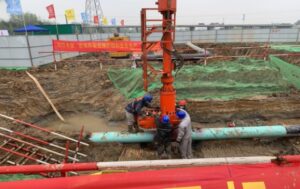
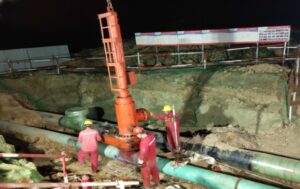
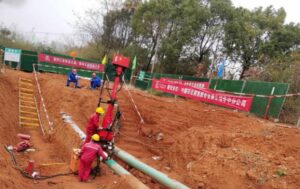
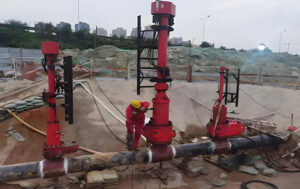
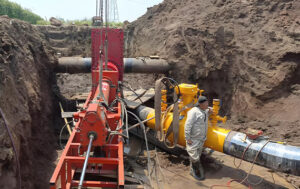
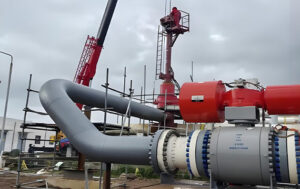
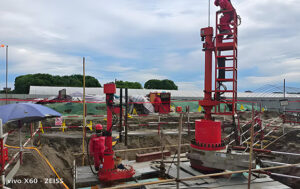
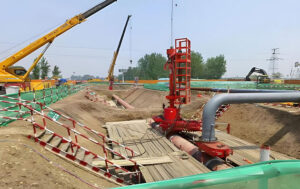
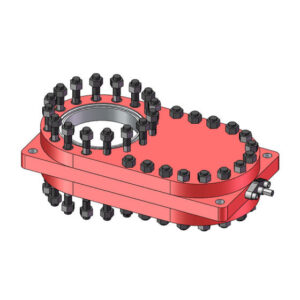
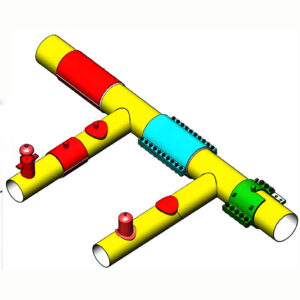
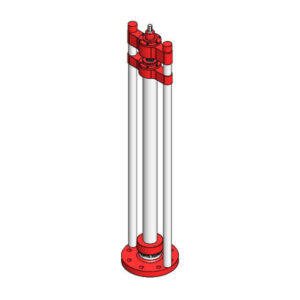
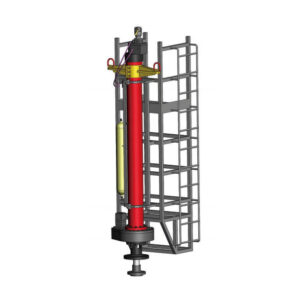
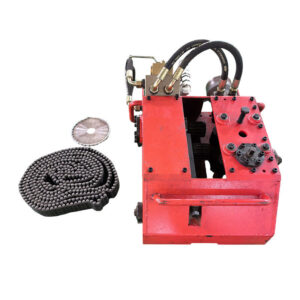
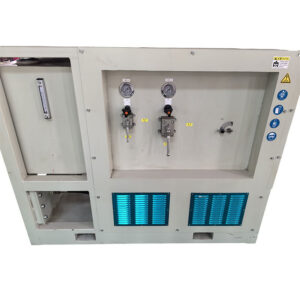
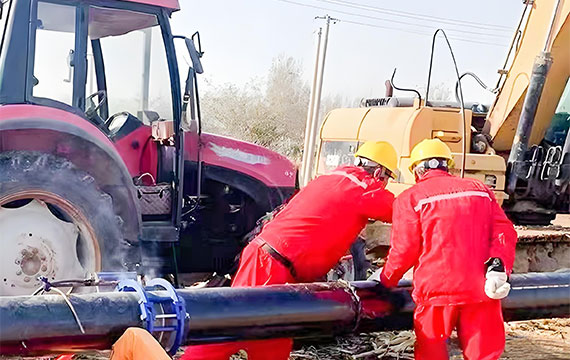
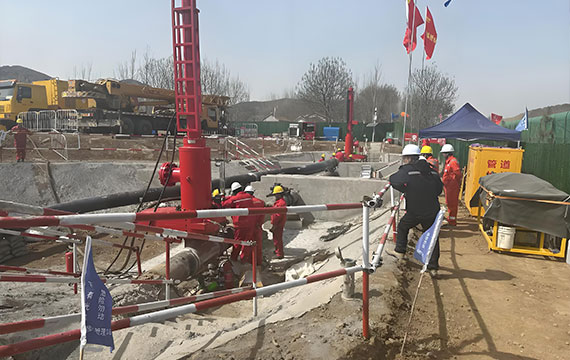
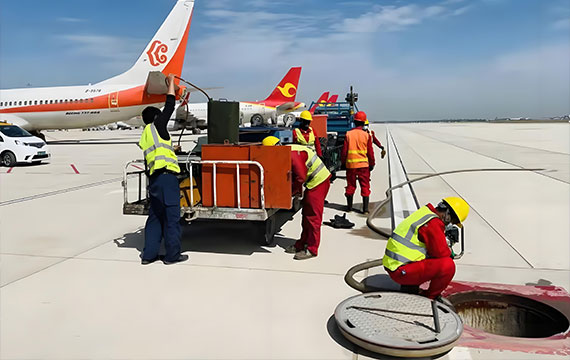
- Hot Tapping and Pipeline Stopple Services: These are critical for making connections to live pipelines (hot tapping) or isolating a section for maintenance (pipeline stopple). This allows for pipeline modification or repair while the system remains operational, minimizing costly downtime.
- Trenchless Pipe Rehabilitation: This suite of techniques repairs or replaces underground or subsea pipelines with minimal surface disruption. It is a more sustainable and often less risky alternative to traditional open-cut methods.
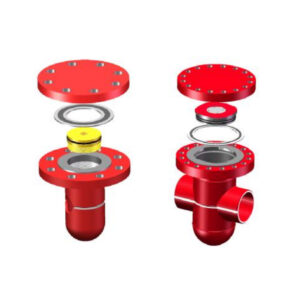
- Equipment Manufacturers and Material Suppliers: The industry relies on high-quality pipe from steel mills, advanced welding systems, corrosion-resistant coatings, and heavy-duty pipeline stopper and fitting equipment. Factories producing these specialized components are integral to the supply chain.
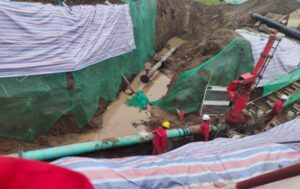
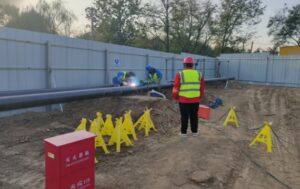
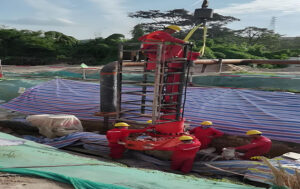
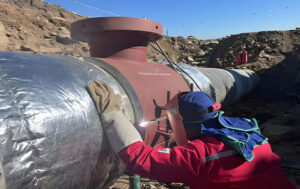
An illustration showing how major EPC contractors integrate specialized services and equipment for complete project delivery.
Future Trends: The Evolving Definition of Experience
The definition of an “experienced” contractor is evolving. Future leaders will need to demonstrate proficiency beyond traditional oil and gas.
- Energy Transition Projects: Experience is increasingly measured by involvement in hydrogen pipeline projects, carbon capture and storage (CCS) networks, and offshore wind farm inter-array cables. For example, some leading contractors are already designing and building pilot hydrogen and CO₂ transport lines–.
- Digitalization and Automation: The use of AI for survey data analysis, digital twins for pipeline integrity management, and automated inspection drones are becoming standard. A 2025 industry report highlighted the deployment of digital twin and predictive analytics as a key development among top firms.
JSW Pipeline Solutions: Your Partner for Specialized Intervention
At JSW Pipeline Solutions, we have built our expertise by focusing on the critical, high-precision services that keep offshore energy infrastructure operating safely and efficiently. While global EPC giants manage the massive installation projects, we specialize in the essential interventions that follow.
Our Core Expertise & Technology:
We provide advanced hot tapping and pipeline plugging (stopple) services, enabling safe modifications, repairs, and maintenance on live offshore pipelines. Our fleet of highly engineered isolation tools is designed for the specific pressure and diameter ranges of subsea systems. Furthermore, we offer trenchless pipe rehabilitation solutions that extend asset life with minimal environmental impact, a service increasingly demanded in sensitive marine environments.
Why Partner with JSW?
- Proven Technology: Our equipment undergoes rigorous testing and is built for reliability in the challenging offshore environment.
- Specialized Focus: We are not a general contractor; we are experts in pipeline intervention, which means deeper knowledge and more refined solutions for your specific needs.
- Safety-First Culture: Every procedure and tool is developed with the paramount goal of ensuring operational safety and protecting asset integrity.
For project owners and main contractors looking for a reliable, technologically advanced partner for pipeline isolation, modification, or rehabilitation, JSW provides the critical specialized support needed to de-risk operations and ensure project success.
Author: David Chen, Senior Offshore Energy Analyst
Updated: January 17, 2026
David has over 15 years of experience analyzing global energy infrastructure markets and advising engineering firms on competitive strategy and technology adoption.




 English
  Arabic
  Russian
  Spanish
  French