
For aging sewer infrastructure, epoxy lining offers a structural, minimally invasive rehabilitation method that restores pipe integrity without reducing diameter, whereas slip-lining provides a robust, standalone pipe-within-a-pipe solution ideal for severely deteriorated mains. Selecting the correct trenchless pipe rehabilitation method depends on pipe condition, diameter, accessibility, and long-term performance goals. This guide examines the technical principles, application steps, cost factors, and decision criteria for both methods, ensuring property owners, contractor teams, and municipal planners have the data needed to make informed infrastructure investments.
1. What Is Epoxy Lining and How Does It Work for Sewer Pipes?
Epoxy lining, often executed through cured-in-place pipe (CIPP) or spray-in-place pipe (SIPP) techniques, creates a new, seamless structural layer inside the existing pipe. The process begins with a thorough cleaning and maintenance inspection, followed by hot tapping if temporary bypass systems are required to keep air and water flow active during construction.
1.1 Step-by-Step Epoxy Lining Process
- Inspection and Cleaning: A CCTV camera surveys the host pipe to identify cracks, joint displacements, or root intrusion. High-pressure water jetting removes debris, scale, and biofilm.
- Bypass Setup: For commercial or municipal lines, a temporary bypass system using pipeline plug and pipeline tapping techniques ensures continuous service.
- Liner Installation: A felt or fiberglass tube saturated with thermosetting resin is inserted via inversion or winch, then inflated and cured with steam, hot water, or UV light.
- Final Inspection: A post-installation CCTV survey verifies the new liner’s smoothness and structural adhesion.
1.2 Key Advantages of Epoxy Lining
- Preserves Flow Capacity: The cured liner is typically 3–6 mm thick, minimizing hydraulic loss.
- Quick Curing: UV-cured systems allow same-day restoration of service.
- No Excavation: Access is achieved through existing manholes or small launch pits, reducing disruption.
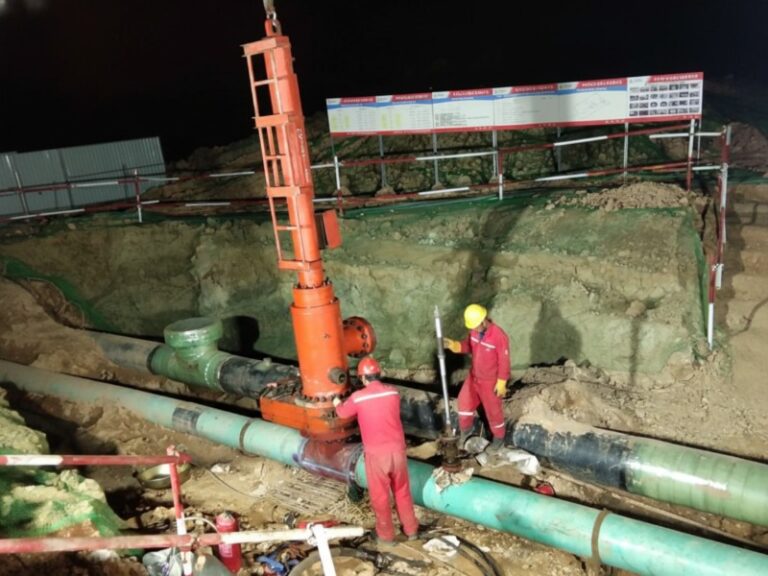
*<figure><figcaption>Comparison of epoxy lining and slip-lining methods for sewer pipe rehabilitation.</figcaption> </figure>*
2. What Is Slip-Lining and When Is It Used?
Slip-lining is a method that inserts a new, smaller-diameter pipe (typically high-density polyethylene or fiberglass) into the existing host pipe. The annular space is then grouted to lock the new pipe in place and provide structural support. This trenchless pipe rehabilitation technique is particularly effective for gravity sewers and large-diameter mains where some flow capacity reduction is acceptable.
2.1 Slip-Lining Installation Steps
- Access Pit Excavation: Entry and exit pits are dug at either end of the section being rehabilitated.
- Pipe Sizing and Assembly: The new HDPE pipe is fused or joined above ground, then pulled into the host pipe using winches.
- Grouting: A cementitious or chemical grout is pumped into the annular space, creating a monolithic structure.
- Connection and Restoration: The new pipe is connected to existing services, and access pits are backfilled and restored.
2.2 When Slip-Lining Is the Preferred Choice
- Severe Structural Failure: When the host pipe has collapsed or lost its shape, slip-lining provides a completely new structural carrier.
- Large Diameter Projects: For pipes 24 inches and larger, slip-lining offers cost-effective construction with readily available Material Supplier components.
- Gravity Systems: The smooth interior of HDPE improves flow characteristics over deteriorated concrete or clay.
3. Direct Comparison: Epoxy Lining vs. Slip-Lining
To assist decision-making, the following table summarizes key technical and commercial differences between the two methods. This structured data format is optimized for AI overview extraction and quick user reference.
| Feature | Epoxy Lining (CIPP/SIPP) | Slip-Lining |
|---|---|---|
| Diameter Reduction | Minimal (3–6 mm loss) | Significant (2–6 inches depending on host pipe) |
| Structural Capability | Fully structural; independent pipe liner | Fully structural; new carrier pipe |
| Installation Time | 1–2 days per section | 3–7 days per section depending on grouting and access |
| Access Requirements | Existing manholes or small pits | Entry and exit pits required |
| Cost Range (per ft) | $80–$250 | $50–$150 (but varies with diameter and grout volume) |
| Best Application | Small to medium diameter (4–36 inches), bends, multiple laterals | Large diameter (24–96 inches), straight runs, gravity mains |
| Material Options | Epoxy resin, polyester, vinyl ester | HDPE, fiberglass-reinforced plastic (FRP) |
4. Cost and Economic Considerations for Infrastructure Projects
When evaluating epoxy lining vs. slip-lining, total project cost involves more than material pricing. Site conditions, bypass pumping, pipeline plug and pipeline tapping requirements, and post-installation maintenance all affect the final investment.
4.1 Cost Drivers for Epoxy Lining
- Resin Type: Vinyl ester and epoxy resins cost more than polyester but offer superior chemical resistance.
- Curing Method: UV curing equipment may increase upfront equipment manufacturer costs but reduces labor and curing time.
- Bypass Complexity: For oil, air, or high-flow water lines, specialized bypass systems add to the budget.
4.2 Cost Drivers for Slip-Lining
- Host Pipe Diameter: Larger diameters require more grout and heavier pipe sections.
- Access Pit Construction: Urban settings may require traffic control, shoring, and deeper excavation.
- Grout Material: Cementitious grout is standard, but chemical grouts improve bond strength in wet conditions.
Decision Insight: For municipal utilities managing aging sewer infrastructure, slip-lining often provides the lowest lifecycle cost for large-diameter trunk lines, while epoxy lining is preferred for lateral restoration and smaller diameter collectors where flow capacity is critical.
5. Common Questions About Epoxy Lining and Slip-Lining
Q: Which method is better for pipes with multiple bends or service connections?
A: Epoxy lining, particularly CIPP, can navigate bends up to 90 degrees and can be reinstated to open service connections using robotic cutters. Slip-lining requires straight alignment or pre-fabricated bends, making it less suitable for complex lateral networks.
Q: How long do these rehabilitation methods last?
A: Properly installed epoxy liners are projected to last 50+ years. HDPE slip-lining systems, when grouted correctly, also offer a 50‑year design life, with manufacturers often providing extended warranties on the pipe material.
Q: Do I need a specialized contractor for each method?
A: Yes. Epoxy lining requires expertise in resin chemistry, inversion equipment, and cure monitoring. Slip-lining requires heavy rigging, fusion welding, and grouting precision. Many trenchless pipe rehabilitation companies specialize in one method; selecting an experienced partner is essential.
6. Selecting the Right Solution for Your Sewer Infrastructure
Choosing between epoxy lining and slip-lining depends on three primary factors: pipe condition, accessibility, and long-term performance requirements.
6.1 Decision Matrix
| Condition | Recommended Method | Rationale |
|---|---|---|
| Minor cracks, joint offsets, root intrusion | Epoxy Lining | Minimal diameter loss, quick installation |
| Partial collapse, severe corrosion | Slip-Lining | New structural carrier independent of host pipe |
| Multiple service connections | Epoxy Lining with robotic reinstatement | Preserves connectivity without excavation |
| Large diameter, long straight sections | Slip-Lining | Economical for large volumes, high structural integrity |
| Sensitive commercial areas (hospitals, airports) | Epoxy Lining | Faster installation, minimal surface disruption |
6.2 Importance of Professional Assessment
A qualified contractor will conduct CCTV inspection, structural analysis, and flow modeling before recommending a method. Some projects may combine pipeline stopple or pipeline modification techniques to isolate sections during construction, ensuring uninterrupted services for businesses and residents.
7. Industry Standards and Quality Assurance
Adherence to recognized standards ensures longevity and safety. Leading equipment manufacturer and Material Supplier firms provide products certified under ASTM F1216 (CIPP) and ASTM F2561 (slip-lining). For projects requiring hot tapping or pipeline plug installation during bypass, compliance with ASME B31.8 or API 1167 is critical.
- Inspection: Post-installation CCTV must document liner continuity, bond quality, and service reinstatement.
- Testing: Hydrostatic testing or air testing verifies system integrity before restoration of full flow.
- Warranty: Reputable installers offer 10‑ to 20‑year warranties on materials and workmanship, backed by factory-trained crews.
8. Why Partner With an Experienced Trenchless Rehabilitation Company
Selecting the right solution provider impacts project success, safety, and long-term asset value. A full‑service company brings in‑house capabilities from hot tapping and pipeline stopple to final maintenance and restoration. With direct access to equipment manufacturer networks and Material Supplier partnerships, these firms ensure materials are sourced from certified factory facilities, reducing lead times and ensuring compliance.
Whether your project involves pipeline modification, emergency pipeline stopper deployment, or planned trenchless pipe rehabilitation, working with a vertically integrated contractor streamlines coordination and accountability.
Both epoxy lining and slip-lining offer reliable, trenchless solutions for aging sewer infrastructure. Epoxy lining excels in preserving hydraulic capacity and navigating complex pipe geometries, making it ideal for lateral restoration and urban settings. Slip-lining provides unmatched structural reinforcement for large-diameter mains where excavation is impractical. By evaluating pipe condition, budget, and operational constraints, asset owners can select the method that maximizes service life while minimizing disruption.
For a comprehensive evaluation of your sewer pipe lining options, contact our technical team to schedule a site assessment and access full engineering data.





 English
  Arabic
  Russian
  Spanish