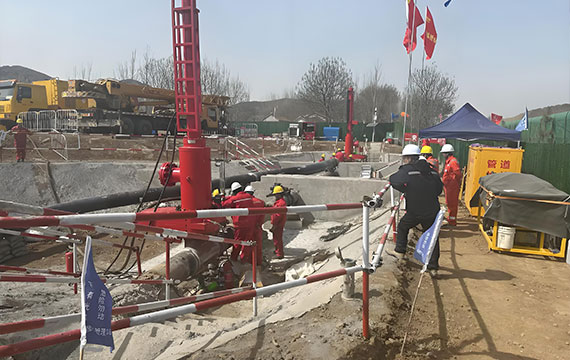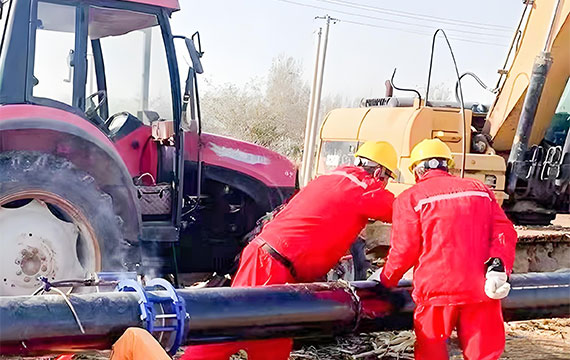
Imagen de una obra en la que unos ingenieros están aplicando un revestimiento compuesto a una gran tubería de acero. Un diagrama técnico superpuesto muestra las capas de reparación compuestas, la tensión circunferencial y la transferencia de carga.

Cómo reparar defectos en tuberías de gas que atraviesan paredes con materiales compuestos de ingeniería: límites de presión, permeabilidad y datos de fatiga según la norma ASME B31.8

Through-wall defects in gas pipelines create an immediate loss of pressure containment and require urgent repair. Engineered composite systems offer a proven solution for restoring up to 100% MAOP without shutdown—when designed to address cyclic fatigue and gas permeation. This guide explains ASME B31.8 and ISO 24817 pressure limits, compares

Leer Más »
Un buzo con un traje amarillo aplica bajo el agua un revestimiento de compuesto de fibra de carbono a un conducto ascendente marítimo corroído, con el fin de aislarlo de la corrosión cerca de una plataforma petrolífera.

Reparación submarina con materiales compuestos para aislar de la corrosión los conductos ascendentes en alta mar: validación de la aplicación en condiciones de fuerte oleaje

Underwater composite repair for corrosion isolate offshore risers is a subsea rehabilitation method where carbon fiber wraps bonded with marine-grade epoxy restore mechanical strength and create a permanent corrosion barrier on damaged risers without shutdown or welding. When validated under severe wave action combined with cyclic pressure, carbon fiber systems

Leer Más »
Tramo de un oleoducto y gasoducto agrietado en un desierto, reforzado con una envoltura de compuesto de fibra de carbono tejida de color oscuro. Los gráficos destacan la mayor vida útil frente a la fatiga según la norma ASME B31.8.

Comportamiento a largo plazo de los recubrimientos de compuestos de fibra de carbono en tuberías sometidas a presión cíclica: mitigación de las grietas por fatiga según la norma ASME B31.8

How Carbon Fiber Composite Wraps Extend Pipeline Fatigue Life (ASME B31.8 Guide) Carbon fiber composite wraps extend pipeline fatigue life by reducing crack tip stress intensity (ΔK) through load sharing, enabling up to 10 million pressure cycles and over 20 years of service under ASME B31.8. What is pipeline fatigue

Leer Más »
Three technicians in hard hats and reflective gear perform a composite wrap repair on a rusted crude oil pipeline in an outdoor industrial setting with tools.

ISO 24817 frente a ASME PCC-2, parte 4: Cálculo del espesor del revestimiento compuesto para la reparación de pérdidas en paredes sometidas a alta presión

ISO 24817 and ASME PCC-2 Part 4 are standards for composite wrap repair of pressurized pipelines. ISO 24817 uses a performance-based design that allows thinner, optimized repairs based on material testing, while ASME PCC-2 applies stricter safety factors, resulting in thicker and more conservative designs. In practice, ISO is typically

Leer Más »
Engineering technicians in safety gear inspect a large steel oil and gas pipeline with field instruments at a dusty construction site featuring excavators.

Pipeline Ovality Limits for Line Stopping (API 570 Guide)

Pipeline ovality is a critical factor in determining whether line stopping can be performed safely under API 570. In practice, ovality above 3% reduces folding-plug sealing effectiveness, while ovality above 5% is typically unacceptable. This guide explains allowable limits, inspection methods, failure mechanisms, and how to decide whether to proceed,

Leer Más »
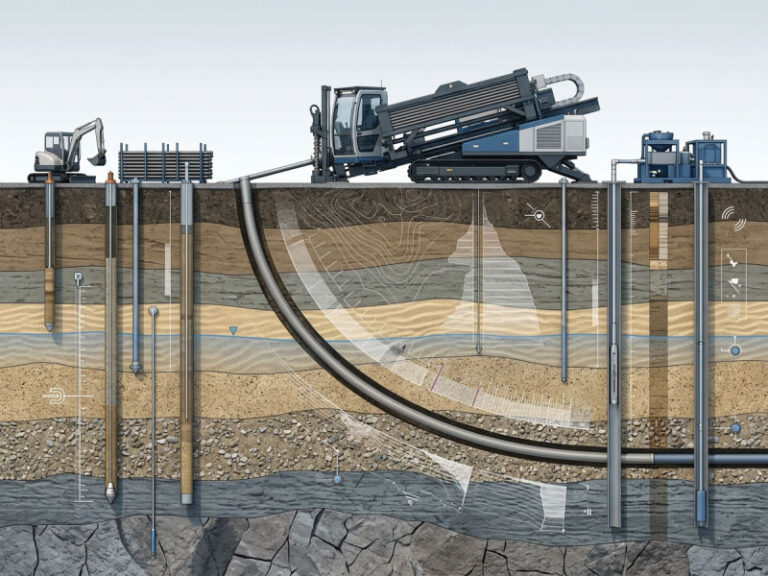
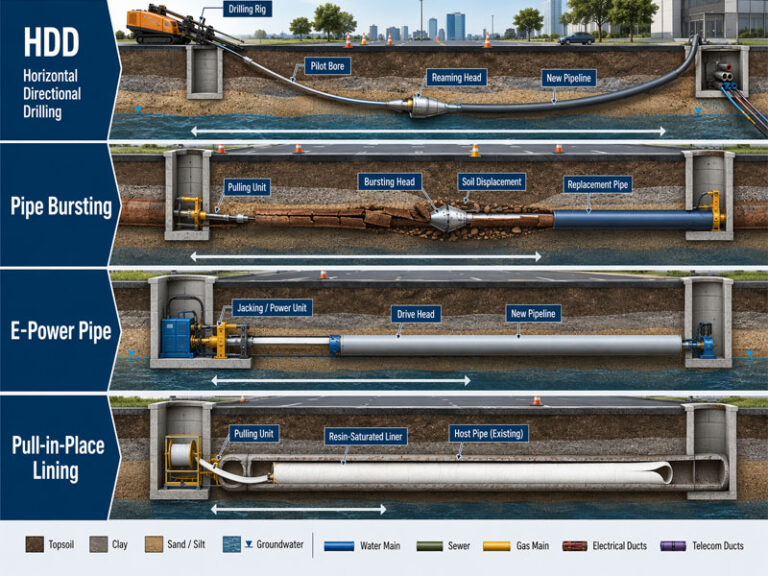
Engineering infographic comparing pulling-distance concepts for HDD, pipe bursting, E-Power Pipe, and pull-in-place lining in underground pipelines

Maximum Distance a Pipe Can Be Pulled Using Trenchless Methods: HDD Pull Length, Pipe Bursting & Lining Limits

The maximum distance a pipe can be pulled using trenchless methods ranges from approximately 50 meters to more than 3,000 meters, depending on the installation technology, pipe characteristics, ground conditions, and equipment limitations. For new pipeline construction, Horizontal Directional Drilling (HDD) typically achieves 200–800 meters per pull. For pipeline rehabilitation, specialized

Leer Más »
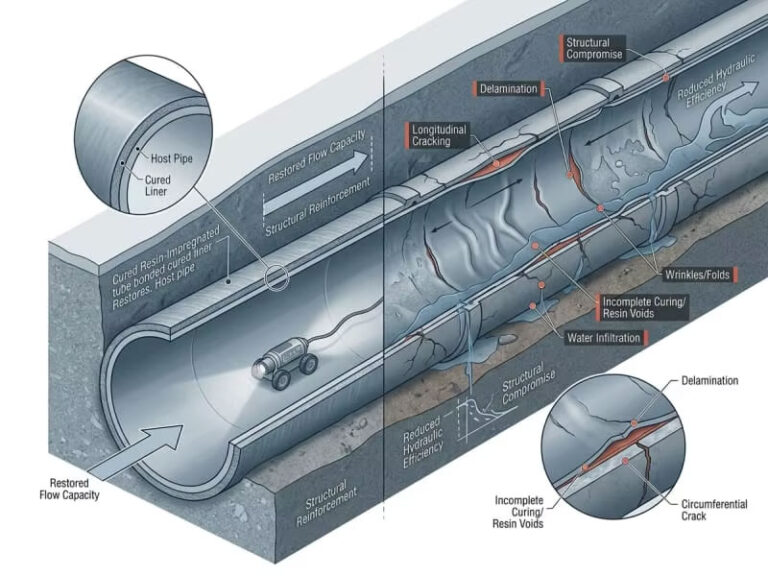
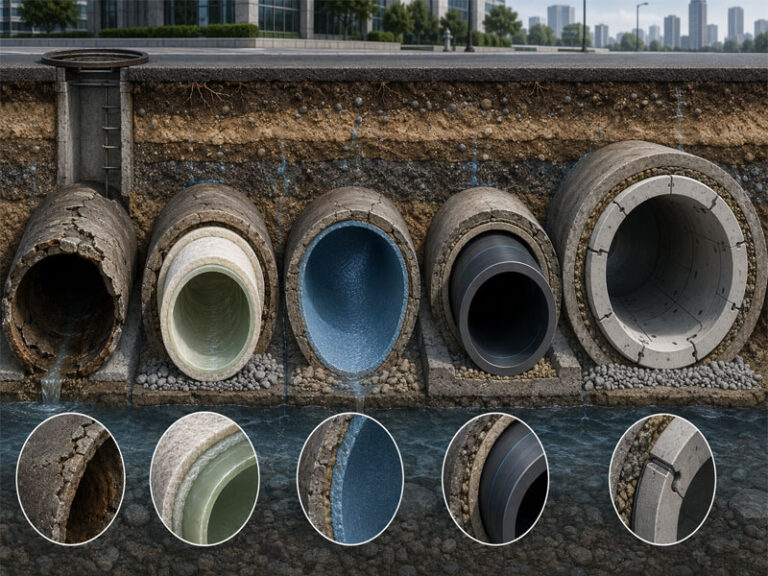
Engineering cutaway illustration comparing CIPP resin liners, spray-applied polyurea, HDPE sliplining, and UHPC structural lining segments in underground sewer pipes.

Los mejores materiales para la rehabilitación de tuberías sin zanja: comparación entre CIPP, poliurea y HDPE

Best Materials for Trenchless Pipe Rehabilitation The most widely used and effective materials for trenchless pipe rehabilitation are thermosetting resin systems—specifically epoxy, polyester, and vinyl ester—combined with reinforcement fabrics such as fiberglass or polyester felt. For most municipal sewer rehabilitation projects, polyester CIPP offers the best cost-to-performance balance, while epoxy CIPP is preferred for pipes

Leer Más »