
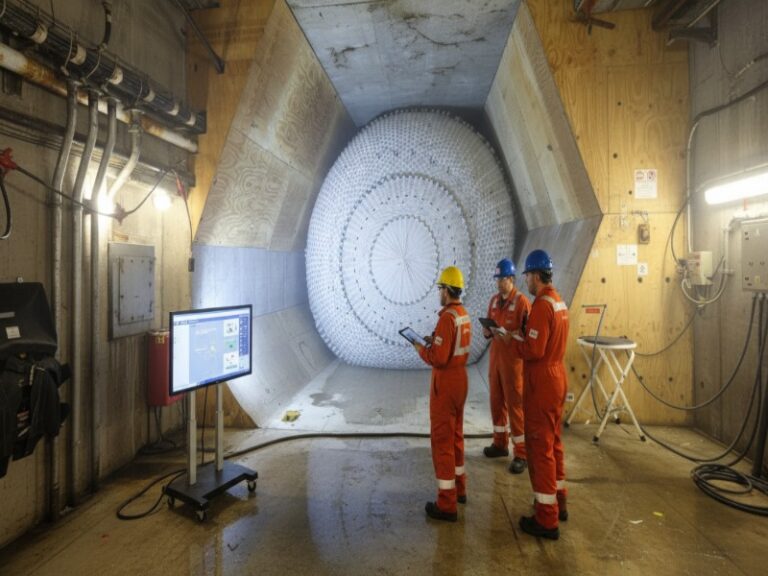
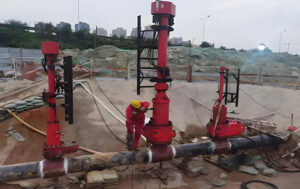
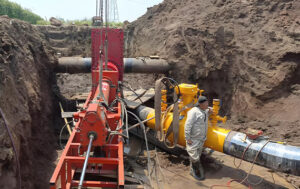
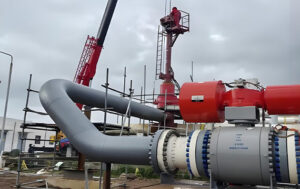
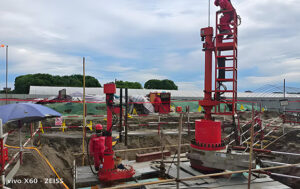
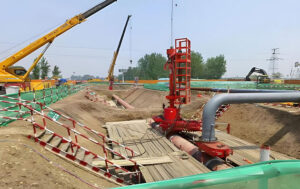
Inflatable plugs are used in hot tapping and line stopping operations by being inserted through a valve attached to a live pipeline, then inflated to create a temporary seal, allowing for safe maintenance, modification, or pipeline maintenance without shutting down the entire system. This method, often referred to as line stopping services, enables operators to perform work on a section of pipe while maintaining flow through a temporary bypass, ensuring uninterrupted service to customers and avoiding the high costs and emissions associated with venting.
What is Hot Tapping and Line Stopping with Inflatable Plugs?
Hot tapping is the technique of connecting to a pressurized pipeline, such as a natural gas transmission line, and drilling a hole while the system remains live and in service. Line stopping, or using a pipeline stopple, is the subsequent step where a plug is inserted through this new access point to block the flow. When using an inflatable line stop, a flexible, reinforced elastomer element is inserted in its deflated state. Once in position within the pipe, it is inflated with a medium like water, nitrogen, or glycol to expand against the pipe walls, creating a robust and temporary seal. This technique is a cornerstone of modern trenchless pipe rehabilitation, allowing for pipeline modification and repair with minimal environmental impact.
The Step-by-Step Process for Inflatable Line Stopping
A successful operation follows a precise, engineered sequence to guarantee safety and effectiveness. Here is the general workflow for deploying an inflatable line stop.
1. Fitting Installation & Hot Tapping
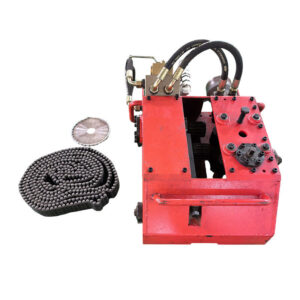
The process begins with welding or mechanically attaching a split tee fitting to the pipeline at the point of intervention. A full-opening valve is mounted onto the fitting. A hot tap machine is then attached, which drills a hole through the valve and the pipe wall, removing a section of pipe known as the coupon. The cutter and coupon are retracted, and the valve is closed, securing the new access point.
2. Deploying the Inflatable Plug for Isolation
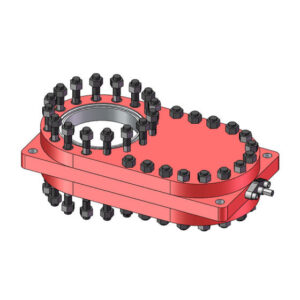
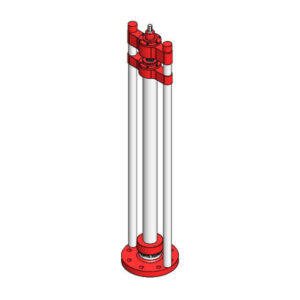
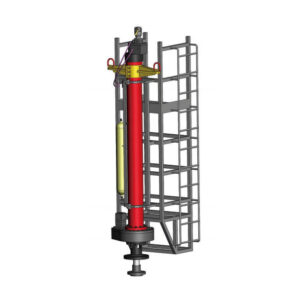
The line stopping services equipment, containing the deflated pipeline stopper, is bolted onto the closed valve. The valve is then opened, and the plug assembly is mechanically inserted or lowered into the pipeline. Once positioned at the exact location, the plug is inflated. For high-pressure natural gas applications, dual-seal systems are common. As noted by industry equipment manufacturer Petersen Products, “the system inserts an inflatable plug through a hot tap valve to effectively block or divert flow”.
3. Maintaining Flow with a Temporary Bypass
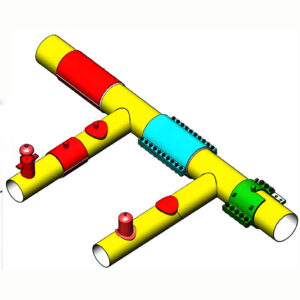
If the section of pipe needs to be fully isolated for activities like valve replacement, a temporary bypass line is connected from upstream of the first inflatable line stop to downstream of the second. This allows the product—whether it is oil, air, water, or gas—to continue flowing through the bypass, ensuring zero disruption to downstream consumers during the entire construction or repair phase.
4. Completing the Work and Restoring the Pipeline
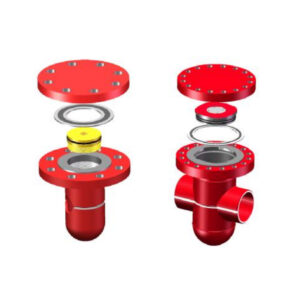
With the section isolated, depressurized, and purged, the required work—such as pipeline modification, restoration, or tie-in—is performed. After completion, the isolated section is repressurized, the plugs are deflated and retracted, and the valves are closed. Finally, a completion plug is installed in the split tee fitting under pressure, and the valve is removed, leaving the pipeline fully operational and permanently sealed at the tap location.
Achieving Maximum Safety: The Double Block and Bleed (DBB) Method
For critical applications on high-pressure gas mains, a single seal is often insufficient. The industry standard for maximum safety is the double block and bleed isolation method. This involves using two sealing elements within the pipeline.
- The Mechanism: Two independent pipeline stopper seals are set a short distance apart.
- The “Bleed”: The space between these two seals is vented to the atmosphere and monitored. If the primary seal leaks, any pressure or gas will accumulate in this “zero-energy zone” and can be safely vented, proving that the secondary seal remains intact and the isolation is secure.
- Industry Application: Advanced tools like the STATS BISEP are designed specifically for this. A project in Oman highlighted that this tool “provides a fail-safe double block and bleed isolation deployed through a single full bore hot tap intervention,” with the zero-energy zone monitored throughout the work scope to confirm “isolation integrity with zero leakage”.
Key Advantages of Inflatable Over Mechanical Line Stop Tools
While mechanical hinged-line stoppers are common, inflatable technologies offer distinct benefits, making them the preferred solution for many pipeline contractors.
| Feature | Inflatable Line Stop | Mechanical Line Stop |
|---|---|---|
| Pipe Condition Tolerance | Conforms to out-of-round, pitted, or corroded pipe walls due to its flexible nature. | Requires a perfectly round, smooth pipe surface for a effective seal. |
| Pressure Rating | Advanced models can achieve high-pressure isolation (e.g., 75 bar / 1088 psi) with dual-seal DBB capability. | Generally limited to lower pressures unless very large and heavy. |
| Deployment | Can be deployed through a single hot tap fitting for DBB isolation, reducing the number of access points needed. | Typically requires two separate fittings for a DBB isolation. |
| Application Versatility | Suitable for a wide range of media, including gas, oil, water, and air, and can be used in both temporary and permanent scenarios. | Primarily used for temporary stopping in clean, low-pressure pipelines. |
Critical Operational Considerations for Live Gas Interventions
Engaging a specialized line stopping services company is non-negotiable. However, understanding the operational parameters is crucial for project planning.
- Pipeline Material and Condition: While inflatable plugs excel in pipes with irregularities, a thorough inspection is required. The internal surface must be free of sharp debris that could puncture the elastomer.
- Pressure and Temperature: Every pipeline stopper has a maximum differential pressure and temperature rating. The Material Supplier must certify that the elastomers are compatible with the specific gas composition and operating temperature.
- Safety Standards: All operations must adhere to stringent standards. For instance, GSO 2492:2015 specifies safety and technical requirements for hot taps on pipelines containing hydrocarbons, mandating a detailed, written procedure before each job -5. A reputable equipment manufacturer will always conduct a witnessed Factory Acceptance Test (FAT) prior to mobilization.
- Contractor Expertise: The success hinges on the experience of the pipeline contractor. They are responsible for engineering the solution, managing the bypass flow, and ensuring all restoration activities are performed to code.
Case Study: 48-Inch Gas Main Isolation in Oman
In a landmark project for OQ Gas Networks (OQGN), a complex operation was required to integrate a new extension into a live 48-inch gas pipeline operating at 75 bar. The challenge was to isolate a 150-meter section for tie-in without disrupting supply. The chosen solution involved deploying dual STATS BISEP tools, a sophisticated type of inflatable line stop capable of double block and bleed isolation. A temporary 50-meter bypass line maintained full gas flow to customers. The project was completed without incident, preventing large-scale venting and flaring, which significantly reduced greenhouse gas emissions. This case exemplifies how precision pipeline intervention using advanced inflatable technology enables safe, sustainable, and efficient pipeline maintenance on the most critical infrastructure.
FAQs on Inflatable Hot Tapping and Line Stopping
Q: Can an inflatable line stop be used on any size pipe?
A: Yes, manufacturers provide solutions for a wide range of diameters, from small distribution mains to large transmission lines like the 48-inch pipeline mentioned in the Oman case study. Each plug is typically custom-engineered for the specific pipe size, pressure, and medium.
Q: Is it safe to weld on a live gas pipeline?
A: Yes, when performed correctly by trained professionals. This is the “hot” in hot tapping. It involves a detailed risk assessment and strict adherence to procedures like those in ASME B31.8 to manage the temperature and prevent burn-through.
Q: What happens to the hole after the inflatable line stop is removed?
A: The hole is permanently sealed with a completion plug. This plug is installed into the split tee fitting under pressure, creating a metal-to-metal or elastomer seal that is designed to last the life of the pipeline.
Q: What is the difference between a line stop and a pipeline plug?
A: While often used interchangeably, a pipeline stopper typically refers to the device used specifically for line stopping (blocking flow under pressure for maintenance). A more general pipeline plug might refer to any device used to seal a pipe, including inflatable plugs used for testing, or permanent plugs for abandonment.
Partner with JSW for Your Pipeline Maintenance & Restoration Projects
Since 2003, JSW has stood as a pillar of reliability in the oil and gas industry, bridging the gap between complex project requirements and successful execution. As a premier pipeline contractor and integrated solution provider, we deliver more than just equipment; we deliver peace of mind. Our deep expertise encompasses the full spectrum of pipeline maintenance, from emergency pipeline modification to planned construction tie-ins.
We are not just an equipment manufacturer or Material Supplier; we are your end-to-end partner. Our team brings firsthand operational experience to every project, ensuring that your line stopping services are performed with an unwavering commitment to safety and efficiency. Whether you require hot tapping on a live natural gas transmission line, a complex double block and bleed isolation, or comprehensive trenchless pipe rehabilitation, JSW has the engineering acumen and field-proven solutions to deliver. We treat your pipeline as if it were our own—with the utmost respect for the environment, the public, and the asset itself. Contact JSW today to engineer your success.
Author: The JSW Engineering Team
Updated: October 26, 2025







 English
  Arabic
  Russian
  Spanish
  French
  Vietnamese
  Polish
  Thai
Thai  Indonesian
  Turkish
  Portuguese