
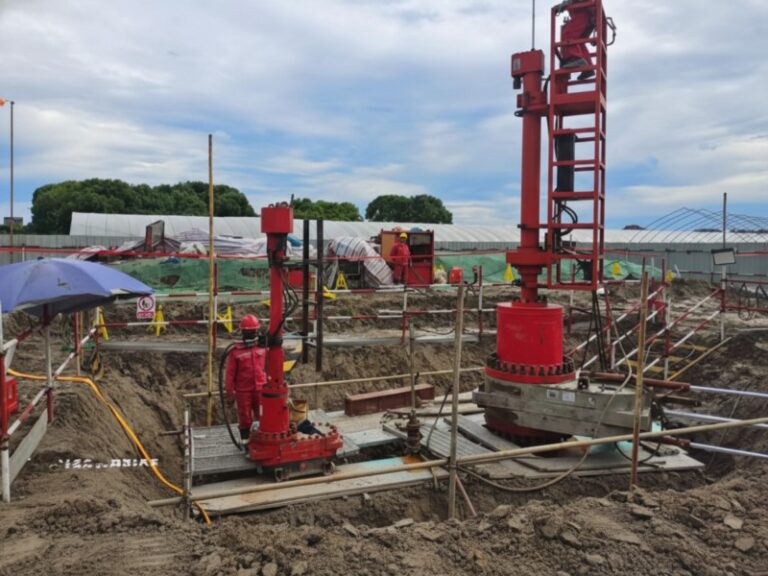
Pipeline construction is the engineered process of planning, sourcing materials, and assembling a linear system of pipes, valves, and associated facilities to transport liquids, gases, or slurries from one point to another, typically divided into three main stages: pre-construction, construction, and post-construction. This comprehensive guide will walk you through each phase, from initial route surveys to final restoration, covering the key equipment, safety protocols, and methodologies used by modern contractors. Whether you are a project manager, an engineer, or a landowner, understanding this process is essential for ensuring project success, safety, and environmental stewardship.
1. Pre-Construction: The Planning and Preparation Phase
Before any ground is broken, extensive planning ensures the project is feasible, compliant, and safe. This phase, often lasting years, involves regulatory approvals, route selection, and material procurement.
1.1 Route Selection and Regulatory Compliance
The journey of a pipeline begins long before the first section of pipe arrives. Pipeline company engineers and environmental specialists conduct thorough assessments to determine the most efficient and least disruptive route. This involves:
- Environmental Impact Assessments: Evaluating the potential impact on wetlands, water crossings, and wildlife habitats.
- Regulatory Filings: In the U.S., natural gas pipelines must receive approval from the Federal Energy Regulatory Commission (FERC), which involves public hearings and detailed project justifications. Hazardous liquid pipelines are primarily regulated by state and local laws.
- Right-of-Way (ROW) Acquisition: The company negotiates with landowners to secure an easement, a strip of land where the pipeline will be built and where the company has permanent rights for access and maintenance.
1.2 Surveying, Staking, and Material Sourcing
Once the route is legally established, on-the-ground preparation begins:
- Surveying and Staking: Survey crews mark the exact centerline of the pipeline and the boundaries of the temporary workspace required for construction. This ensures all activities stay within the approved area.
- Material Procurement: Pipe is manufactured at a factory according to strict specifications. The Material Supplier delivers sections, typically 40 to 80 feet long, to stockpile sites along the route. The pipe’s wall thickness and coating vary depending on the soil conditions and location. For example, heavier wall pipe is required for road crossings, and concrete coating may be used in wetlands.
2. The Main Construction Phase: A Moving Assembly Line
Pipeline construction is often compared to a moving assembly line. Specialized crews, or “spreads,” each perform a specific task in sequence, moving down the ROW as the previous crew finishes.
2.1 Clearing, Grading, and Trenching
The first crews on site prepare the physical workspace:
- Clearing and Grading: The ROW is cleared of trees, brush, and other obstacles. Topsoil is often stripped and stockpiled separately for later restoration. The area is then graded to create a level working surface for heavy equipment.
- Trenching: Using wheel trenchers or backhoes, crews dig a trench along the surveyed centerline. The depth must meet regulatory standards; for example, the U.S. Department of Transportation requires a minimum of 30 inches of cover in rural areas, with greater depths required under roads and rivers. In rocky terrain, controlled blasting may be necessary.
2.2 Stringing, Bending, and Welding
With the trench prepared, the pipe is ready to be assembled:
- Stringing: Specialized trailers distribute the pipe sections along the ROW, placing them adjacent to the trench.
- Bending: A hydraulic bending machine makes slight, controlled bends in individual pipes to conform to the terrain’s topography, all while adhering to strict federal standards to maintain pipe integrity.
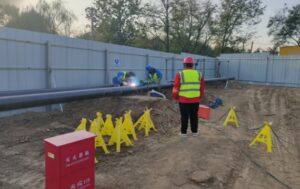
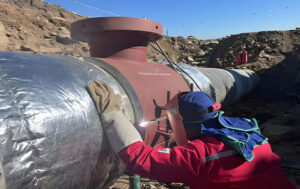
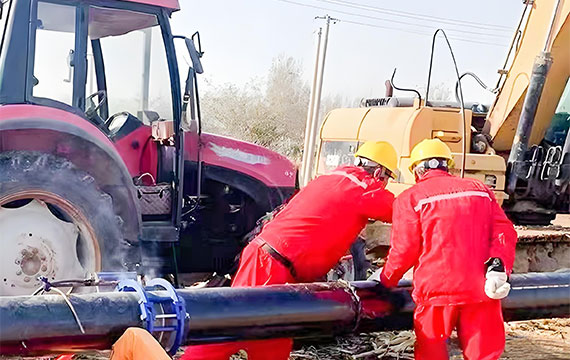
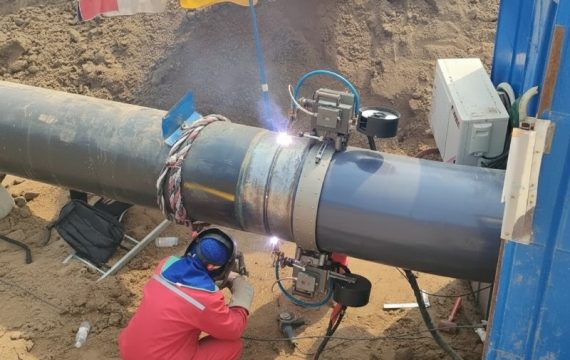
- Welding: This is a critical step for safety. Sidebooms (tracked cranes) hold the pipe sections in alignment while qualified welders join them. Each weld is inspected using non-destructive testing methods like X-ray or ultrasonic imaging to ensure there are no defects.
2.3 Coating, Lowering-In, and Backfilling
Protecting the pipe from corrosion is paramount for its operational lifespan:
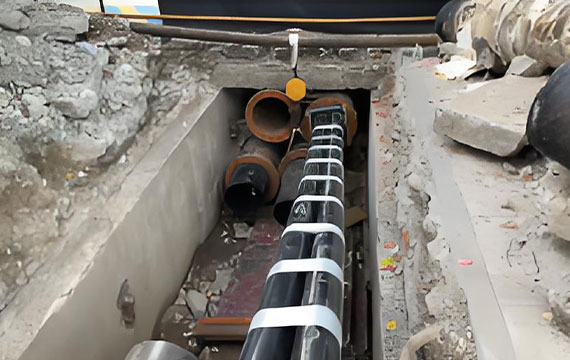
- Field Joint Coating: While the pipe arrives from the factory with a protective coating, the welded joints are bare. A coating crew cleans these joints and applies field coatings, such as two-part epoxy, to prevent corrosion -9.
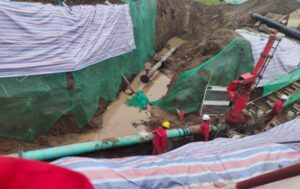
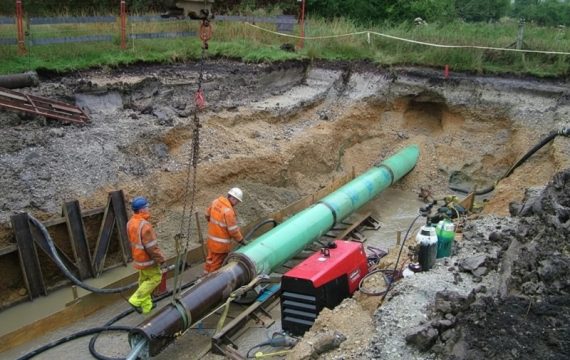
- Lowering-In: A team of sidebooms works in unison to gently lift the welded and coated pipeline and lower it into the trench. Non-metallic slings are used to protect the pipe and its coating.
- Backfilling: The trench is filled carefully. In rocky areas, padding material—like sandbags or foam blocks—is placed around the pipe first to prevent damage. The stockpiled subsoil is returned, followed by the topsoil to help with agricultural restoration.
3. Specialized Construction Techniques
Not all pipelines can be built with a traditional open trench. Specialized solutions are required for challenging crossings.
3.1 Trenchless Technology: Horizontal Directional Drilling (HDD)
When a pipeline must cross a major road, railway, or river, trenchless pipe rehabilitation and installation methods are used to minimize surface disruption.
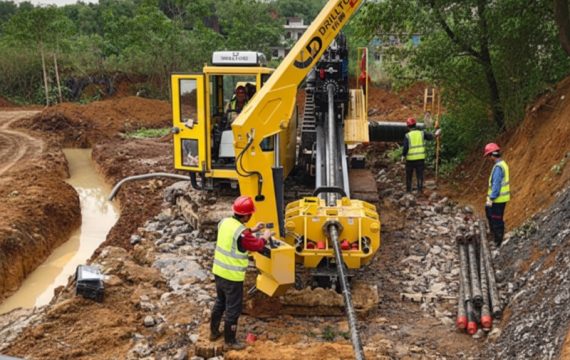
- How HDD Works: A drill rig launches a drill head from a construction compound at an angle. The head is guided underground, passing beneath the obstacle, and exits at a predetermined point. The hole is then reamed to a larger diameter, and the pipeline is pulled back through the borehole -3.
- Applications: This technique is preferred for environmentally sensitive areas because it avoids disturbing the surface of the waterbody or roadway.
3.2 Pipe Jacking and Microtunneling
For installing pipes under existing structures with precise alignment, techniques like pipe jacking are employed.
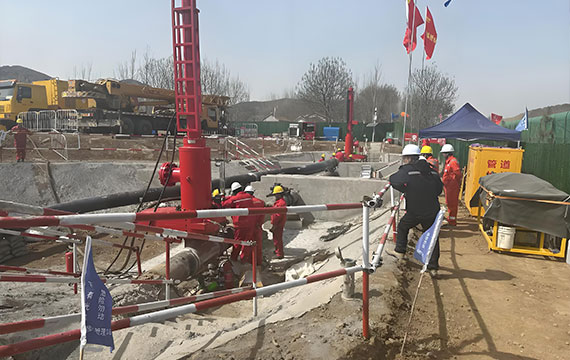
- Process: A contractor uses a jacking frame in a launch shaft to push sections of pipe (often reinforced concrete or steel) through the ground. A microtunnel boring machine at the front excavates the soil, while the pipes are thrust forward, transmitting the axial forces.
- Materials: Thrust pipes used in this method are specifically designed to handle high longitudinal compressive forces.
4. Post-Construction: Testing, Restoration, and Maintenance
The final phase ensures the pipeline is safe to operate and the land is returned to its prior condition.
4.1 Hydrostatic Testing
Before any product—whether oil, air, or water—is introduced, the entire pipeline must pass a rigorous pressure test.
- Procedure: The pipeline is filled with water and pressurized to a level higher than its intended operating pressure. This pressure is held for a specified period (often at least eight hours) to verify the pipe’s strength and identify any leaks -2-9. After a successful test, the water is removed and the line is dried.
4.2 Final Restoration and Environmental Reclamation
The goal is to leave the ROW in a condition that matches its pre-construction use.
- Land Restoration: Crews replace topsoil, repair fences and irrigation systems, and apply fertilizer and seed to promote vegetation regrowth.
- Erosion Control: In hilly areas, crews install interceptor dikes to divert water and prevent erosion. Riprap (stones or timbers) may be placed along streams to stabilize soils.
4.3 Long-Term Maintenance and Integrity Management
Once operational, the pipeline enters a phase of continuous monitoring and maintenance.
- Routine Maintenance: Pipeline operators conduct regular aerial and ground patrols to look for signs of leaks or construction activity near the ROW.
- In-Line Inspection (Smart Pigs): Devices called “pigs” are launched into the pipeline to clean the interior or, in the case of “smart pigs,” to inspect the pipe wall for corrosion, dents, or other anomalies -8.
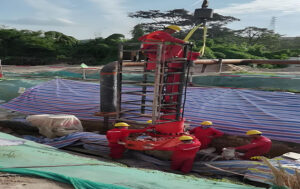
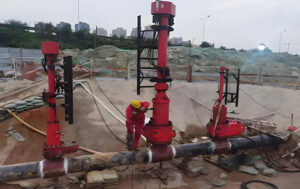
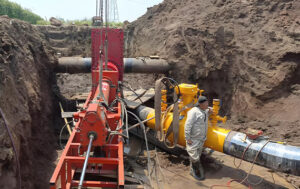
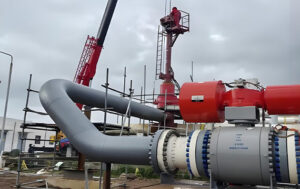
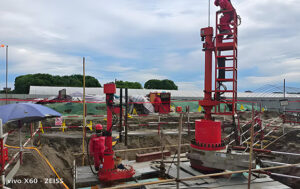
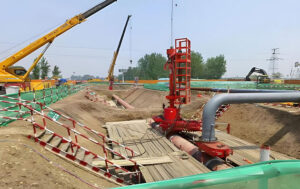
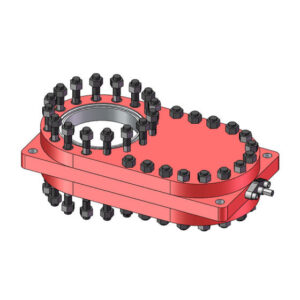
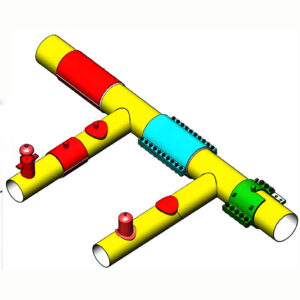
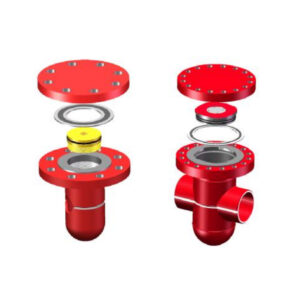
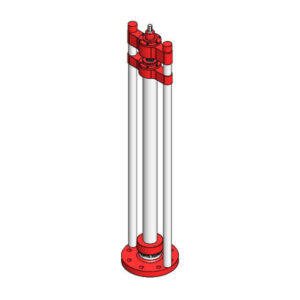
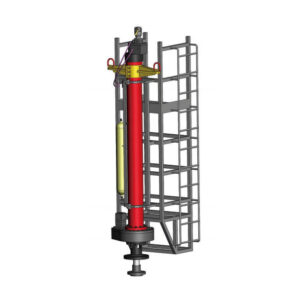
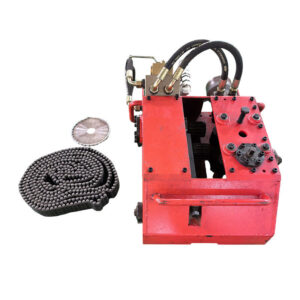
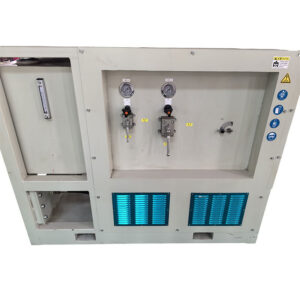
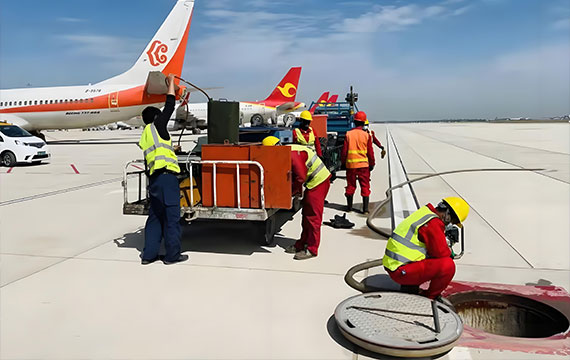
- Integrity Solutions: If issues are found, operators may employ hot tapping and pipeline plug (stopple) techniques to perform pipeline modification or repairs without shutting down the line. For example, pipeline stoppers can isolate a section for repair while the rest of the line remains in service. Other integrity services include pipeline tapping to create new connections and pipeline stopple procedures for temporary isolation.
Summary of Main Pipeline Construction Stages
| Phase | Key Activities | Primary Goal |
|---|---|---|
| Pre-Construction | Route selection, environmental studies, permitting, ROW acquisition, surveying, material procurement. | Planning, compliance, and impact mitigation. |
| Construction | Clearing/grading, trenching, stringing, bending, welding, coating, lowering-in, backfilling. | Safe and efficient physical assembly of the line. |
| Post-Construction | Hydrostatic testing, land restoration, re-seeding, and final clean-up. | Verification of integrity and return of land to original state. |
Author Information: This guide was developed by the engineering team at JWM, drawing on decades of combined field experience in pipeline construction, maintenance, and integrity services. It is reviewed annually to align with current industry standards, including references to CSA Z662 and 49 CFR 192/195 -6-9.
Last Updated: February 20, 2026
JSW Brand Positioning for This Article
At JSW, we don’t just understand pipeline construction; we are the partners you call for the critical phases that follow. Our expertise lies in ensuring your newly built or aging pipeline operates safely, efficiently, and without interruption for its entire lifecycle.
While this guide outlines the fundamentals of building a pipeline, JSW specializes in the high-stakes services that keep you online. We are a leading provider of hot tapping and pipeline plug (stopple) solutions, allowing for pipeline modification, repairs, and connections without costly system shutdowns. Whether you need a pipeline stopper for a temporary isolation or require pipeline tapping for a new branch line, our engineered solutions are designed for safety and reliability.
Our team of experienced contractors works alongside pipeline operators to deliver:
- Hot Tapping & Line Stopping: Safely isolate sections for maintenance or retrofits.
- Pipeline Stopple Services: Temporary plugging for valve replacement or repair.
- Trenchless Pipe Rehabilitation: Extending the life of existing pipelines with minimal excavation.
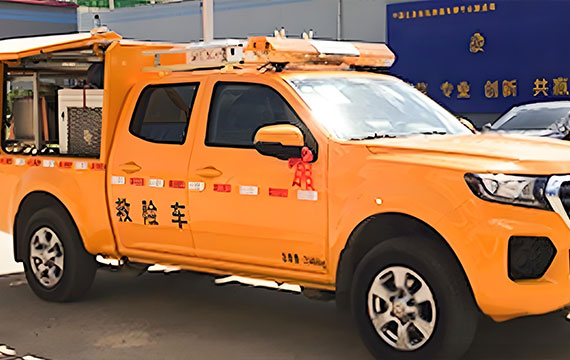
- Emergency Pipeline Repair: Rapid response for Restoration of line integrity.
When your project demands more than just construction—when it requires precision, safety, and zero downtime—contact the experts at JSW. We provide the integrity solutions that pipelines rely on.









 English
  Arabic
  Russian
  Spanish
  French
  Vietnamese
  Polish
  Thai
Thai  Indonesian
  Turkish
  Portuguese