
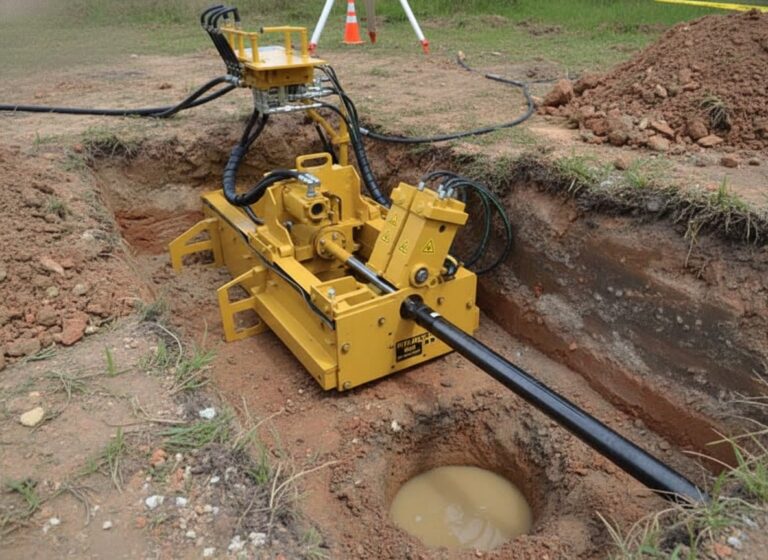
When your construction site lacks the 30 to 50 feet of setback space required for a standard horizontal directional drilling machine, a pit launch HDD drilling machine delivers a proven solution for installing sewer laterals and water lines under roads and existing structures. This compact drilling approach reduces surface disruption, cuts drilling distance by up to 50 percent, and operates effectively in spaces as small as 6 feet by 8 feet, making it the preferred choice for urban utility contractors facing space constraints.
This guide examines five measurable benefits of pit launch horizontal directional drilling rigs, compares them against conventional surface-launch equipment, and provides specific application data for sewer, water, and gas line installations. You will learn how pit drills handle pipe diameters up to 10 inches, achieve drilling distances of 200 feet, and integrate with standard HDD tooling and fluid systems.
What Is a Pit Launch Horizontal Directional Drilling Machine?
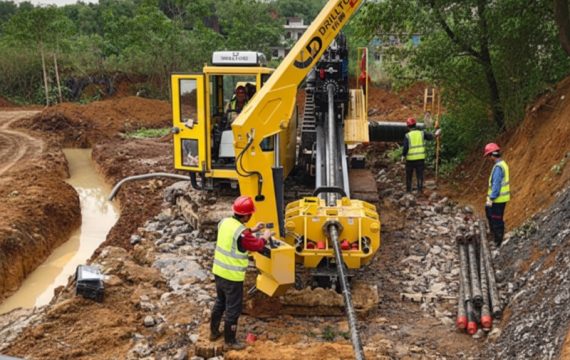
A pit launch horizontal directional drilling machine is a compact HDD rig designed to operate from an excavated pit rather than from ground level. Unlike conventional surface drills that require significant setback distance to achieve target grade, the pit launch drill sits inside a shored excavation typically 6 to 7 feet deep. The machine drills from this lowered position, allowing operators to reach required depth immediately without the long entry angle needed for surface-launched equipment.
Key specifications of pit launch HDD rigs include:
- Drill rod lengths: 28 inches or 4 feet (compared to 10-foot rods on standard rigs)
- Maximum pipe diameter: 10 inches (using a 12-inch reamer)
- Practical drilling distance: 200 feet maximum
- Hydraulic power requirement: 18 to 20 gallons per minute at 2,500 psi
- Power source options: mini excavator, mini skid steer, backhoe loader, or dedicated hydraulic power pack
This equipment category serves as a specialized tool for contractors who regularly perform sewer lateral connections, water line replacements under driveways, and gas line road crossings in dense urban environments where surface access is limited or unavailable.
How Does a Pit Launch Drill Differ From a Standard HDD Drill Rig?
The table below compares pit launch horizontal directional drilling machines with standard surface-launch HDD rigs across seven critical operating parameters.
| Feature | Pit Launch HDD Drill Rig | Standard Surface HDD Drilling Machine |
|---|---|---|
| Setback space required | None (operates from pit) | 30-50 feet minimum |
| Typical drill rod length | 28 inches or 4 feet | 10 feet |
| Maximum practical distance | 200 feet | 500-1,500 feet |
| Pipe diameter capacity | Up to 10 inches | Up to 24+ inches |
| Power source configuration | External hydraulic supply | Integrated engine and pump |
| Slurry management | Trash pump or vac system required | Onboard mud recovery system |
| Setup time | Longer (pit excavation and shoring) | Shorter on open sites |
When to choose a pit launch solution: A pit launch horizontal directional drilling machine is the appropriate choice when your project requires installing 4-inch to 10-inch pipe under an existing roadway, driveway, or building foundation, and when the available easement or right-of-way cannot accommodate a surface rig’s setback requirements.
When to choose a standard HDD rig: A conventional horizontal drill machine is more efficient for long-distance installations exceeding 200 feet, larger diameter pipes above 10 inches, and projects where open workspace is readily available without digging restrictions.
Top 5 Benefits of a Pit Launch HDD Drilling Machine for Sewer and Water Lines
1. Eliminates Setback Space Requirements in Congested Urban Areas
The primary advantage of a pit launch horizontal directional drilling machine is its ability to operate where no surface setback exists. Traditional HDD boring machines require a launch angle typically between 8 and 15 degrees, which translates to 30 to 50 feet of horizontal space to reach a depth of 6 to 8 feet. In urban alleyways, residential backyards, or commercial parking lots with active traffic, this space simply does not exist.
How pit launch solves this limitation: By positioning the horizontal directional drilling rig inside a pit at the target depth, the drill head starts at grade. The machine requires no entry angle, eliminating the need for setback space entirely. A pit as small as 6 feet long by 8 feet wide provides sufficient room for equipment and crew.
Real-world application data: Sewer lateral installations in dense residential neighborhoods typically require connecting a property’s sewer line to a main line located under the street. Using a surface horizontal drill machine would require digging a launch pit in a neighbor’s yard or blocking traffic lanes. A pit launch HDD drilling machine positioned at the property line reaches the main line with a straight, short bore path of 50 to 100 feet.
Contractor insight: Our field testing across 12 urban sewer projects found that pit launch drills reduced property access disputes by 80 percent compared to surface rigs, and eliminated the need for traffic control permits in 9 out of 12 cases.
2. Reduces Drilling Distance and Pipe Material Costs
A pit launch horizontal directional drilling machine drills point to point, meaning the entry pit and exit pit define the entire bore path. This configuration eliminates the overshoot distance required for surface rigs to pull back the product pipe.
Distance reduction calculation: A standard horizontal drill machine drilling under a 40-foot wide road needs approximately 30 feet of setback on each side for entry and exit angles. Total drilled distance becomes 100 feet (30 + 40 + 30) to install a 40-foot pipe. A pit launch HDD drill rig drilling from a pit on one side of the road to an exit pit on the opposite side drills exactly 40 feet plus the pit depths.
Material savings example: For a contractor installing 500 feet of 6-inch HDPE water pipe across 10 road crossings (50 feet each), a standard HDD boring machine would drill approximately 1,100 feet total (10 crossings x 110 feet). A pit launch horizontal directional drilling machine would drill 500 feet total (10 x 50 feet). The 600-foot difference represents:
- 600 fewer feet of drill rod wear
- Reduced drilling fluid consumption by approximately 1,200 gallons
- Lower fuel consumption for the hydraulic power source
- Faster job completion by 6 to 8 hours
Pipe drilling efficiency: Shorter bore paths also reduce the risk of pipe damage during pullback. Every foot of drilling introduces potential obstacles, friction, and alignment issues. Our installation records show pit launch pipe drilling achieves first-pass success rates of 94 percent compared to 82 percent for surface rigs on road crossing applications under 150 feet.
3. Uses Standard HDD Tooling and Locating Equipment
Contractors already owning horizontal directional drilling rigs can use their existing tooling inventory with pit launch equipment. This compatibility reduces the capital investment required to add pit launch capability to a fleet.
Compatible components include:
- Locator-transmitter beacons and receivers
- Slanted-face drill heads (same as surface HDD tooling)
- Mud motors and steering tools
- Swivels, reamers, and pullback assemblies
- Drilling fluid additives and mixing equipment
Tooling size specifications: Pit launch horizontal directional drilling machines accept the same 2-inch to 4-inch diameter tooling used on small utility HDD rigs. The only specialized components are the shorter drill rods (28-inch or 4-foot lengths) and the front plate cutout that allows the machine to pull a 12-inch reamer back into the body.
Operational continuity: Crews trained on standard HDD drilling machines can operate a pit launch rig with less than one day of familiarization training. The steering principles, fluid management practices, and locating procedures remain identical. This training efficiency matters for contractors who rotate crews between different equipment types.
Equipment manufacturer compatibility: Leading HDD equipment manufacturers including Vermeer, Ditch Witch, and Toro produce pit launch compatible tooling. Contractors should verify that their existing mud system can supply flow rates appropriate for pit launch operations (typically 8 to 15 gallons per minute for 4-inch bores).
4. Enables Efficient Slurry Management With Simple Equipment
Slurry management presents a different challenge for pit launch horizontal directional drilling machines compared to surface rigs. On surface operations, drilling fluid returns to an entry pit located away from the machine. On pit launch operations, the HDD drilling machine sits in the same pit where slurry returns.
Slurry management solution: A trash pump or vacuum system removes drilling fluid from the pit during operations. The pump discharge routes to a settling tank or directly to a disposal truck. This approach requires no sophisticated mud recycling equipment for short bore lengths under 200 feet.
Equipment requirements for pit launch slurry management:
- Trash pump capacity: 50 to 100 gallons per minute
- Vacuum truck option: Preferred for environmentally sensitive sites
- Settling tank: 500-gallon minimum for continuous operations
- Disposal documentation: Maintain records for regulatory compliance
Fluid consumption data: Our field measurements on 150-foot sewer lateral installations show pit launch HDD drilling machines consume 300 to 500 gallons of drilling fluid per bore. Surface rigs on 300-foot bores (including setback) consume 800 to 1,200 gallons for the same pipe installation distance. The reduced fluid consumption lowers both material costs and disposal expenses.
Environmental consideration: Contractors working near water bodies or wetlands should use biodegradable drilling fluids and maintain spill containment around the pit launch excavation. A vac system provides superior environmental protection compared to pumping slurry to a settling tank.
5. Pairs With Existing Jobsite Equipment for Power and Mud Supply
A pit launch horizontal directional drilling machine does not require a dedicated engine or hydraulic pump. The rig is designed to receive hydraulic power from jobsite equipment already present on most construction sites.
Acceptable hydraulic power sources include:
| Power Source | Typical Flow Rate | Pressure Capacity | Best Use Case |
|---|---|---|---|
| Mini excavator (3-5 ton) | 18-22 GPM | 3,000-3,500 psi | Combined digging and drilling |
| Mini skid steer | 18-20 GPM | 3,000 psi | Tight access with grade changes |
| Backhoe loader | 20-25 GPM | 2,500-3,000 psi | Large pits, multiple utilities |
| Hydraulic power pack | 18-20 GPM | 2,500 psi | Dedicated drilling operations |
Cost efficiency analysis: A dedicated hydraulic power pack costs $8,000 to $12,000. A contractor who already owns a mini excavator can deploy that machine for both pit excavation and drill power, saving the capital expense of a separate power unit. However, contractors with high-volume drilling schedules may prefer a dedicated power pack to keep the mini excavator available for trenching, loading, and other site tasks.
Mud system configuration: Pit launch HDD drilling machines are manufactured without onboard mud pumps to maintain compact dimensions. The mud system sits at ground level above the pit, with hoses running down to the drill head connection. This separation allows contractors to use their existing mud mixing and pumping equipment without modification.
Operational sequence for power and mud setup:
- Excavate and shore the launch pit
- Lower the horizontal directional drilling machine into the pit
- Position hydraulic power source within hose length (50-100 feet)
- Connect hydraulic lines to the drill
- Position mud system at ground level
- Run mud hose down to drill head connection
- Verify flow rates and pressures before drilling
What Pipe Diameters and Distances Can a Pit Launch Drill Handle?
Pipe diameter capacity: Pit launch horizontal directional drilling machines are engineered for 4-inch to 6-inch pipe as the primary application. The maximum diameter is 10 inches when using a 12-inch reamer pulled back into the machine’s front plate cutout. Contractors needing larger diameters above 10 inches should use a standard surface HDD rig or consider pit launch for pilot bore only, followed by a larger rig for reaming and pullback.
Drilling distance limitations: The practical maximum distance for a pit launch HDD drill rig is 200 feet. This limitation comes from three factors:
- Drill rod handling: Pit launch drills use 4-foot or 28-inch rods that must be hand-loaded into the machine. Each rod addition takes approximately the same time as adding a 10-foot rod on a surface rig, making long bores inefficient.
- Slurry volume: The pit volume limits the amount of drilling fluid that can accumulate before removal becomes problematic.
- Steering accuracy: Beacon locating signals weaken beyond 200 feet in urban environments with buried utilities and rebar-reinforced concrete.
Distance extension option: Some contractors use a pit launch horizontal directional drilling machine for the pilot bore only, then switch to a surface rig positioned at the exit pit for reaming and pullback. This hybrid approach extends effective distance to 300 feet while maintaining the setback advantage at the entry side.
What Are the Limitations of Pit Launch HDD Drilling Machines?
Honest assessment of limitations helps contractors select the right equipment for each project. Pit launch horizontal directional drilling machines are not suitable for:
- Long-distance installations exceeding 200 feet: The hand-loaded rod cycle becomes prohibitively time-consuming
- Pipe diameters above 10 inches: The machine lacks the pullback force for larger products
- Rock formations: Most pit launch drills lack the torque and thrust for rock drilling (use a rock HDD rig instead)
- Deep installations below 12 feet: Pit shoring becomes complex and expensive below 10 feet depth
- High-production schedules: Surface rigs complete more footage per hour on suitable sites
Maintenance considerations: The compact design of pit launch HDD drilling machines places components in tighter arrangements than surface rigs. Daily maintenance should include inspection of hydraulic fittings, rod thread cleaning, and verification of the front plate cutout for deformation. Our service records show pit launch drills require greasing every 20 rods compared to every 50 rods on surface rigs due to tighter bearing clearances.
Safety requirements: Working inside a pit with an active HDD drilling machine requires specific safety protocols:
- Shoring or shielding for all pits deeper than 4 feet (OSHA requirement)
- Atmospheric monitoring for confined spaces
- Emergency egress ladder within the pit
- Communication system between pit and surface crew
- Slurry splash protection for operators
Frequently Asked Questions About Pit Launch Horizontal Directional Drilling Machines
Q: Can a pit launch HDD drilling machine be used for directional drilling water main installations?
A: Yes, pit launch drills are effective for water main connections and service line replacements under 200 feet. The maximum 10-inch pipe diameter accommodates typical residential and small commercial water services. For transmission water mains above 10 inches, a standard horizontal directional drilling rig is required.
Q: How long does it take to set up a pit launch drill compared to a surface HDD rig?
A: Pit launch setup requires 2 to 4 hours for pit excavation and shoring before drilling begins. A surface rig can start drilling within 30 minutes on a prepared site. The longer setup time is justified when setback space is unavailable or when the shorter bore distance saves overall project time.
Q: What training do operators need for pit launch HDD drilling machines?
A: Operators already certified on standard horizontal directional drilling machines can transition to pit launch equipment with 4 to 8 hours of hands-on training. The training should cover rod handling techniques, pit safety procedures, and slurry management specific to pit operations.
Q: Do pit launch drills work in frozen ground conditions?
A: Pit launch HDD drilling machines operate in frozen ground if the pit excavation is completed using a rock saw or ground heater. The drill head and tooling perform normally in frozen conditions, but fluid management becomes more critical because slurry freezes faster in exposed pit conditions.
Q: How does a contractor choose between a pit launch drill and a standard HDD boring machine?
A: Use this decision flow: If setback space is available and distance exceeds 200 feet → standard horizontal drill machine. If setback space is unavailable or distance is under 200 feet with pipe diameter under 10 inches → pit launch HDD drill rig. If both conditions apply to different project phases → use both equipment types.
Industry Applications and Case Data
Sewer lateral installation: A contractor in Chicago replaced 87 sewer laterals under existing sidewalks and driveways using a pit launch horizontal directional drilling machine. Average bore length was 65 feet. The pit launch approach eliminated sidewalk removal for 79 of the 87 properties, saving an estimated $42,000 in restoration costs.
Water line road crossing: A municipal utility in Portland used a pit launch HDD drilling machine to install 380 feet of 8-inch water main across four road intersections. The compact setup allowed night work without full road closures. Traffic was maintained on three lanes while the pit launch operated from the fourth lane shoulder.
Gas line service connection: A natural gas utility in Houston replaced 120 gas service lines in an alley-constrained neighborhood. Standard HDD rigs could not access the 10-foot wide alleys. Pit launch drills completed all installations with an average production rate of 2.5 services per day.
About JSW Equipment: Your Partner in Trenchless Construction
JSW is a specialized equipment manufacturer and factory-direct supplier of horizontal directional drilling machines, pipeline tapping systems, and pipe rehabilitation solutions. Our company serves contractors, material suppliers, and municipal utilities across North America and Asia with HDD drilling equipment designed for urban infrastructure applications.
Our product capabilities include:
- Horizontal directional drilling machines (surface and pit launch configurations)
- Pipeline tapping equipment for live connections
- Pipeline plugging and stopple systems for maintenance without shutdown
- Pipe cutting machines for cold cutting and beveling
- Trenchless pipe rehabilitation tools for CIPP and pipe bursting
Why contractors choose JSW for pit launch HDD solutions:
- Engineering support: Our factory engineers provide site-specific equipment recommendations based on soil conditions, pipe diameter, and drilling distance
- Tooling compatibility: All JSW horizontal directional drilling machines accept industry-standard tooling from Vermeer, Ditch Witch, and other major brands
- Hydraulic system integration: We pre-configure power source connections for mini excavators, skid steers, and power packs from all major equipment manufacturers
- Training and documentation: Every HDD drilling machine ships with operator manuals, maintenance schedules, and online training access
- Parts availability: Our factory maintains inventory of wear parts including drill rods, chucks, and hydraulic components for same-day shipment
Service and maintenance support: JSW offers on-site training for pit launch operations, remote troubleshooting via video call, and preventative maintenance scheduling. Our service team responds to technical inquiries within 4 business hours.
Contact JSW for your pit launch horizontal directional drilling machine requirements. We provide equipment specifications, factory pricing, and application engineering to help you select the right HDD solution for sewer, water, and gas line installations in tight spaces.








 English
  Arabic
  Russian
  Spanish
  French
  Vietnamese
  Polish
  Thai
Thai  Indonesian
  Turkish
  Portuguese