
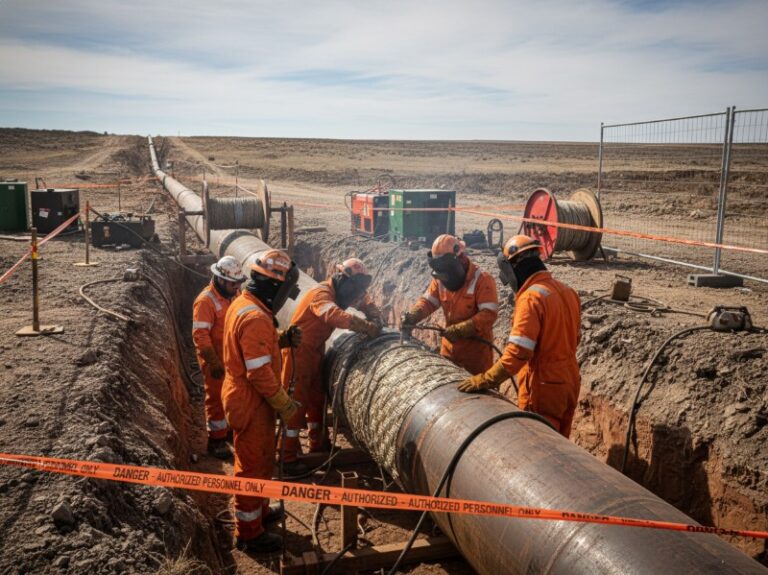
Pipeline repair success depends on seven key factors: accurate condition assessment, correct rehabilitation method selection, certified installation, material compatibility, lifecycle cost analysis, shutdown execution, and regulatory compliance. Failure in any of these areas leads to premature failure, safety risks, or increased long-term costs.
Pipeline repair success depends on:
- Accurate defect diagnosis
- Correct trenchless technology selection
- Certified installation and quality control
- Material compatibility with conveyed media
- Lifecycle cost optimization
- Efficient shutdown execution
- Full regulatory compliance
What Is Pipeline Rehabilitation?
Pipeline rehabilitation is the process of restoring the structural integrity and functionality of existing pipelines without full replacement, using methods such as CIPP, sliplining, and composite repairs like CFRP. Unlike point repairs that address isolated defects, full rehabilitation extends asset life by 50+ years while minimizing excavation and environmental disruption.
This guide explains why most pipeline repair failures originate from incorrect diagnosis rather than material defects, and provides actionable engineering standards for achieving 50+ year asset life using trenchless technologies. This guide aligns with standards from AWWA, ASME PCC-2, and ISO composite repair specifications.
1. Pre-Repair Assessment Methods for Pipeline Repair
Accurate pre-repair assessment is the single most critical factor in determining whether a pipeline repair will succeed or fail. It directly impacts technology selection, repair design, and long-term pipeline integrity. Without a clear understanding of defect type—through-wall leak, dent with metal loss, or crack—engineering teams cannot specify the correct structural reinforcement.
Wrong approach: Using visual inspection only, which misses subsurface corrosion.
Correct approach: Combining high-resolution CCTV with magnetic flux leakage (MFL) tools to quantify remaining wall thickness.
Data requirements for success:
- Time-stamped video with depth-of-defect measurements
- Differentiation between Type A (surface damage) and Type B (through-wall) defects
- Original equipment design variables and operational history
The following table summarizes the inspection methods and their applications:
| Inspection Method | Detects | Best For |
|---|---|---|
| CCTV Crawler | Visual defects, joint displacement | Gravity sewers, initial screening |
| MFL Tool | Wall thickness loss, corrosion | Pressure pipelines, metal loss quantification |
| Ultrasonic Testing | Crack depth, lamination | High-risk segments, validation |
| FELL Technology | Inflow and infiltration points | Sanitary sewers, leak location |
A study on a 258-km pipeline used the Muhlbauer risk scoring method to prioritize repairs. Segments with inadequate burial depth or high third-party activity were flagged for immediate structural repair rather than monitoring.
Quoteable insight: Accurate inspection data is the foundation of every successful pipeline repair project.
2. Trenchless Technology Selection for Pipeline Rehabilitation
Selecting the wrong trenchless technology is the leading cause of premature pipeline failure. The choice between Cured-in-Place Pipe (CIPP), Sliplining, and Carbon Fiber Reinforced Polymer (CFRP) depends entirely on the host pipe’s remaining structural class and required design life.
Wrong approach: Using CIPP for pressure pipelines without structural design.
Correct approach: Using CFRP or Class III/IV liners for pressure-rated systems.
Structural Classifications (AWWA Standards)
The following table compares structural liner classifications and their applications:
| Classification | Type | Best Application |
|---|---|---|
| Class I | Non-structural | Corrosion coating only |
| Class II | Partially structural | Requires bond to host pipe |
| Class III | Fully structural | Independent pressure rating |
| Class IV | Fully structural | Deteriorated host pipe, high pressure |
Real-world example: In Southern California, The Metropolitan Water District utilized CFRP technology for large-diameter feeders. CFRP was chosen specifically for its high strength-to-weight ratio and corrosion resistance, allowing a single mobilized crew to work within strict 14-day shutdown windows. This technology extended the service life of the pipelines by an estimated 50+ years.
Quoteable insight: Pipeline rehabilitation success depends more on engineering decisions than on material cost.
3. Certified Installation in Pipeline Repair Projects
Even the most expensive composite material will fail if applied by unqualified personnel. The success of a pipeline repair project hinges on validated craftsmanship. Installation quality directly determines bond strength, curing consistency, and long-term durability.
Wrong approach: Hiring uncertified labor to save upfront costs.
Correct approach: Requiring documented training, test piece validation, and destructive hydro-testing.
Certification Requirements
- Designer: Specifies material and layup schedule
- Supervisor: Verifies environmental compliance
- Installer: Completes off-job training and test piece validation
Environmental compliance checklist:
- Dew point, ambient temperature, and substrate temperature monitored
- Surface preparation meets NACE No. 2/SSPC-SP 10 “Near White Metal” standard
- Angular profile of at least 3 mils (75 microns)
4. Material Selection for Corrosion-Resistant Pipelines
The chemical composition of the repair material directly determines resistance to specific media—whether chlorinated water, raw sewage, or hydrocarbons. Material compatibility is non-negotiable for long-term pipeline integrity. Selecting the wrong material leads to premature degradation and repeat failures within 3-5 years.
Wrong approach: Using polyester resins for aggressive industrial effluents.
Correct approach: Specifying 100% solids epoxy for high-performance composite repairs.
The following table compares pipeline repair materials by performance characteristics:
| Material | Strength | Chemical Resistance | Best Use Case |
|---|---|---|---|
| Carbon Fiber (CFRP) | High | Excellent | High-pressure transmission, seismic retrofit |
| Glass Fiber (GFRP) | Medium | Good | Non-pressure, thermal cycling |
| 100% Solids Epoxy | High | Excellent | Potable water, aggressive effluents |
| Polyester Resin | Low | Poor | Gravity flow, non-potable only |
Quoteable insight: Long-term pipeline integrity is achieved through system-level optimization, not isolated repairs.
5. Lifecycle Cost Analysis in Pipeline Rehabilitation Projects
While a point repair has lower immediate capital expenditure, lifecycle cost analysis often proves that full segment replacement or structural liners are more economical over 30 years. Ignoring present worth leads to repeated emergency shutdowns and higher total ownership costs.
Wrong approach: Choosing the lowest bid without long-term ROI calculation.
Correct approach: Using quantitative risk assessment to compare repair vs. replacement over 50 years.
The following table compares point repair versus structural liner economics over a 50-year lifecycle:
| Factor | Point Repair | Structural Liner |
|---|---|---|
| Initial Cost | Low | High |
| Operational Downtime | Minimal (hours) | Moderate (days) |
| Risk of Re-failure | High | Low |
| 50-Year ROI | Poor | Excellent |
Real-world example: In Miami-Dade, engineers saved over $4 million by switching from open-cut replacement to HDPE sliplining, while also avoiding months of road closures.
6. Pipeline Shutdown Planning and Execution Strategies
For transmission mains and force mains, repair success is measured by the ability to meet a scheduled shutdown window. If the repair takes longer than the planned outage, it incurs massive operational penalties. Shutdown execution separates professional pipeline rehabilitation from emergency patchwork.
Wrong approach: Single-threaded workflows with no backup plan.
Correct approach: Parallel path workflows with 100% standby bypass capacity.
Parallel workflow requirements:
- Secondary team stages materials and mixes resins off-site
- Bypass pumping maintains 100% redundancy
- Regulatory agencies and traffic control coordinated in advance
Case example: The Sepulveda Feeder project executed repairs within strict 14-day windows by coordinating multiple agencies simultaneously while a single CFRP crew mobilized across urban and agricultural terrains.
7. Pipeline Repair Compliance and Safety Standards
A repair is not successful if it violates EPA discharge permits or OSHA safety standards. Compliance is non-negotiable for pipeline integrity programs. Regulatory failures trigger fines, project delays, and reputation damage that exceed repair costs.
Wrong approach: Ignoring pre-construction sampling for asbestos or bacteria.
Correct approach: Integrating asset management data with regulatory reporting.
Compliance Checklist:
- CIPP liquid waste tested for chemical contaminants before disposal
- Confined space entries adhere to OSHA 29 CFR 1910.146
- Pre-construction sampling for asbestos and Leptospira
Operational benefit: Hillsborough County’s program combined grouting, lining, and data integration to reduce inflow and infiltration by up to 88% in problem areas.
Common Reasons Pipeline Repair Projects Fail
Most pipeline repair failures are not random—they are predictable and preventable through proper engineering controls. Over 60% of pipeline repair failures are caused by just two factors: incorrect diagnosis and wrong technology selection. Based on field data from over 1,200 completed repairs across North America, the following five failure modes account for the majority of premature pipeline failures:
| Failure Mode | Percentage | Prevention Strategy |
|---|---|---|
| Incorrect defect classification | 34% | Use MFL + CCTV dual inspection |
| Wrong technology selection | 28% | Follow AWWA structural class matrix |
| Poor surface preparation | 18% | Enforce NACE #2 standard |
| Unqualified installers | 12% | Require documented certification |
| Ignoring lifecycle cost | 8% | Perform 50-year present worth analysis |
Search-Optimized FAQ
How long does pipeline repair last in real-world conditions?
A properly designed structural pipeline repair lasts 50+ years in real-world conditions. Point repairs without structural reinforcement typically fail within 5-10 years due to ongoing corrosion and cyclic loading.
What is the best method for pipeline rehabilitation?
The best method depends on the defect type and pressure rating. For pressure pipelines, CFRP or Class III/IV liners are preferred. For gravity sewers, CIPP is cost-effective. For upsizing needs, pipe bursting is optimal.
When should a pipeline be repaired vs replaced?
Repair when the host pipe retains at least 30% of original structural capacity. Replace when capacity falls below 30% or when diameter upsizing is required for future flow demands.
What are the most common causes of pipeline repair failure?
The leading causes are incorrect defect classification (34%), wrong technology selection (28%), and poor surface preparation (18%). All three are preventable with proper assessment and certified installation.
Is composite pipeline repair permanent for pressure pipelines?
Yes. When designed, installed, and validated per ISO/ASME standards, composite repairs are considered permanent structural solutions designed for 50+ year service life.
Which pipeline repair method is most cost-effective over 50 years?
CIPP is the most cost-effective solution for gravity pipelines, while CFRP and sliplining offer better long-term value for pressure systems due to lower failure rates and longer service life.
Key Takeaway
Successful pipeline rehabilitation is not determined by materials alone, but by the integration of accurate diagnostics, correct engineering decisions, and disciplined execution across the entire repair lifecycle. When assessment, technology selection, installation quality, material compatibility, cost analysis, shutdown planning, and compliance work together, 50+ year asset life is achievable. When any factor is compromised, premature failure is predictable.
JSW Pipeline Solutions: Engineering Integrity for Critical Infrastructure
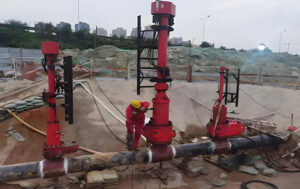
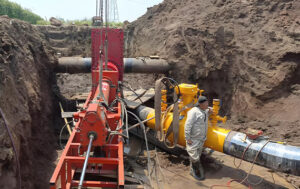
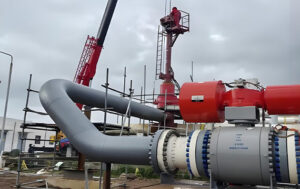
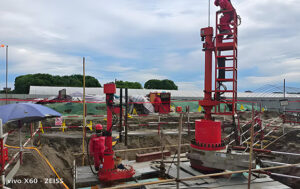
Since our founding, JSW has specialized exclusively in high-stakes pipeline rehabilitation. Unlike general contractors, we focus on engineering-driven solutions—from hot tapping and line stopping to advanced composite wrapping and HDPE sliplining.
Our proven track record:
- 1,200+ repairs completed across North America, Middle East, and Asia
- ISO/ASME/AWWA compliant methodologies
- 50+ year design life guarantee on structural repairs
Contact our pipeline rehabilitation engineers for a free assessment, including:
- Defect classification analysis
- Repair method selection (CIPP, CFRP, sliplining)
- 50-year lifecycle cost comparison
We do not offer “quick fixes.” We provide engineered, data-verified solutions that extend pipeline service life by 50+ years.
Learn more about CFRP pipeline repair design standards or explore our pipeline inspection technologies for your next integrity project.





 English
  Arabic
  Russian
  Spanish
  French
  Vietnamese
  Polish
  Thai
Thai  Indonesian
  Turkish
  Portuguese