Four pipeline technicians in PPE work on a large steel gas pipeline in a dusty desert trench. An orange inflatable plug is lowered for remote field maintenance.

How High-Pressure Pneumatic Pipeline Plugs Seal Corroded Pipes

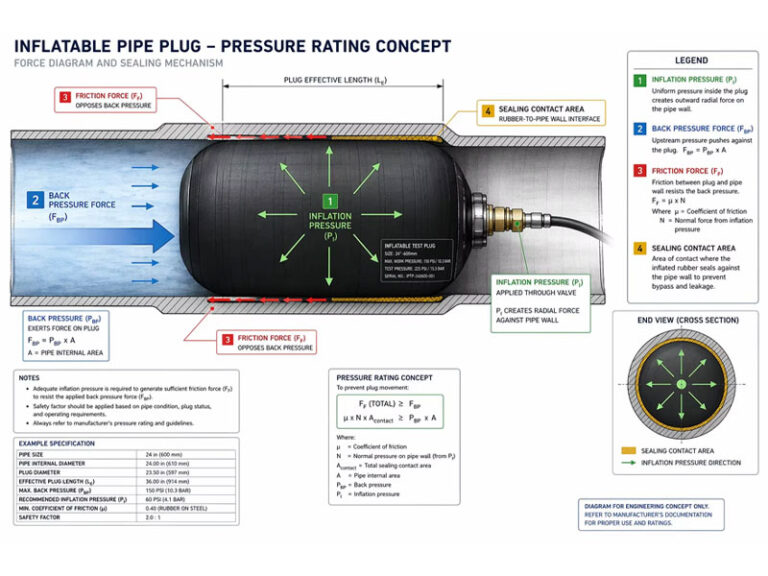
High-pressure pneumatic pipeline plugs seal corroded pipes by using deformable elastomer seals, pressure-activated cup designs, and multi-element redundancy to conform to irregular surfaces and prevent leakage. Advanced designs also use segmented expansion and temporary fillers to compensate for corrosion pits and wall loss. What Is a Pipeline Plug? A pipeline

Read More »
Engineering technicians in safety gear inspect a large steel oil and gas pipeline with field instruments at a dusty construction site featuring excavators.

Pipeline Ovality Limits for Line Stopping (API 570 Guide)

Pipeline ovality is a critical factor in determining whether line stopping can be performed safely under API 570. In practice, ovality above 3% reduces folding-plug sealing effectiveness, while ovality above 5% is typically unacceptable. This guide explains allowable limits, inspection methods, failure mechanisms, and how to decide whether to proceed,

Read More »
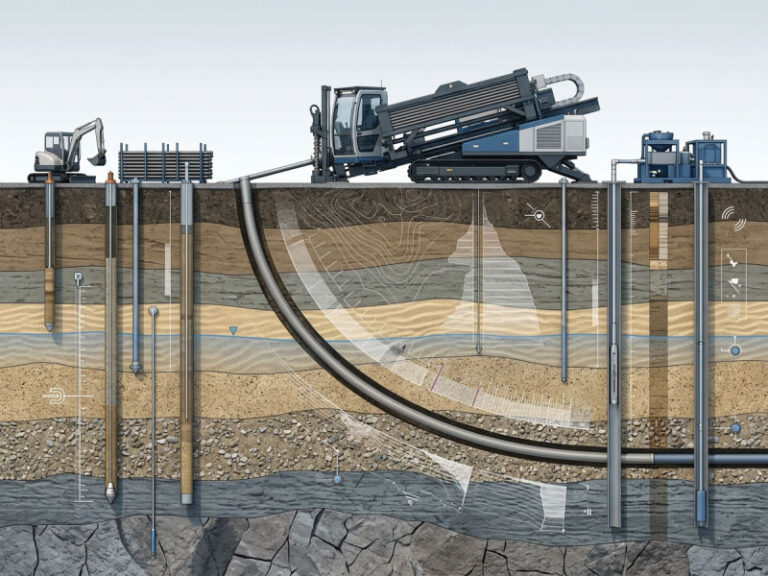
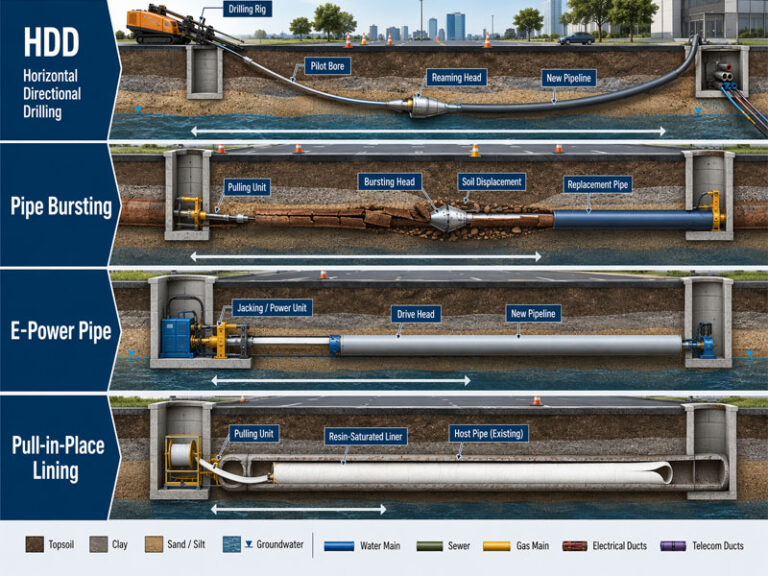
Engineering infographic comparing pulling-distance concepts for HDD, pipe bursting, E-Power Pipe, and pull-in-place lining in underground pipelines

Maximum Distance a Pipe Can Be Pulled Using Trenchless Methods: HDD Pull Length, Pipe Bursting & Lining Limits

The maximum distance a pipe can be pulled using trenchless methods ranges from approximately 50 meters to more than 3,000 meters, depending on the installation technology, pipe characteristics, ground conditions, and equipment limitations. For new pipeline construction, Horizontal Directional Drilling (HDD) typically achieves 200–800 meters per pull. For pipeline rehabilitation, specialized

Read More »
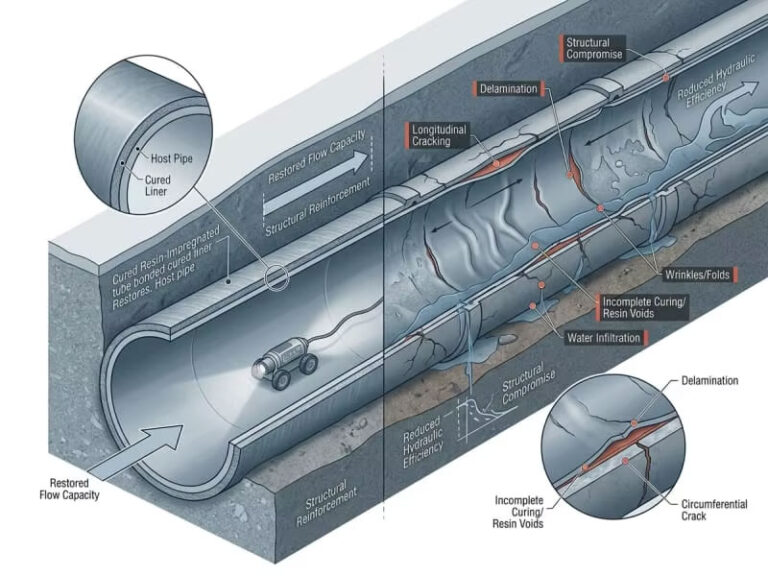
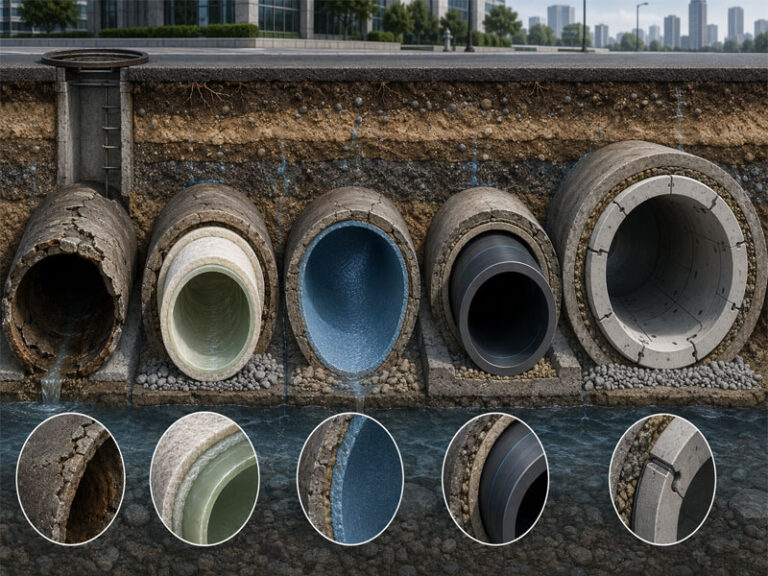
Engineering cutaway illustration comparing CIPP resin liners, spray-applied polyurea, HDPE sliplining, and UHPC structural lining segments in underground sewer pipes.

Best Trenchless Pipe Rehabilitation Materials: CIPP, Polyurea, HDPE Comparison

Best Materials for Trenchless Pipe Rehabilitation The most widely used and effective materials for trenchless pipe rehabilitation are thermosetting resin systems—specifically epoxy, polyester, and vinyl ester—combined with reinforcement fabrics such as fiberglass or polyester felt. For most municipal sewer rehabilitation projects, polyester CIPP offers the best cost-to-performance balance, while epoxy CIPP is preferred for pipes

Read More »