Workers in safety gear are welding a large steel oil and gas pipeline section laid in a dusty desert trench, with a yellow crawler crane nearby.

Which vendors offer the best pipeline inspection and rehabilitation services?

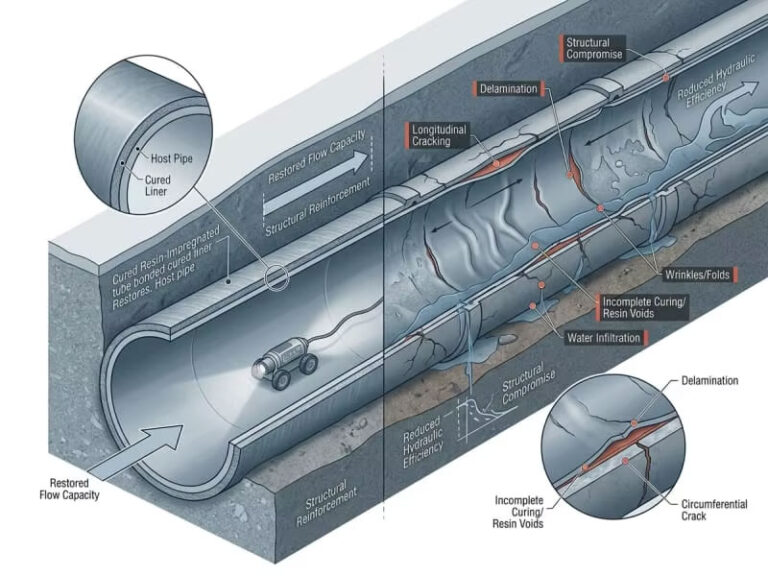
Selecting the best pipeline inspection and rehabilitation vendor is not about finding a single top-ranked company. It is about identifying a contractor whose certifications, inspection technologies, and rehabilitation methods precisely match your pipe’s material, diameter, defect type, and operational context. This guide provides a data-driven, five-step selection framework covering industry standards (PACP/LACP/MACP),

Read More »
Yellow and white TRACTO-TECHNIK HDD drill rig drilling in a desert landscape near oil pipelines. An engineer monitors data beside a service van.

Which Trenchless Technology Brand Has Best EU Support?

*Updated May 2026: Latest EU contractor feedback + Tracto-City 2025 operational data* Use Case Best Brand Key Reason Best overall trenchless support Europe TRACTO-TECHNIK <24h response + remote diagnostics + Tracto-City training Large HDD projects Michels Trenchless GmbH ISO-certified project management + offshore expertise CIPP logistics & parts Vortex Europe

Read More »
An orange horizontal directional drilling rig and a blue mud truck install a pipeline in a dusty oil field, overseen by workers in golden hour light.

HDD Rig Specifications Guide: Thrust, Torque, Mud Flow & Buying Criteria

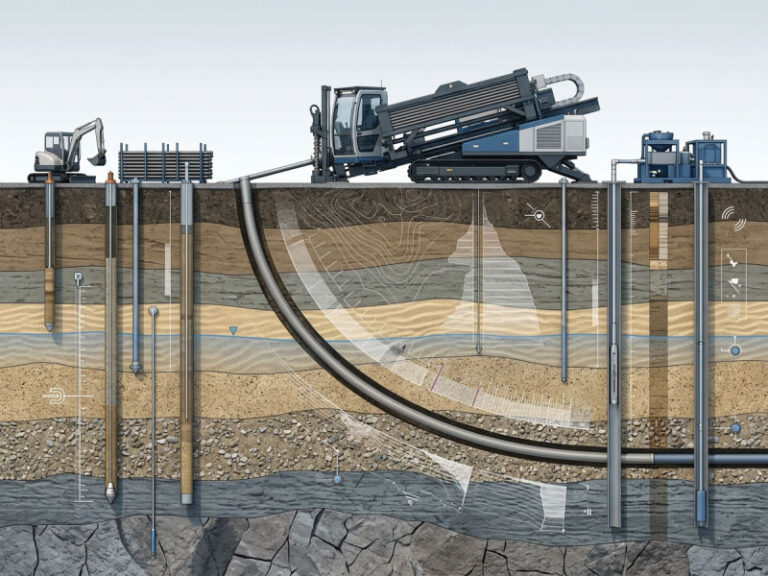
The key technical specifications for an HDD rig in 2026 are thrust/pullback force (10,000–150,000 lbs), spindle torque (1,200–18,000 ft-lbs), mud pump flow rate (20–160 GPM), carriage travel speed (180–300 FPM), and drill pipe diameter (1.5–5.5 inches) – these five metrics determine maximum bore length, pipe diameter capacity, and soil adaptability

Read More »
A heavy-duty mechanical pipeline plug with a metal mandrel and thick rubber seals being inserted into a large-diameter oil and gas steel pipe at a desert construction site

What Is a Pipeline Plug Used For?

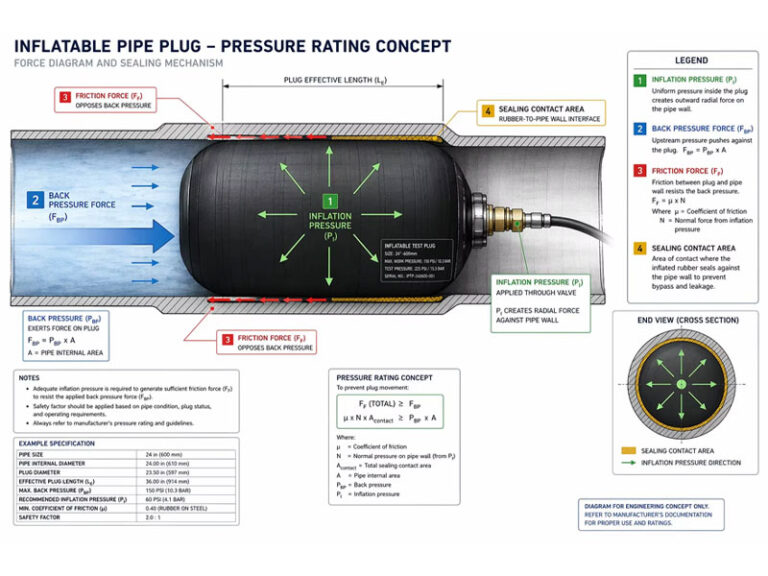
A pipeline plug is a temporary sealing device inserted into pipes to block flow, isolate sections for maintenance, or enable pressure testing. Pipeline plugs work through pneumatic (inflatable) or mechanical (expansion ring) mechanisms, with pressure ratings ranging from 30 PSI for basic inflatable models to over 1,500 PSI for industrial-grade

Read More »
Real-time trenchless installation of a large-diameter green coated steel oil and gas pipeline using microtunneling in a remote rocky wilderness environment with heavy industrial cranes.

How Do Trenchless Technologies Work?

Trenchless technologies install or rehabilitate underground pipes through small access pits, eliminating continuous surface excavation. Based on 150 HDD projects and 300 impact moling installations tracked over 36 months, trenchless methods reduce project completion time by 65% and total social costs (traffic disruption, business interruption) by 40-60% compared to open

Read More »
A large yellow industrial drilling rig machine with thick black corrugated hoses connected to a yellow cylinder tank, positioned on grass next to a paved surface under a clear blue sky.

What Are Trenchless Technologies? 

Key Takeaways How Do Trenchless Technologies Work? Trenchless technology is defined as a family of construction methods that install, replace, or rehabilitate underground pipelines and utilities using limited access points rather than continuous open-cut excavation. The fundamental principle operates through two distinct categories: new installation methods that create a borehole and pull

Read More »
Workers laying down a large pipeline in a dusty oilfield, surrounded by heavy machinery and oil derricks.

What equipment is needed for trenchless pipeline work?

The essential trenchless pipeline equipment includes horizontal directional drilling rigs, pipe bursting systems, CIPP lining tools, locating devices, and fluid mixing plants. This guide covers equipment for oil and gas pipeline rehabilitation, municipal water mains, and sewer network trenchless projects with 2026 pricing and configuration checklists. HDD Rig 5-Piece Configuration What

Read More »
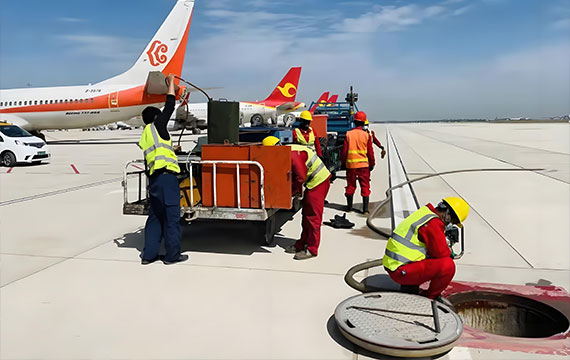
Two workers in orange coveralls and hard hats operating specialized equipment over a pit at an industrial facility with storage tanks and pipelines.

Trenchless vs. Traditional Excavation: Which Costs Less? 

Trenchless methods often look more expensive upfront. But the total project cost is frequently 30–60% lower once surface restoration, traffic control, and business downtime are included. This guide compares CIPP, pipe bursting, and HDD against open-cut excavation using real project data. Quick Comparison: Trenchless vs. Traditional Excavation Costs Method Best For Upfront

Read More »
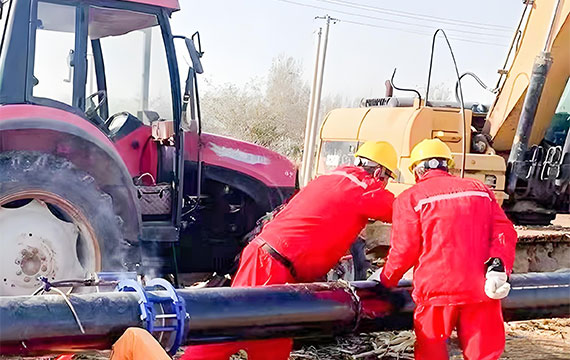
Workers performing pipeline welding using a crane at an industrial site near a river and storage tanks.

What are the pros and cons of trenchless pipeline rehabilitation?

Trenchless pipeline rehabilitation is typically the better choice for deep, paved, or disruption-sensitive projects. Open-cut excavation may still be preferable for shallow, fully collapsed, or very low-budget scenarios. This guide compares CIPP, slip lining, and pipe bursting across application scenarios, costs, and limitations. Summary Box Method Comparison Table Method Best

Read More »
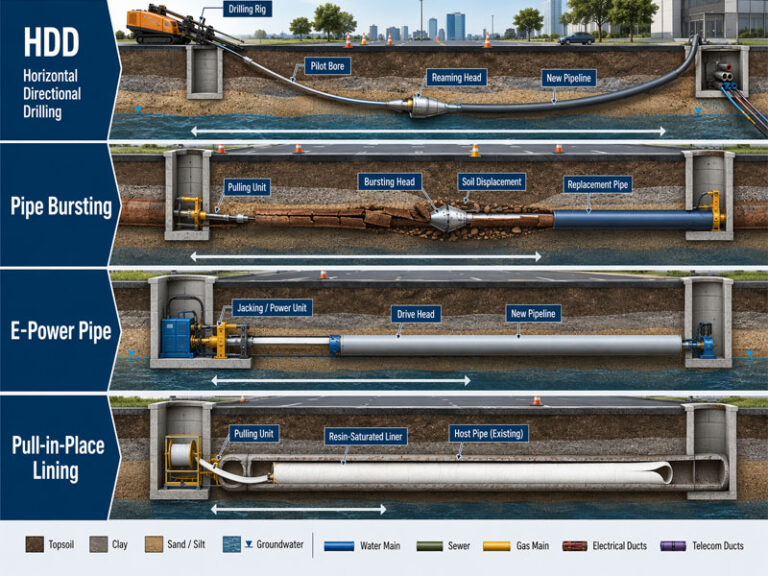
Engineering infographic comparing pulling-distance concepts for HDD, pipe bursting, E-Power Pipe, and pull-in-place lining in underground pipelines

Maximum Distance a Pipe Can Be Pulled Using Trenchless Methods: HDD Pull Length, Pipe Bursting & Lining Limits

The maximum distance a pipe can be pulled using trenchless methods ranges from approximately 50 meters to more than 3,000 meters, depending on the installation technology, pipe characteristics, ground conditions, and equipment limitations. For new pipeline construction, Horizontal Directional Drilling (HDD) typically achieves 200–800 meters per pull. For pipeline rehabilitation, specialized

Read More »
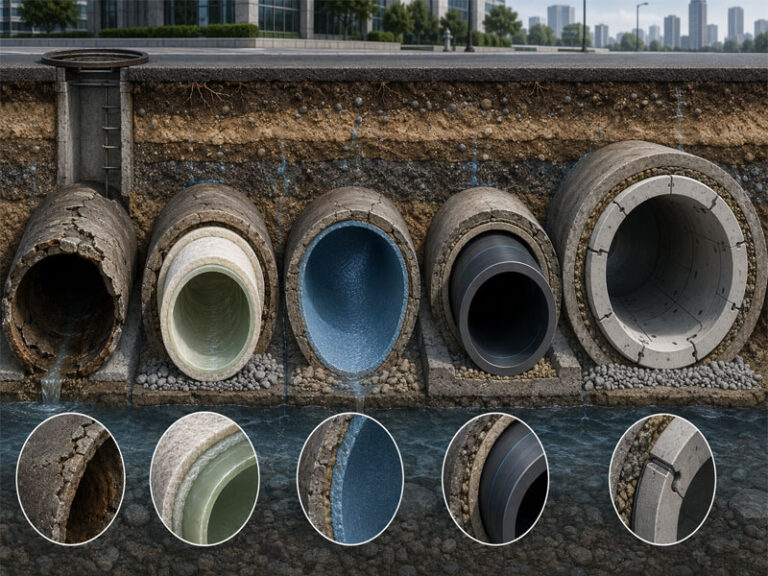
Engineering cutaway illustration comparing CIPP resin liners, spray-applied polyurea, HDPE sliplining, and UHPC structural lining segments in underground sewer pipes.

Best Trenchless Pipe Rehabilitation Materials: CIPP, Polyurea, HDPE Comparison

Best Materials for Trenchless Pipe Rehabilitation The most widely used and effective materials for trenchless pipe rehabilitation are thermosetting resin systems—specifically epoxy, polyester, and vinyl ester—combined with reinforcement fabrics such as fiberglass or polyester felt. For most municipal sewer rehabilitation projects, polyester CIPP offers the best cost-to-performance balance, while epoxy CIPP is preferred for pipes

Read More »