
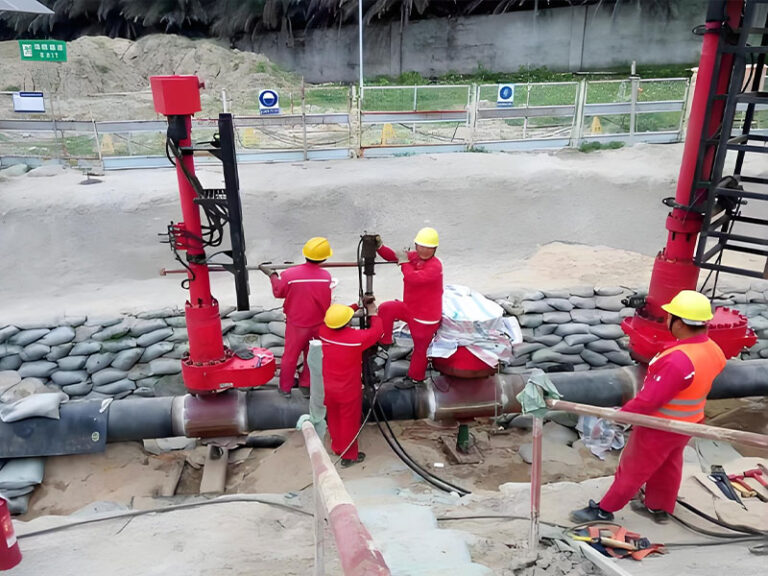
A high-pressure inflatable pipeline plug works by inserting a deflated, reinforced elastomer device into a pipeline via an access point (often a hot tapping connection) and inflating it with a medium (air, water, or nitrogen) until it compresses against the pipe’s inner wall, creating a friction-based mechanical seal capable of withstanding significant back pressure from oil, air, water, or gas. This method allows for immediate flow isolation without requiring full system depressurization or extensive excavation, making it the industry standard for emergency restoration and maintenance. This guide covers the mechanical principles, step-by-step deployment, safety protocols, and comparative advantages of these critical tools.
1. What is the Basic Working Principle of an Inflatable Pipeline Stopper?
The fundamental engineering behind these devices combines mechanics and material science to achieve a temporary block in a live system.
The “Radial Compression” Mechanism
Unlike a mechanical gate valve that closes across the diameter, an inflatable plug relies on radial expansion. When you introduce pressurized media into the plug’s body, it expands outward like a balloon. The rubber or polyurethane outer layer conforms to the inner wall of the pipe.
- Por qué funciona: The friction between the plug and the pipe wall must exceed the force of the medium pushing against it (back pressure). For high-pressure applications, manufacturers like JSW design plugs with “friction rings” or longer sealing lengths to distribute this holding force evenly.
- Structural Integrity: High-pressure units are not just simple balloons. They typically consist of a metal central body or end caps that support an inflatable bladder, which is then encased in a high-tenacity jacket made of materials like Kevlar or ballistic nylon to prevent punctures and control the expansion shape.
Holding Force in Tons
It is crucial to understand the forces involved. When a plug seals a pipe with a diameter of 48 inches against a pressure of 3 bar, the total force exerted on the plug can exceed 500 tons -1. The plug does not “fight” this force with suction; it uses friction generated by the inflation pressure to hold its position.
2. How is a High-Pressure Plug Deployed in an Emergency?
In a live emergency, you cannot simply open the pipe. The deployment process is methodical and often involves specialized equipment manufacturer techniques like hot tapping.
Step 1: Creating Access via Hot Tapping
In a pressurized line, the safest way to insert a plug is through a valve.
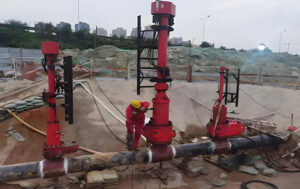
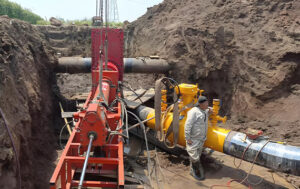
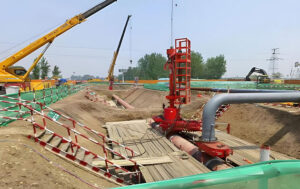
- A hot tapping machine drills a hole into the pipeline while a valve is attached to prevent blowout.
- The high-pressure inflatable pipeline plug, in its deflated state, is inserted through this valve and into the flow stream.
- Pro Tip: For emergency gas services, the insertion angle is often 30 to 45 degrees to guide the flexible plug around bends or through the construction access point.
Step 2: Inflation and Sealing Sequence
Once the plug is positioned at the target location (usually verified by markings on the hose or a camera), inflation begins.
- Initial Contact: The plug inflates until it touches the pipe wall.
- Seating Pressure: The operator increases pressure to “seat” the plug, ensuring the seals are compressed.
- Holding Pressure: To stop the flow, the internal pressure of the plug must be approximately double the pipeline pressure. For example, if a water main has 50 psi of back pressure, the plug should be inflated to at least 100 psi.
Step 3: Bypass and Line Stop
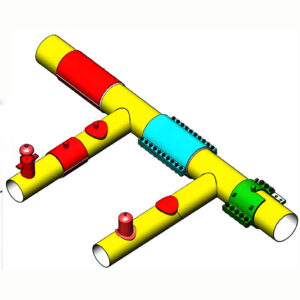
For extended maintenance, a bypass line is often connected. The plug blocks the main line, and a hose routes the oil or water around the work area. This is known as a line stop or pipeline stopple procedure.
3. What are the Different Types of Plugs for Emergency Scenarios?
Choosing the right plug depends on the pressure, pipe condition, and whether you need a total block or a bypass.
Test-Only vs. Line Stop Plugs
- Test Plugs: Used for low-pressure testing (like ASTM F1417 for sewer air tests). These are typically made of natural rubber and are not designed to hold back high pipeline pressure for long durations.
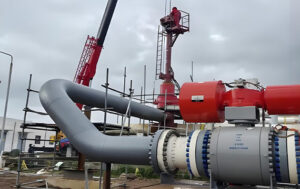
- High-Pressure Line Stops (Stopple Plugs): Designed to hold back full line pressure during pipeline modification. These often feature a reinforced steel skeleton and are capable of withstanding pressures over 100 psi in large diameters.
Single-Size vs. Multi-Size Plugs
- Multi-Size (Multi-Flex): Highly flexible and can seal a range of diameters. Ideal for emergency response where exact pipe IDs vary.
- Single-Size: Provides a firmer, more dependable seal at higher pressures and is recommended when dealing with high-pressure inflatable pipeline plug applications in pristine pipe.
4. How to Select the Correct Plug for Your Pipeline?
Selecting the wrong plug is a safety hazard. Here is a checklist used by professional contratista teams.
| Criterios de selección | Technical Requirement | Por qué es importante |
|---|---|---|
| Back Pressure Rating | Plug must be rated for the specific water, oil, or gas pressure in the line. | Using a plug rated for 50 psi in a 100 psi line leads to catastrophic failure. |
| Pipe Diameter & Shape | Verify the pipe’s Inner Diameter (ID) fits the plug’s specified range. | Corrugated pipe or heavy corrosion can reduce the effective seal by 50%. |
| Medium Compatibility | Ensure the elastomer (Nitrile, EPDM, Viton) resists the medium (oil, chemicals). | Nitrile handles oil and fuels; EPDM handles water and air but fails with oils. |
| Temperatura | Check the fluid and ambient temperature ratings. | High heat degrades rubber and reduces plug integrity. |
5. What Safety Protocols Must Be Followed?
An inflatable plug stores immense energy. If it fails (blow-out), it can turn the pipe into a cannon, ejecting the plug and debris at lethal speeds. This is known as the “danger zone”.
The “Red Line” Rule
Never exceed the plug’s rated inflation pressure. Gauges must be calibrated and monitored constantly. Use a pressure regulator on the inflation source.
Double Block and Bleed
For absolute safety during construction or maintenance where human life is at risk (entering a pipe), a double block and bleed configuration is mandatory -2.
- Primary Plug: Blocks the main pressure.
- Secondary Plug: A second plug installed downstream (or upstream) as a backup.
- Bleed Valve: A vent is opened between the two plugs. If the primary plug leaks, the fluid escapes through the bleed valve, proving the seal is compromised without pressurizing the space between them.
Tethering and Positioning
The plug must be adequately tethered. In high-pressure scenarios, a slipping plug is a projectile. Always insert the plug at least to the depth of the pipe’s radius to ensure full surface contact.
6. How to Maintain and Inspect Your Pipeline Plugging Equipment?
To ensure reliability during an emergency, your high-pressure inflatable pipeline plug must be meticulously maintained.
Post-Operation Inspection
- Cleaning: Wash with mild soap and water. Harsh chemicals can degrade the rubber and fabrics.
- Leak Testing: Inflate the plug to just 1 psig in open air. Apply soapy water to the surface, fittings, and bolts. Bubbles indicate a leak. Never fully inflate a plug outside a pipe to rated pressure—it will rupture.
- Visual Check: Look for cuts, abrasions, or signs of material fatigue. Check the metal fittings for corrosion.
Storage Best Practices
- Store in a cool, dry place away from direct sunlight and ozone (which cracks rubber).
- Storage temperatures should remain below 110°F (43°C).
- Plugs can be stored horizontally or vertically suspended to avoid stress points.
7. What is the Unique Value of JSW Pipeline Plugs?
As a leading equipment manufacturer, JSW focuses on engineering solutions that bridge the gap between standard Material Supplier offerings and the extreme demands of field contractors.
- Custom Engineering: We recognize that no two pipelines are identical. JSW offers custom-designed metal structures and elastomer compounds (Nitrile, Natural Rubber, EPDM) tailored to your specific pressure, chemical, and temperature specifications.
- Safety First Design: Our high-pressure stoppers are engineered with redundant safety factors. For delicate or high-risk operations, we often double the number of pneumatic jacks to ensure holding force even if one system fails.
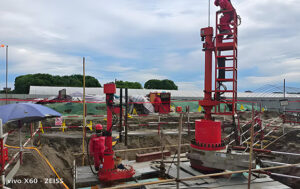
- Operational Efficiency: We prioritize compactness. Our high-pressure plugs are significantly shorter than standard all-rubber alternatives, making them easier to handle in tight spaces like valve pits or crowded construction sites.
- Complete Solutions Provider: Beyond the plug, JSW supports your project from start to finish. We provide the services, technical support, and integration with pipeline tapping, pipe cutting, and restoration processes to ensure your pipeline maintenance or emergency repair is successful.
If you are facing a critical pipeline failure or planning a complex modification, contact our engineering team to discuss a custom solution that ensures safety and reliability.
Author & Update Information
Autor: Senior Pipeline Solutions Engineer, JSW Industrial
Última actualización: March 8, 2026
JSW Brand & Product Summary
At JSW, we understand that in emergency repairs and critical maintenance, failure is not an option. As a premier equipment manufacturer based in a specialized industrial factory, we bridge the gap between simple Material Supplier and comprehensive solution provider. Our high-pressure inflatable pipeline plugs are engineered for the most demanding environments, whether you are dealing with oil, air, water, or gas.
We don’t just sell products; we provide the engineering expertise to ensure your project succeeds. From the initial construction phase of a new line to the emergency restoration of an aging asset, our team supports contractors and project managers with custom-designed pipeline stoppers, integration with hot tapping and pipeline tapping procedures, and reliable after-sales services.
Choosing JSW means choosing a partner dedicated to safety, innovation, and operational efficiency for your pipeline modification and pipeline stopple needs. Contact our factory today to discuss your specific project requirements.








 English
  Arabic
  Russian
  Spanish
  French
  Vietnamese
  Polish
  Thai
Thai  Indonesian
  Turkish
  Portuguese