
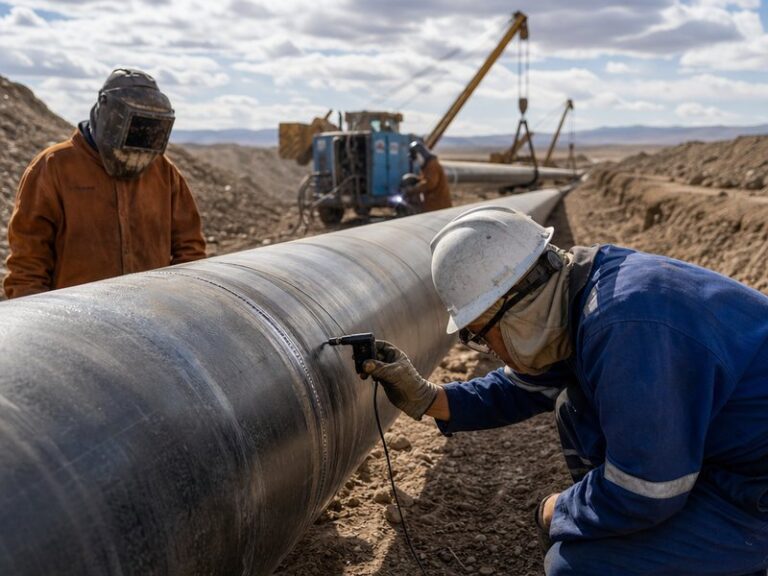
High-quality pipeline welding services are identified by four measurable signals: a first-pass acceptance rate of 95 percent or higher, a weld repair rate below 5 percent, welding procedure specifications backed by valid procedure qualification records, and welder qualifications that match the exact process, pipe grade, and position of your project.
This guide explains how to evaluate those signals through document audits, site inspections, and scored comparisons. It covers the quality metrics, WPS and PQR review, welder qualification checks, non-destructive testing capability, equipment, safety, and quality management systems that separate qualified providers from risky bids. We have condensed the method into a repeatable pipeline welding audit that any procurement team can run before award.
We cover the benchmarks we use in our own supplier audits, the documents to request before award, how to build a weighted scorecard, and the red flags that should stop an evaluation in its tracks. Whether you are procuring pipeline welding services for a new mainline, a station tie-in, or a repair spread, or comparing pipeline welding contractors on a tender, this article is written for the engineer, owner, or procurement lead doing the vetting.
Puntos clave
- Measure first-pass acceptance, not price. A 95 percent first-attempt acceptance rate is the benchmark, and leading crews hold 98 to 99 percent under automated ultrasonic testing.
- Audit the WPS and PQR before award. A WPS without a supporting PQR is not a procedure. Check the essential variables against your pipe grade and wall thickness.
- Verify welder certifications. Every welder on the spread must hold a current API 1104 qualification that matches the process, electrode class, thickness range, and position used on your line.
- Confirm NDT coverage and certification. Know which method applies, what percentage of welds is examined, who interprets the results, and how the NDT personnel are certified.
- Match equipment to schedule. Automatic pipeline welding raises mainline production to 50 to 60 joints per day per crew, while manual crews remain the standard for tie-ins and repairs.
- Weight safety and systems. TRIR and DART rates and ISO 9001 certification matter as much as weld quality when the spread runs for months.
Why Provider Quality Decides Project Risk
On a transmission pipeline, the girth weld is the integrity-critical element of the entire line. A long mainline contains tens of thousands of welded joints, each one carrying the full operating pressure for decades, and a single defective joint can leak or rupture years after installation. The provider who makes those joints therefore decides more about project risk than any other subcontractor on the spread.
Quality also drives the economics of the job. In our supplier audits, we track first-pass acceptance as the leading indicator: provider repair rates range from under 1 percent on well-run spreads to above 8 percent on crews with procedure or training gaps. On a 24-inch line, each rejected weld costs three to five times the price of a first-time weld once excavation, repair, and re-inspection are counted, and one rejection can stop a spread that produces 30 joints per day for a full shift.
Provider selection is therefore a risk decision, not a price decision. The seven checks below form a repeatable evaluation framework, and we have used the same method when auditing our own welding crews before we bid mainline work.
Quality Metrics: What Numbers to Measure
Welding quality control starts with numbers, because numbers do not argue. The three figures that matter most are first-pass acceptance rate, weld repair rate, and cost per accepted weld, and each one is verifiable from the provider’s production records once you know what to ask for.
First-pass acceptance, the percentage of welds that pass inspection on the first attempt, is the single strongest predictor of overall welding quality control. The repair rate is the mirror image: the share of joints that require excavation, re-welding, and re-inspection. Cost per accepted weld divides the crew, equipment, consumables, and inspection cost by the number of welds that pass first time, which is why a low bid with a high assumed repair rate is usually the most expensive option on paper.
Table 1 summarizes the benchmarks we use in our own supplier audits. We treat these numbers as pass-fail gates, not marketing material.
| Métrico | Acceptable benchmark | Strong performance | How to verify |
|---|---|---|---|
| First-pass acceptance rate | 95% or higher | 98-99% under AUT | NDT reports and weld tally sheets |
| Weld repair rate | Below 5% | Below 2% on mainline spreads | Repair log cross-checked against NDT records |
| Cost per accepted weld | Matches market for pipe size and class | Lower than bid average with first-pass at 97%+ | Bid breakdown plus production records |
| NDT re-test rate | Below 3% | Below 1% | Third-party inspection summary |
| Qualification currency | 100% current for project scope | 100% with six-month continuity maintained | Qualification register |
Ask the provider for twelve months of production statistics before award, not a single project highlight. In our audits, a provider that cannot produce a weld tally with first-pass acceptance broken out by crew is usually a provider that does not track it, and untracked quality cannot be managed.
Audit the Welding Procedure Specification and PQR
The welding procedure specification (WPS) and its supporting procedure qualification record (PQR) are the two documents inspectors ask for first, and both must exist before the first production weld. The WPS describes how to weld; the PQR proves the parameters produce an acceptable weld on the target material. A procedure qualified on X52 with a 12.7 mm wall does not cover X70 or a 19 mm wall unless the PQR range allows it.
Essential Variables to Check
Check the essential variables against your project specification: welding process, pipe grade, wall thickness range, electrode classification, heat input, and preheat and interpass temperatures. Also check the practical controls that make a procedure work in the field: electrode storage ovens for low-hydrogen consumables, preheat verification methods, and records of welding parameters during production.
During a supplier audit for a 36-inch gas line, we rejected two of six submitted WPSs because the PQRs did not support the wall thickness range the contractor proposed. The provider requalified within three weeks, but had we discovered the gap after award, the delay would have hit the schedule and the inspection plan. Treat the documentation audit as a pass-fail gate, not a formality.
When In-Service Welding Changes the Rules
If your project includes in-service work on operating lines, the procedure requirements change completely. Ask how the provider handles the added constraints of in-service welding, and review the related safety requirements with the pipeline maintenance services team before you commit to a scope.
Verify Welder Qualification Records
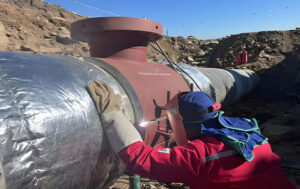
Welder qualification is the first gate because no procedure produces an acceptable weld in the hands of an unqualified welder. For cross-country lines, welders are qualified to API 1104 Chapter 6, while plant and station work follows ASME Section IX, and in the United States the operating regulations in 49 CFR Parts 192 and 195 add their own record requirements.
Ask for the provider’s qualification register and spot-check records against the project scope. Each record must state the process, electrode class, thickness range, and position, and it must match the work the welder will actually perform. Under API 1104, a welder who has not used the process in the previous six months must requalify, and any change to an essential variable invalidates the qualification.
In our own pre-qualification audits, we request the welder list before the site visit. On one 2025 project, we found a crew claiming X70 capability whose records only covered X52 pipe; the mismatch was caught before mobilization, and the provider requalified the crew in two weeks. Qualified welders are the provider’s most valuable asset, and a provider that cannot show the register on demand has something to hide.

Figure 2. Spot-checking the qualification register against the project scope catches mismatches before mobilization, not after.
Verify licensing and insurance in parallel. The provider should hold the registrations required in the project jurisdiction, plus liability and worker’s compensation coverage that matches the contract value. A welding crew that arrives without current qualification records will stop your schedule; a crew without insurance will stop your project entirely.
Evaluate NDT and Inspection Capability
Non-destructive testing (NDT) decides whether a weld is accepted or rejected, so the inspection plan is part of the welding contract. On modern cross-country spreads, automated ultrasonic testing (AUT) typically examines 100 percent of mainline girth welds, while radiography (RT) remains common for tie-ins and smaller lines. Magnetic particle and penetrant testing cover surface flaws where required.
Who Inspects, Who Interprets, Who Accepts
Confirm who performs the pipeline welding inspection, who interprets the results, and who owns the acceptance criteria. NDT personnel should be certified to a recognized scheme such as ASNT SNT-TC-1A or ISO 9712, and the acceptance criteria from API 1104 or the project specification should be frozen in writing before the first joint is welded. When the provider supplies inspection in-house, ask about the auditor’s independence; many owners prefer an independent third party for exactly this reason.
Crews matched to a qualified AUT procedure report first-attempt acceptance of 95 to 99 percent on mainline work. We treat pipeline welding inspection as part of the welding contract rather than an afterthought: on our projects, the inspection provider is approved before the first weld, and the percentage of welds examined, the method, and the acceptance criteria are written into the contract so there is no dispute later.
Verify the NDT Chain End to End
Ask for the provider’s NDT procedure list and the certifications of the technicians who will interpret your welds. If the provider outsources inspection, request the same documents from the inspection company, because the pipeline welding inspection chain is only as strong as its weakest link.
Check Equipment and Automatic Welding Capacity
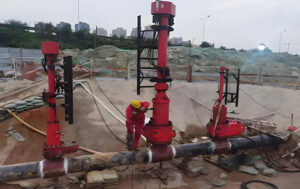
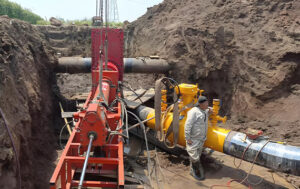
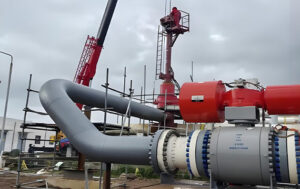
Equipment decides both quality and production rate. A modern mainline spread runs internal line-up clamps, automatic welding bugs or mechanized systems, preheat and stress-relief equipment, and its own NDT hardware, and the condition of that equipment shows up directly in first-pass acceptance numbers.
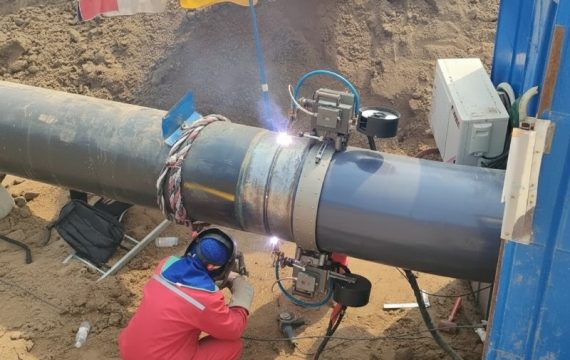
Automatic pipeline welding raises mainline production to 50 to 60 joints per day per crew, compared with 30 to 40 for manual crews, and it improves repeatability because the arc parameters are machine-controlled rather than hand-controlled. Manual crews remain the standard for tie-ins, repairs, and tight spaces, so the right question is not “automatic or manual” but whether the provider has the right mix for your specific work.
In our audits we ask three equipment questions: how old is the fleet, what is the maintenance program, and can the provider supply backup machines on site. On a 30-inch gas project, a single downed automatic welding unit stopped production for a full shift; the provider with a backup bug on the truck lost nothing, and the provider without one lost the day.
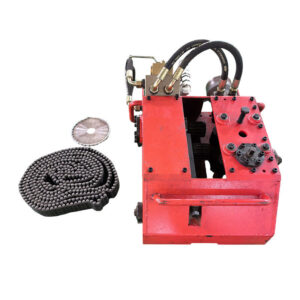
Equipment capability also extends to the surrounding operations. Ask how the provider prepares the pipe end, whether the cutting and beveling tools match the wall thickness, and how the crew handles bends. The pipeline cutting machines and pipeline cold bending processes used upstream of the weld affect fit-up quality, which drives root pass defects more than any other single factor.
Assess Safety Performance and Quality Management Systems
Safety performance is a reliable proxy for welding quality control, because both come from the same discipline. Ask for the provider’s TRIR and DART rates for the last three years and compare them against the industry median, which sits near 1.5 to 2.5 for recordable incidents. A provider that cannot manage its own crews safely will not manage weld quality under schedule pressure.
Quality management systems add the documentation layer that makes quality repeatable. Ask whether the provider holds ISO 9001 certification and whether the certified system actually covers field operations; an ISO 9001 welding quality system that covers only the office does little for a weld made in a ditch at minus 20 degrees.
Look for the management behaviors that numbers cannot capture: does the provider hold daily weld quality reviews, does the site supervisor have authority to stop welding on a procedure deviation, and are repair root-cause analyses documented? These behaviors separate providers who react to defects from providers who prevent them.
If the project includes work on operating lines, safety assessment must cover the isolation and plugging plan as well. Review how the crew prepares the line with hot tapping and plugging services and what line stopping and plugging equipment standards apply, because an in-service failure is a different risk class from a greenfield weld defect.
Build a Weighted Provider Scorecard
A scorecard turns subjective impressions into a defensible decision. Assign weights to the categories that matter for your project, score each provider against the evidence you collected, and compare the totals rather than the headline bid price.
Table 2 shows the scoring framework we use when comparing providers. Adjust the weights to your project: a sour-gas line with high hydrogen risk should weight procedure and welder credentials heavier, while a long flat mainline should weight equipment and production capacity heavier.
| Categoría | Weight | What to score | Evidence to request |
|---|---|---|---|
| Weld quality metrics | 30% | First-attempt acceptance, weld repair rate, NDT re-test rate | 12 months of weld tallies and NDT reports |
| Procedures and qualifications | 25% | WPS/PQR coverage for your pipe grade, qualification currency | WPS, PQR, qualification register |
| NDT and inspection | 15% | Method coverage, personnel certification, independence | NDT procedures, ASNT or ISO 9712 certificates |
| Equipment and capacity | 10% | Fleet condition, automatic pipeline welding capability, backup machines | Equipment list, maintenance records, production history |
| Safety and systems | 10% | TRIR, DART, ISO 9001 coverage of field operations | Three years of safety statistics, ISO 9001 certificate |
| Commercial terms | 10% | Cost per accepted weld, schedule realism, payment terms | Bid breakdown, production assumptions |
Score with a simple 1 to 5 scale for each category, multiply by the weight, and sum the totals. In our experience the top two providers on a well-run tender usually finish within a few points, and the decision then rests on the site visit and the references rather than the paperwork.
Schedule a site visit before award, not after. Watch a full weld cycle from joint preparation through preheat, root pass, and cap pass, and ask to see the repair log from the current project. The behavior you observe in one hour tells you more than any certificate.
Need a second pair of eyes on your provider shortlist? JSW’s welding engineers run independent provider audits: we review your shortlist’s WPS, PQR, and welder qualification registers and return a scored gap analysis. Send us your tender documents, and we will reply within one business day.
Red Flags When Evaluating Pipeline Welding Services
Some signals should end the evaluation regardless of price or references. Table 3 lists the red flags we treat as automatic disqualifiers when running a pipeline welding audit.
| Red flag | Why it matters | What to do |
|---|---|---|
| Cannot produce a WPS with its PQR | A procedure without proof is not a procedure, and production cannot legally start without both | Disqualify, or require requalification before award |
| Qualification register does not match project scope | Unqualified welders produce defects regardless of the procedure | Require documented requalification before mobilization |
| Repair rate is vague or “confidential” | Providers that do not track quality cannot manage it | Request the weld tally; treat refusal as a disqualifier |
| NDT personnel without recognized certification | Uncertified interpretation invalidates the inspection chain | Verify ASNT SNT-TC-1A or ISO 9712 certificates |
| No insurance or low liability limits | A weld failure can exceed the contract value many times over | Verify certificates against contract value |
| Refuses a site visit before award | Field behavior is the only honest evidence of quality | End the evaluation |
| Safety statistics above industry median without explanation | Safety discipline tracks weld quality discipline | Request the three-year record and root-cause summaries |
None of these red flags are negotiable in our audits. A provider that fails one check usually fails several, and every missed check costs schedule and money once the spread is in the field.
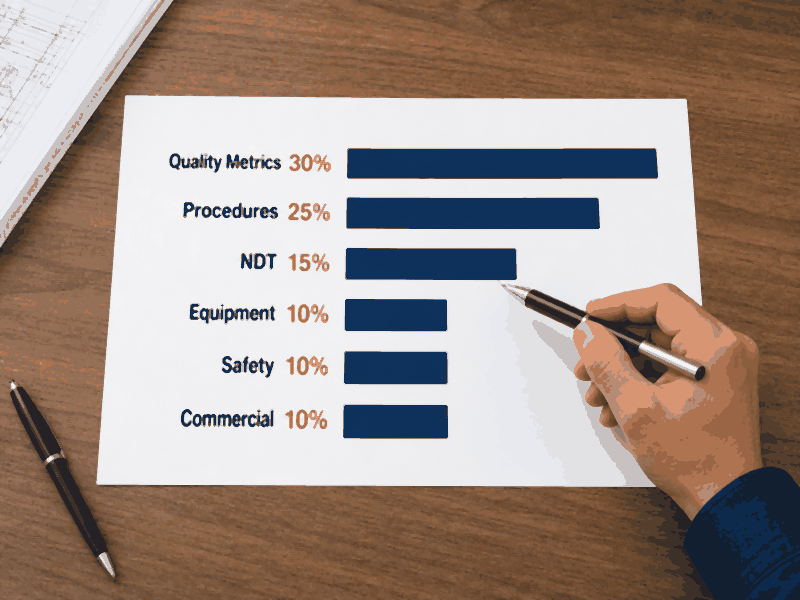
Figure 3. A weighted scorecard turns audit evidence into a defensible provider decision.
Preguntas frecuentes
Quick answers to the questions procurement teams ask most when evaluating pipeline welding providers.
What is a good first-pass acceptance rate for pipeline welding services?
A rate of 95 percent or higher on the first attempt is the working benchmark for well-managed providers, and strong crews hold 98 to 99 percent under automated ultrasonic testing. A rate below 95 percent means roughly one joint in twenty fails inspection, and each rejected weld costs three to five times the price of a first-time weld.
What documents should I request when evaluating a pipeline welding provider?
When evaluating a pipeline welding contractor, request the welding procedure specification with its supporting procedure qualification record for every process and pipe grade you intend to use, the welder qualification register, the non-destructive testing plan with personnel certifications, plus safety statistics, insurance certificates, and references from comparable mainline projects.
What is the difference between a WPS and a PQR?
A welding procedure specification (WPS) describes how to weld: process, pipe grade, wall thickness range, electrode class, heat input, and preheat. The procedure qualification record (PQR) proves those parameters produced an acceptable weld on the target material. A WPS without a PQR is not a procedure, and a PQR range that does not cover your pipe grade or wall thickness does not apply to your project.
What is the difference between API 1104 and ASME Section IX?
API 1104 governs field welding of cross-country pipelines under ASME B31.4 and B31.8, while ASME Section IX covers welder and procedure qualification for plant and station piping. Cross-country lines qualify welders to API 1104 Chapter 6; station tie-in work follows Section IX.
Automatic or manual pipeline welding: which is right for my project?
Automatic welding raises mainline production to 50 to 60 joints per day per crew and improves repeatability, while manual crews remain the standard for tie-ins, repairs, and tight spaces. The right question is not automatic or manual, but whether the provider has the right mix for your specific work.
How do I verify a welder’s qualification?
Ask to see the register of qualified welders and spot-check each record against the work the welder will perform: process, electrode class, thickness range, and position. On cross-country lines welders are qualified to API 1104 Chapter 6, and a welder who has not used the process in the previous six months must requalify.
Should welding inspection be in-house or third-party?
Either model works if the acceptance criteria are frozen in the project specification and the NDT personnel are certified to a recognized scheme such as ASNT SNT-TC-1A or ISO 9712. What matters is clarity: who performs the examination, who interprets the results, and who decides whether a weld is accepted or rejected.
What is a good weld repair rate for pipeline welding services?
A weld repair rate below 5 percent is the working ceiling for acceptable providers, and leading crews report repair rates under 2 percent on mainline spreads. A repair rate above 5 percent should trigger a procedure, equipment, or crew review, because each rejected weld stops the spread and costs three to five times a first-time weld.
How much do pipeline welding services cost?
Welding and its inspection typically account for roughly 10 to 15 percent of total installed pipeline construction cost, varying with pipe size, wall thickness, terrain, and inspection method. The meaningful number is cost per accepted weld, and a low bid that assumes an unrealistic repair rate is usually more expensive per accepted weld than a higher bid from a proven crew.
7-Step Provider Evaluation Checklist
Run these seven steps in order before you sign a welding contract: each step maps to one section of this guide and takes less than a day of document review.
- Step 1: Pull 12 months of weld tallies and NDT reports. First-pass acceptance and weld repair rate are only credible when they come from actual production records, not project highlights.
- Step 2: Audit the WPS and PQR against your pipe grade. Confirm the essential variables cover the process, grade, wall thickness, and position you will actually weld.
- Step 3: Spot-check the welder qualification register. Every welder on the spread must hold a current qualification that matches the exact job scope.
- Step 4: Confirm the NDT plan, certification, and independence. Freeze the method, examination percentage, and acceptance criteria in writing before the first joint.
- Step 5: Match equipment and automatic welding capacity to your schedule. Verify fleet age, maintenance program, and backup machines before you rely on production numbers.
- Step 6: Review TRIR, DART, and ISO 9001 field coverage. Safety discipline tracks weld quality discipline over months of production.
- Step 7: Score providers on a weighted scorecard, then visit the site. Let the numbers shortlist the finalists, and let the field visit make the final call.
Evaluating the quality of pipeline welding services comes down to five verifiable questions: What is the first-pass acceptance rate? Do the WPS and PQR cover your pipe grade? Are the welders qualified for the exact work? Is the NDT chain certified and independent? And does the safety and quality system hold up under field conditions? The seven-step checklist above turns these five questions into an audit sequence you can run before award. The provider that answers all five with documents and production data is the provider you can put on your line.
Talk to a welding quality team that audits itself the same way. JSW is a pipeline engineering and equipment specialist serving the oil, gas, water, and chemical industries. Our welding crews and engineers work daily with API 1104, ASME B31.4, B31.8, and ASME Section IX across pipeline construction, repair, and maintenance projects, and we manufacture hot tapping machines, line stopping plugs, and pipeline cutting equipment used by contractors worldwide. Because we combine field crews with our own equipment line, we can qualify the welding procedure, supply the fittings and machines, and execute the weld under the standard that governs your project. Send us your pipe size, fluid, pressure, and governing code, and our engineers will reply with a compliant plan and quotation within one business day. The cheapest bid on paper is often the most expensive per accepted weld; let us price the risk, not just the rate.
Explore related capabilities: pipeline construction services, pipeline repair services, and hot tapping equipment.






 English
  Arabic
  Russian
  Spanish
  French
  Vietnamese
  Polish
  Thai
Thai  Indonesian
  Turkish
  Portuguese