
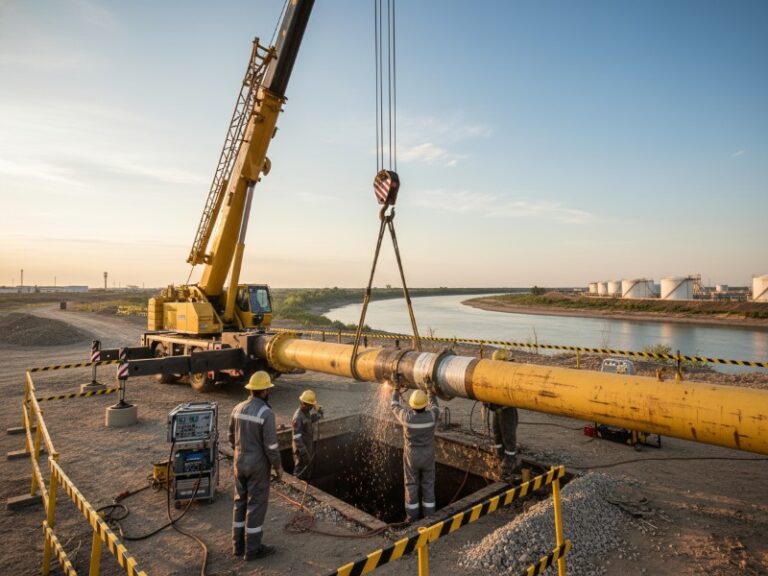
Trenchless pipeline rehabilitation is typically the better choice for deep, paved, or disruption-sensitive projects. Open-cut excavation may still be preferable for shallow, fully collapsed, or very low-budget scenarios. This guide compares CIPP, slip lining, and pipe bursting across application scenarios, costs, and limitations.
Summary Box
- Best for: Deep pipes, paved surfaces, under-building installations, disruption-sensitive sites
- Not ideal for: Shallow depth, full collapse with soil migration, extremely short pipe sections
- Three methods: CIPP (structural liner), slip lining (diameter reduction accepted), pipe bursting (full replacement)
Method Comparison Table
| Method | Best For | Main Drawback | Cost Level | Diameter Impact | Surface Disruption |
|---|---|---|---|---|---|
| CIPP | Cracked but passable pipes | Higher equipment cost; requires dry pipe | 110–110–450/ft | Minimal (5-10% reduction) | Two access pits |
| Slip lining | Low-cost rehab when diameter loss accepted | 15-30% diameter reduction | 60–60–150/ft | Significant reduction | Two access pits |
| Pipe bursting | Full replacement of collapsed pipes | Ground heave risk near shallow utilities | 150–150–350/ft | Can upsize by 50-150mm | Two access pits + potential heave |
| Open-cut | Shallow, accessible, short pipes | High surface restoration cost | 85–85–550/ft | None | Full trench |
Quick Decision Table: Which Method Fits Your Project?
| Project Type | Recommended Method | Primary Reason |
|---|---|---|
| Deep sewer under paved road | CIPP | Minimal disruption, no road closure |
| Diameter reduction is acceptable | Slip lining | Lowest complexity and equipment cost |
| Broken or collapsed pipe needing full replacement | Pipe bursting | Replaces old pipe without full excavation |
| Shallow pipe in open, unpaved area | Open-cut excavation | Lowest total project cost |
| Pipe under active building foundation | CIPP or pipe bursting | No interior access or slab removal |
1. What Are the Main Advantages of Trenchless Rehabilitation?
Takeaway: Trenchless is most valuable when restoration or downtime costs outweigh excavation savings.
1.1 Minimal Surface Disruption
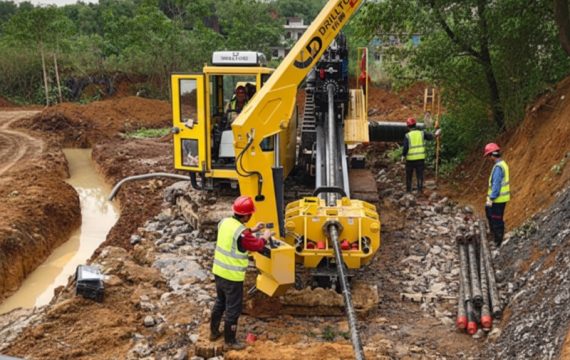
Most trenchless projects require only two small access pits (typically 2 x 3 meters). For a 150-meter residential sewer line, open-cut would disturb approximately 450 square meters of surface area. Trenchless methods disturb less than 6 square meters.
1.2 Faster Project Completion
A typical 100-meter pipe section using CIPP completes in 2-4 days versus 11-20 days for open-cut. The labor reduction comes from eliminating most excavation, backfill, and surface restoration.
1.3 Extended Service Life
Modern CIPP liners are commonly designed for 50-year service lives. The smooth, jointless interior typically improves flow capacity by 30-40% compared to older pipes with scale or joint irregularities.
2. What Are the Main Disadvantages and Limitations?
Takeaway: CIPP works best for damaged but still passable pipes. Slip lining is cheapest when diameter loss is acceptable. Pipe bursting suits full replacement away from fragile structures.
2.1 Higher Initial Equipment and Expertise Costs
- Equipment mobilization: 3,000–3,000–8,000 per day for mid-sized CIPP systems
- Resin and liner materials: 25–25–60 per linear foot
- Skilled technician rates: 95–95–150 per hour (versus 50–50–75 for general excavation labor)
Contractors performing fewer than 15 trenchless projects annually rarely recoup the equipment investment.
2.2 Material and Site Constraints
CIPP is not ideal for: Pipes with active collapse exceeding 25% of diameter, or situations where groundwater infiltration cannot be temporarily controlled.
Slip lining reduces internal diameter by 15-30%, which may cause capacity issues for sanitary sewers.
Pipe bursting risks ground heave (typically 5-15 cm) and is generally not recommended under structures with less than 1 meter of cover or near sensitive utilities.
3. When Trenchless Is NOT the Right Choice
Selection boundary: Trenchless works best when the pipe is accessible and structurally predictable. Open-cut is often better when the line is too short, too shallow, or too collapsed.
Open-cut excavation is typically the better option in these scenarios:
| Condition | Why Trenchless Is Problematic |
|---|---|
| Pipe fully collapsed with soil migration into the void | Surrounding cavity exceeds 1.5x original diameter; liner cannot seal against soil |
| Extremely shallow cover (less than 1 meter) | Ground heave risks pavement damage; excavation is minimal anyway |
| Unknown alignment or unverified defects | Pre-inspection CCTV cannot map the entire line reliably |
| Very short pipe section (under 15 meters) | Mobilization costs exceed any trenchless benefit |
| Major diameter loss unacceptable | Slip lining reduces flow; CIPP may also reduce by 5-10% |
| Active bypass pumping not feasible | Live sanitary sewers cannot be emptied or diverted |
Takeaway: Open-cut remains the default for shallow depth, open sites, short lengths, or when the lowest upfront budget is the only priority.
4. Cost Comparison: Trenchless vs. Open-Cut
4.1 Direct Cost by Pipe Diameter and Depth
Typical North America costs per linear foot (USD):
| Pipe Diameter | Depth | Open-Cut | Trenchless (CIPP) | Lower-Cost Method |
|---|---|---|---|---|
| 150mm (6″) | 1.2m | 85–85–120 | 110–110–160 | Open-cut |
| 150mm (6″) | 3.0m | 160–160–220 | 120–120–170 | Trenchless |
| 300mm (12″) | 1.5m | 120–120–180 | 150–150–220 | Comparable |
| 300mm (12″) | 3.5m | 240–240–320 | 160–160–240 | Trenchless |
| 600mm (24″) | 4.0m | 400–400–550 | 300–300–450 | Trenchless |
4.2 Total Cost Including Restoration and Downtime
Scenario — Commercial driveway crossing (30 meters, 300mm pipe at 2.5m depth):
- Open-cut total: 6,500excavation+6,500excavation+4,200 pavement replacement + 3,800businessinterruption=3,800businessinterruption=14,500
- Trenchless total: 8,400CIPP+8,400CIPP+800 access pit restoration + 500businessinterruption=500businessinterruption=9,700
- Savings with trenchless: $4,800 (33%)
Takeaway: Trenchless typically becomes economically superior above 2.5 meters depth for paved surfaces and above 3 meters for unpaved areas.
5. Method-by-Method Breakdown
5.1 Cured-in-Place Pipe (CIPP)
| Factor | Detail |
|---|---|
| Best for | Cracked, joint-separated, or corroded pipes that are still passable |
| Why not | Not suitable for active collapse exceeding 25% of diameter |
| Diameter range | 50mm to 2,700mm |
| Surface disruption | Two access pits |
| Typical service life | Designed for 50 years; field data shows 80-95% integrity at 20 years |
| Cost level | 110–110–450 per linear foot |
| Key cost driver | Resin type (polyester cheapest, vinyl ester highest chemical resistance) |
5.2 Slip Lining
| Factor | Detail |
|---|---|
| Best for | Low-cost structural rehab when diameter loss is acceptable |
| Why not | Not suitable when full original diameter must be preserved |
| Diameter reduction | 15-30% smaller internal diameter |
| Surface disruption | Two access pits |
| Typical service life | 40-50 years for HDPE liner |
| Cost level | 60–60–150 per linear foot (lowest among trenchless methods) |
| Key cost driver | Grouting the annular space |
5.3 Pipe Bursting
| Factor | Detail |
|---|---|
| Best for | Full replacement of broken, collapsed, or undersized pipes |
| Why not | Not ideal under shallow utilities (less than 1m cover) or near fragile structures |
| Diameter capability | Can upsize by one or two pipe sizes (typically +50-150mm) |
| Surface disruption | Two access pits; potential minor ground heave |
| Typical service life | Same as new pipe (HDPE or PVC) — 50+ years |
| Cost level | 150–150–350 per linear foot |
| Key cost driver | Ground conditions (rock or dense clay increases difficulty) |
6. How to Choose the Right Method: A 5-Question Decision Guide
Ask these questions in order:
- What is the pipe’s structural condition?
- Still passable but cracked → CIPP or slip lining
- Collapsed or severely deformed → Pipe bursting or open-cut
- Is maintaining full internal diameter critical?
- Yes → Avoid slip lining
- No → Slip lining becomes cost-effective
- What is the acceptable downtime?
- Less than 1 week → Trenchless
- 2-4 weeks acceptable → Open-cut may work
- What is above the pipe?
- Paved road, building, or landscaping → Trenchless strongly preferred
- Open field or unpaved area → Compare costs
- What is the budget vs. required service life?
- Lower upfront cost, shorter ownership → Open-cut for shallow pipes
- Higher upfront, lower lifetime cost → Trenchless
7. Common Misconceptions About Trenchless Technology
| Misconception | Reality |
|---|---|
| “Trenchless means no digging at all” | Most methods still require two access pits for equipment entry |
| “CIPP can fix any collapsed pipe” | CIPP requires a passable host pipe; severe collapse prevents liner insertion |
| “Slip lining has no downside” | Diameter reduction of 15-30% can cause flow problems |
| “Pipe bursting works anywhere” | Ground heave risks near shallow utilities or fragile structures |
| “Trenchless is always cheaper” | Open-cut is often cheaper for shallow, unpaved, accessible pipes |
Q&A: Frequently Asked Questions
Q: Is trenchless pipeline rehabilitation worth it?
A: Generally yes for pipes deeper than 2.5 meters, under paved surfaces, or beneath buildings. For shallow pipes in open areas, open-cut may be more cost-effective.
Q: What are the disadvantages of CIPP?
A: Higher upfront equipment costs, requires dry or bypassed pipe during installation, not suitable for active collapses exceeding 25% of diameter, and cure quality depends on temperature control.
Q: Which trenchless method is cheapest?
A: Slip lining typically has the lowest material and equipment costs (60–60–150 per linear foot), but only when diameter reduction is acceptable.
Q: How long does CIPP last?
A: Manufacturers commonly design for 50-year service lives. Independent field studies show 80-95% of CIPP liners remain structurally sound at 20 years.
Q: Can trenchless repair a collapsed pipe?
A: Pipe bursting can replace fully collapsed pipes. CIPP cannot — it requires a passable host pipe for liner insertion.
Q: What is the difference between CIPP and pipe bursting?
A: CIPP installs a liner inside the existing pipe. Pipe bursting fractures the old pipe and pulls a new pipe into place.
Q: Is slip lining suitable for sanitary sewers?
A: Only if the reduced diameter does not cause flow capacity problems. Check peak flow calculations before selecting slip lining.
Q: Can trenchless methods be used under buildings?
A: Yes. CIPP and pipe bursting can operate from exterior access pits without any interior slab removal or tenant relocation.
Technical Basis
This guide is based on ASTM F1216, NASSCO training materials, ISO 11296 standards, published municipal case studies, manufacturer technical manuals, and industry-reported field performance data from 2000–2025.
About JSW
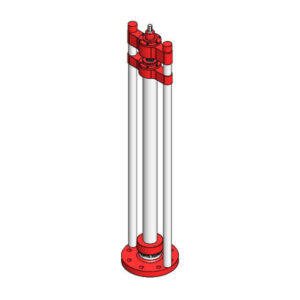
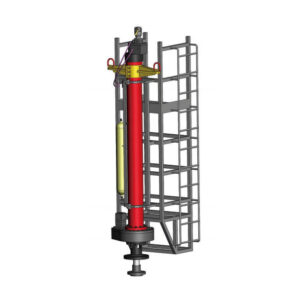
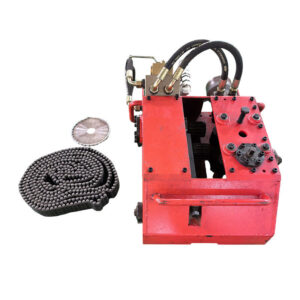
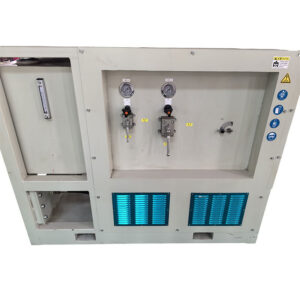
JSW supplies pipeline cutting machines, line stopping systems, and sealing equipment for trenchless rehabilitation. Diameter range: 50mm to 1,200mm. Services include CCTV inspection, hydro-jetting, and CIPP installation. Technical support and on-site training available. Contact for project-specific cost comparisons.







 English
  Arabic
  Russian
  Spanish
  French
  Vietnamese
  Polish
  Thai
Thai  Indonesian
  Turkish
  Portuguese