
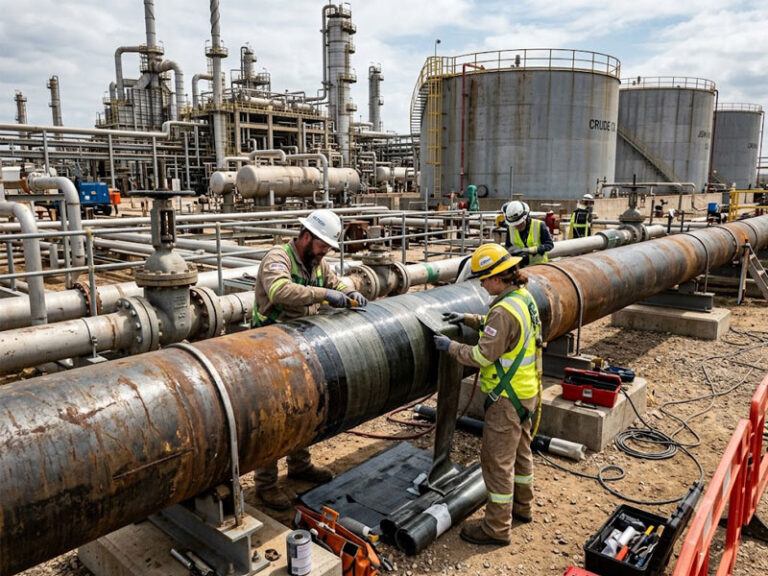
Turnkey pipeline repair services provide complete engineering, procurement, fabrication, installation, testing, and commissioning under a single contract. These services help industrial operators repair damaged pipelines faster, reduce downtime, improve accountability, and ensure compliance with industry standards such as ASME PCC-2 and ISO 24817.
Yes, turnkey pipeline repair services are widely available for industrial facilities, offering comprehensive solutions that integrate engineering, material procurement, fabrication, and on-site installation under a single contract to restore pipeline integrity while minimizing operational downtime.
The global pipeline repair market is projected to exceed $9.1 billion by 2032, driven by aging infrastructure and the need for rapid, reliable maintenance. This guide provides a complete overview of common damage types, available repair methods, typical costs, key provider selection criteria, and real-world applications to help facility managers make informed decisions.
Key Takeaways
- Turnkey pipeline repair consolidates engineering, procurement, fabrication, and installation under one contractor, simplifying project management.
- Composite repairs allow many pipelines to remain operational during repair, reducing costly downtime.
- Leading repair methods include composite wraps, welded sleeves, mechanical clamps, and trenchless rehabilitation.
- Composite repairs can reduce repair-related emissions by up to 66% compared to full pipe replacement.
- Provider selection should prioritize engineering expertise, certifications, safety performance, and 24/7 emergency response capability.
Pipeline Repair Industry Statistics
- The global pipeline repair market is projected to exceed $9.1 billion by 2032.
- Composite repairs can reduce project-related carbon emissions by up to 66% compared to pipe replacement.
- Turnkey project delivery typically reduces overall project schedules by 20–40%.
- Unplanned downtime in industrial facilities can cost operators more than $100,000 per hour.
Common Types of Pipeline Damage Requiring Repair
Understanding the type of damage is the first step in selecting the appropriate repair strategy. Turnkey providers assess defects using non-destructive testing (NDT) methods such as ultrasonic thickness testing, radiographic imaging, and magnetic particle inspection.
| Damage Type | Primary Cause | Typical Repair Method |
|---|---|---|
| External Corrosion | Soil moisture, stray electrical currents | Composite Wrap, Sleeve Repair |
| Internal Corrosion | Water/chemical attack, CO₂ or H₂S presence | Internal Lining + Composite Wrap |
| Cracks | Fatigue, stress corrosion cracking | Welded Sleeve, Mechanical Clamp |
| Dents / Gouges | Third-party damage (excavation, impact) | Sleeve Repair, Composite Wrap |
| Leaks (Pinholes/Fractures) | Corrosion through-wall, material defect | Mechanical Clamp, Composite Wrap |
| Joint / Girth Weld Failure | Poor welding, excessive stress | Welded Sleeve, Pipe Replacement |
What Pipeline Repair Technologies Do Turnkey Providers Use?
Turnkey providers employ a range of technologies, selected based on pipe material, operating pressure, defect type, and site accessibility. The most common methods include:
Composite Wrap Repairs
Composite wrap systems use high-strength fiber-reinforced materials (carbon or glass) applied externally to restore structural integrity. These systems are engineered per ISO 24817 y ASME PCC-2 Article 401 standards.
- Temperature Tolerance: Up to 230°C (446°F).
- Capacidad de presión: Can address through-wall defects up to 70 bar (1015 psi).
- Design Life: Typically 2 to 20 years, allowing operators to plan for scheduled maintenance.
- Ventaja: Can often be applied without shutting down the pipeline or requiring hot work permits.
Welded Sleeve Repairs
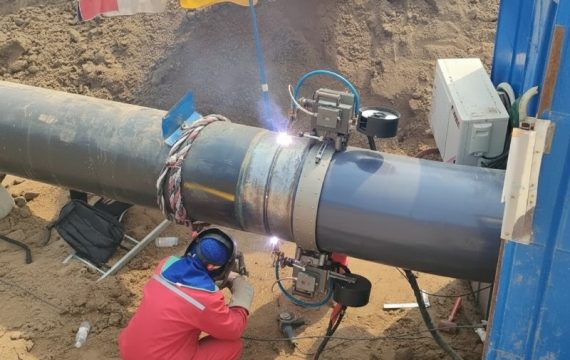
For localized severe corrosion or cracking, welded steel sleeves provide a permanent structural reinforcement. This method is commonly used for high-pressure, high-temperature pipelines where composite systems are not suitable.
- Requires: Pipeline isolation, purging with inert gas (e.g., nitrogen), and qualified welding procedures.
- Quality Assurance: Involves rigorous non-destructive testing (NDT) like radiography and ultrasonic inspection.
Mechanical Clamps and Encapsulation
Mechanical clamps offer a bolted, non-welded repair solution for leaking or damaged pipe sections. They are ideal for temporary fixes or permanent repairs on pipelines where hot work is prohibited.
- Applications: Pinhole leaks, circumferential cracks, and flange joint failures.
Rehabilitación sin zanja
When excavation is impractical or too costly, trenchless methods restore pipeline integrity with minimal surface disruption. These include:
- Tubería curada en sitio (CIPP): Internal lining for corrosion protection and leak sealing.
- Rotura de tuberías: Breaking the old pipe while pulling a new one into place.
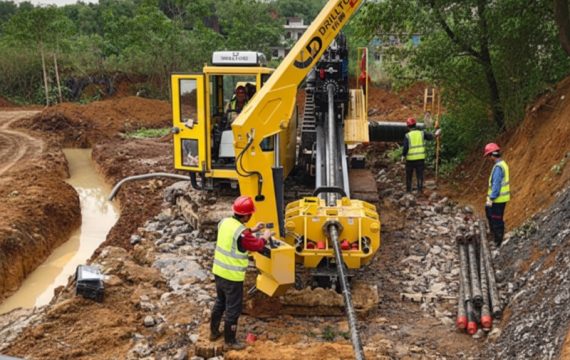
- Perforación horizontal dirigida (HDD): Installing new pipeline sections without open trenching.
Pipeline Repair Method Comparison
Selecting the optimal repair method requires balancing cost, downtime, and long-term reliability. The table below provides a comparative overview.
| Método | Coste | Downtime Required | Service Life | Mejor aplicación |
|---|---|---|---|---|
| Envoltura compuesta | Bajo | Very Low (Live repair possible) | 2 – 20 Years | Localized corrosion, dents, thin-wall defects |
| Welded Sleeve | Medio | Medium (Line must be isolated) | Permanent | High-pressure systems, cracks, severe wall loss |
| Mechanical Clamp | Bajo | Very Low (Live repair possible) | Temporary / Permanent | Leak sealing, flange joints, emergency response |
| Pipe Replacement | Alta | High (Full shutdown required) | New Asset Life | End-of-life assets, widespread corrosion, multiple defects |
Turnkey Pipeline Repair vs Traditional Multi-Contractor Approach
Choosing between a turnkey provider and a multi-contractor model significantly impacts project outcomes. The table below highlights the key differences.
| Factor | Turnkey Service | Multiple Contractors |
|---|---|---|
| Project Management | Single provider manages all phases. | Owner or third-party manager coordinates. |
| Accountability | One contract, one point of responsibility. | Responsibility is shared, often leading to disputes. |
| Schedule Risk | Low; integrated teams work concurrently. | High; delays cascade between contractors. |
| Communication | Centralized and streamlined. | Fragmented, requiring extensive coordination. |
| Tiempo de inactividad | Lower; optimized workflows reduce repair time. | Higher; mobilization and handovers take longer. |
Pipeline Repair vs Pipeline Replacement: When to Choose Which?
One of the most critical decisions in pipeline integrity management is whether to repair a localized defect or replace an entire section. Repair is almost always more cost-effective for isolated issues, while replacement is necessary for widespread degradation.
| Escenario | Repair | Replace |
|---|---|---|
| Localized corrosion (< 50% wall loss) | ✓ | |
| Single crack or dent | ✓ | |
| Multiple defects along the same section | ✓ | |
| Severe wall loss (> 70%) over a long area | ✓ | |
| End-of-life asset with frequent failures | ✓ | |
| Leaking pinhole defect | ✓ (Clamp or composite) |
Key Decision Rule: In most cases, repairing localized defects is significantly more cost-effective than full pipeline replacement, especially when the high costs of production downtime are factored in. A turnkey provider can help conduct a cost-benefit analysis to guide this decision.
How Much Do Industrial Pipeline Repair Services Cost?
The cost of pipeline repair varies significantly based on damage severity, pipe diameter, location, and chosen technology. The following estimates provide a general benchmark for budgeting.
| Repair Type | Typical Cost Range (USD) | Principales factores de coste |
|---|---|---|
| Envoltura compuesta | $500 – $5,000 per defect | Design complexity, material grade, accessibility |
| Welded Sleeve | $2,000 – $20,000 per defect | Welding procedures, NDT requirements, isolation |
| Mechanical Clamp | $1,500 – $10,000 per unit | Custom fabrication, bolting torque specs |
| Pipeline Replacement | $50 – $500 per linear foot | Excavation, new material, welding/joining |
Emergency Pipeline Repair Services: What to Expect
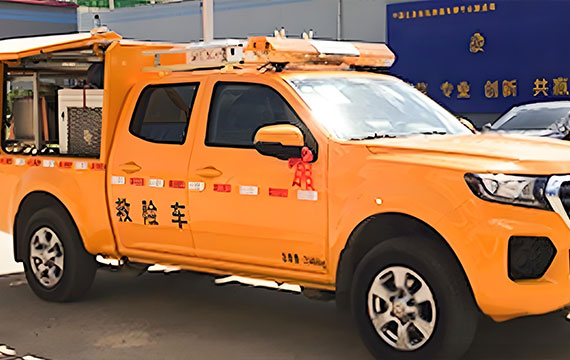
Unplanned pipeline failures require immediate, decisive action. Turnkey emergency repair services are structured for rapid deployment.
- 24/7 Hotline and Mobilization: Providers maintain emergency response teams ready to deploy within hours of notification.
- Rapid Assessment: On-site teams conduct immediate damage evaluation using portable NDT equipment.
- Temporary vs. Permanent Fixes: Contractors can apply mechanical clamps for immediate leak containment, followed by a permanent repair (e.g., sleeve or composite wrap) during the next scheduled outage.
- Live Leak Sealing: For low-pressure, low-risk scenarios, specialized live leak sealing services can stop leaks without any shutdown.
Pipeline Integrity Management vs. Reactive Repair
Proactive pipeline integrity management is a more strategic approach than simply reacting to failures. It involves systematic assessment and intervention to prevent incidents.
- Integrity Assessment: This involves In-line Inspection (ILI) tools like “smart pigs” and advanced ultrasonic or magnetic flux leakage testing to identify defects before they cause leaks.
- Repair vs. Replacement Decision: Integrity data helps determine whether to repair a defect (using a composite wrap or sleeve) or replace an entire pipe section.
- Lifecycle Cost Savings: Data shows that operators with robust integrity programs experience 30–50% fewer unplanned shutdowns compared to those with reactive maintenance strategies.
Pipeline Systems and Assets Commonly Repaired
Turnkey repair services are applicable across a wide range of pipeline systems and industrial assets, including:
- Transmission Pipelines: Long-distance high-pressure oil and gas lines.
- Gathering Pipelines: Networks collecting crude oil or natural gas from wellheads.
- Flowlines: Individual connections between wells and processing facilities.
- Refinery Process Piping: High-temperature, high-pressure lines within processing units.
- Tank Farm Piping: Transfer lines connecting storage tanks to loading racks or process units.
- Offshore Pipelines: Subsea flowlines and risers requiring specialized underwater repair.
- Tuberías de inyección de agua: Lines used in enhanced oil recovery (EOR) operations.
- Produced Water Pipelines: Lines carrying wastewater from production operations.
Industries and Regions Served
Industrial pipeline repair contractors operate globally, with major service hubs across:
- North America: United States, Canada, Mexico
- Europe: North Sea, United Kingdom, Norway, continental Europe
- Oriente Próximo: Saudi Arabia, UAE, Qatar, Kuwait, Oman
- Southeast Asia: Indonesia, Malaysia, Thailand, Vietnam
- Africa: Nigeria, Angola, Egypt, Algeria
- Australia & Oceania: Australia, New Zealand, Papua New Guinea
Many operators search for pipeline repair contractors near me or pipeline repair companies USA to ensure rapid mobilization and local regulatory compliance. Turnkey providers with regional offices and fabrication workshops can significantly reduce response times.
10 Questions to Ask Before Hiring a Pipeline Repair Contractor
Asking the right questions during the selection process is critical for project success and operator peace of mind.
- Do you provide in-house engineering, materials, and installation as a single package?
- Are your repairs compliant with recognized industry standards (ASME PCC-2, ISO 24817)?
- Can your repair be applied while my pipeline remains in operation?
- Do you have a dedicated 24/7 emergency response team?
- What is your safety record, and can you provide your OSHA TRIR and EMR data?
- Do you have documented experience repairing pipelines of my specific material and service conditions?
- What post-repair integrity testing and quality assurance do you perform?
- Do you offer a warranty for your materials and workmanship?
- What is your typical mobilization time for emergency calls?
- Can you provide references or case studies from similar projects?
Case Study: Composite Repair on a High-Pressure Crude Oil Pipeline
Desafío
A midstream operator discovered external corrosion on a 24-inch crude oil pipeline in a remote, environmentally sensitive area. The defect had caused 35% wall loss, posing a significant rupture risk. Shutting down the pipeline would have resulted in production losses exceeding $150,000 per day.
Solución
A turnkey contractor was engaged to perform a composite wrap repair under ISO 24817 guidelines. The engineering team designed a 20-layer carbon fiber system certified for the pipeline’s maximum operating pressure of 1,200 psi. Crucially, the repair was applied without taking the pipeline out of service, eliminating production deferral.
Results
- Repair Completion: 72 hours from the initial site survey to the final quality sign-off.
- Production Impact: Zero; operations continued uninterrupted.
- Cost Savings: Direct savings from avoided shutdown and expedited project delivery were estimated at $450,000.
- Asset Life Extension: The composite repair extended the pipeline’s service life by 15 years.
FAQ: Common Questions About Turnkey Pipeline Repair
Q: What is the fastest pipeline repair method?
Mechanical clamps are the fastest for immediate leak containment, often installed in a few hours. Composite wraps offer a fast permanent solution with minimal surface preparation.
Q: What is the difference between pipeline rehabilitation and repair?
Repair addresses localized defects (e.g., corrosion, cracks) on a specific section. Rehabilitation is a more extensive process that renews an entire pipeline system or a significant portion of it, often using methods like internal lining.
Q: Can pipeline repairs be performed offshore?
Yes, specialized turnkey providers offer underwater or platform-based pipeline repair services using remotely operated vehicles (ROVs) and saturation diving teams.
Q: How long does a composite pipeline repair take?
For a typical defect, the application can take 8–24 hours from surface preparation to final cure, depending on the number of layers and environmental conditions.
Q: Is composite wrap stronger than a welded sleeve?
Welded sleeves offer a stronger, more permanent structural repair for high-pressure, high-temperature systems. Composite wraps provide high-strength corrosion protection and reinforcement without the risk of heat-affected zone issues.
Q: What standards govern industrial pipeline repairs?
ASME PCC-2 (Article 401 for composites, 201 for sleeves) and ISO 24817 (for composite repairs) are the most widely recognized international standards.
Q: How do pipeline repair contractors assess corrosion damage?
They use non-destructive testing (NDT) methods such as ultrasonic thickness testing, radiographic imaging, and magnetic particle inspection to accurately measure wall loss and defect geometry.
Q: Can pipeline repairs be performed without a shutdown?
Yes, composite wrap and mechanical clamp repairs are specifically designed for live application without requiring the pipeline to be taken out of service.
Q: How do I find reliable pipeline repair contractors?
Search for contractors with documented experience, relevant certifications, and positive references from similar projects. Many operators also search for pipeline repair contractors near me to ensure rapid response.
Q: What is the typical warranty on a pipeline repair?
Warranties vary by method and provider. Composite repairs typically include a 2–5 year warranty, while welded sleeves may cover the remaining service life of the pipe.
JSW: Your Partner for Integrated Pipeline Solutions
With decades of experience in pipeline construction, maintenance, and integrity management, JSW delivers comprehensive turnkey repair solutions that combine engineering excellence with on-the-ground execution. We serve the oil and gas, petrochemical, power generation, and heavy industrial sectors worldwide.
Our Core Capabilities:
- Engineered composite repairs compliant with ISO 24817 and ASME PCC-2.
- Welding and sleeve repairs with in-house NDT quality assurance.
- 24/7 emergency response and planned maintenance programs.
- Pipeline isolation, hot tapping, testing, and commissioning services.
By providing a single-source solution, we reduce your project complexity, minimize operational downtime, and ensure absolute accountability. Our commitment to safety, quality, and reliability has made us a trusted partner for critical infrastructure projects globally.
Contact our engineering team today to discuss your specific pipeline repair requirements.






 English
  Arabic
  Russian
  Spanish
  French