
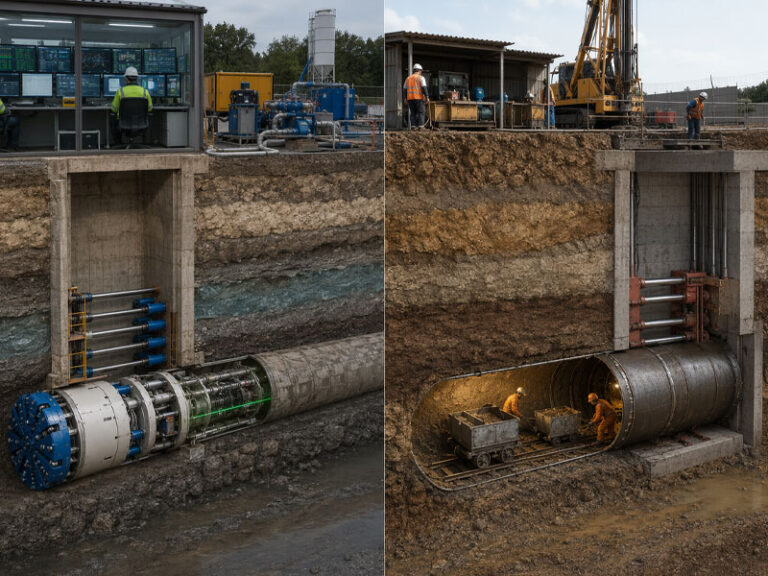
Microtunelización frente a la técnica «Jack and Bore»
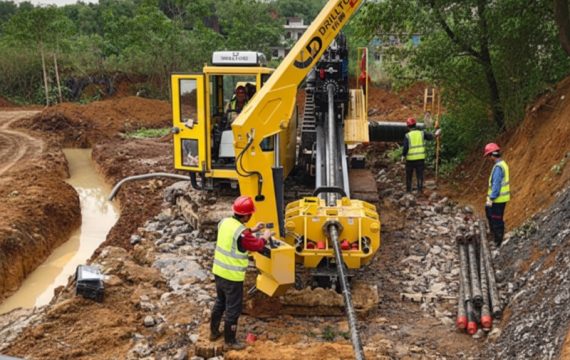
El microtunelado es un método controlado a distancia método de instalación de tuberías sin zanjas que utiliza una máquina perforadora de microtúneles (MTBM), guía láser y excavación a cara cerrada para instalar tuberías sin que los trabajadores tengan que entrar en ellas. El método «jack and bore» es un método tradicional sin zanja en el que los trabajadores entran en la tubería para excavar el terreno y retirar los escombros de forma manual o mecánica.
La principal diferencia es que el microtunelado ofrece mayor seguridad, precisión y control del terreno, mientras que el método de empuje y perforación supone una solución más económica para cruces cortos en suelos estables. El microtunelado es una modalidad especializada del empuje de tuberías que utiliza maquinaria teledirigida en lugar de la excavación manual en el interior de la tubería.
| Característica | Microtunelación | Jack y Bore |
|---|---|---|
| Funcionamiento | Controlado a distancia desde la superficie | Es necesario que un trabajador acceda al interior de la tubería |
| Orientación | Guiado por láser con precisión milimétrica | Alineación manual/mecánica |
| Precisión | ±25–50 mm (guiado láser continuo) | ±50–100 mm (dependiendo de las condiciones) |
| Condiciones del terreno | Suelo blando, aguas subterráneas, terreno inestable | Suelo seco y estable, por encima del nivel freático |
| Seguridad del personal | Superior: no es necesario presentar la solicitud de admisión | Inferior: personal dentro de una excavación en curso |
| Coste inicial | Mayores costes de equipamiento y puesta en marcha | Menores costes de equipamiento y movilización |
| Rango de diámetros | De 10 a 136 pulgadas | 42 pulgadas o más |
| Coste por pie | $150–$500+ | $80–$250+ |
¿Qué es el microtunelización?
Microtunelación Es un método de construcción sin zanja que utiliza una perforadora de microtúneles (MTBM) controlada a distancia para excavar el terreno, mientras que unos gatos hidráulicos instalan simultáneamente tuberías prefabricadas desde un pozo de lanzamiento hasta un pozo de recepción. Toda la operación se supervisa y controla desde una sala de control en superficie mediante sistemas de guía por láser y datos en tiempo real.
Características principales:
- No es necesario que el personal acceda a las instalaciones durante las operaciones rutinarias
- Excavación a cielo cerrado con soporte continuo del terreno
- Los sistemas de equilibrio de presión de lodos o de tierra controlan las aguas subterráneas y los suelos inestables
- Precisión milimétrica para alcantarillado por gravedad e instalaciones sensibles
Aplicaciones típicas:
- Sistemas de alcantarillado por gravedad que requieren un control preciso de la pendiente
- Tuberías de transporte de agua
- Pasos subterráneos bajo vías férreas, autopistas y ríos
- Instalaciones de servicios públicos urbanos con límites de asentamiento estrictos
- Cruce de oleoductos y gasoductos en terrenos complejos
¿Qué es «Jack and Bore»?
El método «jack and bore» es un método tradicional de instalación sin zanja en el que se empuja hidráulicamente un tubo de revestimiento desde un pozo de lanzamiento, mientras que la excavación se realiza de forma manual o mecánica en el interior del tubo. Los trabajadores acceden al interior del tubo para manejar la maquinaria de excavación, retirar los escombros y supervisar la alineación.
Características principales:
- Personal necesario dentro de la tubería para la excavación y la retirada de los escombros
- Construcción a cielo abierto con un sistema de soporte subterráneo limitado
- Apto para tuberías de mayor diámetro (42 pulgadas y más)
- Método consolidado con una amplia experiencia en el sector
Aplicaciones típicas:
- Tuberías colectoras de alcantarillado de mayor diámetro
- Cruce de tuberías de agua y de servicios públicos
- Cruces de carreteras y vías férreas en terrenos estables
- Tuberías a presión en las que la inclinación exacta no es tan importante
- Corredores de servicios con requisitos de gran diámetro
Microtunelización frente a empuje de tuberías
El microtunelización es una técnica especializada de hincado de tuberías. El hincado tradicional de tuberías puede implicar una excavación manual en el interior de la tubería, mientras que la microtunelización utiliza una máquina de perforación de túneles (MTBM) controlada a distancia con guía láser y sin que sea necesaria la entrada de personal.
Diferencia clave:
- Instalación de tuberías mediante empuje = la familia más amplia de métodos de instalación de tuberías hidráulicas
- Microtunelación = una variante del tendido de tuberías mediante empuje, controlada a distancia y guiada por láser, que ofrece mayor precisión y seguridad
El término “perforación con empuje” abarca tanto los métodos tradicionales (en los que los trabajadores pueden encontrarse dentro de la tubería) como el microtunelado (en el que la operación se realiza de forma totalmente remota). A la hora de definir un proyecto, es importante distinguir entre estos métodos en función de los requisitos de seguridad, precisión y condiciones del terreno.
Diferencias clave entre el microtunelado y la técnica «Jack and Bore»
1. Método de funcionamiento y control
| Aspecto | Microtunelación | Jack y Bore |
|---|---|---|
| Control | A distancia de la sala de control en superficie | Tubo interior manual/mecánico |
| Sistema de guía | Basado en láser o giroscopio, con supervisión en tiempo real | Alineación visual o topografía básica |
| Excavación | Cabezal de corte mecánico con soporte frontal | Excavación manual o mecánica |
| Eliminación de escombros | Sistema de lodos o de sinfín, continuo | Carritos, carros o extracción por vacío |
La posibilidad de controlar a distancia el microtunelado elimina la necesidad de que haya personal dentro de la tubería, lo que mejora considerablemente la seguridad y permite realizar instalaciones de menor diámetro.
2. Seguridad de los trabajadores
Microtunelización:
- Prohibido el acceso del personal durante las operaciones rutinarias
- El control basado en la superficie elimina los riesgos asociados a los espacios confinados
- El soporte continuo de la superficie reduce los riesgos de derrumbe
- La videovigilancia y la monitorización mediante sensores ofrecen una visibilidad total
Jack y Bore:
- Personal necesario dentro de la tubería durante la excavación
- Se exigen protocolos de acceso a espacios confinados
- La construcción a cielo abierto aumenta el riesgo de derrumbe en terrenos inestables
- Se requieren sistemas de control de la calidad del aire y de ventilación
La ventaja en materia de seguridad que ofrece el microtunelado resulta especialmente importante en condiciones de alto nivel freático o en suelos inestables, donde el acceso del personal supondría riesgos inaceptables.
3. Exactitud y precisión
| Parámetro | Microtunelación | Jack y Bore |
|---|---|---|
| Precisión típica | ±25–50 mm (línea y pendiente) | ±50–100 mm (alineación manual) |
| Método de orientación | Basado en láser o giroscopio, con supervisión continua | Visual/mecánico con ajuste limitado |
| Supervisión en tiempo real | Sí: seguimiento continuo de la posición | Limitado |
| Control de grado | De gran precisión: ideal para alcantarillado por gravedad | Moderado |
El sistema de guiado por láser del microtunelado proporciona un control continuo, con una precisión milimétrica, de la trazada y la pendiente, lo que lo convierte en la opción preferida para la instalación de alcantarillado por gravedad, donde una pendiente precisa es fundamental para el rendimiento hidráulico. El método de perforación y empuje se basa en métodos de alineación manuales que suelen ofrecer resultados menos precisos, aunque la precisión puede variar en función de la experiencia del operario y de las condiciones del terreno.
4. Condiciones del terreno
| Estado del terreno | Microtunelación | Jack y Bore |
|---|---|---|
| Nivel elevado de las aguas subterráneas | Adecuado: los sistemas de cara cerrada equilibran la presión | No apto (requiere deshidratación) |
| Suelos inestables | Adecuado: soporte facial continuo | De riesgo: construcción a cielo abierto |
| Suelos blandos/turba | Adecuado: los sistemas de lodos gestionan la excavación | Limitada: presenta problemas de estabilidad |
| Roca/Terreno mixto | Compatible con cabezales de corte especializados | Limitado |
| Suelos secos y estables | Adecuado | Mejor aplicación |
El microtunelado es preferible al método «jack and bore» en zonas con un nivel freático elevado, a menos que los sistemas de bombeo puedan reducir eficazmente los niveles de agua durante la construcción.
5. Rango de diámetros y longitud de transmisión
| Parámetro | Microtunelación | Jack y Bore |
|---|---|---|
| Rango de diámetros | De 10 a 136 pulgadas | 42 pulgadas o más |
| Longitud típica del tramo | De 500 a 1.500 pies | Hasta 1.500 pies |
| Longitud máxima del registro | Hasta 2.000 metros (con sistemas avanzados) | Varía en función de las condiciones del terreno |
| Diámetro mínimo | 10 pulgadas (no es necesario que entre personal) | 42 pulgadas (para permitir el acceso de los trabajadores) |
La limitación del diámetro mínimo es fundamental: el método de «jack and bore» requiere el acceso de personal, por lo que las tuberías deben tener un diámetro mínimo de 42 pulgadas. El microtunelado permite instalar tuberías de tan solo 10 pulgadas, ya que no es necesario que entre personal.
6. Comparación de costes y factores
El microtunelización conlleva unos costes iniciales más elevados debido a la sofisticación del equipo y a la mayor complejidad de la instalación. El método «jack and bore» suele resultar más rentable para instalaciones más cortas y sencillas.
| Factor de coste | Microtunelación | Jack y Bore |
|---|---|---|
| Coste del equipamiento | Superior (MTBM, planta de lodos, orientación) | Parte inferior (bastidor de elevación, equipamiento básico) |
| Movilización | Más complejo y que requiere más tiempo | Más sencillo y más rápido |
| Necesidades de mano de obra | Inferior (funcionamiento a distancia) | Más alto (personal dentro de la tubería) |
| Riesgos y contingencias | Más bajo (riesgo de suelo reducido) | Mayor (riesgos de inestabilidad del terreno) |
| Complejidad del proyecto | Adecuado para proyectos complejos o de gran envergadura | Adecuado para proyectos cortos o sencillos |
Factores que influyen en el coste del microtunelado y de la perforación con martillo hidráulico
| Factor | Impacto en el coste |
|---|---|
| Diámetro de la tubería | Un diámetro mayor aumenta los requisitos en cuanto a equipamiento y sistemas de elevación. |
| Longitud del tramo | Los trayectos más largos requieren sistemas de mayor capacidad y una mayor planificación |
| Condiciones del suelo | Las rocas, los cantos rodados y las aguas subterráneas aumentan la complejidad y el coste |
| Profundidad del pozo | Los pozos más profundos aumentan los costes de construcción y de seguridad |
| Material de los tubos | Las diferentes tuberías requieren diferentes capacidades de fuerza de empuje. |
| Acceso al recinto | El acceso limitado aumenta los costes de movilización y logística. |
| Gestión de las aguas subterráneas | Los sistemas de deshidratación o de lodos suponen un coste considerable |
| Requisitos de precisión | Una mayor precisión requiere sistemas de guía más sofisticados |
Microtunelización frente a «Jack and Bore»: coste por pie
Rango de precios habitual (estimaciones orientativas del sector):
- Microtunelización: Aproximadamente entre $150 y $500+ por pie lineal
- Jack y Bore: Aproximadamente entre $80 y $250+ por pie lineal
Los costes reales del proyecto dependen en gran medida del diámetro, la profundidad, las condiciones del terreno, los niveles freáticos, las especificaciones del material de las tuberías, los requisitos de los pozos de acceso y la ubicación de la obra. Para obtener estimaciones de costes precisas, solicite siempre presupuestos específicos para cada proyecto a contratistas cualificados.
Microtunelización frente a «jack and bore»: ¿qué método es mejor?
Ninguno de los dos métodos es mejor en todos los casos. La elección correcta depende de los requisitos específicos de cada proyecto.
Por lo general, se opta por el microtunelado en los siguientes casos:
- Sistemas de alcantarillado por gravedad que requieren un control preciso de la pendiente
- Zonas urbanas con límites estrictos de expansión urbana
- Condiciones del terreno adversas (nivel elevado de las aguas subterráneas, suelos inestables)
- Tuberías de pequeño diámetro (10-42 pulgadas)
- Tiros largos con alineaciones complejas
- Proyectos en los que la seguridad del personal es una prioridad fundamental
- Tuberías de transporte de agua que requieren una pendiente precisa
Normalmente se suele optar por el método «Jack and Bore» para:
- Tubos de revestimiento de gran diámetro (42 pulgadas y más)
- Cruces cortos de carretera o ferrocarril
- Condiciones estables del suelo por encima del nivel freático
- Proyectos de presupuesto reducido con requisitos sencillos
- Tuberías a presión en las que la precisión del nivel no es tan importante
- Movilización rápida y plazos de ejecución más cortos
- Cruzamientos de tuberías de agua y de servicios públicos en terrenos estables
Ventajas y desventajas
Microtunelación
| Ventajas | Desventajas |
|---|---|
| Funcionamiento a distancia: sin necesidad de que el personal acceda a las instalaciones | Mayores costes de equipamiento y puesta en marcha |
| Precisión superior para sistemas por gravedad | Movilización más compleja |
| Adecuado para terrenos inestables y un nivel freático elevado | Requiere operarios e ingenieros cualificados |
| El soporte continuo de la pared reduce el asentamiento del terreno | Se necesita una planta de tratamiento de lodos |
| Permite instalar tuberías de pequeño diámetro (10″+) | No resulta económico para trayectos muy cortos |
| Menor riesgo de incidentes de seguridad | Plazos de entrega más largos para los equipos |
Jack y Bore
| Ventajas | Desventajas |
|---|---|
| Menores costes de equipamiento y movilización | Es necesario que entre el personal (por motivos de seguridad) |
| Método sencillo y fácil de entender | Limitado a diámetros mayores (42″+) |
| Movilización más rápida para trayectos cortos | No apto para niveles altos de agua subterránea |
| Amplia experiencia en el sector | Open-face construction – higher collapse risk |
| Suitable for large diameter installations | Limited accuracy for gravity systems |
| Widely available equipment and labour | Ground settlement risks in unstable soils |
Applications by Method
Microtunneling Applications
| Aplicación | Why Microtunneling is Preferred |
|---|---|
| Gravity sewer systems | Laser-guided accuracy maintains required slopes |
| Stormwater pipelines | Precise alignment for hydraulic efficiency |
| Tuberías de transporte de agua | Accurate grade control for gravity flow systems |
| Railway crossings | Controlled settlement prevents track deformation |
| Highway crossings | Minimal surface disruption and settlement |
| River crossings | Can install bundled pipelines in one casing |
| Urban utility corridors | Tight settlement limits protect adjacent structures |
| Oil and gas crossings | Handles complex terrain and precise alignment |
Jack and Bore Applications
| Aplicación | Why Jack and Bore is Suitable |
|---|---|
| Trunk sewer lines | Large diameter pipes accommodate personnel access |
| Pressure pipelines | Less critical grade requirements |
| Cruce de tuberías de agua y de servicios públicos | Cost-effective for short crossings in stable ground |
| Road crossings (stable ground) | Simple method for short crossings |
| Utility corridors | Cost-effective for large diameter installations |
| Temporary lines | Lower cost for non-critical installations |
Preguntas frecuentes
Q: What is the main advantage of microtunneling?
A: Microtunneling provides superior accuracy, safety, and performance in difficult ground conditions because excavation is remotely controlled and continuously supported. The laser guidance system achieves millimetre-level precision, making it ideal for gravity sewer installations where slope control is critical.
Q: Why is microtunneling better for sewer installation?
A: Gravity sewer systems require precise slope control to maintain hydraulic performance. Microtunneling’s laser-guided system provides the accuracy required to install pipes at the correct grade, preventing flow issues and blockages.
Q: Can microtunneling replace jack and bore?
A: Yes. In many projects, microtunneling can replace traditional jack and bore when higher accuracy or difficult ground conditions are required. However, for short crossings in stable ground with large diameter pipes, jack and bore remains a cost-effective option.
Q: Is jack and bore cheaper than microtunneling?
A: Usually yes, especially for short crossings in stable soil. However, microtunneling may reduce risks and delays in complex projects, potentially making it more cost-effective over the project lifecycle when considering risk and contingency costs.
Q: What diameter pipes can each method install?
A: Microtunneling can install pipes from 10 to 136 inches. Jack and bore typically requires pipes of 42 inches or larger to allow personnel access for excavation and spoil removal.
Q: Which method is more accurate?
A: Microtunneling provides higher accuracy (±25–50 mm) compared to jack and bore (±50–100 mm). The laser guidance system enables continuous real-time monitoring and adjustment, while jack and bore relies on manual alignment methods.
Q: Does microtunneling work in rocky ground?
A: Yes. Microtunneling is effective for rocky terrain due to its closed-face systems and ability to handle boulders up to approximately 30% of face size with appropriate cutting heads.
Q: How long can microtunneling drives be?
A: Microtunneling can achieve 500–1,500 feet typically, with advanced systems reaching up to 2,000 metres (approximately 6,500 feet) depending on ground conditions and equipment specifications.
Q: What safety risks are associated with each method?
A: Microtunneling eliminates confined space entry risks by operating from the surface. Jack and bore requires personnel inside the pipe, exposing workers to collapse hazards, air quality issues, and other confined space risks.
Q: Is microtunneling suitable for all ground conditions?
A: Microtunneling is suitable for most ground conditions including soft soils, groundwater, unstable soils, and rock. However, very hard rock or heavily bouldered ground may require specialized cutting heads or pre-treatment.
Q: What is the cost per foot for microtunneling vs jack and bore?
A: Microtunneling typically costs approximately $150–$500+ per linear foot, while jack and bore typically costs approximately $80–$250+ per linear foot. Actual costs vary based on diameter, depth, soil conditions, and project location.
Q: Is microtunneling the same as pipe jacking?
A: No. Microtunneling is a specialized form of pipe jacking that uses remote-controlled equipment and laser guidance. Traditional pipe jacking may involve manual excavation inside the pipe.
Microtunneling vs Jack and Bore: Summary Comparison
| Característica | Microtunelación | Jack y Bore |
|---|---|---|
| Funcionamiento | Remote controlled | Worker entry required |
| Orientación | Laser/gyro with real-time monitoring | Alineación manual/mecánica |
| Precisión | ±25–50 mm | ±50–100 mm |
| Rango de diámetros | 10–136 inches | 42+ inches |
| Condiciones del terreno | All conditions (including groundwater) | Stable dry soil |
| Seguridad | No personnel entry | Personnel inside pipe |
| Face Support | Closed-face (continuous) | Open-face (limited) |
| Eliminación de escombros | Slurry or auger | Buggies/carts |
| Coste del equipamiento | Alta | Low–Moderate |
| Mobilisation Complexity | Alta | Low–Moderate |
| Necesidades de mano de obra | Bajo | Alta |
| Risk Level | Bajo | Moderate–High |
| Lo mejor para | Complex, long, accurate, urban | Simple, short, large diameter |
| Coste por pie | $150–$500+ | $80–$250+ |
JSW Trenchless Engineering Capabilities
JSW provides comprehensive technical support for trenchless pipeline projects, including:
- Method selection based on ground conditions and project requirements
- Ground condition evaluation and geotechnical analysis
- MTBM and jacking system selection for optimal performance
- Pipe specification and material recommendations
- Construction planning and risk assessment
- Field engineering support during installation
- Garantía de calidad and project management
Equipment and Systems
- Microtunnel Boring Machines (MTBM): Slurry and earth pressure balance systems for challenging ground conditions, handling diameters from 10 to 136 inches
- Jacking Systems: High-capacity hydraulic jacking frames and intermediate jacking stations with thrust capacities up to 2,000 tonnes
- Guidance Technology: Laser and gyro-based alignment systems achieving millimetre-level precision
- Pipe Supply: Reinforced concrete, GRP, steel, and vitrified clay pipes rated for jacking forces
- Slurry Treatment: Separation plants for efficient spoil management and fluid recycling
Why Choose JSW
- Proven track record across diverse ground conditions and project scales
- Comprehensive equipment fleet available for project mobilisation
- Experienced engineering team supporting project planning and execution
- Commitment to safety, quality, and environmental responsibility
- Global project experience with local technical support
Contact JSW trenchless specialists for project-specific engineering recommendations and method selection guidance.










 English
  Arabic
  Russian
  Spanish
  French
  Vietnamese
  Polish
  Thai
Thai  Indonesian
  Turkish
  Portuguese