
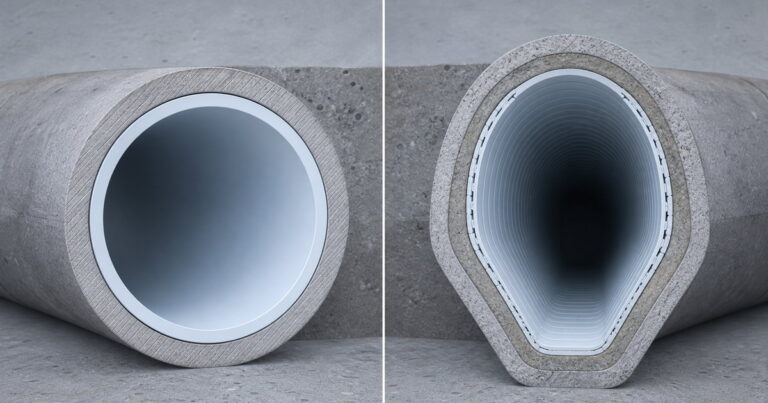
Spiral-wound lining wins on non-circular, ovoid or man-entry sections, and on pipes that cannot be taken out of service; CIPP stays the default for a true circle. The CIPP vs spiral wound lining decision therefore turns on three variables: section geometry, tolerance for working under flow, and how well a grouted liner fills the space behind the new surface.
This guide compares CIPP vs spiral wound lining (also called wound-profile lining) on the four dimensions that decide the choice on irregular and large-diameter lines: how well each liner follows the section, what flow the pipe can carry during the works, how the wall carries load, and how much bore is lost. Both are engineered systems, so the evidence sits in the survey, the grout record and the flow check. It closes with four on-site rules and with the limits that send a job back to a cured tube.
When Does a Wound Profile Beat a Cured Tube?
Two conditions decide whether a wound profile or a cured tube is the right liner, more often than any material argument: a cross-section that is not round, and a pipe that must keep carrying flow while it is lined.
Screen the line against these thresholds before any detailed design begins:
- Section shape is ovoid, egg-shaped, or horseshoe rather than a true circle.
- Internal diameter is large enough for man-entry, commonly 800 mm and above, the usual lower bound for manned work.
- Bypass is expensive, so a live flow during the works is preferred.
Conclusión: CIPP stays a sound default for circular sewers; the wound profile takes over when geometry and service conditions make a flexible cured tube awkward to fit.
What Spiral-Wound Lining Is
Spiral-wound lining, a wound-profile liner rather than a cured-in-place pipe (CIPP) tube, is formed from the inside out. A PVC profile, or an HDPE profile on some systems, is fed from a reel and interlocked, edge to edge, into a continuous coil pressed out against the pipe wall.
The profile is a purpose-made strip with a locking joint along both edges, so the finished liner carries one continuous helical joint instead of a ring of butt joints across the bore.
The liner alone is only half of the system. A cementitious or resin grout is pumped into the annular space, binding the new shell to the host pipe around its full circumference.
The PVC profile and the cured grout act together as a composite, and the grouting step is what makes the liner load-bearing rather than a mere coating.
For a wider introduction to trenchless options, see our overview of trenchless pipeline rehabilitation methods.
How the Winding Machine Builds the Liner
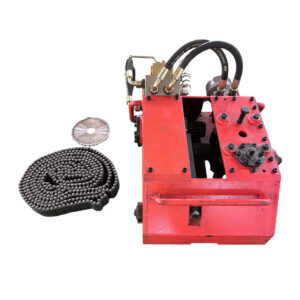
The winding machine does the forming. It carries the profile reel, closes each interlock, and expands the finished coil against the wall as it travels.
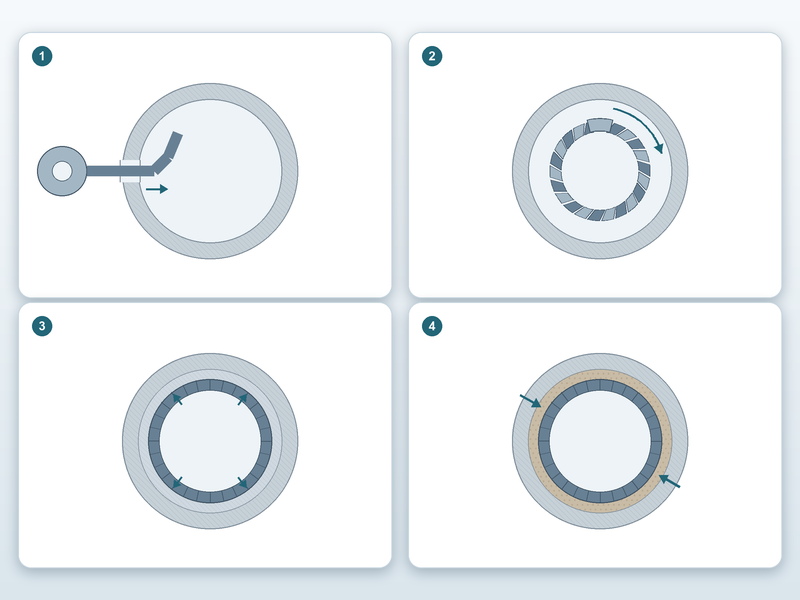
A man-entry installation typically runs in four stages:
- Set up the winding machine and feed the first turn of the PVC profile into the forming head.
- Wind the profile spirally, locking every new turn into the one before it.
- Expand the completed coil so it seats firmly against the host pipe.
- Grout the annulus, then reconnect laterals and reinstate the surface.
Laterals need their own sequence: because the coil is continuous, every connection is cut back through the finished wall, and with the line still in service those connections keep discharging during the cut.
On projects we have delivered, the rig’s travel sets the pace, and the delays we see come from profile supply and grout volume rather than from the winding itself.
When Do Non-Circular Sewers Decide the Method?
A flexible felt tube wants to be circular. Inverted into an ovoid or horseshoe sewer, it tends to:
- bridge across the wide axis
- wrinkle along the flatter walls
A wound coil behaves differently. Because every turn is formed inside the actual section, the PVC profile follows the wall shape instead of pulling it toward a circle.
In an ovoid or horseshoe sewer, conformity to the existing section is the deciding case; the practical question is less about material strength than about whether the liner can follow the wall.

A CIPP vs spiral wound lining review on an irregular sewer therefore usually favours the winding route, provided the annulus can be filled and the reduced section still passes design flow.
Diameter and annulus effects are developed further in our comparison of CIPP vs sliplining, diameter loss and structural strength.
Can You Line a Pipe That Is Still in Service?
Often the answer is yes. Spiral winding can proceed under live flow, because the coil is built above the invert and water passes through the open core.
On trunk sewers, working under live flow lowers the pumping, storage and temporary works normally needed to take a line out of service.
CIPP usually needs the pipe taken out of service, because the liner must be installed dry and cured in place.
Working under flow still needs judgment. These conditions should trigger a staging review and a look at pipeline maintenance services for bypass planning:
- Depth of flow rises enough to reach the winding head.
- Active laterals keep discharging into the working length.
- Permits or environmental controls restrict discharge, as covered in our guide to environmental impact assessment for trenchless construction.
Conclusión: treat live flow as a design input rather than a guarantee, and confirm the working section and depth of flow before committing.
The Annular Grout: What Makes It Structural
The grout is a structural component, not a filler. Its job is to transfer load between the new liner and the host pipe and to seal the annular space around the full circumference.
Grouting the annulus is what turns a flexible coil into a composite ring: under controlled pressure the grouting fills the annular space evenly, and the mix design and cure must be verified before the line returns to service.
The wall is checked as a composite section, so profile depth and grout strength are specified as a pair.
A void left in the annular space is a weak point that will not carry load, so grouting records belong in the handover pack.
See our rehabilitación de tuberías sin zanja services for how that verification is documented.
What Diameter Does the Liner Remove?
On diameter, the CIPP vs spiral wound lining comparison usually favours the wound profile: the profile is thin and sits close to the wall, so internal loss is often smaller than with a full-thickness cured tube.
Any loss still has to be verified. The lined bore is checked for flow capacity, because the liner adds a wall and can change the roughness of the surface.
Use these checks to confirm the lined section still performs:
- Note the profile thickness and any re-rounding allowance in the design section.
- Re-check design flow against the reduced bore, not the original diameter.
- Confirm that man-entry access is preserved if the section must be inspected later.
For the wider mechanics, see how trenchless pipe rehabilitation works.
Limits: Where a Cured Tube Is the Better Answer
Scope first: spiral winding fits a defined set of conditions. It depends on equipment, on the supply of a matched PVC profile, and on access for the rig at both ends of the run.
Section deformation sets a second limit. If a section is too irregular, the coil cannot be formed to fit and the annulus becomes difficult to fill evenly.
Access sets a third limit: a tight or obstructed manhole can rule the method out before any material is considered.
Man-entry work is the labour line that side-by-side comparisons leave out: a wound-profile job puts crews and the winding machine inside a confined space, so entry permits, gas monitoring and rescue planning belong in the programme.
Conclusión: when these conditions fail, the CIPP vs spiral wound lining balance shifts back, and a cured tube, a full replacement or other pipe restoration solutions become the more honest answer, not a forced winding job.
CIPP vs Spiral-Wound Lining: How Do They Compare?
The table sets the two methods side by side on the attributes that decide an irregular or large-diameter project. Values are industry-typical publicly reported ranges and depend on ground conditions, host pipe condition, and equipment configuration.
| Attribute | CIPP | Spiral-wound lining |
|---|---|---|
| Liner material | Resin-impregnated felt or glass tube, cured in place | Interlocked PVC / HDPE profile |
| Best-fit cross-section | Circular sections at ordinary diameters | Ovoid, horseshoe and large man-entry sections |
| Flow during works | Usually requires stoppage and bypass | Often maintained through the open core |
| Working environment | Entry mainly through manholes and access points | Man-entry along the whole run |
| Structure | Continuous cured tube, designed per ASTM F1216 | Profile plus grouting forming a composite ring |
| Diameter loss | Per design wall thickness | Thin profile close to the wall; smaller loss, still verified |
| Annular space | Not applicable, the tube is the liner | Filled to transfer load and lock the coil |
| Typical setting | Manhole-to-manhole circular sewers | Large or irregular sewers, limited bypass options |

Which Four Rules Decide Between CIPP and a Wound Profile?
The rules below turn a general CIPP vs spiral wound lining debate into a site decision. Work through them in order and stop at the first clear pointer.
- Check the section. A circular pipe that is not deeply deformed points to CIPP; an ovoid or horseshoe section points to a wound profile, provided the annulus behind it can be filled and verified.
- Check the flow constraint. If bypass is expensive or impractical, the ability to work under live flow favours winding.
- Check the access and size. Man-entry access and a large diameter support winding; a small circular bore favours a cured tube.
- Check the supply chain. Confirm equipment and profile availability against the programme before the method goes to tender.
Conclusión: geometry decides first, service conditions second, and logistics third; only when all three leave a genuine tie should cost break it.
Not sure which route your survey points to? JSW reviews condition survey data and recommends the liner that fits the section and the service conditions.
Final Verdict: Which Method Fits a Non-Circular or Large-Diameter Line?
A CIPP vs spiral wound lining decision on a large-diameter line usually comes down to two questions: can the liner conform to the section, and can the work tolerate the service conditions.
Answer both questions and record the findings, then run the design check, because each step can rule a method in or out:
- Survey the true cross-section to NASSCO PACP grades, including deformation, and confirm man-entry access.
- Measure the available bypass capacity and the depth of flow.
- Re-check hydraulic and structural design for the finished section.
For a cost and disruption view of the wider method family, see the comparison of trenchless technology vs open-cut excavation.
In our relining work, the irregular and large-diameter lines are the ones where the extra preparation pays back most clearly. On these jobs the CIPP vs spiral wound lining question usually resolves toward the wound profile, because conformity and service conditions outweigh the simplicity of a cured tube.
Have a non-circular or large-diameter line to rehabilitate? JSW plans and delivers trenchless lining where geometry, access, and flow all have to be solved together.
Preguntas frecuentes
When is spiral-wound lining better than CIPP?
It is usually better when the host pipe is non-circular, when the diameter is large enough for man-entry, or when the pipe has to keep carrying flow during the lining work. In those cases conformity and service conditions outweigh the simplicity of a cured tube.
Can spiral-wound lining be installed without taking the pipe out of service?
Yes in many cases. The coil is built above the invert, so flow can pass through the core while winding continues. That reduces the bypass and over-pumping normally needed for CIPP.
How much diameter does spiral-wound lining remove?
The profile is comparatively thin and sits close to the wall, so the internal diameter loss is often smaller than with a full-thickness cured tube. Even so, flow capacity must be re-checked against the reduced bore.
Is spiral-wound lining structural on its own?
Not on its own. The wound shell becomes a structural composite only after the gap behind it is filled, because that fill transfers load between the liner and the host pipe.
Which cross-sections suit a wound profile best?
Ovoid, egg-shaped, and horseshoe sections suit it best. Each turn is formed inside the real cross-section, so the liner follows the wall shape instead of forcing it round.
What limits spiral-wound lining on large-diameter pipes?
Equipment and profile supply availability, excessive section deformation, and the working space needed to set up the rig all set practical limits. When any of them fails, another method is usually the better answer.
How does CIPP cope with a non-circular sewer?
A flexible felt tube tends to bridge the wide axis of an ovoid section and wrinkle along the flatter walls, so CIPP is generally a better fit for circular sections.
Fuentes
The organisations below are the issuing bodies behind the terms used in this article. Links point to the organisation home pages pending final deep-link checks.
- ASTM International, standards for cured-in-place pipe and rehabilitation design: astm.org
- NASTT, trenchless technology education and guidance: nastt.org
- WRc, pipeline and sewer assessment guidance: wrcgroup.com
- NASSCO, PACP pipeline assessment and certification programme: nassco.org










 English
 Arabic
 Russian
 Spanish
 French
 Vietnamese
 Polish
 Thai
 Indonesian
 Turkish
 Portuguese