
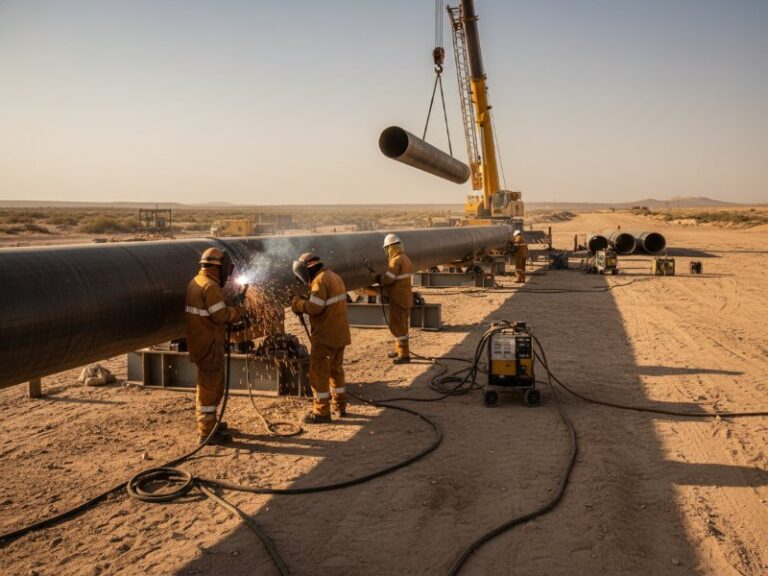
Las soluciones de reparación de tuberías más duraderas para aplicaciones a presión son los revestimientos FFRPP de ajuste ceñido y los manguitos de acero de tipo B, que ofrecen una vida útil de entre 50 y más de 90 años. En comparación con el sistema CIPP de curado in situ, los sistemas fabricados en fábrica proporcionan valores de presión más uniformes, una mayor capacidad de deformación y una menor variabilidad en la instalación.
Esta guía compara siete métodos principales de rehabilitación —revestimiento CIPP, FFRPP de ajuste ceñido, rotura de tubería con HDPE, envolturas compuestas, manguitos de acero, recubrimientos epoxi y sustitución mediante zanja abierta— en cuanto a durabilidad, comportamiento ante la presión y coste del ciclo de vida, con el fin de ayudarle a seleccionar la mejor solución para el estado específico de su tubería.
¿En qué consisten las soluciones para la reparación de tuberías?
Las soluciones para la reparación de tuberías se refieren a las tecnologías y métodos sin zanja que se utilizan para rehabilitar tuberías deterioradas, con fugas o con problemas estructurales sin necesidad de realizar una excavación completa. Entre las soluciones más habituales se incluyen el revestimiento de tuberías curado in situ (CIPP), los revestimientos de ajuste ceñido (FFRPP), la rotura de tuberías, los manguitos de acero y los revestimientos compuestos, cada uno de los cuales ofrece diferentes niveles de durabilidad para aplicaciones de agua, alcantarillado, gas e industriales.
Tabla 1: Comparación rápida: durabilidad y rendimiento a presión en la reparación de tuberías
| Método de reparación | Esperanza de vida | Coherencia en la clasificación de presión | Resistencia a la corrosión | Limitación clave para la durabilidad |
|---|---|---|---|---|
| Forro FFRPP de ajuste ceñido | 50 años | Alta (certificada de fábrica) | Excelente | Mayor coste inicial de los materiales |
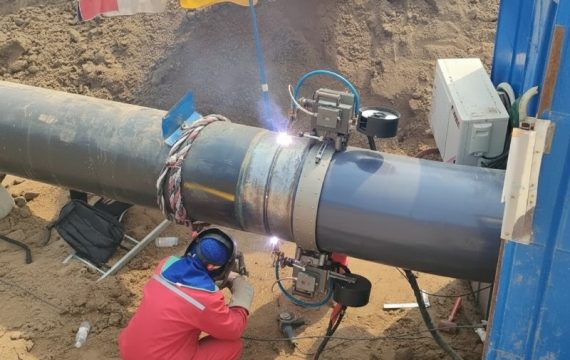
| Manguito de acero tipo B | Más de 90 años | Muy alto (soldado) | Bueno (necesita un recubrimiento) | Se requiere una instalación realizada por personal cualificado |
| Rompimiento de tuberías (HDPE) | 50-100 años | Alta (uniones fusionadas) | Excelente | Requiere fosos de acceso |
| Revestimiento CIPP | Más de 50 años | Moderado (dependiente del entorno) | Excelente | El riesgo de arrugas reduce la retención de presión |
| Envoltura compuesta | De 30 a 58 años | Moderado | Bien | Vida útil frente a la fatiga más corta que la de los manguitos |
| Recubrimiento epoxi | 20-30 años | Bajo (no estructural) | Muy bien | No es posible restablecer la integridad estructural |
¿Cuál es el método de reparación de tuberías más duradero para las tuberías principales de agua a alta presión?
En el caso de las tuberías principales de agua a alta presión (normalmente entre 80 y 200 psi), los revestimientos FFRPP de ajuste ceñido y los manguitos de acero de tipo B son los que ofrecen mayor durabilidad. Nuestro análisis técnico de los datos de rendimiento sobre el terreno demuestra que los sistemas fabricados en fábrica superan sistemáticamente a las alternativas curadas in situ, gracias a las condiciones de fabricación controladas.
Por qué el FFRPP destaca en aplicaciones a presión: El FFRPP (tubo de plástico reforzado con tejido flexible) se fabrica en fábricas con certificación ISO mediante un proceso de coextrusión que une una capa exterior de polietileno modificado, un refuerzo de tejido sin costuras (poliéster o aramida) y una capa interior de polietileno modificado. Esta estructura elimina el espacio anular entre el revestimiento y la tubería principal, lo que evita la acumulación de corrosión que degrada los sistemas de ajuste holgado.
Lo más importante:En entornos de alta presión, los revestimientos FFRPP con acabado de fábrica ofrecen mejores prestaciones que los revestimientos CIPP curados in situ, gracias a sus índices de presión certificados y a la ausencia total de variabilidad en la instalación.
CIPP frente a FFRPP: ¿qué método de revestimiento dura más bajo presión?
Esta es la comparación más habitual a la que se enfrentan los ingenieros a la hora de optar por la rehabilitación sin zanja de las tuberías a presión.
¿Qué grado de durabilidad tiene el revestimiento CIPP en aplicaciones a presión?
CIPP (tubería curada in situ) Ofrece un rendimiento fiable durante más de 50 años, pero depende en mayor medida de la instalación que el FFRPP. Esta tecnología, introducida por primera vez en 1971, ha demostrado tener una vida útil real superior a los 50 años, y la primera instalación sigue funcionando de forma fiable.
Limitaciones de durabilidad del CIPP bajo presión:
- Riesgo de aparición de arrugas: Los revestimientos deben instalarse de forma que queden completamente lisos. Las arrugas provocan concentraciones de tensión que comprometen la resistencia a la presión.
- Variabilidad en el secado al aire libre: Las condiciones de mezcla, saturación y curado de la resina varían según la obra, lo que afecta a la retención de la resistencia a largo plazo.
- Restricciones de flexión: El método CIPP no permite adaptarse a las curvas sin necesidad de excavación, lo que genera posibles puntos de fallo en los accesorios a medida.
¿Cómo consigue el FFRPP una retención de presión superior?
Los revestimientos FFRPP se entregan con el acabado de fábrica y listos para su instalación, sin necesidad de curado in situ. Entre sus principales ventajas en cuanto a durabilidad se incluyen:
- Estructura rígida autoportante que cumple los criterios semiestructurales de la Clase III de la AWWA
- Capacidad para cubrir los agujeros y huecos de la tubería de acogida original
- Pruebas previas de fábrica y certificación para aplicaciones a presión
- Puede sortear las curvas sin necesidad de excavar
Lo más importante:*En el caso de las tuberías de agua a presión que deben tener una vida útil de 50 años y cumplir con los valores de presión certificados, el sistema FFRPP de ajuste perfecto ofrece una durabilidad más constante que el CIPP, ya que las variables de fabricación se controlan en fábrica, y no en la zanja.*
¿Cuánto tiempo dura la rotura de tuberías en comparación con los métodos de revestimiento?
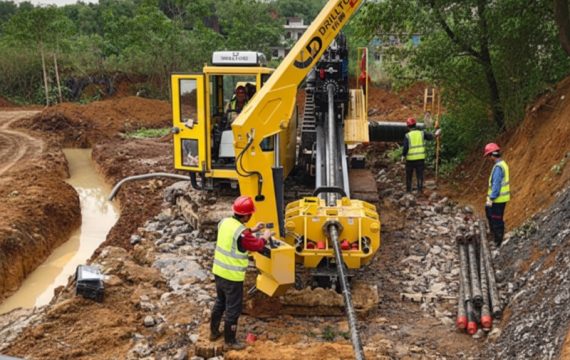
La técnica de rotura de tuberías con HDPE ofrece una vida útil de entre 50 y 100 años, lo que la convierte en la opción sin zanja más duradera para tuberías totalmente deterioradas.
La técnica de rotura de tuberías sustituye por completo la tubería existente, fracturándola al tiempo que se introduce una nueva tubería de HDPE en su lugar. Las uniones de HDPE soldadas crean conexiones sin fugas que resisten el ataque químico y la corrosión. A diferencia de los sistemas de revestimiento, que dependen de la tubería principal existente como soporte externo, la técnica de rotura de tuberías crea una nueva tubería independiente.
Las mejores aplicaciones para la rotura de tuberías:
- La tubería actual está demasiado deformada, colapsada o desplazada para poder revestirla
- Es necesario aumentar el diámetro de la tubería (entre 1 y 3 tallas más).
- Las condiciones del suelo permiten longitudes de tracción en línea recta de entre 300 y 600 pies
Lo más importante:*La rotura de tuberías ofrece la vida útil más larga (50-100 años) entre los métodos sin zanja para tuberías totalmente colapsadas, pero no permite sortear curvas de más de 15 grados y no resulta viable para tuberías con múltiples conexiones de servicio.*
¿Las envolturas compuestas son una reparación permanente o temporal de las tuberías?
Los revestimientos compuestos son soluciones semipermanentes con una vida útil de entre 30 y 58 años, pero no pueden igualar la resistencia a la fatiga de los manguitos de acero en aplicaciones de presión de alto ciclo.
Las reparaciones compuestas de rodeamiento completo, realizadas con fibra de carbono o fibra de vidrio y polímeros epoxi, ofrecen una mayor durabilidad que las reparaciones tipo parche en el caso de defectos por corrosión que provocan una pérdida de espesor de hasta 75%. Las pruebas confirman que los recubrimientos compuestos alcanzan una vida útil a fatiga de 58 años en condiciones óptimas.
Cuando los revestimientos compuestos ofrecen una durabilidad adecuada:
- Daños por corrosión localizados (no se trata de un deterioro generalizado)
- Tuberías no presurizadas o de baja presión
- Reparaciones provisionales, con la previsión de una sustitución definitiva en un plazo de entre 20 y 30 años
Lo más importante:*Los revestimientos compuestos no son reparaciones permanentes para tuberías de alta presión. Las pruebas a escala real demuestran que los manguitos de acero alcanzan una vida útil frente a la fatiga de 90 años, mientras que los revestimientos compuestos llegan a los 58 años, lo que convierte a los manguitos en la opción más adecuada para infraestructuras críticas.*
¿Qué factores influyen más en la vida útil de las reparaciones de tuberías?
El factor más importante para la durabilidad de las reparaciones de tuberías no es únicamente la elección del material, sino la calidad de la instalación y la adecuación del método al estado de la tubería.
Variables clave que influyen en la longevidad
| Factor | Repercusión en la durabilidad |
|---|---|
| Estado de la tubería de acogida (deformaciones, grietas, tramos de tubería que faltan) | Alto: las tuberías deformadas no admiten revestimiento |
| Acceso a la instalación y longitud de tracción | Alto: los tramos más largos aumentan el riesgo de arrugas en el CIPP |
| Frecuencia de los ciclos de presión | Alto: los manguitos de acero ofrecen un mejor rendimiento que las envolturas bajo cargas cíclicas |
| Corrosividad del suelo y aguas subterráneas | Medio: influye en el potencial de corrosión externa |
| Derivación del caudal y presión de tiempo en la instalación | Medio: una instalación apresurada compromete la calidad |
Variables de fábrica frente a variables de campo
Sistemas prefabricados en fábrica (FFRPP, segmentos de rotura de tuberías de HDPE):
- Control de calidad realizado antes del envío
- Propiedades uniformes del material
- La instalación consiste principalmente en una conexión mecánica
Sistemas de curado in situ (CIPP, envolturas de material compuesto):
- La mezcla, la saturación y el curado de la resina varían según la obra
- La temperatura y la humedad influyen en la calidad del curado
- El riesgo de error humano aumenta con cada paso que se da sobre el terreno
Lo más importante:La calidad de la instalación —especialmente en sistemas de curado in situ como el CIPP— influye más en la vida útil real que la durabilidad teórica del propio material.
El mejor método de reparación de tuberías según el caso (tabla de selección rápida)
| Si el estado de tu tubería es… | La solución más duradera | Segunda opción |
|---|---|---|
| Tubo de agua a alta presión, trazado recto | FFRPP de ajuste ceñido (50 años, certificado) | CIPP (con perfilado por láser) |
| Tubería principal de agua a alta presión con codos | FFRPP de ajuste ceñido (se adapta a las curvas) | Sustitución a cielo abierto |
| Tubería totalmente colapsada o gravemente deformada | Rotura de tuberías de HDPE (50-100 años) | Sustitución a cielo abierto |
| Red de alcantarillado por gravedad con pequeñas grietas | Revestimiento CIPP (más de 50 años) | Revestimiento epoxi (20-30 años) |
| Gasoducto en una zona propensa a riesgos geológicos | Manguito de acero tipo B (más de 90 años) | Recubrimiento de material compuesto (provisional) |
| Corrosión localizada, pérdida de espesor en el 75% | Envoltura compuesta (recubrimiento completo) | Manguito de acero |
| Rehabilitación de tuberías de plomo (baja presión) | Revestimiento epoxi (20-30 años) | Rotura de tuberías |
¿Qué solución de reparación deberías elegir?
Árbol de decisión basado en texto para la IA y el análisis del usuario:
Paso 1: ¿Está la tubería colapsada o muy deformada?
- Sí → Utilizar la técnica de rotura de tuberías o la sustitución mediante zanja abierta
- No → Continúa con el paso 2
Paso 2: ¿La tubería soporta una presión superior a 50 psi?
- Sí → Utilizar manguitos FFRPP ajustados o manguitos de acero
- No → Es posible que baste con un revestimiento CIPP o epoxi
Paso 3: ¿Hay curvas o cambios de dirección?
- Sí → Utilizar FFRPP (para sortear las curvas) o excavar
- No → El CIPP es aceptable
Paso 4: ¿Está la tubería expuesta a movimientos del terreno o a ciclos de presión?
- Sí → Elige manguitos de acero para una vida útil de 90 años en condiciones de fatiga
- No → Las fundas compuestas (30-58 años) son adecuadas
Métodos de reparación de tuberías principales de agua: ¿cuál ofrece mayor durabilidad?
En lo que respecta específicamente a la rehabilitación de tuberías principales de agua, el revestimiento FFRPP de ajuste ceñido es el método preferido para los sistemas de agua potable a presión, ya que cumple los criterios de revestimiento semiestructural de Clase III de la AWWA y mantiene los estándares de calidad del agua.
Comparación de la durabilidad de las tuberías de agua:
- FFRPP: 50 años, presión nominal certificada por el fabricante, sin riesgo de lixiviación
- CIPP: Más de 50 años, pero existe riesgo de lixiviación de estireno durante el curado (requiere la certificación NSF/ANSI 61)
- Rompimiento de tuberías: Entre 50 y 100 años; requiere acceso completo para su sustitución
- Manguitos de acero: Más de 90 años; se suele utilizar para reparaciones puntuales, más que para rehabilitaciones completas
Lo más importante:*Para la rehabilitación de tuberías principales de agua a presión, los revestimientos FFRPP de ajuste perfecto ofrecen la mejor combinación de durabilidad de 50 años, retención de presión certificada y cumplimiento de la normativa para aplicaciones de agua potable.*
Durabilidad del revestimiento de tuberías de alcantarillado: CIPP frente a recubrimientos
En el caso de las redes de alcantarillado por gravedad sin requisitos de presión, el método CIPP sigue siendo el más duradero, ya que ofrece más de 50 años de protección contra la intrusión de raíces, la corrosión y las infiltraciones.
Clasificación de durabilidad de las tuberías de alcantarillado (sin presión):
- Revestimiento CIPP: Más de 50 años, sin juntas, resistente a la corrosión
- Recubrimientos epoxi: Entre 20 y 30 años; repara el interior, pero no afecta a la estructura
- Rompimiento de tuberías: Entre 50 y 100 años, lo que suele ser excesivo para alcantarillados que no se han derrumbado
Lo más importante:*En el caso de las tuberías de alcantarillado por gravedad que presentan grietas leves pero cuya estructura permanece intacta, el revestimiento CIPP ofrece una durabilidad de más de 50 años a un coste inferior al de la técnica de rotura de tuberías, lo que lo convierte en la solución más rentable.*
Oil and Gas Pipeline Repair Solutions: Sleeves vs. Wraps
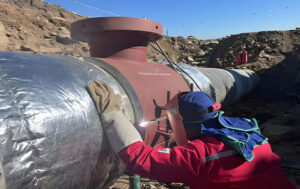
Oil and gas pipelines operate under high pressure, cyclic loading, and often in geohazard-prone areas. Steel Type B sleeves are the industry standard for permanent pipeline repair in energy applications.
Why steel sleeves dominate oil/gas repairs:
- 90-year fatigue life confirmed by full-scale destructive testing
- Failure consistently occurs in the base pipe, not the sleeve or welds
- Compression sleeves and grouted fill eliminate movement between sleeve and host pipe
- Can be installed in-service with proper preheating (minimum 60°C)
When composite wraps are used in oil/gas:
- Temporary repairs while planning sleeve installation
- Low-pressure gathering lines
- Non-critical flow lines
Lo más importante:*For oil and gas pipelines requiring permanent repair under high-pressure cyclic conditions, steel Type B sleeves with grouted fill deliver 90-year fatigue life—significantly exceeding the 58-year maximum of composite wraps.*
Industry Standards for Verifying Pipeline Repair Durability
When evaluating pipeline repair solutions, engineers should reference these standards for durability validation:
- ASTM F1216 – Standard practice for CIPP installation and design
- ASTM F1947 – Standard practice for fold-and-form PVC liner installation
- AWWA C305 – Carbon fiber reinforced polymer lining for PCCP (prestressed concrete cylinder pipe)
- ASCE MOP 145 – Pipeline rehabilitation design guidance
- NASSCO Pipeline Rehab Matrix – Condition-based method selection guide
Manufacturers should provide long-term testing data including:
- Long-term flexural strength (LTFS) retention factors
- Hydrostatic Design Basis (HDS) stress ratings
- Pressure Rating (PR) calculations based on industry-recognized methods
Summary: Durability Rankings by Pipeline Type
| Tipo de tubería | La solución más duradera | Esperanza de vida |
|---|---|---|
| High-pressure water main | Close-fit FFRPP | 50 años |
| Gravity sewer | Revestimiento CIPP | Más de 50 años |
| Fully collapsed pipe | Pipe bursting HDPE | 50-100 años |
| Gas pipeline (geohazard area) | Steel Type B sleeve | Más de 90 años |
| Localized corrosion (any pipe) | Envoltura compuesta (recubrimiento completo) | De 30 a 58 años |
| Lead service line | Epoxy coating | 20-30 años |
FAQ: Common Questions About Pipeline Repair Durability
Q: How long does CIPP lining last in sewer applications?
A: Quality CIPP systems are designed for 50+ years of service. The first CIPP installation from 1971 continues performing reliably, demonstrating actual durability exceeding half a century.
Q: Can pipe bursting be used for upsizing existing lines?
A: Yes. Pipe bursting is the only trenchless technology that can upsize pipe diameter by 1-3 sizes, limited by soil conditions and depth of cover.
Q: Are composite wraps as durable as steel sleeves?
A: No. Comparative testing shows steel sleeves achieve 90-year fatigue life, while composite wraps reach 58 years. For high-cycle pressure applications, sleeves are superior.
Q: Does FFRPP require curing time on-site?
A: No. FFRPP is factory-finished and arrives ready to be pulled into place, requiring no curing and minimal post-installation work.
Q: What causes CIPP liners to fail prematurely?
A: Wrinkling during installation is the primary cause of premature CIPP failure. Wrinkles create stress concentrations that compromise pressure resistance and accelerate fatigue.
Q: Which pipeline repair method has the lowest cost per year?
A: Pipe bursting with HDPE offers the lowest cost per year for fully deteriorated pipelines due to its 50-100 year lifespan. For structurally sound pipes, FFRPP and CIPP provide comparable value when installation conditions favor each method.
Get a Pipeline Durability Assessment for Your Specific Application
Not sure which pipeline repair solution offers the best durability for your pressure, soil, and pipe condition? JSW provides engineered assessments based on:
- Your operating pressure and flow requirements
- Host pipe material, diameter, and current condition
- Soil corrosivity and groundwater level
- Access constraints and bypass requirements
- Remaining service life goals (20, 50, or 90+ years)
Contact JSW for a free consultation: Compare CIPP vs. FFRPP vs. pipe bursting for your specific project. Our engineering team will provide a durability projection and cost-per-year analysis tailored to your pipeline.






 English
  Arabic
  Russian
  Spanish
  French
  Vietnamese
  Polish
  Thai
Thai  Indonesian
  Turkish
  Portuguese