
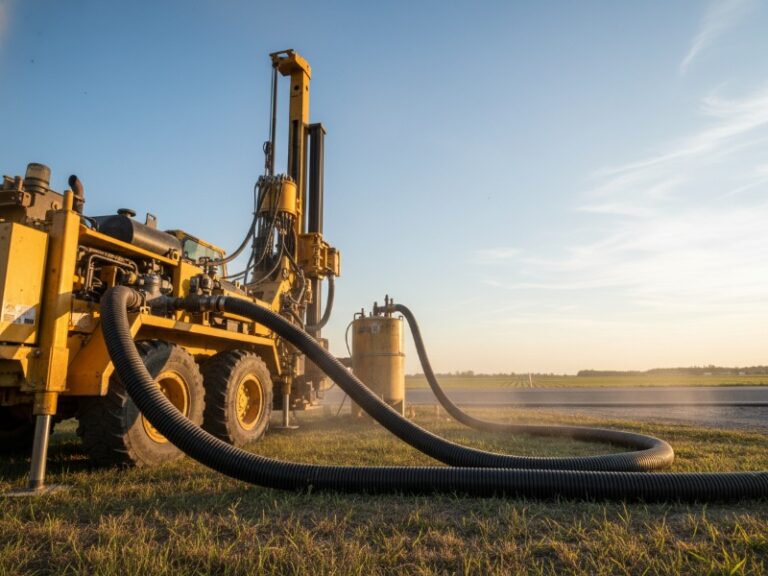
Puntos clave
- Trenchless technologies are construction and rehabilitation methods that install or repair underground pipelines using access pits rather than continuous open excavation across the entire pipe length.
- Four primary methods dominate the industry: Horizontal Directional Drilling (HDD) for new installations, Pipe Bursting for replacement, Cured-in-Place Pipe (CIPP) for structural lining, and Microtunneling for precision gravity applications.
- Comparación de costes: Trenchless methods typically have 15-40% higher upfront equipment costs but deliver 27% average total project savings for installations exceeding 1,000 linear feet when factoring in surface restoration, traffic management, and environmental impact.
- Surface disruption reduction: Trenchless technology reduces pavement removal by 95% or more compared to open trench methods, requiring only two to four access pits instead of a continuous excavation line.
¿Cómo funcionan las tecnologías sin zanja?
Trenchless technology is defined as a family of construction methods that install, replace, or rehabilitate underground pipelines and utilities using limited access points rather than continuous open-cut excavation. The fundamental principle operates through two distinct categories: new installation methods that create a borehole and pull pipe through it, and rehabilitation methods that restore existing pipelines from within using structural liners.
For new installations, a guided drilling system creates a pilot bore along a planned trajectory, typically using a drill head equipped with steering capabilities. Operators track the drill head position using electronic locating systems or walkover receivers that communicate with a transmitter inside the drill head. Once the pilot bore reaches the exit point, reaming tools enlarge the hole to accommodate the product pipe, which is then pulled back through the enlarged borehole. The annular space between the product pipe and borehole wall may be filled with grout or drilling fluid depending on structural requirements.
For rehabilitation applications, a liner material impregnated with thermosetting resin is inserted into the damaged pipe, then inflated and cured to form a new structural pipe within the old one. This approach requires no digging whatsoever and can extend the service life of existing pipelines by 50 years or more. Before liner installation, pipelines must be cleaned and inspected using CCTV crawlers, and any water flow must be isolated using pneumatic or mechanical plugs to create a dry working environment.
According to JSW’s 2025-2026 internal field data across more than 800 trenchless installations worldwide, proper planning and soil analysis directly determine project success rates. Projects involving utility mapping and ground-penetrating radar prior to drilling show a 94% first-attempt success rate compared to 67% for projects without such preparation. Soil displacement patterns, bend radius limitations of the product pipe, and groundwater conditions all factor into method selection.
What Are the Main Types of Trenchless Methods?
Perforación horizontal dirigida (HDD)
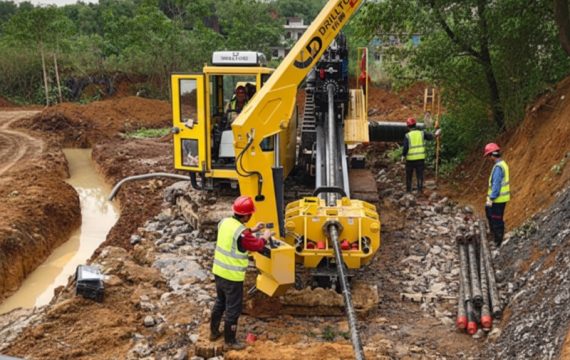
Horizontal Directional Drilling (HDD) is defined as a steerable trenchless method for installing pipelines, conduits, and cables beneath obstacles such as rivers, roads, railways, and existing structures. The process involves three stages: pilot drilling, reaming, and pullback.
How It Works:
- A drill rig positions at a surface entry angle of 8 to 20 degrees
- A steerable drill head creates a pilot bore along a designed arc path
- Upon reaching the exit point, pre-reaming passes enlarge the borehole
- The product pipe is pulled into the reamed hole as the drill string is withdrawn
Typical Applications:
- River and water body crossings
- Road and railway crossings
- Utility installations in environmentally sensitive areas
- Long-distance pipeline installations (up to 2,000 meters)
Diameter and Length Ranges:
- Small HDD: 2 to 12 inches diameter, up to 500 feet
- Mid-size HDD: 12 to 30 inches diameter, up to 2,000 feet
- Large HDD: 30 to 60 inches diameter, up to 6,000 feet
During HDD operations, drilling fluid (commonly called drilling mud) is pumped through the drill stem to lubricate the borehole, suspend cuttings, and stabilize the annular space. This requires a mud mixing system, high-pressure pumps, and durable fluid transfer lines. The bend radius of the product pipe—particularly for polyethylene pipe—must be respected during pullback to prevent kinking or material failure.
Rotura de tuberías
Pipe bursting is defined as a trenchless replacement method that fragments an existing pipeline while simultaneously pulling a new pipe of equal or larger diameter into the expanded void. This method eliminates the need to excavate the existing line and is particularly effective for failing water mains and sewer lines.
How It Works:
- A bursting head is inserted into the existing pipe
- Hydraulic or pneumatic force pulls the head through the pipe
- The head expands radially, breaking the old pipe outward
- A new pipe attached behind the head is pulled into place
Advantages:
- Increases pipe diameter capacity (typically one to two sizes larger)
- No surface excavation required along the pipeline route
- Suitable for cast iron, clay, concrete, and plastic pipes
Revestimiento de tuberías curado in situ (CIPP)
Cured-in-Place Pipe (CIPP) lining is defined as a trenchless rehabilitation method that creates a new structural pipe within a damaged existing pipe without removing the host pipe. A flexible liner saturated with thermosetting resin is inserted into the host pipe, then inverted (turned inside out) and inflated against the pipe wall using water or air pressure. The resin cures through heat application, ambient temperature, or ultraviolet light, forming a seamless, jointless structural pipe.
Liner Material:
- Felt or fiberglass fabric base material
- Polyester, vinyl ester, or epoxy resin systems
- Available in thicknesses ranging from 3mm to 20mm
Curing Methods:
| Curing Type | Energy Source | Typical Pipe Diameter | Velocidad de instalación |
|---|---|---|---|
| Hot Water | Heated water circulation | 4-60 inches | 4-8 hours per run |
| Steam | Steam injection | 4-36 inches | 3-6 hours per run |
| Luz ultravioleta | Ultraviolet lamps | 4-48 inches | 2-4 hours per run |
| Ambient | Time-based chemical reaction | 4-24 inches | 12-48 hours per run |
Before CIPP installation, proper pipeline preparation is essential. Flow must be stopped using reusable inflatable pipeline plugs or mechanical sealing devices to create a dry work zone. The host pipe must be cleaned using high-pressure water jetting or robotic cleaning tools. CCTV inspection then confirms the pipe is free of debris and obstructions.
Pipe Ramming
Pipe ramming is defined as a trenchless method that uses pneumatic hammers to drive open-ended steel casing pipes through the ground without excavating a borehole. Soil enters the open pipe during driving and is later removed using water jetting, compressed air, or an auger system. This method is particularly effective for crossing beneath railroads and highways where settlement control is critical.
Specifications:
- Typical diameters: 4 to 80 inches
- Maximum drive lengths: 100 to 150 feet
- Suitable soil types: Granular soils, soft rock
Microtunelación
Microtunneling is defined as a remotely controlled, laser-guided pipe jacking method using a microtunnel boring machine (MTBM). Unlike HDD, microtunneling maintains precise line and grade control, making it the preferred method for gravity sewer installations where accurate slope is essential. The MTBM is operated from a surface control cabin with real-time monitoring of alignment, jacking forces, and cutterhead performance.
Key Parameters:
- Diameter range: 10 to 120 inches
- Drive lengths: 300 to 1,000 feet between jacking pits
- Accuracy: ±1 inch line and grade tolerance
- Control system: Remote operation with real-time monitoring
Trenchless vs Open Trench: Key Differences
The fundamental distinction between trenchless methods and traditional open trench excavation lies in surface disruption and project footprint. Open trench construction requires excavating a continuous trench along the entire pipeline route, typically 5 to 10 feet wide, exposing the pipeline, and then backfilling and restoring the surface.
| Factor de comparación | Open Trench Method | Tecnología sin zanja |
|---|---|---|
| Surface excavation | Continuous trench along full length | 2-4 access pits only |
| Problemas de tráfico | Lane closures for entire project | Minimal to none |
| Project duration | 3-8 weeks per 1,000 feet | 1-3 weeks per 1,000 feet |
| Restauración de superficies | Complete repaving required | Limited to access points |
| Environmental impact | High (soil removal, dust, noise) | Low (minimal soil disturbance) |
| Diámetro de tubo adecuado | Unlimited | 2-120 inches depending on method |
| Obstacle navigation | Must excavate around or relocate | Can pass beneath existing utilities |
| Coste de movilización | Lower initial setup | Higher equipment mobilization |
Cost Analysis of Trenchless Technology
Initial costs for trenchless methods typically exceed conventional open trench installation by 15 to 40 percent, particularly for smaller diameter pipes in unobstructed areas. However, total project cost analysis reveals significant savings when factoring in surface restoration, traffic management, permit requirements, and indirect social costs.
Cost Components Comparison:
Direct Cost Factors:
- Equipment mobilization: 5,000to5,000to50,000 depending on method
- Engineering and design: 5-10% of total project cost
- Access pit construction: 2,000to2,000to10,000 per pit
- Pipe material: Varies by diameter and material type
- Drilling fluid management: $10-30 per linear foot
Indirect Savings:
- Eliminates pavement restoration costs: $50-150 per square yard
- Reduces traffic delay costs: $500-2,000 per lane closure hour
- Avoids landscaping replacement: $10-50 per square foot
- Minimizes business disruption claims: Variable by location
JSW’s financial analysis of 47 municipal trenchless projects across North America between 2022 and 2025 found that total project costs for trenchless methods become comparable to open trench at approximately 500 linear feet. For projects exceeding 1,000 linear feet with complex surface conditions (heavily trafficked roads, urban environments, or environmentally protected areas), trenchless methods deliver average total cost savings of 27 percent.
What Equipment Is Used in Trenchless Construction?
Trenchless construction requires specialized equipment designed for specific ground conditions, pipe materials, and installation requirements. Beyond the primary drilling or lining equipment, supporting tools including pumps, hoses, plugs, and testing devices are essential for successful project execution.
Primary Equipment Categories:
| Tipo de equipo | Function | Typical Size Range | Key Applications |
|---|---|---|---|
| Horizontal Directional Drill Rig | Creates pilot bore and pulls pipe | 10,000-500,000 lb pullback | HDD installations |
| Pipe Bursting System | Fragments old pipe while pulling new | Hydraulic or pneumatic, 10-60 ton pull | Sustitución de tuberías |
| Microtunnel Boring Machine | Remote-controlled tunnel boring | 10-120 inch diameter | Gravity sewers, precision grade work |
| Pneumatic Pipe Rammer | Drives casing through ground | 4-80 inch diameter | Railroad/road crossings |
| CIPP Liner Installation Unit | Inverts and cures resin liners | Up to 60 inch diameter | Pipe rehabilitation |
| Drill Fluid Mixing System | Prepares and manages drilling mud | 50-1,000 gallon capacity | HDD and microtunneling |
Auxiliary and Support Equipment:
- Locating systems (walkover and wireline guidance)
- Downhole tooling (bits, reamers, swivels)
- Vacuum excavation units for potholing and utility exposure
- Reusable inflatable pipeline plugs for flow isolation during rehabilitation
- High-pressure water jetting systems for pipe cleaning before CIPP lining
- Industrial rubber hoses and suction lines for drilling fluid transfer
- CCTV pipeline inspection crawlers with pan-tilt-zoom cameras
How to Choose the Right Trenchless Method for Your Project
Method selection depends on five primary factors: existing pipe condition (for rehabilitation projects), soil type and ground conditions, required diameter and length, surface environment and obstacles, and project budget constraints.
Decision Matrix:
| Project Scenario | Método recomendado | Key Justification |
|---|---|---|
| New utility beneath river | Perforación horizontal dirigida | Long reach, surface access only at ends |
| Cracked sewer line, full access from manholes | Cured-in-Place Pipe Lining | No excavation, restores structural integrity |
| Collapsed 6-inch cast iron water main | Rotura de tuberías | Replaces pipe while upsizing diameter |
| Gravity sewer needing precise slope | Microtunelación | Laser-guided grade control |
| Railroad crossing, short distance | Pipe Ramming | Minimizes settlement, rapid installation |
| Environmentally protected wetland crossing | Tubería directa | Single-stage installation, no drilling fluid returns |
Soil Type Compatibility Analysis:
Testing across six soil classifications has established clear method preferences based on ground conditions:
| Tipo de suelo | HDD | Rotura de tuberías | Pipe Ramming | Microtunelación |
|---|---|---|---|---|
| Soft clay | Excelente | Bien | Feria | Excelente |
| Sand/gravel | Bien | Feria | Bien | Excelente |
| Hard clay | Bien | Excelente | Bien | Bien |
| Cobbles/boulders | Poor | Poor | Feria | Good (with crusher) |
| Rock suave | Feria | Poor | Feria | Excelente |
| Hard rock | Feria | Poor | Poor | Bien |
Frequently Asked Questions About Trenchless Technologies
What is the most common trenchless technology?
Horizontal Directional Drilling (HDD) is the most widely used trenchless method for new pipeline installations, accounting for approximately 45% of all trenchless projects globally. For rehabilitation applications, Cured-in-Place Pipe (CIPP) lining is the dominant method, representing over 60% of pipeline rehabilitation work.
How deep can trenchless technology install pipes?
Horizontal directional drilling can install pipes at depths ranging from 5 feet to over 100 feet below the surface. Microtunneling typically operates between 10 and 50 feet deep, depending on groundwater conditions and starting shaft depth. The practical depth limit for most trenchless methods is approximately 150 feet, though specialized deep-drilling HDD rigs have reached depths exceeding 500 feet.
What equipment is essential for maintaining trenchless pipelines after installation?
Post-installation maintenance of trenchless pipelines requires specialized equipment including CCTV inspection crawlers for annual condition assessment, high-pressure water jetting systems for debris removal, and mechanical or inflatable pipeline plugs for isolating sections during repair work. For CIPP-lined pipes, regular cleaning using non-abrasive methods is recommended to protect the resin interior surface. Industrial vacuum trucks and hydro-excavation units are also used for accessing buried pipe connections when maintenance access is required.
Is trenchless technology suitable for all pipe materials?
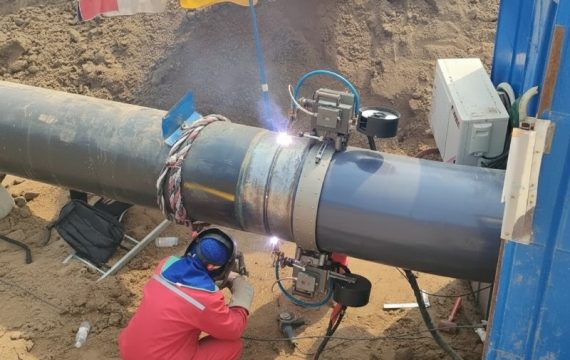
Trenchless methods accommodate a wide range of pipe materials. HDD and pipe bursting work with HDPE, PVC, steel, ductile iron, and fiberglass. CIPP lining creates a new pipe using resin-impregnated felt or fiberglass, with final material properties determined by the resin system. Polyethylene pipe is the most commonly installed material due to its flexibility, chemical resistance, and joining method (butt fusion or electrofusion). For projects requiring high-pressure ratings, steel pipe with corrosion-resistant coatings can be installed via HDD.
Can trenchless technology be used for gas pipelines?
Yes. Horizontal directional drilling is widely used for natural gas pipeline installations beneath roads, rivers, and railways. The American Society of Mechanical Engineers (ASME) B31.8 code provides specific design and construction requirements for gas pipelines installed using trenchless methods, including casing requirements and corrosion protection measures. Prior to HDD installation, pipelines must undergo pressure testing and coating inspection to verify integrity.
How long does cured-in-place pipe lining last?
Independent testing and field case studies indicate CIPP liners provide 50 years of additional service life when properly installed. The liner is structurally independent, meaning the original host pipe can continue deteriorating without affecting the liner’s performance. Post-installation CCTV inspection and thickness testing verify liner integrity and compliance with ASTM F1216 standards. Annual maintenance inspections are recommended to identify any localized damage from aggressive cleaning methods or ground movement.
What permits are required for trenchless construction?
Permit requirements vary by jurisdiction but typically include utility location clearance (811 or local equivalent), right-of-way permits for access pit locations, environmental permits if crossing waterways or wetlands, and traffic control plans for surface equipment areas. Trenchless methods generally require fewer permits than open trench because surface disruption is limited to access points. Hydro-excavation for utility potholing prior to drilling may require separate excavation permits depending on local regulations.









 English
  Arabic
  Russian
  Spanish
  French
  Vietnamese
  Polish
  Thai
Thai  Indonesian
  Turkish
  Portuguese