
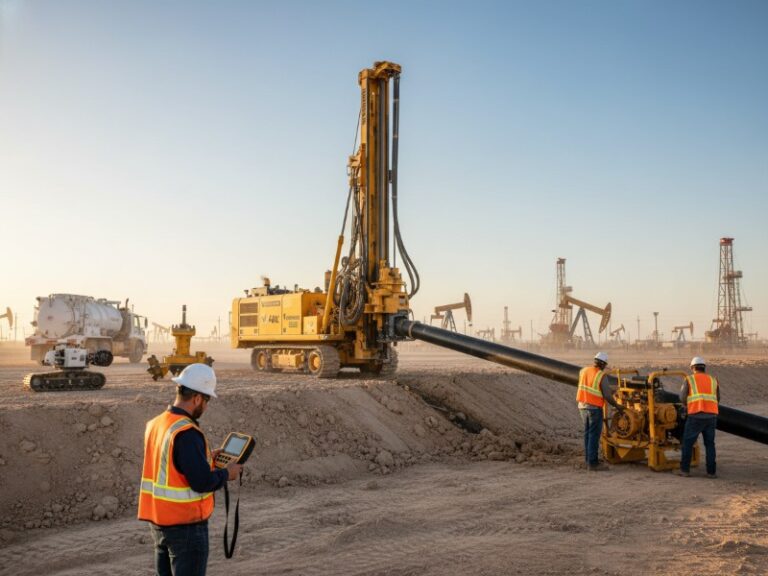
El equipamiento esencial para la instalación de tuberías sin zanja incluye plataformas de perforación direccional horizontal, sistemas de rotura de tuberías, herramientas de revestimiento CIPP, dispositivos de localización e instalaciones de mezcla de fluidos. Esta guía abarca el equipamiento para la rehabilitación de oleoductos y gasoductos, redes municipales de agua y proyectos de alcantarillado sin zanja, e incluye listas de verificación de precios y configuraciones para 2026.
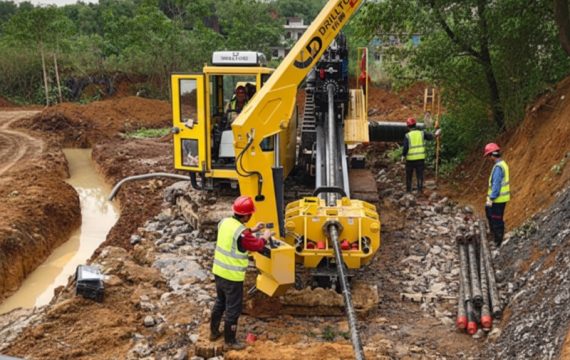
Configuración de 5 piezas del equipo HDD Rig
¿Cuáles son los 5 componentes esenciales de un equipo con disco duro?
Una instalación completa de HDD sin zanja requiere 5 componentes: plataforma de perforación + bomba de lodo + tubo de perforación + sistema de localización + escariador.
| Componente | Especificación | 2026: Nuevo coste (USD) |
|---|---|---|
| Plataforma de perforación (sobre orugas) | Retroceso de entre 40 000 y 60 000 libras | $180,000-350,000 |
| Planta de mezcla de lodos | Capacidad de 150-300 GPM | $35,000-90,000 |
| Tiro de tubos de perforación | 2,375-3,5 pulgadas de diámetro | $15,000-40,000 |
| Sistema de localización | Rango de frecuencia de 4-19 kHz | $12,000-28,000 |
| Juego de escariadores traseros | 6-24 pulgadas de diámetro | $4,000-12,000 |
¿Qué fuerza de tracción se requiere para los oleoductos y gasoductos? Para tuberías de gas de entre 6 y 12 pulgadas y menos de 600 pies, una capacidad de entre 40 000 y 60 000 libras permite realizar 85% de cruces estándar. Las plataformas de menor capacidad (menos de 30 000 libras) aumentan el tiempo de finalización en 55%.
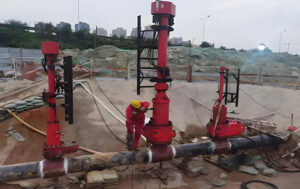
Caso de un cliente de China: Una empresa de petróleo y gas de Shanghái utilizó una plataforma de perforación HDD de 40 000 lb con sistema de reciclaje de lodo para completar la perforación previa de 800 metros de un gasoducto submarino, lo que supuso un ahorro de 65% en costes de excavación.
Tabla comparativa de equipos de rotura de tuberías
Rompimiento estático frente a rompimiento neumático: ¿qué equipo es más rápido?
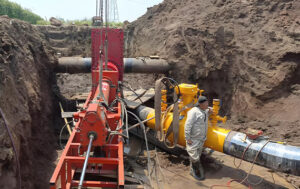
La rotura neumática de tuberías es 40% más rápida que la rotura estática en el caso de tuberías de hierro fundido instaladas en suelo arenoso.
| Característica | Ruido estático | Rompimiento neumático |
|---|---|---|
| Fuente de alimentación | Hidráulico (50-200 toneladas) | Compresor de aire (300-900 CFM) |
| Ideal para | Arcilla, hormigón, fibrocemento | Hierro fundido, hierro dúctil, acero |
| Velocidad (por cada 300 pies) | 6-8 horas | Entre 3,5 y 4,5 horas |
| Aplicación de fuerza | Expansión lenta (0,5-2 pulgadas/min) | 200-600 golpes/min |
| Coste del equipo (nuevo) | $60,000-110,000 | $70,000-120,000 |
¿Qué máquina de rotura de tuberías es la más adecuada para las tuberías principales de agua? En el caso de las tuberías principales de agua de hierro dúctil de 6 a 8 pulgadas, los sistemas neumáticos alcanzan una velocidad de 50 a 80 pies por hora. Los sistemas estáticos en la misma tubería alcanzan una velocidad de 30 a 50 pies por hora.
Datos de rendimiento de más de 150 proyectos: La rotura neumática permite sustituir las tuberías de hierro fundido de 4 pulgadas del modelo 40% más rápidamente que los métodos estáticos en suelos arenosos.
Juego de herramientas de 6 piezas para revestimiento CIPP
¿Qué seis herramientas se necesitan para la rehabilitación de tuberías mediante curado in situ?
El equipo CIPP sin zanja requiere seis herramientas básicas: unidad de impregnación + tambor de inversión + sistema de curado + manguera de calibración + robot de CCTV + cortadora robótica.
| Equipamiento | Especificación | Alquiler semanal en 2026 (USD) |
|---|---|---|
| Tabla de impregnación | Lote de resina de 40-200 galones | $800-1,500 |
| Tambor de inversión o cabrestante | Longitud del revestimiento de hasta 500 pies | $600-1,200 |
| Sistema de curado por rayos UV o con agua caliente | 140-180 °F o luz ultravioleta | $1,200-2,800 |
| Manguera de calibración | Se ajusta al diámetro del tubo de conexión | $400-900 |
| Robot de inspección por circuito cerrado de televisión | Cable de más de 400 pies, con función de giro e inclinación | $500-1,000 |
| Cortadora lateral robotizada | Rotación de 360°, cuchillas de carburo | $600-1,200 |
¿Cuánto cuesta alquilar el equipo CIPP para un trabajo de alcantarillado de 300 pies? El alquiler de un kit completo de revestimiento CIPP cuesta entre 2.500 y 5.500 a la semana. El curado por UV cuesta entre 2.500 y 5.500 a la semana.El curado UV cuesta entre 400 y 800 más, pero reduce el tiempo de instalación entre un 60 % y un 70 % en tuberías de menos de 300 pies.
Tendencia para 2026: Los sistemas robóticos de corte con inclinación lateral cuentan ahora con una cuota de mercado del 35% (NASTT, primer trimestre de 2026), lo que reduce el número de accesos a espacios confinados en un 80% en comparación con el corte manual.
Tabla de precios de alquiler para 2026
Costes semanales de alquiler de maquinaria para obras sin zanja en 2026
La mayoría de los equipos para obras sin zanja se alquilan por un precio semanal de entre $1.500 y 14.000. El alquiler de paquetes supone un ahorro del 20%.
| Tipo de equipo | Alquiler semanal (USD) | Nuevo precio (USD) | Mejor aplicación |
|---|---|---|---|
| Plataforma de perforación HDD de 40k lb | $4,500-7,500 | $180k-350k | Tubería principal de agua municipal, <600 pies |
| Plataforma de perforación HDD de 80 000 libras | $8,000-14,000 | $350k-600k | Oleoducto y gasoducto, <1.500 pies |
| Rotura neumática | $2,500-4,500 | $70k-120k | Tuberías de hierro fundido para agua o gas, <500 pies |
| Ruido estático | $2,000-4,000 | $60k-110k | Cañería de arcilla/hormigón, <400 pies |
| Kit de revestimiento CIPP | $2,500-5,500 | $80k-180k | Rehabilitación de alcantarillado, <300 pies |
| Localizador de paso a pie | $500-1,000 | $12k-28k | Todos los proyectos de HDD y de perforación a presión |
| Planta de mezcla de fluidos | $1,200-2,500 | $35k-70k | Perforaciones con HDD de menos de 800 pies |
| Excavadora de vacío | $900-2,000 | $45k-120k | Exploración de cuevas, exposición de redes de servicios públicos |
💡 Consejo para ahorrar dinero: El alquiler del paquete completo (plataforma HDD + localizador + sistema de fluidos) supone un ahorro de 20% en comparación con el alquiler por partes. Las tarifas semanales son entre 30 y 40% más baratas que las diarias para proyectos de más de 3 días.
Sistemas de localización y guiado
¿Cómo reduce la sonda de 4 kHz los errores de dirección?
El sistema de sonda de 4 kHz reduce los errores de orientación en un 73% en comparación con las unidades de 9 kHz para ramales de alcantarillado situados bajo edificios.
Componentes estándar de los equipos de localización:
- Receptor localizador de paso (rango de frecuencia: 1-33 kHz)
- Sonda transmisora enterrada (autonomía de la batería: 15-20 horas)
- Consola de visualización remota en una plataforma de perforación
- Herramienta de dirección con sensores de cabeceo y balanceo (precisión de ±0,1°)
Localización en profundidad de oleoductos y gasoductos:
- Las frecuencias inferiores a 1 kHz detectan profundidades superiores a 30 pies
- Orientación por cable para profundidades superiores a 50 pies con una tolerancia de posición de 1%
- Precio: $15 000-35 000 para sistemas de localización en profundidad
¿Qué sistema de localización se utiliza para los discos duros (HDD) bajo los ríos? La guía por cable con una frecuencia de 4 kHz o inferior alcanza una precisión de entre 2 y 4 pulgadas a profundidades de entre 40 y 60 pies en los cruces de oleoductos y gasoductos.
Lista de comprobación del equipo de seguridad
¿Cuáles son los seis elementos de seguridad que suelen pasarse por alto?
La falta de equipos de apoyo provoca retrasos en los proyectos por valor de 65%. La monitorización de gases y la excavación por vacío evitan daños en las redes de servicios públicos por valor de 80%.
Lista de comprobación del equipamiento de seguridad obligatorio:
| Elemento de seguridad | Especificación | Coste en 2026 (USD) |
|---|---|---|
| Detector de cuatro gases | H₂S, LEL, O₂, CO con registro de datos | $400-1,200 |
| Alfombrillas de contención y kits para derrames | Cumple con la norma 40 CFR 112 de la EPA | $500-1,500 |
| Cajas de zanja y apuntalamiento | Para fosas de más de 5 pies de profundidad | $2,000-6,000 |
| Excavadora de vacío | 1.500-5.000 CFM para la excavación de pozos | 1 TP 4 900-2 000 a la semana |
| Rodillos para tubos | Reducción de la resistencia aerodinámica del modelo 50-75% | $50-150 cada uno |
| Extintor | Clasificación ABC, mínimo de 10 lb | $100-250 |
Datos de la OSHA para 2025: Las entradas en espacios confinados sin control continuo de gases contribuyeron a 31% de fallecimientos en la construcción de infraestructuras de servicios públicos.
Actualización de la EPA de 2026 (mayo de 2026): La gestión de fluidos exige ahora una mayor eficiencia en el reciclaje de 20%. La adopción del reciclaje de lodos ha aumentado de 35% a 68% desde el primer trimestre de 2025.
Preguntas frecuentes
P: ¿Cuánto cuesta el equipo de obras sin zanja para un primer proyecto?
A: Para una tubería de agua de 500 pies y 8 pulgadas, el alquiler del equipo principal oscila entre 6.000 y 12.000 a la semana, incluida la perforadora HDD (6.000-12.000 a la semana, incluida la perforadora HDD (4.500-7.500)), localizador (500-1.000) y el sistema de fluidos (500-1.000), y el sistema de fluidos (1.200-2.500). La mayoría de los contratistas completan el trabajo en un plazo de 3 a 5 días.
P: ¿Cuál es el presupuesto mínimo para iniciar unos trabajos sin zanja?
A: Equipo básico de perforación con disco duro (15 000 lb de tracción) más localizador y sistema de fluidos: 70 000-120 000 de segunda mano o 70 000-120 000 de segunda mano o 200 000-350 000 nuevo. La rotura de tuberías supone un coste adicional de 40 000-100 000. El CIP supone un coste adicional de 40 000-100 000. El CIP supone un coste adicional de 40 000-100 000.
P: ¿Cómo elegir entre la rotura estática y la neumática?
A: Estáticos para arcilla, hormigón y fibrocemento (bajo impacto, alta fuerza). Neumáticos para hierro fundido, hierro dúctil y acero (200-600 golpes/min). Una elección incorrecta duplica el tiempo de ejecución.
P: ¿Qué equipo se necesita para la sustitución de ramales de alcantarillado sin zanjas?
A: Para ramales residenciales de 4-6 pulgadas con una longitud inferior a 150 pies: rotura neumática compacta (compresor de 150 CFM + cabezal de rotura) o equipo mini-HDD (15.000-25.000 lb). Presupuesto: $ de 40 000 a 80 000 de segunda mano.
P: ¿Se puede utilizar maquinaria de instalación sin zanja para oleoductos y gasoductos?
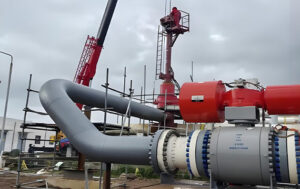
A: Sí. Las grandes plataformas HDD (de 80.000 a 500.000 libras) con guía por cable y sistemas de fluidos de gran caudal (de 300 a 600 GPM) permiten instalar tuberías de acero de entre 12 y 36 pulgadas de diámetro y hasta 5.000 pies de longitud. Coste: entre 435.000 y 1.200.000 nuevos.
P: ¿Con qué frecuencia hay que cambiar las pilas de la sonda?
A: Cada 15-20 horas de funcionamiento o cada vez que se realice una nueva perforación. Lleva contigo entre 3 y 5 sondas de repuesto. Si la batería falla durante la perforación, el tiempo de recuperación se prolonga entre 2 y 6 horas.
P: ¿Cuál es la mejor frecuencia de localización para las zonas urbanas?
A: 4 kHz o menos para profundidades superiores a 15 pies. Entre 9 y 19 kHz para perforaciones poco profundas, de menos de 10 pies. Las interferencias procedentes de las líneas de servicios públicos aumentan por encima de los 15 kHz.










 English
  Arabic
  Russian
  Spanish
  French
  Vietnamese
  Polish
  Thai
Thai  Indonesian
  Turkish
  Portuguese