
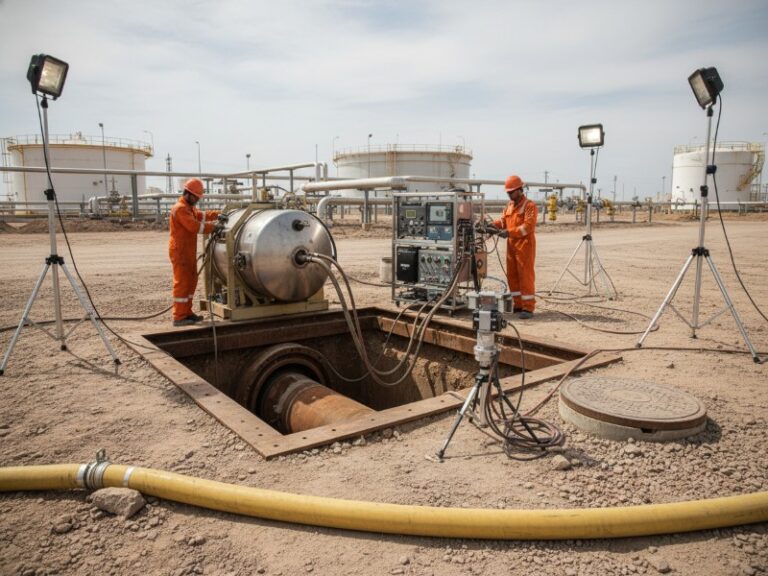
Trenchless methods often look more expensive upfront. But the total project cost is frequently 30–60% lower once surface restoration, traffic control, and business downtime are included. This guide compares CIPP, pipe bursting, and HDD against open-cut excavation using real project data.
Quick Comparison: Trenchless vs. Traditional Excavation Costs
| Método | Lo mejor para | Upfront Cost (per linear ft) | Restoration Cost | Downtime Impact | Total Cost Tendency | Limitación principal |
|---|---|---|---|---|---|---|
| CIPP (tubería curada en sitio) | Sewer repair under structures | 80–80–250 | Very Low (2 small pits) | Minimal (hours) | 30-60% lower total | Requires accessible pipe, no severe collapse |
| Rotura de tuberías | Collapsed pipes or upsizing | 100–100–300 | Low (2 access pits) | Low (1 day typical) | 20-50% lower total | Requires extraction pit, heavy equipment access |
| Perforación horizontal dirigida (HDD) | New pipe under roads/water | 150–150–400+ | Very Low (entry/exit only) | None (no lane closure) | 20-40% lower total | Higher daily equipment rate |
| Traditional Open-Cut | Shallow, short, accessible sites | 50–50–250 | High (30-50% of total) | High (days to weeks) | Baseline (highest total) | Surface value, downtime, traffic control |
How Trenchless Methods Compare with Traditional Excavation
1. Cured-in-Place Pipe (CIPP) vs. Open-Cut for Sewer Rehabilitation
CIPP is the most common trenchless method for repairing existing sewers without digging.
Traditional open-cut total cost (100 ft, 8-inch sewer, 8 ft depth):
- Direct construction: 8,000–8,000–15,000
- Surface restoration (asphalt, sidewalk, landscaping): 3,500–3,500–11,000
- Traffic control (if applicable): 1,000–1,000–3,000 per day
- Total project cost: 15,000–15,000–28,000
CIPP trenchless total cost (same 100 ft line):
- Liner, resin, and curing equipment: 9,000–9,000–18,000
- Access pit restoration (two 2×4 ft pits): 200–200–600
- Total project cost: 9,200–9,200–18,600
Resultado: CIPP typically saves 30-60% on total project cost for pipes 6-10 inches in diameter, primarily by eliminating surface restoration. For pipes over 24 inches in diameter, savings usually decrease to 15-30% because resin and curing costs increase substantially.
2. Pipe Bursting vs. Open-Cut for Collapsed or Undersized Pipes
Pipe bursting is used when the existing pipe is collapsed or when a larger diameter is required.
When pipe bursting usually costs less: For a 150 ft, 6-inch cast iron sewer line under a driveway and landscaped yard, open-cut total cost typically reaches 18,000–18,000–30,000 including concrete replacement and regrading. Pipe bursting for the same project requires only an insertion pit and receiving pit (4×8 ft each). Total cost typically ranges from 12,000–12,000–22,000. The primary savings come from eliminating trench shoring, reducing labor hours, and avoiding surface restoration.
Resultado: Pipe bursting generally saves 20-50% compared to traditional excavation for collapsed pipes. The savings are typically highest when surface restoration costs are high (decorative concrete, mature landscaping) and smallest when the site is already bare ground.
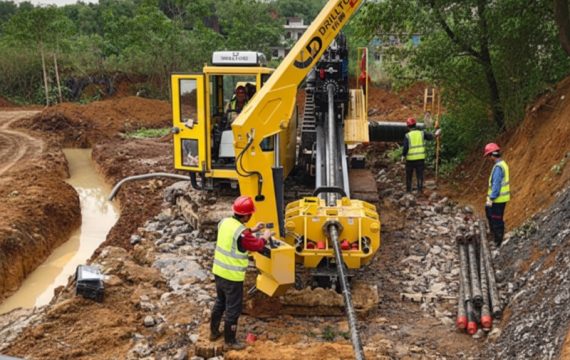
3. Horizontal Directional Drilling (HDD) vs. Open-Trench for New Installations
For new pipe installations under existing surfaces, HDD and open-trench have distinct cost profiles.
Traditional open-trench (500 ft, 12-inch water main under a two-lane road):
- Saw-cutting, excavation, shoring, dewatering: 60,000–60,000–120,000
- Pipe bedding, installation, backfill, compaction: 30,000–30,000–50,000
- Asphalt replacement and lane closure traffic control: 30,000–30,000–50,000
- Total project cost: 120,000–120,000–200,000
HDD for the same 500 ft crossing:
- Directional rig, drill rods, mud system (higher daily rate): 50,000–50,000–100,000
- Pipe pullback and entry/exit pits: 20,000–20,000–40,000
- No road surface damage, no lane closures, no asphalt patching: $0
- Total project cost: 70,000–70,000–140,000
Resultado: HDD typically saves 20-40% on total project cost for road and waterway crossings. The savings are usually highest when traffic control costs are high (busy urban roads) and lowest when the crossing is short and easily restored.
The Hidden Costs That Make Traditional Excavation More Expensive in Total
Traditional excavation often appears cheaper on initial quotes because these costs are frequently omitted. When included in total project cost, traditional excavation usually becomes the more expensive option.
- Surface restoration: Asphalt patching, concrete replacement, sidewalk repair, landscaping regrading, sod or seed installation, irrigation system repair, mature shrub or tree replacement — typically 30-50% of total project cost on improved properties.
- Traffic control: Lane closures, flaggers, signage, detour setup — often 1,000–1,000–5,000 per day for municipal projects.
- Business interruption: Lost revenue during parking lot closures or sidewalk shutdowns — easily 2,000–2,000–20,000+ for retail or multi-family residential projects.
- Permitting and environmental mitigation: Additional fees for excavation near wetlands, streams, or protected species habitats — typically 500–500–10,000 depending on jurisdiction.
- Disposal of excavated material: Hauling and landfill fees for spoils — generally 5-15% of direct excavation costs for projects with contaminated or wet soils.
Our analysis of municipal infrastructure projects found that when these hidden costs are added to direct construction costs, traditional excavation is usually 45-70% more expensive on a total project basis than the equivalent trenchless method for pipes deeper than 8 feet or under improved surfaces.
Decision Framework: Choose Based on Total Project Cost, Not Per-Foot Price
Answer these five questions to determine which method typically delivers lower total project cost for your specific project.
1. How deep is the pipe?
- 0 – 4 feet: Excavation total cost is often competitive with trenchless
- 4 – 10 feet: Trenchless usually saves 20-40% on total cost
- 10+ feet: Trenchless almost always saves 40-70% on total cost (shoring requirements increase excavation costs exponentially)
2. What is above the pipe?
- Bare soil or grass: Excavation total cost may be similar or lower
- Asphalt or concrete driveway/parking lot: Trenchless typically saves 30-60% (avoids repaving)
- Landscaping, patios, pools, buildings: Trenchless almost always saves 40-80% (avoids demolition and replacement)
3. How damaged is the pipe?
- Cracks, leaks, root intrusion — pipe shape intact: CIPP is usually the lowest total cost
- Partial collapse or severe deformation: Pipe bursting typically has lower total cost than open-cut, but higher than CIPP on intact pipes
- Complete collapse or multiple offsets: Open-cut or pipe bursting may be comparable; CIPP is generally not feasible
4. How much downtime can be tolerated?
- Unoccupied site (farmland, rural road, vacant lot): Excavation total cost may be acceptable
- Active business, school, hospital, multifamily residential: Trenchless typically saves 50-80% on total cost when downtime and lost business are monetized
5. What is the full restoration cost?
- Under $1,000 (small grass patch): Excavation total cost may be competitive
- 1,000–1,000–10,000 (driveway, sidewalk, small asphalt parking area): Trenchless typically saves 20-50% on total cost
- $10,000+ (decorative concrete, mature trees, busy urban intersection): Trenchless almost always saves 50-80% on total cost
When Traditional Excavation Remains the Lower Total-Cost Choice
Despite the advantages of trenchless technology, traditional excavation typically has lower total project cost in these specific scenarios:
- Shallow depth (under 4 feet): Excavation shoring requirements are minimal, and restoration is inexpensive
- Short segment (under 10 linear feet): Mobilization costs for trenchless equipment often exceed the total cost of a small excavation
- Open site with no valuable surface (bare agricultural or rural land): No restoration cost eliminates the primary advantage of trenchless methods
- Pipe is fully accessible with heavy equipment: No access constraints that would otherwise favor trenchless
- Contaminated soil requiring removal: If environmental regulations already require full excavation for soil remediation, pipe replacement can be done simultaneously at marginal additional cost
In these situations, open-cut excavation typically has total project costs 10-30% lower than trenchless alternatives.
FAQ:
Is trenchless cheaper than traditional excavation?
In most cases, yes — but not always. Trenchless methods typically have higher upfront material costs but 30-60% lower total project costs once restoration, traffic control, and downtime are included. The savings are largest when pipes are deep, under improved surfaces, or in occupied facilities.
When is open-cut cheaper than trenchless?
Open-cut usually has lower total project cost when: pipe depth is under 4 feet, the segment is under 10 feet, the site is bare soil or grass with no valuable surface, and there are no access constraints. Always compare total project cost, not per-foot pricing.
Which is cheaper: CIPP or pipe bursting?
For intact pipes with minor damage, CIPP is typically 10-30% less expensive than pipe bursting because it requires less heavy equipment and no replacement pipe material. Pipe bursting is generally lower total cost than CIPP only when the existing pipe is collapsed or when upsizing the diameter is required.
Does trenchless save money on paved roads?
Yes. HDD for new pipe installations under paved roads typically saves 20-40% on total project cost compared to open-cut, primarily by eliminating saw-cutting, excavation, backfill compaction, and asphalt replacement. For road crossings, the savings are often even higher when traffic control and lane closure costs are included.
What costs are hidden in traditional excavation quotes?
Common omitted costs include: asphalt patching or concrete replacement (2,000–2,000–20,000), landscaping restoration (500–500–8,000), traffic control (1,000–1,000–5,000 per day), business interruption (2,000–2,000–20,000+), and disposal fees for excavated material (5-15% of excavation cost). Always request a turnkey total project cost from excavation contractors before comparing with trenchless quotes.
Total Project Cost by Project Type
| Tipo de proyecto | Profundidad típica | Surface Above | Lower Total Cost Method | Typical Savings |
|---|---|---|---|---|
| Residential sewer line, landscaped yard | 3–6 ft | Lawn and shrubs | Trenchless (CIPP) | 30-50% |
| Residential sewer line under driveway | 3–6 ft | Concrete / asphalt | Trenchless (CIPP or pipe burst) | 40-60% |
| Commercial parking lot sewer repair | 5–10 ft | Asphalt with active business | Trenchless (CIPP) | 50-70% |
| Municipal road crossing (new water main) | 6–15 ft | Paved road with traffic | Sin zanja (HDD) | 20-40% |
| Rural agricultural drain tile | 2–4 ft | Bare soil / crops | Traditional open-cut | 10-30% |
| Under-building sewer replacement | 4–10 ft | Building foundation | Trenchless (pipe burst) | 60-80% |
Trenchless methods are usually the lower total-cost choice when the pipe is deep, the surface is expensive to restore, or downtime is costly; traditional open-cut typically has lower total project cost only for shallow, short, and highly accessible projects with no valuable surface above.







 English
  Arabic
  Russian
  Spanish
  French
  Vietnamese
  Polish
  Thai
Thai  Indonesian
  Turkish
  Portuguese