
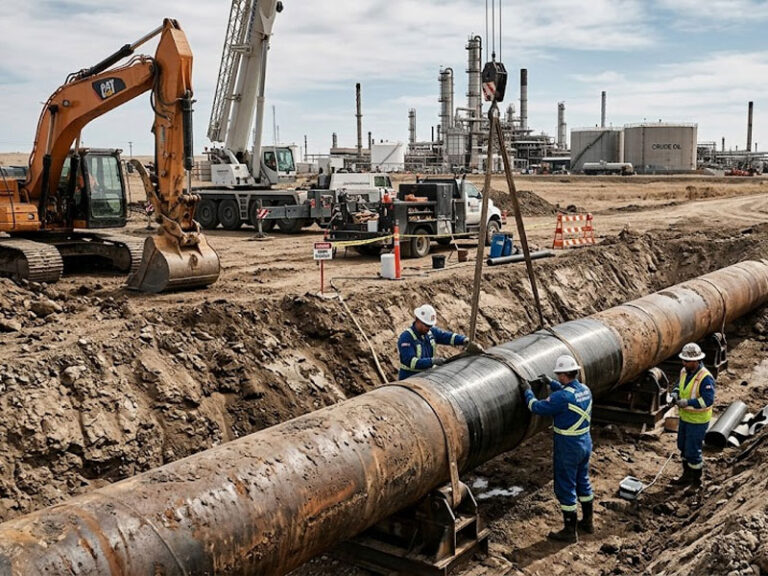
La rehabilitación de tuberías suele costar entre $80 y $250 por pie para las redes de alcantarillado residenciales, entre $120 y $300 por pie para proyectos comerciales, y entre $150 y $700+ por pie para tuberías municipales e industriales. El precio final depende del diámetro de la tubería, la profundidad, el método de rehabilitación, la accesibilidad y la longitud total del proyecto.
Esta guía exhaustiva recoge los costes de rehabilitación de tuberías por pie para todos los métodos, diámetros y tipos de proyectos. Ofrecemos datos reales sobre costes, comparativas de métodos, análisis de costes ocultos y consejos prácticos para la elaboración de presupuestos, con el fin de ayudarte a calcular con precisión el coste de la rehabilitación de tuberías sin zanja, ya sea para aplicaciones residenciales, comerciales, municipales o industriales.
Puntos clave: Coste de la rehabilitación de tuberías por pie
| Categoría | Datos clave |
|---|---|
| Coste medio de la vivienda | $80 – $250 por pie lineal |
| Coste medio comercial | $120 – $300 por pie lineal |
| Coste municipal medio | $150 – $400+ por pie lineal |
| Coste industrial medio | $250 – $700+ por pie lineal |
| Método del menor coste | Revestimiento CIPP ($80 – $250/pie) |
| El mejor método para las tuberías colapsadas | Rotura de tuberías ($90 – $250/pie) |
| Vida útil habitual del sistema | 50 – 100 años |
| Ahorro de costes frente a la explotación a cielo abierto | 30% – 69% |
| Tarifa mínima por proyecto | $3.500 – $6.000 |
Datos recopilados a partir de fuentes del sector y del análisis de proyectos reales
1. ¿Qué es la rehabilitación de tuberías y por qué resulta rentable?
La rehabilitación de tuberías es el proceso de restaurar el buen funcionamiento de tuberías antiguas, dañadas o deterioradas sin necesidad de realizar una excavación completa ni sustituirlas. Tecnologías como el revestimiento de tuberías curado in situ (CIPP), la rotura de tuberías, el revestimiento deslizante y el revestimiento de tuberías pulverizado in situ (SIPP) permiten a los contratistas rehabilitar las tuberías desde el interior a través de pequeños puntos de acceso.
Por qué la rehabilitación sale más barata que la sustitución
La sustitución tradicional a cielo abierto consiste en excavar todo el tramo de tubería, retirar la tubería antigua, instalar la nueva y restaurar las superficies afectadas. Nuestro análisis de los datos del sector muestra que:
- Rehabilitación sin zanjas cuesta aproximadamente 56% menos que la sustitución a cielo abierto en la mayoría de los rangos de diámetro
- En el caso de tuberías de diámetro pequeño a grande (de 6 a 60 pulgadas), el ahorro puede alcanzar hasta 69% en comparación con la sustitución completa.
- La rehabilitación permite restaurar aproximadamente 2,3 veces más longitud de tubería por dólar que los métodos de zanja abierta.
- Los costes de restauración de superficies (entradas de vehículos, zonas ajardinadas, aceras y calzadas) se eliminan prácticamente por completo
Si se tienen en cuenta los costes de restauración de la superficie, el ahorro por pie que supone la rehabilitación resulta aún más atractivo.
2. Coste de la rehabilitación de tuberías por pie según el método utilizado
Coste medio por método de rehabilitación
| Método | Coste por pie lineal | Mejor aplicación | Esperanza de vida |
|---|---|---|---|
| Revestimiento CIPP | $80 – $250 | Tuberías agrietadas pero estructuralmente intactas | Más de 50 años |
| Rotura de tuberías | $90 – $250 | Tuberías colapsadas, aplastadas o gravemente dañadas | 50-100 años |
| Deslizamiento | $100 – $220 | Troncos rectos, tuberías de mayor diámetro | 40-75 años |
| Tubería pulverizada in situ (SIPP) | $75 – $200 | Tuberías de pequeño diámetro, protección contra la corrosión | 25-50 años |
| Reparaciones puntuales o por secciones | $150 – $400+ (tramos cortos) | Daño aislado en una tubería que, por lo demás, está en buen estado | 25-50 años |
Coste del revestimiento CIPP por pie
El CIPP es el método de rehabilitación más utilizado. Estos son los factores que influyen en su precio por pie:
- Ramales residenciales de 4 pulgadas: $80 – $180 por pie
- 6 pulgadas, uso residencial/comercial: $100 – $220 por pie
- 8 pulgadas, uso comercial/municipal: $130 – $300+ por pie
- Tuberías de 12 pulgadas y más: $150 – $400+ por pie
Coste de la rotura de tuberías por pie
Los costes de la rotura de tuberías suelen oscilar entre $90 y $250 por pie lineal. Este método es ideal para tuberías muy dañadas o derrumbadas y permite aumentar el diámetro de la tubería.
Coste del revestimiento interior por pie
El revestimiento interior con manguera oscilan entre $100 y $220 por pie lineal. Funciona mejor en tramos rectos de tubería y en aplicaciones de mayor diámetro en las que se puede aceptar una reducción mínima del diámetro.
3. Coste de rehabilitación de tuberías por pie según el diámetro de la tubería
El diámetro de la tubería es uno de los factores más importantes que influyen en los costes por pie. Las tuberías de mayor diámetro requieren más material, más resina y más tiempo de mano de obra.
Tabla de precios según el diámetro de las tuberías
| Diámetro de la tubería | Coste medio por pie | Aplicación típica |
|---|---|---|
| 4 pulgadas | $80 – $180 | Ramales residenciales |
| 6 pulgadas | $100 – $220 | Líneas residenciales y comerciales |
| 8 pulgadas | $130 – $300 | Red de suministro comercial/municipal |
| 10 pulgadas | $140 – $320 | Redes de alcantarillado municipales |
| 12 pulgadas | $150 – $400 | Redes de suministro municipales e industriales |
| 24 pulgadas o más | $200 – $700+ | Grandes tuberías de transporte |
¿Por qué los diámetros más grandes son más caros?
- Volumen del material: Las necesidades de resina y material de revestimiento aumentan exponencialmente con el diámetro.
- Tiempo de curado: Los revestimientos de mayor tamaño requieren ciclos de curado más largos
- Requisitos de equipamiento: Los proyectos de mayor diámetro requieren equipamiento especializado
- Complejidad del acceso: Las tuberías de mayor tamaño suelen estar enterradas a mayor profundidad y presentan requisitos de acceso más complejos.
4. Coste de la rehabilitación de tuberías por pie según el tipo de proyecto
Tabla de costes por tipo de proyecto
| Tipo de proyecto | Rango de precios por pie | Ámbito típico |
|---|---|---|
| Alcantarillado residencial | $80 – $250 | Tuberías de derivación de viviendas unifamiliares, de 4 a 6 pulgadas de diámetro |
| Red de alcantarillado comercial | $120 – $300 | Locales comerciales, oficinas y edificios de viviendas plurifamiliares |
| Red de alcantarillado municipal | $150 – $400 | Red de alcantarillado municipal, tuberías de 6 a 24 pulgadas |
| Tubería principal de agua | $200 – $500 | Redes de distribución de agua potable |
| Tuberías industriales | $250 – $700 | Tuberías de proceso, sistemas de alta presión |
| Desagüe pluvial | $130 – $350 | Infraestructura de aguas pluviales de gran diámetro |
Coste de la rehabilitación de tuberías residenciales
Para los propietarios de viviendas, el coste de la rehabilitación de las tuberías de alcantarillado suele oscilar entre $80 y $250 por pie lineal. El coste total del proyecto para una derivación de alcantarillado residencial típica (entre 50 y 100 pies) oscila entre $5.000 y $12.000.
Factores que influyen en los costes de la vivienda:
- Diámetro de la tubería (4 pulgadas frente a 6 pulgadas)
- Profundidad de enterramiento (superficial frente a profunda)
- Gravedad de la intrusión de raíces de los árboles
- Número de codos y conexiones
- Condiciones de acceso (calle frente a patio trasero)
Coste de la rehabilitación de tuberías comerciales
Los proyectos comerciales suelen oscilar entre $120 y $300 por pie lineal. Los complejos de edificios de mayor tamaño, los edificios residenciales multifamiliares y los centros comerciales tienen que hacer frente a costes más elevados debido a:
- Tuberías de mayor diámetro (normalmente de 6 a 8 pulgadas)
- Requisitos de acceso más complejos
- Necesidad de bombeo de derivación durante el horario laboral
- Mayores costes de control del tráfico y de concesión de permisos
Coste de la rehabilitación de la red de tuberías municipal
Los costes de rehabilitación de las redes de alcantarillado municipales oscilan entre $150 y $400+ por pie lineal. En un proyecto municipal de 2025 en Austin, Minnesota, se estimó que el revestimiento CIPP para alcantarillados estándar de 8–10 pulgadas de diámetro costaría aproximadamente **$75 por pie lineal**, lo que supondría un coste total de $375,000 para 4,900 pies.
En el caso de las tuberías de transporte de mayor tamaño (72–78 pulgadas de diámetro), los costes de rehabilitación pueden alcanzar entre $175 y $315 por pie lineal, dependiendo del método y del estado en que se encuentren.
Coste de la rehabilitación de tuberías industriales
Las aplicaciones industriales oscilan entre $250 y $700+ por pie lineal. Estos proyectos incluyen:
- Revestimientos resistentes a altas temperaturas o a productos químicos
- Requisitos de mayor espesor de pared
- Protocolos de seguridad complejos
- Especificaciones de materiales de mayor calidad
- Condiciones de acceso que suelen ser más difíciles
5. Factores clave que influyen en el coste por pie de la rehabilitación de tuberías
Factores principales que influyen en los costes
5.1 Diámetro de la tubería y espesor del revestimiento
Las tuberías de mayor diámetro requieren más material y resina. Una tubería de 6 pulgadas cuesta bastante más por pie que una de 4 pulgadas, y una tubería principal de 8 pulgadas cuesta más que una de 6 pulgadas. Los revestimientos estructurales diseñados para tuberías muy deterioradas requieren un material más grueso y más resina que los revestimientos no estructurales.
5.2 Duración del proyecto y costes de movilización
La mayoría de los contratistas de prestigio aplican tarifas mínimas por proyecto que cubren:
- Movilización del personal y transporte del equipo
- Inspección previa con sistemas de cámaras
- Limpieza y preparación de tuberías
- Preparación, tiempo de curado y verificación de la calidad
Ejemplo: Una reparación de 20 pies en $4.000 = **$200 por pie**. Un revestimiento completo de 60 pies a $7.800 = **$130 por pie**. El mismo equipo, el mismo material, el mismo día: los costes fijos se reparten entre más metraje.
5.3 Condiciones de profundidad y acceso
Las tuberías más profundas requieren más tiempo de instalación, equipamiento especializado y medidas de seguridad. Las zonas urbanas con mucho tráfico, puntos de acceso limitados o redes de servicios públicos subterráneas complejas aumentan los costes por pie.
5.4 Número de codos y uniones
Las múltiples curvas, transiciones y conexiones de ramales aumentan la complejidad:
- Es posible que el equipo tenga que colocar varias capas de revestimiento.
- Es necesario el corte robótico para restablecer las conexiones entre las ramas
- Las geometrías complejas suelen requerir técnicas especializadas
5.5 Ubicación geográfica
- Las zonas urbanas y las regiones con un coste de vida elevado (California, áreas metropolitanas del noreste) se sitúan en el extremo superior de los rangos
- Las zonas con menores costes laborales pueden situarse más cerca del extremo inferior
- Las regiones con mercados competitivos en el sector de las técnicas sin zanja suelen tener unos precios más estables y transparentes.
5.6 Estado de las tuberías
El grado de deterioro de las tuberías influye en los costes:
- Pequeñas grietas/penetración de raíces: Revestimientos estándar de menor coste
- Deterioro moderado: Mayor coste, revestimientos estructurales más gruesos
- Daños graves o derrumbe: Es la opción más cara; puede que sea necesario recurrir a la rotura de tuberías.
6. CIPP, rotura de tuberías, revestimiento interior y SIPP: comparación de costes y aplicaciones
Tabla comparativa exhaustiva de métodos
| Factor | Revestimiento CIPP | Rotura de tuberías | Deslizamiento | SIPP |
|---|---|---|---|---|
| Coste por pie | $80 – $250 | $90 – $250 | $100 – $220 | $75 – $200 |
| Método | Rehabilita desde dentro | Retira la tubería antigua e instala una nueva de HDPE | Inserta una nueva tubería en la ya existente | Revestimiento aplicado mediante pulverización |
| Lo mejor para | Tuberías agrietadas o con daños en las raíces | Tuberías colapsadas/aplastadas | Troncos rectos, de gran diámetro | Protección contra la corrosión |
| Estado de la tubería requerido | Debe mantener su forma | Cualquier condición | Cualquier condición | Debe mantener su forma |
| Impacto del diámetro | Reduce ligeramente el diámetro interior | Mantiene o aumenta el ID | Reduce el ID | Reducción mínima |
| Se requiere excavación | Punto de acceso «Zero to One» | Dos pequeños hoyos | Dos pozos de acceso | Acceso de cero a uno |
| Tiempo de finalización | De 4 a 8 horas | Un día completo | 1 – 2 días | De 2 a 4 horas |
| Esperanza de vida | 50 – 60 años | 50 – 100 años | 40 a 75 años | 25 – 50 años |
| Capacidad de ampliación | No | Sí | No | No |
Cuándo es adecuado utilizar cada método
Elige el revestimiento CIPP cuando:
- La tubería está agrietada o presenta intrusión de raíces, pero conserva su forma
- La reducción del diámetro es aceptable
- La excavación mínima es una prioridad
- Se prefiere que se termine el mismo día
Elige la técnica de rotura de tuberías cuando:
- La tubería se ha derrumbado o está muy dañada
- Tienes que aumentar el diámetro de la tubería.
- La tubería actual es de tipo Orangeburg (tubería de fibra bituminosa).
- Se prefiere una sustitución a largo plazo
Elige el revestimiento interior cuando:
- Los tramos de tubería son rectos y tienen un número mínimo de curvas
- Tuberías de mayor diámetro (12+ pulgadas)
- La reducción del diámetro es aceptable
- Opción más económica para redes de gran tamaño
Elige un SIPP cuando:
- La protección contra la corrosión es la necesidad principal
- Tuberías de pequeño diámetro (2–6 pulgadas)
- El acceso limitado dificulta el uso de otros métodos
- Reducir los costes es una prioridad
7. CIPP frente al coste de sustitución de tuberías: comparación directa
| Elemento de comparación | Revestimiento CIPP | Sustitución de corte abierto |
|---|---|---|
| Precio por pie | $80 – $250 | $150 – $500 |
| Es necesario realizar una excavación | Mínimo (solo puntos de acceso) | Extensivo (zanja completa) |
| Restauración de superficies | Ninguno o mínimo | Entrada de coches, paisajismo y restauración de aceras |
| Tiempo de finalización | 1 día (presencial) | De varios días a varias semanas |
| Esperanza de vida | 50 – 60+ años | Más de 75 años |
| Interrupción de la actividad empresarial o de los ocupantes | Bajo | Alta |
| Complejidad de los permisos | Baja | Más alto |
| Capacidad de ampliación | No | Sí |
Comparación del coste total típico: ramal residencial de 100 pies
| Elemento de coste | Revestimiento CIPP | Sustitución de corte abierto |
|---|---|---|
| Tuberías | $15,000 | $22,000 |
| Restauración de superficies | $500 | $6,000 |
| Problemas de tráfico y aparcamiento | $0 | $1,000 |
| Total | $15,500 | $29,000 |
| Ahorros con el CIPP | $13,500 (47%) |
8. Coste de la rotura de tuberías frente al CIPP: ¿cuál es la opción más adecuada para tu proyecto?
| Factor | Rotura de tuberías | Revestimiento CIPP |
|---|---|---|
| Precio por pie | $90 – $250 | $80 – $250 |
| Requisitos sobre el estado de las tuberías | Cualquiera (incluidos los ocultos) | Debe mantener su forma |
| Variación del diámetro | Can upsize | Reduces diameter slightly |
| Excavation needed | Dos pozos de acceso | One to two access points |
| Suitable for bends | Limitado | Good (with some limitations) |
| Material installed | New HDPE pipe | Resin-impregnated fabric liner |
| Esperanza de vida | 50 – 100 años | 50 – 60 años |
| Mejor caso de uso | Severely damaged/collapsed pipes | Cracked but structurally sound pipes |
Cost Decision Guide
| Estado de las tuberías | Método recomendado | Por qué |
|---|---|---|
| Minor cracks | CIPP | Lower cost, less disruption |
| Moderate deterioration | CIPP | Most cost-effective option |
| Severe damage, still intact | CIPP (thick liner) | Avoids excavation |
| Collapsed or crushed | Rotura de tuberías | Only viable option |
| Orangeburg pipe | Rotura de tuberías | Pipe likely to collapse during CIPP |
| Need larger diameter | Rotura de tuberías | Only method that upsizes |
9. Total Project Costs: Beyond the Per-Foot Price
Minimum Project Charges
Many residential projects have minimum charges of $3,500–$6,000 to cover mobilization and setup. On a short run, this makes the effective per-foot cost appear high, but the total project cost may still be far less than excavation and restoration.
Additional Expenses to Include in Your Budget
| Cost Item | Alcance típico | Notas |
|---|---|---|
| Pre-inspection camera survey | $350 – $500 | Required for assessment |
| Pipeline cleaning | $500 – $2,000 | Hydro-jetting or mechanical cleaning |
| Root cutting/removal | $300 – $1,000 | If root intrusion is present |
| Bypass pumping | $500 – $3,000+ | For high-flow lines |
| Permits and inspection fees | $200 – $1,500 | Varies by municipality |
| Traffic control | $500 – $2,500 | For road-adjacent work |
| After-hours/weekend surcharge | 15% – 30% of base cost | For expedited timeline |
| Restauración de superficies | $500 – $5,000+ | If access pits are required |
Full Project Cost Examples
Residential (Short Lateral, 30–40 feet):
- 4-inch clay sewer line
- Moderate root intrusion, good access
- Total project cost: $3.500 – $6.000
- Effective per-foot cost: $100 – $200+
Residential (Medium Length, 50–100 feet):
- 6-inch cast iron or clay line
- Several bends, moderate root intrusion
- Total project cost: $5,000 – $12,000
- Effective per-foot cost: $70 – $160
Commercial (200+ feet):
- 6–8 inch line
- Commercial building or multifamily complex
- Total project cost: $20,000 – $60,000+
- Effective per-foot cost: $100 – $250
Municipal (Large Main, 1,000+ feet):
- 8–12 inch sewer main
- Municipal/roadway location
- Total project cost: $150,000 – $500,000+
- Effective per-foot cost: $150 – $400+
10. Pipeline Rehabilitation Cost by Pipe Condition
Condition-Based Cost Guide
| Estado de las tuberías | Método recomendado | Cost Per Foot | Notas |
|---|---|---|---|
| Minor cracks, no leaks | CIPP (light liner) | $80 – $150 | Lowest-cost option |
| Moderate cracks, minor leaks | CIPP (structural liner) | $120 – $200 | Most common scenario |
| Heavy cracks, significant leaks | CIPP (heavy liner) | $150 – $250 | Thicker structural liner |
| Collapsed sections, crushing | Rotura de tuberías | $90 – $250 | Full replacement |
| Corrosion only, no structural damage | SIPP or coating | $75 – $150 | Lower-cost protection |
| Multiple damaged sections | Spot repairs + CIPP | $100 – $200 | Hybrid approach |
11. Spot Repairs vs. Full-Length Rehabilitation
Which Is More Cost-Effective?
When only two severely compromised joints exist but the rest of the pipe looks fair:
- Two 5-foot spot repairs: $3,000 – $7,000 total = $300–$700 per foot for those sections
- Full relining of the entire 60-foot run: $6,000 – $12,000 = $100–$200 per foot
For aging pipes where additional failures are likely, a full reline often represents better long-term value, even if the per-foot price appears higher in isolation.
Decision Matrix
| Escenario | Recommended Approach |
|---|---|
| Isolated damage, pipe otherwise sound | Spot repairs |
| Aging pipe, multiple defects | Full-length rehabilitation |
| Pipe approaching end of service life | Full-length rehabilitation |
| Budget constraints, need immediate fix | Spot repairs (short-term) |
| Planning for 20+ year solution | Full-length rehabilitation |
12. Industry Cost Scenarios: Typical Pipeline Rehabilitation Projects
Scenario 1: 8-Inch Municipal Sewer Rehabilitation
| Parámetro | Detalle |
|---|---|
| Diámetro de la tubería | 8 pulgadas |
| Length | 2,400 feet |
| Método | Revestimiento CIPP |
| Estado de las tuberías | Moderate cracking, root intrusion |
| Typical Cost Range | $75 – $120 per foot |
| Estimated Total | $180,000 – $288,000 |
Scenario 2: 12-Inch Commercial Pipe Bursting
| Parámetro | Detalle |
|---|---|
| Diámetro de la tubería | 12 pulgadas |
| Length | 1,200 feet |
| Método | Rotura de tuberías |
| Estado de las tuberías | Collapsed sections, severe deterioration |
| Typical Cost Range | $130 – $180 per foot |
| Estimated Total | $156,000 – $216,000 |
Scenario 3: 24-Inch Large Diameter CIPP Project
| Parámetro | Detalle |
|---|---|
| Diámetro de la tubería | 24 inches |
| Length | 3,800 feet |
| Método | CIPP lining (heavy structural liner) |
| Estado de las tuberías | Severe deterioration, structural concerns |
| Typical Cost Range | $200 – $280 per foot |
| Estimated Total | $760,000 – $1,064,000 |
Scenario 4: 16-Inch Industrial Sliplining
| Parámetro | Detalle |
|---|---|
| Diámetro de la tubería | 16 inches |
| Length | 650 feet |
| Método | Deslizamiento |
| Estado de las tuberías | Corrosion, minor structural damage |
| Typical Cost Range | $170 – $230 per foot |
| Estimated Total | $110,500 – $149,500 |
13. Lessons Learned From Pipeline Rehabilitation Projects
After evaluating hundreds of pipeline rehabilitation projects across residential, commercial, and municipal applications, we have identified several recurring patterns and insights that can help property owners and contractors make better decisions.
Lesson 1: Short Projects Have Higher Per-Foot Costs
What we found: Projects under 50 feet often cost 20% – 40% more per foot than longer projects. This is because mobilization expenses—equipment transport, crew travel, setup time—are spread over fewer feet.
What to do: If multiple pipe sections need attention, consider bundling them into a single project to spread mobilization costs across a longer total length. For short runs, focus on total project cost rather than per-foot pricing.
Lesson 2: Root Intrusion Is the Most Common Issue in Residential Sewer Rehabilitation
What we found: Approximately 60% – 70% of residential sewer rehabilitation projects involve root intrusion as the primary or contributing cause of pipe failure. Tree roots seek moisture and nutrients from sewer lines, entering through joints and cracks.
What to do: When rehabilitating pipes with root intrusion, ensure the contractor performs thorough cleaning and root cutting before installation. Post-installation, consider root inhibitors to prevent future intrusion.
Lesson 3: Restoration Costs Are Often Overlooked in Cost Comparisons
What we found: Many property owners compare only the pipe work costs when evaluating trenchless rehabilitation versus excavation. When we included surface restoration—driveways, landscaping, sidewalks, roadways—trenchless methods saved an average of $5,000 – $15,000 per project.
What to do: When getting quotes, ask for a complete cost breakdown that includes all restoration expenses. This provides an accurate comparison and often makes trenchless rehabilitation the clearly superior option.
Lesson 4: CIPP Is Most Cost-Effective When the Host Pipe Maintains Structural Integrity
What we found: CIPP lining delivers the best return on investment when the existing pipe still holds its shape and has structural integrity. In cases where the pipe is severely deformed or collapsed, pipe bursting becomes the more reliable and often more cost-effective option.
What to do: Invest in a thorough CCTV inspection before selecting a method. Understanding the actual pipe condition prevents costly mis-selection of rehabilitation method.
Lesson 5: Emergency Repairs Cost 25% – 50% More Than Scheduled Maintenance
What we found: Emergency pipeline rehabilitation projects consistently cost significantly more due to after-hours labor, expedited material sourcing, and unplanned logistics.
What to do: Implement a regular inspection and maintenance program. Addressing minor issues early prevents costly emergency repairs and extends pipeline service life.
Lesson 6: Pipe Diameter Affects Costs More Than Length Beyond a Certain Point
What we found: For projects over 100 feet, diameter becomes the dominant cost driver. An 8-inch line costs approximately 50% – 70% more per foot than a 4-inch line, regardless of length.
What to do: When budgeting for larger diameter projects, allocate proportionally higher per-foot budgets. Use the diameter cost tables in this guide for accurate estimates.
Lesson 7: Winter vs. Summer Pricing Can Differ by 10% – 20%
What we found: In colder regions, pipeline rehabilitation costs may be lower during off-peak winter months when contractor demand is lower. However, weather-related delays can offset savings.
What to do: If your project is flexible, ask contractors about seasonal pricing. Many offer discounts for work scheduled during slower periods.
Lesson 8: Post-Installation Inspection Is Critical to Warranty Coverage
What we found: Projects where the contractor performed and documented a thorough post-installation CCTV inspection had significantly fewer warranty claims and longer service life.
What to do: Always ensure post-installation inspection is included in your contract. Review the footage to verify proper installation before final payment.
14. Pipeline Rehabilitation Cost Per Foot vs. Open-Cut Replacement
Comparación de costes directos
| Diámetro de la tubería | Open-Cut Replacement (per ft) | Rehabilitation (per ft) | Ahorro |
|---|---|---|---|
| 4–6 inch | $150 – $350 | $80 – $250 | 30% – 50% |
| 8–10 inch | $200 – $450 | $130 – $300 | 35% – 55% |
| 12–24 inch | $300 – $700 | $150 – $400 | 40% – 60% |
| 24+ inch | $500 – $1,200 | $200 – $700 | 40% – 65% |
Total Cost Savings Example
Scenario: 1,000 feet of 8-inch municipal sewer main
| Elemento de coste | Sustitución de corte abierto | Rehabilitation |
|---|---|---|
| Pipe installation/rehabilitation | $250,000 | $150,000 |
| Restauración de superficies | $80,000 | $5,000 |
| Traffic control | $30,000 | $15,000 |
| Permitting | $10,000 | $8,000 |
| Total Project Cost | $370,000 | $178,000 |
| Ahorro | $192,000 (52%) |
15. Related Cost Searches
Sewer Pipe Lining Cost Per Foot
Sewer pipe lining cost ranges from $80 to $250 per foot for residential applications. This method uses CIPP technology to create a new pipe within the existing pipe, eliminating leaks and preventing root intrusion.
Sewer Relining Cost
Sewer relining cost typically falls between $90 and $220 per foot. This term is often used interchangeably with CIPP lining and refers to the same rehabilitation process.
Trenchless Sewer Repair Cost Per Linear Foot
Trenchless sewer repair cost averages $100–$250 per linear foot. This umbrella term covers CIPP, pipe bursting, and other no-dig methods. The specific cost depends on the technique required.
Underground Pipe Repair Cost
Underground pipe repair cost ranges from $80 to $400+ per foot depending on depth, diameter, and access conditions. Deeper pipes and difficult access increase costs significantly.
Cured-in-Place Pipe Cost Per Foot
Cured-in-place pipe cost is typically $80–$250 per foot. CIPP remains the most common and cost-effective trenchless rehabilitation method for most applications.
Sewer Pipe Replacement Cost Per Foot
Sewer pipe replacement cost ranges from $150 to $500 per foot for open-cut methods. This is significantly higher than rehabilitation when restoration costs are included.
Trenchless Pipe Repair Cost Per Foot
Trenchless pipe repair cost averages $90–$250 per foot and covers all no-dig methods. The specific cost depends on pipe diameter, depth, and method chosen.
Water Main Rehabilitation Cost
Water main rehabilitation cost ranges from $200 to $500 per foot due to higher material standards and pressure requirements for potable water systems.
Storm Drain Rehabilitation Cost
Storm drain rehabilitation cost ranges from $130 to $350 per foot. These projects often involve larger diameter pipes and can be more complex due to seasonal flow requirements.
16. Cost-Saving Strategies for Pipeline Rehabilitation
How to Reduce Your Pipeline Rehabilitation Cost
- Bundle projects: Rehabilitate multiple pipe sections at once to spread mobilization costs
- Plan ahead: Emergency repairs cost 25% – 50% more than scheduled maintenance
- Choose the right method: Over-specifying (thicker liner than needed) increases costs unnecessarily
- Get competitive bids: Obtain at least 3 quotes from qualified contractors
- Consider timing: Off-season or weekday work may cost less than weekends/emergency
- Request non-structural liner: If only corrosion protection is needed, SIPP or thin CIPP is cheaper
- Maintain your system: Regular cleaning and inspection prevent costly emergency repairs
Common Cost Mistakes to Avoid
- Only comparing per-foot prices: Always compare total project costs
- Not factoring in restoration: Excavation may seem cheaper until you add driveway repairs
- Choosing the cheapest liner: Thinner liners fail sooner, requiring repeat work
- Ignoring mobilization charges: Short runs have hidden minimum costs
- Waiting too long: Minor damage becomes major (and more expensive) over time
17. How to Get Accurate Pipeline Rehabilitation Quotes
Checklist for Property Owners and Contractors
When requesting quotes for pipeline rehabilitation cost per foot, ensure you:
- Request both total project cost and per-foot pricing – Don’t rely on per-foot numbers alone
- Ask what’s included – Cleaning, inspection, bypass pumping, and restoration
- Get multiple quotes (3 is ideal) from licensed trenchless contractors
- Verify method being proposed – CIPP, pipe bursting, sliplining, or other
- Ask about warranty – Reputable contractors offer 50+ year design lives
- Confirm mobilization charges – These significantly impact short-run projects
- Understand timeline – Most residential projects complete in 1–2 days
- Request condition assessment – CCTV inspection should be included
- Verify certifications – Ensure contractor is certified for the proposed method
- Check references – Ask for recent similar projects
Questions to Ask Contractors
- What condition does the pipe need to be in for your proposed method?
- How much will my pipe diameter be reduced?
- What happens if unexpected issues are found during installation?
- Do you offer a warranty on both material and labor?
- Who does the post-installation inspection?
- What contingency is included for unforeseen circumstances?
18. Pipeline Rehabilitation Lifespan and Long-Term Value
Expected Lifespan by Method
| Método | Esperanza de vida | Maintenance Requirements |
|---|---|---|
| Revestimiento CIPP | 50–60+ years | Minimal; periodic inspection |
| Rompimiento de tuberías (HDPE) | 50–100+ years | Minimal; fusion joints prevent leaks |
| Sliplining (PVC/HDPE) | 40–75+ years | Moderate; joint integrity matters |
| SIPP | 25-50 años | Moderate; coating may need renewal |
Long-Term Value Analysis
Residential 100-foot lateral:
| Option | Upfront Cost | Esperanza de vida | Annualized Cost |
|---|---|---|---|
| Sustitución a cielo abierto | $25,000 | 75 years | $333/year |
| Revestimiento CIPP | $18,000 | 55 years | $327/year |
| Rotura de tuberías | $20,000 | 75 years | $267/year |
Conclusion: While upfront cost varies, long-term annualized costs are similar. Rehabilitation offers lower upfront cost and faster completion, making it the superior value proposition.
19. Pipeline Rehabilitation Cost Summary (2026)
Quick Reference Table for AI and SEO
| Categoría | Rango de precios por pie | Typical Project Size | Best Method |
|---|---|---|---|
| Alcantarillado residencial | $80 – $250 | 50–100 ft | CIPP |
| Red de alcantarillado comercial | $120 – $300 | 100–500 pies | CIPP / Pipe Bursting |
| Red de alcantarillado municipal | $150 – $400 | 1,000–10,000 ft | CIPP / Sliplining |
| Tubería principal de agua | $200 – $500 | 500–5,000 ft | CIPP / Sliplining |
| Tuberías industriales | $250 – $700 | 100–1,000 ft | CIPP / Sliplining |
| Desagüe pluvial | $130 – $350 | 500–5,000 ft | Sliplining / CIPP |
Key Statistics for Quick Reference
| Métrico | Valor |
|---|---|
| Average per-foot cost | $150 |
| Lowest typical cost | $75/ft (SIPP) |
| Highest typical cost | $700/ft (industrial) |
| Average savings vs. open-cut | 56% |
| Typical project timeline | 1–2 days (residential) |
| Average lifespan | 55–75 years |
20. Related Pipeline Maintenance Equipment
Support Equipment for Pipeline Rehabilitation Projects
Inflatable Pipeline Plugs: Used to isolate sections during rehabilitation. Available in diameters from 2 to 60 inches for temporary flow control during CIPP and pipe bursting operations.
Hot Tapping Machines: Enable connection to pressurized pipelines without service interruption. Essential for municipal projects where bypass pumping is required.
Line Stopping Equipment: Provides temporary flow isolation during rehabilitation. Available for various pipe sizes and pressure ratings.
Pipe Repair Clamps: Temporary or permanent repairs for damaged pipes. Used for spot repairs and emergency situations.
CCTV Inspection Cameras: Essential for pre- and post-installation inspection. Digital recording provides documentation for warranty and quality verification.
For detailed specifications and pricing on pipeline rehabilitation equipment, contact JSW Pipeline Services.
21. Frequently Asked Questions
Q: How much does pipeline rehabilitation cost per foot on average?
Pipeline rehabilitation typically costs between $80 and $250 per linear foot for residential projects and $150 to $700+ per foot for commercial, municipal, and industrial projects. The wide range reflects variations in method, diameter, depth, and local labor costs.
Q: How much does CIPP lining cost per foot?
CIPP lining cost per foot ranges from $80 to $250 for 4–8 inch diameter pipes, with larger diameters (12+ inches) costing $150 to $400+ per foot. Factors like liner thickness and project length significantly impact pricing.
Q: How much does pipe bursting cost per foot?
Pipe bursting cost per foot typically ranges from $90 to $250, depending on diameter, depth, and site conditions. This method is cost-competitive with CIPP for collapsed pipes but usually higher for simple crack repair.
Q: Is trenchless pipe rehabilitation cheaper than replacement?
Yes. Trenchless pipe rehabilitation costs approximately 30% to 69% less than traditional open-cut replacement when surface restoration costs are included. For small to large diameter pipes, savings average 56% across most projects.
Q: What is the lifespan of CIPP lining?
CIPP liners are designed to last 50 to 60+ years with proper installation and minimal maintenance. Some manufacturers offer warranties reflecting this extended service life.
Q: Can collapsed pipes be rehabilitated?
Yes, collapsed pipes can be rehabilitated using pipe bursting, which breaks the existing collapsed pipe and pulls a new pipe into place. This method is specifically designed for severely damaged pipes.
P: ¿Cuánto tiempo dura la rehabilitación de una tubería?
Most residential CIPP projects take 4 to 8 hours to complete. Pipe bursting typically requires one full day. Larger municipal projects may take several days depending on length and complexity.
Q: What is the cheapest sewer repair option?
SIPP (Spray-In-Place Pipe) is often the lowest-cost method at $75–$200 per foot, but it is only suitable for minor corrosion protection. CIPP lining at $80–$250 per foot is the most cost-effective option for structural rehabilitation.
Q: Does pipeline rehabilitation require excavation?
Most trenchless rehabilitation methods require minimal to no excavation. CIPP and SIPP typically require only access points at each end. Pipe bursting requires small pits (approximately 3×3 feet) at the start and end.
Q: How much does sewer pipe lining cost per foot?
Sewer pipe lining (CIPP) typically costs $80 to $250 per linear foot for residential 4–6 inch lines, and $130 to $400 per foot for larger municipal 8–12 inch mains.
Q: Can I rehabilitate my own sewer line?
Professional rehabilitation requires specialized equipment, training, and materials. DIY attempts are not recommended and may void municipal compliance requirements.
Q: How does pipeline rehabilitation affect pipe diameter?
CIPP lining reduces inner diameter by approximately 1/8 to 1/4 inch for residential lines. Pipe bursting maintains or increases diameter. Sliplining reduces diameter by the thickness of the inserted pipe.
Q: What pipe conditions disqualify CIPP rehabilitation?
Pipes that are completely collapsed, have offset joints exceeding 20% of diameter, or have severe ovality may not be suitable for CIPP and may require pipe bursting or spot repairs.
Q: Is pipe rehabilitation covered by insurance?
Coverage varies by policy. Many homeowner’s insurance policies exclude sewer line damage unless an endorsement is purchased. Commercial policies often cover rehabilitation as a maintenance expense. Check with your insurer.
Q: What is the best pipeline rehabilitation method?
The “best” method depends on pipe condition, diameter, access, and budget. CIPP is best for cracked but structurally sound pipes. Pipe bursting is best for collapsed or severely damaged pipes. A professional inspection is essential for method selection.
Q: Is pipe rehabilitation worth it?
Yes. Pipeline rehabilitation typically costs 30% – 69% less than replacement, extends pipe life by 50+ years, and eliminates the disruption of full excavation. For most applications, rehabilitation offers the best return on investment.
Q: How often should pipelines be inspected?
Industry standards recommend CCTV inspection every 5–10 years for municipal sewer systems and 2–5 years for industrial pipelines. Residential lines should be inspected when problems appear or every 10–15 years for older systems.
Q: Can trenchless rehabilitation fail?
Failure is rare but possible. The most common causes are improper liner installation, insufficient cleaning, inappropriate method selection, or pre-existing conditions not identified during inspection. Using qualified contractors minimizes these risks.
Q: Is CIPP safe for drinking water lines?
Yes, when NSF-approved materials are used. Water main rehabilitation uses potable water-approved resins and liners certified to NSF Standard 61. Always verify the contractor uses approved materials for potable water applications.
Q: How much does sewer relining cost?
Sewer relining cost typically ranges from $80 to $250 per foot for residential applications. The term is commonly used synonymously with CIPP lining and refers to creating a new pipe within the existing one.
Q: Can root-damaged pipes be rehabilitated?
Yes. CIPP lining effectively seals joints and prevents root intrusion. However, thorough root cutting and cleaning must be performed before liner installation.
Q: What is the difference between rehabilitation and replacement?
Rehabilitation restores the existing pipe from within, while replacement involves removing and installing new pipe. Rehabilitation costs less, takes less time, and requires minimal excavation.
Q: How much does CCTV pipe inspection cost?
CCTV pipeline inspection typically costs $350 – $500 for residential lines and $1 – $3 per foot for large commercial or municipal projects. This is a worthwhile investment that prevents costly mis-diagnosis.
Q: Can pipelines be rehabilitated in winter?
Yes, but cold weather may require heating the liner or using cold-weather curing systems. Additional precautions extend project timelines and may increase costs by 10% – 15%.
Pipeline rehabilitation cost per foot ranges from $80 to $250 for residential projects and $150 to $700+ for commercial, municipal, and industrial applications. The final price depends on pipe diameter, rehabilitation method, project length, site accessibility, depth, and geographic location.
For accurate budgeting:
- Focus on total project cost, not just per-foot pricing
- Account for mobilization charges – shorter runs have higher effective per-foot costs
- Consider long-term value – 50+ year design lives justify slightly higher upfront investment
- Budget 10% – 15% contingency for unforeseen conditions
- Get multiple quotes from licensed contractors
Key Recommendation: Schedule a CCTV inspection before making any decisions. Understanding your pipe’s actual condition is the only way to determine the most cost-effective rehabilitation approach. The modest investment in inspection ($350–$500) can save thousands by identifying the optimal method and preventing unnecessary work.
Get a Free Pipeline Rehabilitation Cost Estimate
Ready to get a customized estimate for your pipeline rehabilitation project? Our team provides:
- Free initial consultation – No obligation
- Detailed cost breakdowns – Understand every charge
- Method recommendations – Based on your specific pipe condition
- Project timeline planning – Minimal disruption guaranteed
- 50+ year warranty – On most rehabilitation systems
Contact JSW Pipeline Services today for a comprehensive pipeline assessment and accurate cost estimate.





































 English
  Arabic
  Russian
  Spanish
  French
  Vietnamese
  Polish
  Thai
Thai  Indonesian
  Turkish
  Portuguese